
Quick answer
What Is Hypotension?
Hypotension is blood pressure that is lower than usual, generally below 90/60 mmHg. In some people it causes no symptoms, but if it comes with dizziness, weakness, or fainting, the cause needs to be found.
SourcesSigns That Need Urgent Help
- Fainting with chest pain, shortness of breath, or a pounding heartbeat
- Fainting during physical activity or while lying down
- Confusion, difficulty waking, or slurred speech
- Cold, clammy, pale or bluish skin with rapid breathing
- Not urinating for hours, with severe weakness
- Severe vomiting or diarrhea that keeps you from drinking
- Black stools or vomiting blood
If these signs appear, go to the nearest emergency department right away or call Heart Attack Center 1500 258.
01 / Understanding the condition
About Hypotension
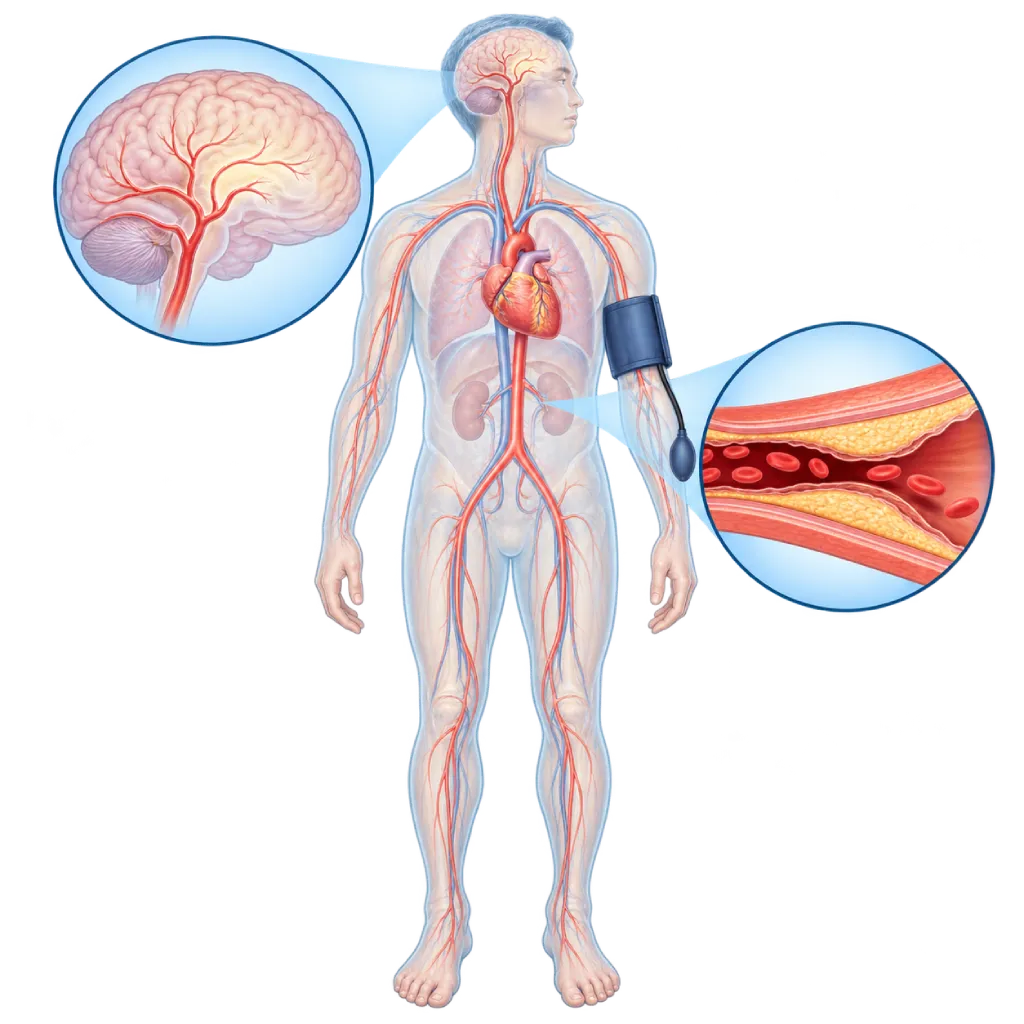
Blood pressure is the force of blood against the walls of the blood vessels as the heart pumps. It is written as two numbers: systolic or upper pressure (when the heart contracts) and diastolic or lower pressure (when the heart rests between beats). Hypotension, or low blood pressure, generally means a reading below 90/60 mmHg. However, no single threshold applies to everyone. What matters more is whether blood pressure is enough to deliver blood to the brain, heart, kidneys, and other organs, and whether symptoms appear.
Many healthy people, for example slim young people or those who exercise regularly, have low blood pressure without any symptoms. This usually does not need treatment. In contrast, a sudden drop in blood pressure, or one that makes you dizzy, weak, or even faint, is a sign that blood flow to the brain has briefly decreased.
Types of Hypotension
Doctors classify hypotension by its timing and trigger. Orthostatic hypotension appears when you stand up from sitting or lying down. Postprandial hypotension occurs within two hours after eating, especially in older adults. Vasovagal hypotension is triggered by a nerve reflex, for example when standing for a long time, overheating, or seeing blood, and can lead to fainting. Drug-induced hypotension is linked to blood pressure medicines or other medicines. Persistent hypotension is blood pressure that stays low over the long term. Hypotensive shock is a severe drop in blood pressure that deprives the organs of blood flow and requires emergency care. Each type is covered on its own page.
Why Blood Pressure Can Drop
The body maintains blood pressure through three things: the amount of fluid in the blood vessels, the pumping strength of the heart, and the ability of the blood vessels to narrow. The autonomic nervous system, the part of the nervous system that works without conscious effort, regulates all three from second to second. Hypotension occurs when one of them is disrupted: fluid is lost through diarrhea, vomiting, or bleeding; the heart's pumping weakens or its rhythm is too slow; blood vessels widen because of medicines, severe infection, or an allergic reaction; or the autonomic nerves do not work properly, for example in long-standing diabetes and Parkinson's disease.
The good news is that the cause of hypotension can generally be identified through a medical history, blood pressure measurements in several positions, and simple tests. Treatment is tailored to that cause, not just aimed at raising the blood pressure number.
02 / Understanding the condition
Types and Related Conditions
The following conditions belong to the Hypotension group. Open each one for a full explanation.
03 / Understanding the condition
Symptoms to Recognize.
Common Symptoms
- Dizziness or lightheadedness, especially when standing up
- Blurred or darkened vision, or seeing spots
- Weakness and tiring quickly
- Nausea or stomach discomfort
- Difficulty concentrating
- Nearly fainting or fainting briefly
- Pale, cold, sweaty skin
Symptoms in Older Adults
In older adults, symptoms are often atypical, so they are easily mistaken for simply a matter of age.
- Falling for no clear reason
- Confusion or drowsiness, especially after eating or waking up
- Weakness to the point of difficulty walking
- Pain in the back of the neck and shoulders when standing
- Symptoms that worsen after a blood pressure medicine is added
04 / Understanding the condition
What Causes This Condition?
- Dehydration from diarrhea, vomiting, fever, excessive sweating, or not drinking enough
- Medicine effects, such as from blood pressure medicines, diuretics, nitrates, and sedatives
- Autonomic nerve disorders, for example in long-standing diabetes and Parkinson's disease
- A vasovagal nerve reflex triggered by prolonged standing, heat, pain, or emotion
- Heart problems, such as a rhythm that is too slow, aortic valve narrowing, or heart failure
- Bleeding, severe infection (sepsis), or a severe allergic reaction (anaphylaxis)
- Hormone disorders, such as a deficiency of adrenal gland hormones
05 / Understanding the condition
Who Is at Higher Risk?
Age
The risk of low blood pressure on standing and after meals increases with age, because the reflexes that regulate blood pressure slow down and the blood vessels become stiffer.
Medical
Diabetes, Parkinson's disease, heart failure, heart valve disease, kidney disease, and adrenal or thyroid hormone disorders increase the likelihood of blood pressure dropping.
Lifestyle
Not drinking enough, drinking alcohol, standing for long periods in hot places, and lying in bed for long periods during illness make it harder for the body to maintain blood pressure.
Other
Taking several medicines at once, especially combinations of blood pressure medicines, diuretics, and prostate or nerve medicines, as well as pregnancy in the first and second trimesters.
Groups at Higher Risk
- Older Adults: Blood pressure reflexes slow down and older adults often take several medicines, so they are more likely to feel dizzy or fall when blood pressure drops.
- People with Diabetes: Long-standing diabetes can damage the autonomic nerves that regulate blood pressure on standing and after meals.
- People Taking Blood Pressure Medicines: Medicines that lower blood pressure or remove fluid can make blood pressure drop too far, especially during illness or when not drinking enough.
- People with Parkinson's Disease: This disease can affect the autonomic nerves, and its medicines can also lower blood pressure.
- Pregnant Women: Blood pressure naturally drops in the first and second trimesters, so dizziness on standing happens more easily.
06 / Understanding the condition
How Is It Diagnosed?
Your doctor starts by asking about your symptoms, when they appear (on standing, after eating, or during prolonged standing), the medicines you take, and your medical history. Blood pressure is then measured while lying down and after standing for one and three minutes to see whether it drops when you change position. An ECG records the heart rhythm, and blood tests look for anemia, dehydration, or problems with blood sugar, electrolytes, or hormones.
If symptoms come and go, blood pressure can be monitored over 24 hours or measured yourself at home. Echocardiography is used when your doctor suspects a valve or heart pumping problem, and a tilt table test is used when repeated fainting still has no clear cause.
Physical Examination
Blood pressure and pulse are measured while lying down, then after standing for one and three minutes, to look for a drop when you change position.
Ambulatory Blood Pressure Monitoring
Automatic blood pressure measurement over 24 hours to capture drops during activity, after eating, or after taking medicines.
Electrocardiogram (ECG)
A recording of the heart rhythm to look for a heartbeat that is too slow, electrical conduction problems, or signs of other heart disease.
Laboratory Tests
Blood tests to look for anemia, dehydration, and problems with electrolytes, blood sugar, kidney function, and hormones.
Echocardiography
Heart ultrasound to assess pumping strength and the valves, for example when aortic valve narrowing or heart failure is suspected.
Tilt table test: blood pressure and pulse are monitored while you are tilted into an upright position, to confirm low blood pressure on standing or a vasovagal reflex.
07 / Understanding the condition
Treatment Options.
Treatment is decided by a doctor after an assessment. The categories below can help you follow the conversation with your doctor.
Treating the Cause
Treating dehydration, bleeding, infection, hormone disorders, or heart disease that lowers blood pressure. Once the cause is resolved, blood pressure usually returns.
Medicine Review by Your Doctor
Your doctor reviews all the medicines you take and, if needed, changes the type, timing, or dose. Do not stop any medicine on your own.
Fluids and Salt as Advised
Drinking enough and, for some people, increasing salt intake can help. This advice is not suitable for people with heart failure, hypertension, or kidney disease, so it needs your doctor's approval.
Daily Habits
Getting up gradually from lying down, avoiding prolonged standing in hot places, eating smaller portions, and wearing compression stockings if your doctor recommends them.
Medicines to Raise Blood Pressure
For symptoms that persist despite other measures, your doctor may consider a fluid-retaining medicine or a medicine that narrows the blood vessels, with blood pressure monitoring while lying down.
08 / Understanding the condition
Complications to Watch For.
Falls and Fractures
Sudden dizziness or fainting can cause falls, head injuries, or broken bones, especially in older adults.
Repeated Fainting
Brief drops in blood flow to the brain can cause repeated fainting and interfere with daily activities, work, or driving.
Reduced Blood Flow to Organs
Very low blood pressure, or low blood pressure over a long period, can reduce blood flow to the kidneys, heart, and brain.
Shock
A severe drop in blood pressure that deprives the organs of oxygen and requires emergency care. Covered on the Hypotensive Shock page.
09 / Understanding the condition
What Can You Do?
- Drink enough water throughout the day, especially in hot weather or during a fever or diarrhea.
- Get up gradually: sit on the edge of the bed first before standing.
- Avoid standing still for too long, especially in hot and crowded places.
- Limit alcohol and eat smaller, more frequent meals.
- Bring a list of your medicines to checkups and ask whether any of them lower blood pressure.
- Measure your blood pressure at home if you often feel dizzy, then show the record to your doctor.
10 / Understanding the condition
When Should You See a Doctor?
Low blood pressure without symptoms usually only needs monitoring. See a doctor if low blood pressure comes with symptoms or keeps happening, so the cause can be found and treated.
- Frequent dizziness, seeing spots, or nearly fainting when standing
- Having fainted, even if you came to quickly
- Falling for no clear reason, especially in older adults
- Symptoms that appear after starting a new medicine or after a medicine is added
- Low blood pressure with weakness, weight loss, or darkening skin
- Go to the emergency room right away if fainting comes with chest pain, shortness of breath, or a pounding heartbeat
Don't Wait in an Emergency.
If symptoms are severe or come on suddenly, go to the nearest emergency department right away or call Heart Attack Center 1500 258, rather than waiting for an appointment.
11 / Common questions
Questions You May Have.
Frequently asked questions about hypotension, or low blood pressure.
What blood pressure reading is considered low?
Blood pressure below 90/60 mmHg is generally considered low. However, this number is not an absolute threshold. Some healthy people have a pressure of about 90/60 mmHg without symptoms, while others already feel dizzy at higher readings if their pressure drops suddenly. For this reason, your doctor assesses the reading together with your symptoms, the change from your usual blood pressure, and the circumstances when it was measured.
Is low blood pressure the same as anemia?
No. Low blood pressure, or hypotension, is about the force of blood inside the blood vessels. Anemia, sometimes called a low blood count, means the level of hemoglobin, the oxygen-carrying substance in red blood cells, is below normal. Both can cause dizziness and weakness, and severe anemia can also lower blood pressure. Blood pressure measurement and blood tests help your doctor tell them apart.
Does low blood pressure need treatment?
Not always. Low blood pressure without symptoms generally does not need medicine. If there are symptoms, the first step is to find and treat the cause, for example dehydration, a medicine side effect, or a heart problem. Simple habits such as drinking enough and getting up gradually often already help. Your doctor considers medicines to raise blood pressure only for symptoms that persist.
What should I do when I feel like I am about to faint?
Sit or lie down right away, then raise both legs if possible, so blood returns to the brain more easily. Do not force yourself to keep standing or to walk to the bathroom. Once the symptoms ease, get up slowly and drink water if you are not nauseated. If fainting comes with chest pain, shortness of breath, a pounding heartbeat, or happens during activity, seek help at the emergency room right away.
Can drinking coffee or eating salt raise blood pressure?
Caffeine can raise blood pressure slightly for a short time, and salt helps the body retain fluid. For some people with hypotension, doctors do recommend increasing salt and fluid intake. However, this advice is not suitable for everyone, for example people with hypertension, heart failure, or kidney disease. Talk to your doctor first before changing your diet.
Can low blood pressure be a sign of heart disease?
It can, although not always. A heart rhythm that is too slow, aortic valve narrowing, and a weakened heart pump can cause low blood pressure, especially when accompanied by shortness of breath, chest pain, a pounding heartbeat, or fainting during activity. An ECG and echocardiography help your doctor assess this possibility. In many people, the cause is simpler, such as not drinking enough or a medicine side effect.
Sources and Medical Review
Translated from the Indonesian edition medically reviewed by dr. Debby C. Soemitha, Sp.PD.
Sources as cited in the Indonesian edition.
- Brignole M, Moya A, de Lange FJ, Deharo JC, Elliott PM, Fanciulli A, et al. 2018 ESC Guidelines for the diagnosis and management of syncope. Eur Heart J. 2018;39(21):1883-1948.
- Freeman R, Wieling W, Axelrod FB, Benditt DG, Benarroch E, Biaggioni I, et al. Consensus statement on the definition of orthostatic hypotension, neurally mediated syncope and the postural tachycardia syndrome. Clin Auton Res. 2011;21(2):69-72.
- Wieling W, Kaufmann H, Claydon VE, van Wijnen VK, Harms MPM, Juraschek SP, et al. Diagnosis and treatment of orthostatic hypotension. Lancet Neurol. 2022;21(8):735-746.
- Trahair LG, Horowitz M, Jones KL. Postprandial hypotension: a systematic review. J Am Med Dir Assoc. 2014;15(6):394-409.
- Vincent JL, De Backer D. Circulatory shock. N Engl J Med. 2013;369(18):1726-1734.
- McEvoy JW, McCarthy CP, Bruno RM, Brouwers S, Canavan MD, Ceconi C, et al. 2024 ESC Guidelines for the management of elevated blood pressure and hypertension. Eur Heart J. 2024;45(38):3912-4018.
Doctors Who Treat This Condition

dr. Siska S. Danny, Sp.JP(K)
Interventional Cardiology
Coronary Intervention Procedures
Clinical focusPCI for Acute Coronary Syndrome · Primary Coronary Intervention
View Profile
dr. Debby C. Soemitha, Sp.PD
Internal Medicine
Clinical focusDiabetes and Diabetes Complications · Obesity and Metabolic Disease
View Profile
Dr. dr. Faris Basalamah, Sp.JP(K)
Interventional Cardiology
Coronary Intervention Procedures +1 center
Clinical focusComplex Coronary Intervention · Cardiac Electrophysiology
View Profile