
Quick answer
What Is Skin Perfusion Pressure?
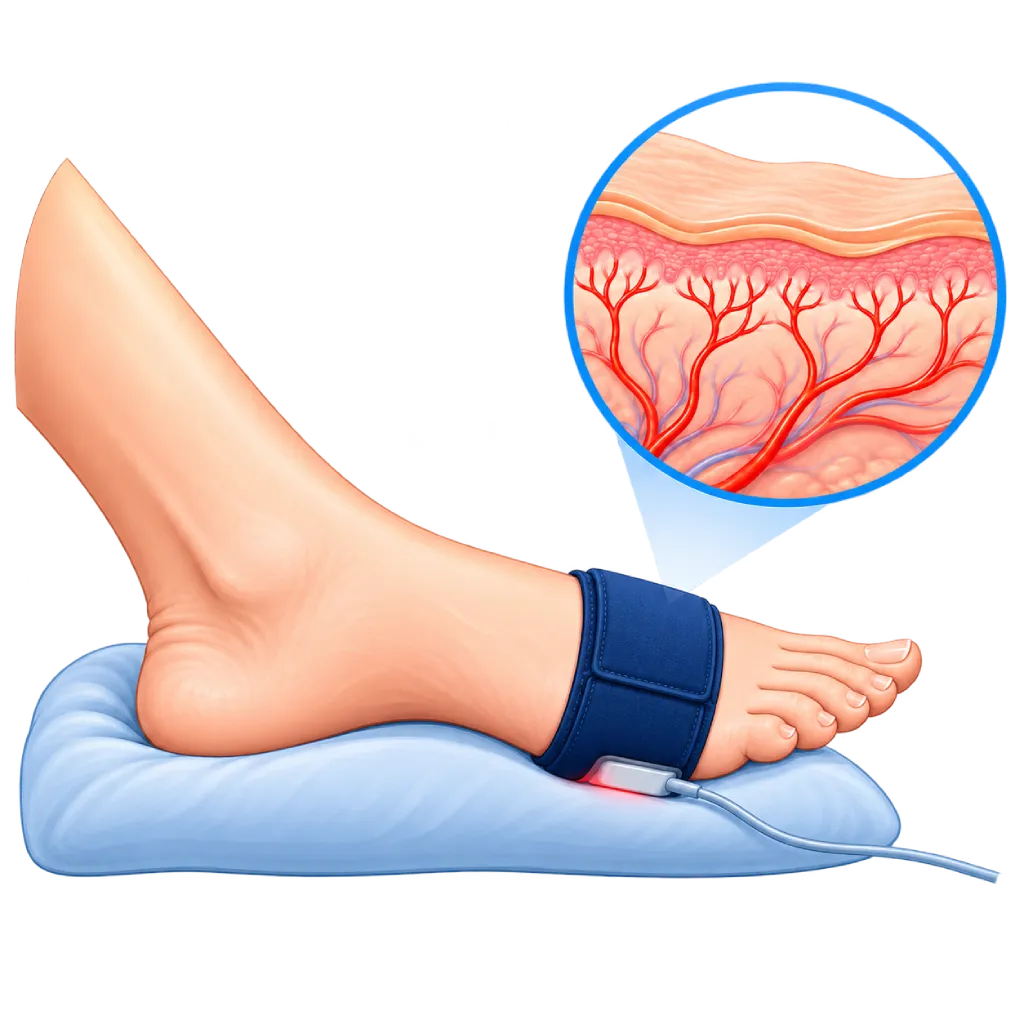
Skin perfusion pressure (SPP) is a needle-free test using a cuff and laser sensor to measure the pressure at which blood flows again in the small skin vessels. It helps the doctor assess whether a foot wound can heal, especially in diabetes or severe limb ischemia, and whether a procedure to restore blood flow is needed.
Sources01 / Understanding the procedure
About Skin Perfusion Pressure
What Is Skin Perfusion Pressure
A wound on the foot needs enough blood flow reaching the small blood vessels in the skin in order to heal. Skin perfusion pressure (SPP) measures the flow in these small vessels. This test complements tests that assess the large arteries, such as the ankle-brachial index (ABI) test, and is very helpful in people with diabetes or kidney disease, whose arteries are often stiff.
How It Works in Brief
A small laser sensor is placed on the skin of the foot, then a cuff is placed over it and inflated until blood flow in the skin stops. The cuff is slowly deflated, and the pressure at which blood flow is detected again is recorded as the SPP value in mmHg.
Reading the Results
- About 40 mmHg or higher: skin blood flow is generally adequate, and the chance of wound healing is better.
- 30 to 40 mmHg: blood flow is borderline, so the result is read together with other tests.
- Below 30 mmHg: skin blood flow is very poor, often indicating severe limb ischemia and the need for a procedure to restore blood flow.
These numbers are a general guide. The doctor reads the results together with the condition of the wound, other tests, and your overall condition.
SPP and Other Tests
SPP is often done together with an ABI test, a toe pressure measurement (TBI), pulse volume recording (PVR), or transcutaneous oxygen pressure. If the results show reduced blood flow, the doctor may continue with a duplex ultrasound or angiography to plan a procedure.
02 / Understanding the procedure
When Is This Procedure Considered?
A doctor may consider this procedure in the situations below. The decision is always made after a thorough assessment.
- Foot Wounds That Are Slow to HealTo assess whether blood flow to the skin around the wound is enough for healing.
- Foot Wounds in People with DiabetesStiff arteries in diabetes make the ABI test less reliable, so SPP helps complement it.
- Suspected Severe Limb IschemiaFor example foot pain at rest, pale or bluish skin, or tissue turning black.
- Determining the Amputation LevelIf amputation cannot be avoided, SPP helps estimate the level that is likely to heal well.
- Assessing the Results of a ProcedureAfter a balloon, stent, or bypass surgery, to see whether skin blood flow has improved.
Situations to Consider First
- Open Wound Exactly at the Sensor SiteThe sensor and cuff are placed on intact skin near the wound, not over the wound.
- Severe Foot SwellingFluid in the tissue can make the results less accurate, so they are read together with other tests.
- Widespread Foot InfectionInflammation can affect skin blood flow. The doctor decides the right time for the test.
- Severe Pain When the Cuff Is InflatedIn a foot with very poor blood flow, the cuff pressure can feel painful. Tell the staff.
- A Foot That Suddenly Turns Pale, Cold, and PainfulThis can signal a sudden blockage. Do not wait for your scheduled test; go to the emergency room right away.
03 / Before the procedure
How Should You Prepare?
An SPP test does not require special preparation, and you do not need to fast.
Smoking. Avoid smoking for a few hours before the test, because smoking temporarily narrows the small blood vessels.
Clothing. Wear loose clothing that is easy to roll up to the knee. Socks and bandages around the test area will be removed temporarily.
Keep your feet warm. Cold feet can lower the results. Arrive early and rest in the room for about 15 minutes before the test.
Medicines. Take your regular medicines as usual, unless your doctor gives other instructions.
Previous results. Bring the results of an ABI test, duplex ultrasound, or previous wound care records.
Unsure about the preparation instructions? Ask our team before the procedure.
04 / During the procedure
How Is the Procedure Done?
The test usually takes about 30 minutes, depending on the number of points measured.
Rest and Positioning
You lie on your back and rest so that blood flow is stable and your feet stay warm.
Placing the Sensor
A small laser sensor is attached to the skin of the foot, for example on the top or sole of the foot near the wound. A small cuff is then wrapped over the sensor.
Measuring the Pressure
The cuff is inflated until blood flow in the skin stops, then slowly deflated. The device records the pressure when blood flow returns. You need to stay still during the measurement.
Several Measurement Points
The measurement may be repeated at several sites, for example on both sides of the foot or around different wounds, to get a more complete picture.
Results
The SPP value is available right after the test and is explained together with other test results by the doctor treating you.
05 / Benefits and risks
Benefits and Risks Should Be Discussed Together.
Every medical procedure has benefits and risks. Your doctor will explain both for your situation before the procedure.
Benefits You Can Expect
- No Needles and No RadiationIt uses only a sensor and a cuff, so it is safe to repeat.
- Assessing the Chance of Wound HealingHelps estimate whether a foot wound can heal with the existing blood flow.
- Still Useful in Stiff ArteriesHelps when the ABI test is less reliable, for example in diabetes or chronic kidney disease.
- A Basis for Treatment DecisionsHelps the doctor decide whether a balloon, stent, or bypass surgery is needed to save the leg.
- Monitoring Treatment ResultsChanges in the SPP value show whether skin blood flow improves after a procedure.
The benefits of a procedure are not a promise of a cure. Ask how the results will affect your care plan.
Risks You Should Know
- Uncomfortable Cuff PressureEspecially in a foot with very poor blood flow. Tell the staff if it feels painful.
- Results Affected by Temperature and MovementA cold foot or movement during the measurement can change the results, so the measurement is sometimes repeated.
- Swelling or Infection Reducing AccuracyIn these situations, the results are read together with other tests.
- Does Not Show Where the Blockage IsSPP assesses flow in the skin, not the location of artery narrowing, so a duplex ultrasound or angiography may be needed.
- Mild Skin RednessMarks from the cuff or the sensor adhesive can make the skin red for a short time, especially in fragile skin.
Risks can differ from person to person. A full explanation and consent are given after an individual assessment.
06 / After the procedure
What Is Recovery Like?
There is no recovery period. You can return to your activities right away.
Skin and wounds. Marks from the cuff pressure may be visible briefly and go away on their own. Wound bandages are put back on according to the nurse's instructions.
Discussing the results. The doctor explains whether blood flow is enough for wound healing, or whether a procedure is needed to restore blood flow.
Foot care. Check your feet every day, keep them clean and dry, wear well-fitting footwear, and control your blood sugar if you have diabetes.
Warning signs. Go to the emergency room right away or contact the medical team if you experience:
- Sudden severe pain, paleness, coldness, or numbness in the foot
- A wound that gets worse, turns black, smells bad, or has pus
- Spreading redness and swelling with a fever
- Foot pain at rest that gets worse
Know the Signs That Need Prompt Care.
Follow the team's guidance on warning signs. If severe or sudden symptoms appear after the procedure, go to the nearest emergency department right away or call Heart Attack Center 1500 258.
07 / Team and support
Doctors and Procedure Support
The doctors below are listed for this procedure. Listed by name, not by ranking.

dr. Debby C. Soemitha, Sp.PD
Internal Medicine
Clinical focusDiabetes and Diabetes Complications · Obesity and Metabolic Disease
View Profile
dr. Emanoel Oepangat, Sp.JP(K)
Interventional Cardiology
Vascular Diagnostic and Therapeutic Center +1 center
Clinical focusCoronary Intervention · Peripheral Vascular Intervention
View Profile
dr. Suko Adiarto, Sp.JP(K), Ph.D.
Interventional Cardiology
Vascular Diagnostic and Therapeutic Center +1 center
Clinical focusCoronary Intervention · Peripheral Vascular Intervention
View Profile08 / Common questions
Before You Plan the Procedure.
Frequently asked questions about the skin perfusion pressure test. Your doctor will explain what the results mean for your situation.
What is the difference between SPP and the ABI test?
The ABI test compares the blood pressure at the ankle and the arm to assess the large arteries in the leg. SPP measures blood flow in the small vessels of the skin, where a wound needs blood to heal. SPP is very helpful when the arteries are stiff because of diabetes or kidney disease, because in these situations ABI results can be misleading.
Is the SPP test painful?
Usually not. You only feel the cuff tightening for a short time, similar to having your blood pressure measured. In a foot with very poor blood flow, the cuff pressure may feel painful briefly. Tell the staff if it hurts so the measurement can be adjusted or paused for a moment.
What does my SPP value mean?
As a general guide, a value of about 40 mmHg or higher shows skin blood flow that is generally enough for wound healing. A value below 30 mmHg shows very poor blood flow and often requires a procedure to restore blood flow. The doctor reads this number together with the condition of the wound and other tests.
Why do my feet need to be warm before the test?
When your feet are cold, the small blood vessels in the skin narrow, so blood flow appears lower than it actually is. That is why you are asked to rest in the room for a few minutes before the test. Also avoid smoking for a few hours beforehand, because smoking also narrows the small blood vessels.
What is the difference between SPP and transcutaneous oxygen pressure?
Both assess blood flow in the skin. SPP measures the pressure at which blood starts flowing again, using a laser sensor and a cuff. Transcutaneous oxygen pressure measures the amount of oxygen reaching the skin, using a warmed sensor. The doctor may use one or both to assess the chance of wound healing.
What happens if my SPP result is low?
A low value shows that the wound is likely to be difficult to heal without improving blood flow. The doctor usually continues with a duplex ultrasound or angiography to look for artery narrowing, then discusses procedures such as a balloon, stent, or bypass surgery. Wound care and blood sugar control continue at the same time.
Sources and Medical Review
Translated from the Indonesian edition medically reviewed by dr. Emanoel Oepangat, Sp.JP(K).
Sources as cited in the Indonesian edition.
- Fitridge R, Chuter V, Mills J, et al. The intersocietal IWGDF, ESVS, SVS guidelines on peripheral artery disease in people with diabetes and a foot ulcer. Diabetes Metab Res Rev. 2024;40(3):e3686.
- Conte MS, Bradbury AW, Kolh P, et al. Global vascular guidelines on the management of chronic limb-threatening ischemia. J Vasc Surg. 2019;69(6S):3S-125S.e40.
- Castronuovo JJ Jr, Adera HM, Smiell JM, et al. Skin perfusion pressure measurement is valuable in the diagnosis of critical limb ischemia. J Vasc Surg. 1997;26(4):629-637.
- Yamada T, Ohta T, Ishibashi H, et al. Clinical reliability and utility of skin perfusion pressure measurement in ischemic limbs: comparison with other noninvasive diagnostic methods. J Vasc Surg. 2008;47(2):318-323.
- Mazzolai L, Teixido-Tura G, Lanzi S, et al. 2024 ESC Guidelines for the management of peripheral arterial and aortic diseases. Eur Heart J. 2024;45(36):3538-3700.