
Quick answer
What Is Obstructive Sleep Apnea?
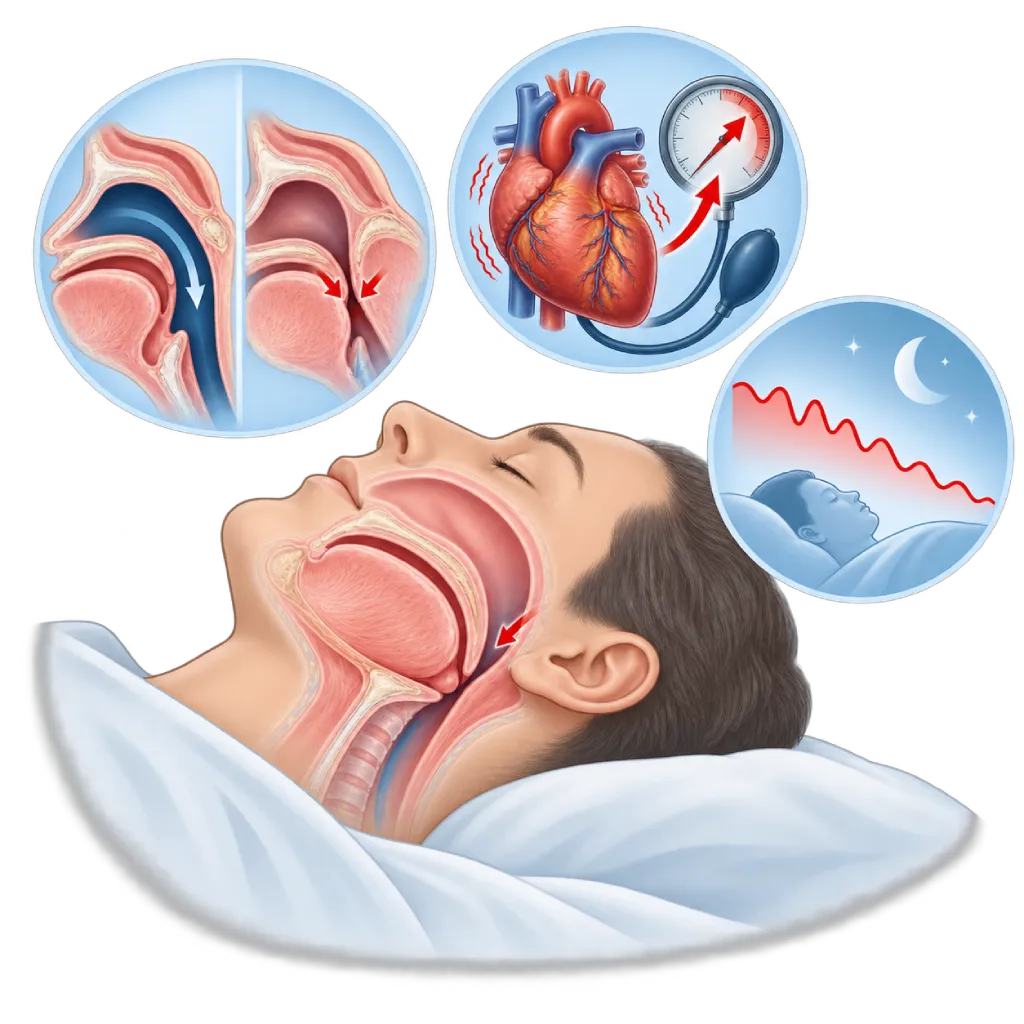
Obstructive sleep apnea is a sleep disorder in which the upper airway repeatedly narrows or closes, so breathing briefly stops. It leads to poor-quality sleep and puts a strain on the heart and blood vessels.
SourcesSigns That Need Urgent Help
- Falling asleep while driving or nearly having an accident
- Chest pain, especially when waking up at night
- An irregular heartbeat with dizziness or fainting
- Shortness of breath when lying down or leg swelling that is getting worse
- A drooping face, slurred speech, or weakness on one side of the body
If these signs appear, go to the nearest emergency department right away or call Heart Attack Center 1500 258.
01 / Understanding the condition
About Obstructive Sleep Apnea
During sleep, the muscles around the throat relax. In obstructive sleep apnea, the upper airway narrows or closes repeatedly, so breathing becomes shallow (hypopnea) or stops (apnea) for 10 seconds or longer. The brain then wakes you briefly, often without you noticing, so that breathing restarts. This cycle can happen dozens of times every hour, so sleep is broken up and oxygen levels rise and fall throughout the night.
Severity is measured with the apnea-hypopnea index (AHI), the number of pauses in breathing and episodes of shallow breathing per hour of sleep: 5 to less than 15 is mild, 15 to less than 30 is moderate, and 30 or more is severe. Many people do not know they have it. A bed partner is often the first person to notice the loud snoring and pauses in breathing.
Effects on the Heart and Blood Vessels
Each pause in breathing lowers oxygen, triggers a surge in the sympathetic nervous system, raises blood pressure, and causes sharp changes in pressure inside the chest. When this repeats every night for years, it is linked to high blood pressure, especially hypertension that is hard to control and blood pressure that stays high during sleep. Sleep apnea is also linked to atrial fibrillation, heart failure, coronary artery disease, and stroke. Hypertension that is hard to control is covered on the Resistant Hypertension page.
Effects on the Lungs and Daily Life
In some people, especially those with severe obesity or other lung diseases, repeated low oxygen levels can raise the pressure in the blood vessels of the lungs. During the day, broken sleep causes sleepiness, difficulty concentrating, and irritability. Sleepiness while driving increases the risk of accidents. In children, sleep apnea is often linked to enlarged tonsils and adenoids, and it can affect growth and learning.
Recognizable and Treatable
Obstructive sleep apnea can be confirmed with a sleep study and can be treated. Positive airway pressure therapy (CPAP), weight loss, oral appliances, and changes in sleep position help keep the airway open. Treatment used regularly improves sleepiness and quality of life, and can help lower blood pressure. That is why hypertension and atrial fibrillation guidelines include sleep apnea as a factor to look for and manage.
02 / Understanding the condition
Symptoms to Recognize.
Common Symptoms
- Loud snoring almost every night
- Pauses in breathing during sleep noticed by a partner
- Waking up choking or gasping
- Severe daytime sleepiness even after sleeping long enough
- Headache or dry mouth when waking up in the morning
- Often waking up at night to urinate
- Difficulty concentrating, forgetfulness, or irritability
Symptoms in Adult Women
In women, especially after menopause, symptoms are often less typical, so sleep apnea is recognized later.
- Trouble sleeping or waking up often
- Long-lasting tiredness that is more noticeable than sleepiness
- Morning headaches
- Low mood or getting anxious easily
Symptoms in Children
In children, sleep apnea is often linked to enlarged tonsils and adenoids, and the symptoms can differ from those in adults.
- Snoring almost every night
- Restless sleep or mouth breathing
- Bedwetting again after previously being dry
- Hyperactivity, difficulty focusing, or falling school performance
- Slowed growth or weight gain
03 / Understanding the condition
What Causes This Condition?
- Throat and tongue muscles relax during sleep, narrowing the airway
- Fat deposits in the neck and around the airway in people who are overweight
- Face and jaw shape, such as a small or set-back lower jaw
- Large tonsils, adenoids, or tongue, especially in children
- Long-term nasal congestion
- Alcohol, sedatives, or sleeping pills that make the throat muscles relax even more
04 / Understanding the condition
Who Is at Higher Risk?
Lifestyle
Being overweight, drinking alcohol close to bedtime, smoking, and using sedatives increase the risk and make sleep apnea worse.
Medical
High blood pressure, especially when hard to control, type 2 diabetes, atrial fibrillation, heart failure, stroke, hypothyroidism, and polycystic ovary syndrome often occur together with obstructive sleep apnea.
Age
The risk increases with age, and in women it increases after menopause.
Genetic
Face, jaw, and airway shapes that run in families can make the airway close more easily.
Other
Men are affected more often than women of childbearing age. A large neck circumference is also a risk marker.
Groups at Higher Risk
- People with Obesity: Fat in the neck and abdomen narrows the airway and reduces lung volume when lying down.
- People with Resistant Hypertension: Sleep apnea is common in this group, and hypertension guidelines recommend screening when symptoms are present.
- People with Atrial Fibrillation or Heart Failure: Sleep apnea can trigger arrhythmia recurrences and add strain to the heart, so it should be looked for when symptoms are present.
- Middle-Aged Men and Postmenopausal Women: Changes in hormones and fat distribution with age make the airway narrow more easily during sleep.
- People with Type 2 Diabetes: Sleep apnea often accompanies type 2 diabetes and can make blood sugar control harder.
05 / Understanding the condition
How Is It Diagnosed?
Your doctor starts with your symptoms and what your bed partner has noticed: snoring, pauses in breathing, choking during sleep, and daytime sleepiness. Questionnaires such as STOP-Bang and the Epworth Sleepiness Scale help estimate the likelihood of sleep apnea, but they cannot confirm it.
The diagnosis is confirmed with a sleep study. Polysomnography in a sleep laboratory records breathing, oxygen, brain waves, and heart rhythm throughout the night. For adults with suspected moderate to severe sleep apnea without serious lung, heart, or nerve disease, a home sleep test may be an option; if the result is negative or unclear, polysomnography is still recommended. The result is given as an AHI, which determines severity. Because sleep apnea is closely linked to the heart, your doctor may also check 24-hour blood pressure, an ECG or Holter, and echocardiography to assess its effects.
Physical Examination
Your doctor assesses your weight, neck circumference, blood pressure, jaw shape, tonsils, and nose, and uses questionnaires such as STOP-Bang and the Epworth Sleepiness Scale.
Polysomnography: an overnight sleep study in a sleep laboratory that records breathing, oxygen, brain waves, movement, and heart rhythm to calculate the AHI.
A home sleep test with a portable device that records breathing and oxygen, for adults with suspected moderate to severe sleep apnea without serious coexisting conditions.
Ambulatory Blood Pressure Monitoring
Measures blood pressure over 24 hours, including during sleep, to detect nighttime blood pressure that stays high.
Holter Monitoring
Records the heart rhythm to look for atrial fibrillation or a slow heartbeat during sleep.
Echocardiography
Assesses heart size and function and estimates the pressure in the blood vessels of the lungs if you have shortness of breath or swelling.
06 / Understanding the condition
Treatment Options.
Treatment is decided by a doctor after an assessment. The categories below can help you follow the conversation with your doctor.
Positive Airway Pressure Therapy (CPAP)
A mask that blows air at gentle pressure keeps the airway open. It is the main option for moderate to severe sleep apnea; its benefits depend on regular use every night.
Weight Loss
Losing weight can reduce the severity of sleep apnea. Your doctor can help with a nutrition program, physical activity, medicines, or bariatric surgery for certain people.
Jaw-Advancing Oral Appliance
A mouthguard-like device that holds the lower jaw slightly forward, an option for mild to moderate sleep apnea or when CPAP cannot be used.
Sleep Position Therapy
Helps people whose breathing pauses happen mainly when lying on their back get used to sleeping on their side.
Airway Surgery
Removal of the tonsils and adenoids in children, or nose, throat, and jaw surgery in certain adults, after evaluation by an ENT doctor.
Heart Risk Factor Control
Blood pressure, blood sugar, cholesterol, and heart rhythm are still managed with medicines as your doctor decides, alongside sleep apnea treatment.
07 / Understanding the condition
Complications to Watch For.
Hypertension and Resistant Hypertension
Repeated spikes in blood pressure during sleep can become persistent hypertension, including nighttime blood pressure that does not fall.
Atrial Fibrillation
Low oxygen and pressure changes inside the chest stretch the upper chambers of the heart, triggering the arrhythmia and its return after treatment.
Heart Failure
Repeated strain on the heart can worsen pump function, especially in people who already have heart disease.
Stroke and Coronary Artery Disease
Moderate to severe sleep apnea is linked to a higher risk of stroke and heart attack.
Sleepiness-Related Accidents
Severe daytime sleepiness increases the risk of traffic accidents and accidents at work.
Blood Sugar and Metabolic Problems
Broken sleep and low oxygen are linked to insulin resistance and difficulty controlling diabetes.
08 / Understanding the condition
What Can You Do?
- Keep a healthy weight and a waist circumference within the normal range
- Avoid alcohol and sedatives close to bedtime
- Quit smoking
- Get used to sleeping on your side if snoring gets worse when you lie on your back
- Treat long-term nasal congestion with your doctor
- Get enough sleep on a regular schedule
- Use CPAP every night once it has been prescribed, including when traveling
09 / Understanding the condition
When Should You See a Doctor?
Get checked if you snore loudly almost every night, your partner notices that you stop breathing during sleep, or you are often sleepy during the day even after sleeping long enough. Testing is also recommended if you have hypertension that is hard to control, atrial fibrillation, or heart failure together with snoring. A child who snores almost every night should be checked by a pediatrician.
Seek help right away if:
- You fall asleep while driving or nearly have an accident
- You have chest pain, an irregular heartbeat, or fainting
- You are short of breath when lying down or your leg swelling is getting worse
- Signs of a stroke appear, such as a drooping face or slurred speech
Don't Wait in an Emergency.
If symptoms are severe or come on suddenly, go to the nearest emergency department right away or call Heart Attack Center 1500 258, rather than waiting for an appointment.
10 / Common questions
Questions You May Have.
Frequently asked questions about obstructive sleep apnea and its link to the heart.
Does everyone who snores have sleep apnea?
No. Many people snore without pauses in breathing. Snoring is a warning sign when it is very loud, happens almost every night, comes with pauses in breathing or choking noticed by a partner, and is followed by daytime sleepiness. Being overweight, high blood pressure, and a large neck circumference make it more likely. Only a sleep study can confirm whether you have sleep apnea.
How is sleep apnea linked to high blood pressure?
Every time breathing stops, oxygen drops and the sympathetic nervous system triggers a spike in blood pressure. When this happens repeatedly every night, blood pressure can stay high, including during sleep. Sleep apnea is common in people with hypertension that is hard to control despite taking several medicines. Treating sleep apnea, especially with CPAP used regularly, can help lower blood pressure, although medicines are still needed.
Do I have to use CPAP for life?
CPAP works while it is being used and does not cure the narrowing of the airway, so most people use it long term. Your need for it can change if you lose a lot of weight, after certain surgeries, or if your sleep apnea improves on a repeat test. Do not stop CPAP on your own. Talk to your doctor if the mask feels uncomfortable, because the mask size and pressure can be adjusted.
Does CPAP prevent heart attacks and strokes?
Large studies have not proven that CPAP prevents heart attacks or strokes in everyone with sleep apnea. However, CPAP has been shown to reduce sleepiness and improve quality of life, and it can help lower blood pressure. Its benefits depend on regular use, usually at least four hours every night. Other heart risk factors still need to be managed with your doctor.
Can a sleep study be done at home?
Yes, for certain adults. A home sleep test uses a portable device that records breathing and oxygen levels. This approach is suitable when moderate to severe sleep apnea is suspected and there is no serious lung, heart, or nerve disease. If the result is negative or unclear, your doctor usually recommends polysomnography in a sleep laboratory to confirm the diagnosis.
Can children also have sleep apnea?
Yes. In children, a common cause is enlarged tonsils and adenoids, besides obesity. Symptoms include snoring almost every night, restless sleep, mouth breathing, bedwetting, and difficulty focusing or hyperactivity at school. If left untreated, sleep apnea can affect growth and learning. Talk to a pediatrician if your child snores regularly.
Sources and Medical Review
Translated from the Indonesian edition medically reviewed by dr. Debby C. Soemitha, Sp.PD.
Sources as cited in the Indonesian edition.
- Yeghiazarians Y, Jneid H, Tietjens JR, et al. Obstructive Sleep Apnea and Cardiovascular Disease: A Scientific Statement From the American Heart Association. Circulation. 2021;144(3):e56-e67.
- Kapur VK, Auckley DH, Chowdhuri S, et al. Clinical Practice Guideline for Diagnostic Testing for Adult Obstructive Sleep Apnea: An American Academy of Sleep Medicine Clinical Practice Guideline. J Clin Sleep Med. 2017;13(3):479-504.
- Patil SP, Ayappa IA, Caples SM, et al. Treatment of Adult Obstructive Sleep Apnea with Positive Airway Pressure: An American Academy of Sleep Medicine Clinical Practice Guideline. J Clin Sleep Med. 2019;15(2):335-343.
- Benjafield AV, Ayas NT, Eastwood PR, et al. Estimation of the global prevalence and burden of obstructive sleep apnoea: a literature-based analysis. Lancet Respir Med. 2019;7(8):687-698.
- Mancia G, Kreutz R, Brunstrom M, et al. 2023 ESH Guidelines for the management of arterial hypertension The Task Force for the management of arterial hypertension of the European Society of Hypertension. J Hypertens. 2023;41(12):1874-2071.
- Veasey SC, Rosen IM. Obstructive Sleep Apnea in Adults. N Engl J Med. 2019;380(15):1442-1449.
Doctors Who Treat This Condition

dr. Santi R. Dewayanti, Sp.P
Pulmonology
Clinical focusLung and Respiratory Disease · Asthma and COPD
View Profile
dr. Debby C. Soemitha, Sp.PD
Internal Medicine
Clinical focusDiabetes and Diabetes Complications · Obesity and Metabolic Disease
View Profile
dr. Siska S. Danny, Sp.JP(K)
Interventional Cardiology
Coronary Intervention Procedures
Clinical focusPCI for Acute Coronary Syndrome · Primary Coronary Intervention
View Profile