
Quick answer
What Is Skin Biopsy?
A skin biopsy is a procedure to remove a small piece of skin tissue under local anesthesia for examination under a microscope. Besides skin conditions, this biopsy helps confirm diseases that can affect the heart, such as sarcoidosis and vasculitis, because taking a sample from the skin is easier and safer than from the heart.
Sources01 / Understanding the procedure
About Skin Biopsy
What Is a Skin Biopsy
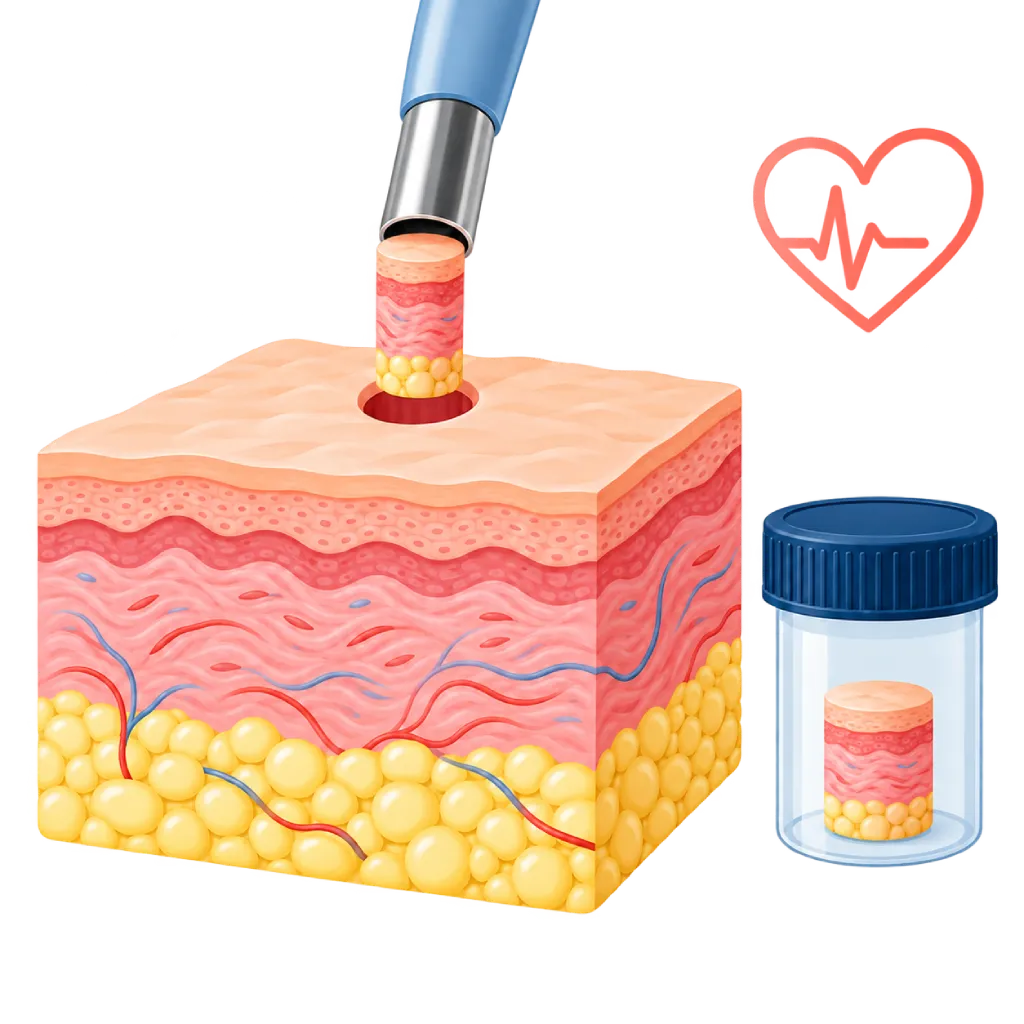
A skin biopsy is the removal of a small piece of skin tissue, usually 3 to 4 mm in size, after the area has been numbed with local anesthesia. The tissue is sent to the pathology laboratory to be examined under a microscope, and it is sometimes given special stains to look for protein deposits or inflammation in small blood vessels.
How It Works at a Glance
After the skin is cleaned and numbed, the doctor removes the tissue with a small tube-shaped cutting tool (punch), a thin blade (shave), or a small incision (excision). The small wound is then closed with one or two stitches or an adhesive strip. A pathologist examines the tissue, and the results are discussed by the doctor in charge of your care.
The Link with the Heart
Some diseases can affect the skin and the heart at the same time. Confirming the diagnosis from the skin helps the doctor plan heart tests and treatment without having to take a sample of heart muscle right away.
- Sarcoidosis: a biopsy of skin lumps or patches can confirm sarcoidosis, and then the heart is checked for involvement.
- Vasculitis: purple patches or lumps on the skin can indicate inflammation of the blood vessels.
- Lupus and scleroderma: a skin biopsy helps confirm autoimmune diseases that can affect the lining, muscle, or blood vessels of the heart.
- Amyloidosis: a small amount of fat under the skin of the abdomen is sometimes taken to look for amyloid deposits.
- Fabry disease: small reddish spots on the skin are sometimes biopsied, but the diagnosis is confirmed with enzyme and genetic tests.
Important Points for Heart Patients
Blood thinners are usually continued for a small skin biopsy, because bleeding can usually be stopped easily with pressure and stitches. If you have a pacemaker or an ICD, tell your doctor, because the electrical cautery device used to stop bleeding can interfere with how your device works.
02 / Understanding the procedure
When Is This Procedure Considered?
A doctor may consider this procedure in the situations below. The decision is always made after a thorough assessment.
- Unexplained Skin Lumps or PatchesTo identify the type of skin abnormality and decide on treatment.
- Suspected SarcoidosisThe skin is often an easily accessible site for confirming the diagnosis.
- Purple Patches or Sores from Suspected VasculitisTo look for inflammation of the small blood vessels in the skin.
- Suspected Lupus or SclerodermaHelps confirm autoimmune diseases that can also affect the heart.
- Suspected AmyloidosisFat under the skin of the abdomen can be examined to look for amyloid deposits.
- A Changing Mole or SoreTo rule out or confirm skin cancer.
Situations to Consider First
- Skin Infection at the Biopsy SiteThe biopsy is usually postponed or moved to another site.
- Severe Bleeding DisordersThese need to be assessed and controlled before the procedure.
- Allergy to Local AnestheticsThe doctor can choose a different type of anesthetic.
- History of KeloidsThe biopsy site is chosen carefully to reduce the risk of a thickened scar.
- Pacemaker or ICDNot a reason to avoid the biopsy, but the use of electrical cautery needs to be adjusted.
03 / Before the procedure
How Should You Prepare?
Preparation for a skin biopsy is simple.
Blood thinners. Do not stop aspirin, clopidogrel, warfarin, or other blood thinners without your doctor's guidance. These medicines are usually continued, but your doctor needs to know about them.
Heart devices. Tell your doctor if you have a pacemaker or an ICD.
Allergies. Let the team know if you are allergic to local anesthetics, adhesive tape, or latex.
Eating and drinking. No fasting is needed. Eat and drink as usual.
Skin and clothing. Do not apply cream or makeup to the area to be biopsied, and wear clothing that makes the area easy to uncover.
Unsure about the preparation instructions? Ask our team before the procedure.
04 / During the procedure
How Is the Procedure Done?
The procedure usually takes 15 to 30 minutes including preparation, and you can go home afterward.
Marking and Cleaning
The doctor chooses and marks an area that clearly represents the abnormality, then cleans the skin with an antiseptic solution.
Local Anesthesia
The anesthetic is injected under the skin. You will feel a brief sting, and then the area becomes numb.
Taking the Tissue
The doctor removes the tissue with a punch tool, a thin blade, or a small incision. You may feel pressure, but no pain.
Closing the Wound
Bleeding is stopped with pressure, and the wound is closed with stitches or an adhesive strip and covered with a bandage. The tissue is sent to the pathology laboratory.
05 / Benefits and risks
Benefits and Risks Should Be Discussed Together.
Every medical procedure has benefits and risks. Your doctor will explain both for your situation before the procedure.
Benefits You Can Expect
- Confirms the DiagnosisExamining the tissue gives a more certain answer than observation alone.
- Safer Than an Internal Organ BiopsyIn systemic diseases, a skin sample can replace a sample from the heart or lungs.
- A Short Procedure Under Local AnesthesiaDone without general anesthesia and without a hospital stay.
- Helps Plan TreatmentThe results guide the right choice of medicine and the heart tests that are needed.
- A Small ScarA biopsy wound is usually only a few millimeters.
The benefits of a procedure are not a promise of a cure. Ask how the results will affect your care plan.
Risks You Should Know
- BleedingUsually mild and stops with pressure; slightly more likely in people taking blood thinners.
- InfectionRare and can be prevented by keeping the wound clean.
- ScarringUsually small, but it can thicken in people prone to keloids.
- Pain or NumbnessMild and temporary around the wound.
- Skin Color ChangesThe biopsy site may look lighter or darker.
Risks can differ from person to person. A full explanation and consent are given after an individual assessment.
06 / After the procedure
What Is Recovery Like?
Recovery after a skin biopsy is usually quick, and you can return to light activities right away.
Wound care. Keep the bandage dry for 24 to 48 hours, then clean the wound gently as instructed.
Stitches. If you have stitches, they are usually removed within 7 to 14 days, depending on the location.
Activity. Avoid strenuous exercise or movements that pull on the wound for a few days.
Results. Pathology results are usually ready in about 1 week, or longer if special stains are needed.
Warning signs. Contact the medical team if you have:
- Bleeding that does not stop after 15 minutes of pressure
- Increasing redness, swelling, or pain
- Pus coming from the wound
- Fever
Know the Signs That Need Prompt Care.
Follow the team's guidance on warning signs. If severe or sudden symptoms appear after the procedure, go to the nearest emergency department right away or call Heart Attack Center 1500 258.
07 / Team and support
Doctors and Procedure Support
The doctors below are listed for this procedure. Listed by name, not by ranking.

dr. Debby C. Soemitha, Sp.PD
Internal Medicine
Clinical focusDiabetes and Diabetes Complications · Obesity and Metabolic Disease
View Profile
dr. Santi R. Dewayanti, Sp.P
Pulmonology
Clinical focusLung and Respiratory Disease · Asthma and COPD
View Profile
dr. Sunu B. Raharjo, Sp.JP(K), Ph.D.
Arrhythmia and Electrophysiology
Arrhythmia and Device Center
Clinical focusClinical and Interventional Electrophysiology · Cardiac Arrhythmia Ablation
View Profile08 / Common questions
Before You Plan the Procedure.
Frequently asked questions about skin biopsy. The location and type of biopsy are decided by your doctor based on your condition.
Does a skin biopsy hurt?
Pain mainly occurs when the anesthetic is injected, as a brief sting or burning feeling. Once the anesthetic takes effect, you usually only feel pressure while the tissue is taken. After the anesthetic wears off, the wound may feel slightly sore for one to two days, which can usually be managed with a mild pain reliever.
Do I need to stop taking my blood thinner?
Usually not. For a small skin biopsy, medicines such as aspirin, clopidogrel, or warfarin are usually continued because bleeding is easy to stop. Stopping your medicine without guidance can increase the risk of heart attack or stroke. Still, tell your doctor about all the medicines you take so your preparation is right.
Why would a heart doctor request a skin biopsy?
Some diseases, such as sarcoidosis, vasculitis, lupus, and amyloidosis, can affect the skin and the heart at the same time. If there is an abnormality in the skin, taking a sample from the skin is much simpler and safer than taking a sample of heart muscle. The results help your doctor confirm the diagnosis and plan heart tests.
How long does it take to get skin biopsy results?
Results are usually ready in about 1 week. If the tissue needs special stains, for example to look for amyloid or blood vessel inflammation, the results may take longer. Your doctor will schedule a follow-up visit to discuss the results, the need for heart tests, and the next steps with you.
Does a skin biopsy leave a scar?
It usually leaves only a small scar a few millimeters long that fades over time. In people prone to keloids, the scar can thicken, so the doctor chooses the location carefully. Caring for the wound as instructed and protecting it from the sun help the scar become less noticeable.
Can I have a skin biopsy if I have a pacemaker?
Yes. A skin biopsy can still be done, but tell your doctor beforehand. The electrical cautery device sometimes used to stop bleeding can interfere with a pacemaker or ICD, so your doctor may choose another method, such as pressure and stitches, or adjust how the cautery device is used.
Sources and Medical Review
Translated from the Indonesian edition medically reviewed by dr. Debby C. Soemitha, Sp.PD.
Sources as cited in the Indonesian edition.
- Alguire PC, Mathes BM. Skin biopsy techniques for the internist. J Gen Intern Med. 1998;13(1):46-54.
- Birnie DH, Sauer WH, Bogun F, et al. HRS expert consensus statement on the diagnosis and management of arrhythmias associated with cardiac sarcoidosis. Heart Rhythm. 2014;11(7):1304-1323.
- Kittleson MM, Ruberg FL, Ambardekar AV, et al. 2023 ACC Expert Consensus Decision Pathway on Comprehensive Multidisciplinary Care for the Patient With Cardiac Amyloidosis. J Am Coll Cardiol. 2023;81(11):1076-1126.
- Carlson JA. The histological assessment of cutaneous vasculitis. Histopathology. 2010;56(1):3-23.
- Otley CC. Continuation of medically necessary aspirin and warfarin during cutaneous surgery. Mayo Clin Proc. 2003;78(11):1392-1396.