
Quick answer
What Is Chronic Obstructive Pulmonary Disease?
Chronic obstructive pulmonary disease (COPD) is a long-term lung disease that makes it hard for air to flow out of the lungs, and the blockage does not fully go away. COPD often occurs together with heart disease and can be controlled with regular treatment.
SourcesSigns That Need Urgent Help
- Severe shortness of breath at rest or difficulty speaking
- Bluish lips or fingertips
- Confusion, extreme sleepiness, or being hard to wake
- Reliever medicine not helping as it usually does
- Chest pain, a very fast heartbeat, or fainting
- Leg swelling that increases quickly, with shortness of breath
If these signs appear, go to the nearest emergency department right away or call Heart Attack Center 1500 258.
01 / Understanding the condition
About Chronic Obstructive Pulmonary Disease
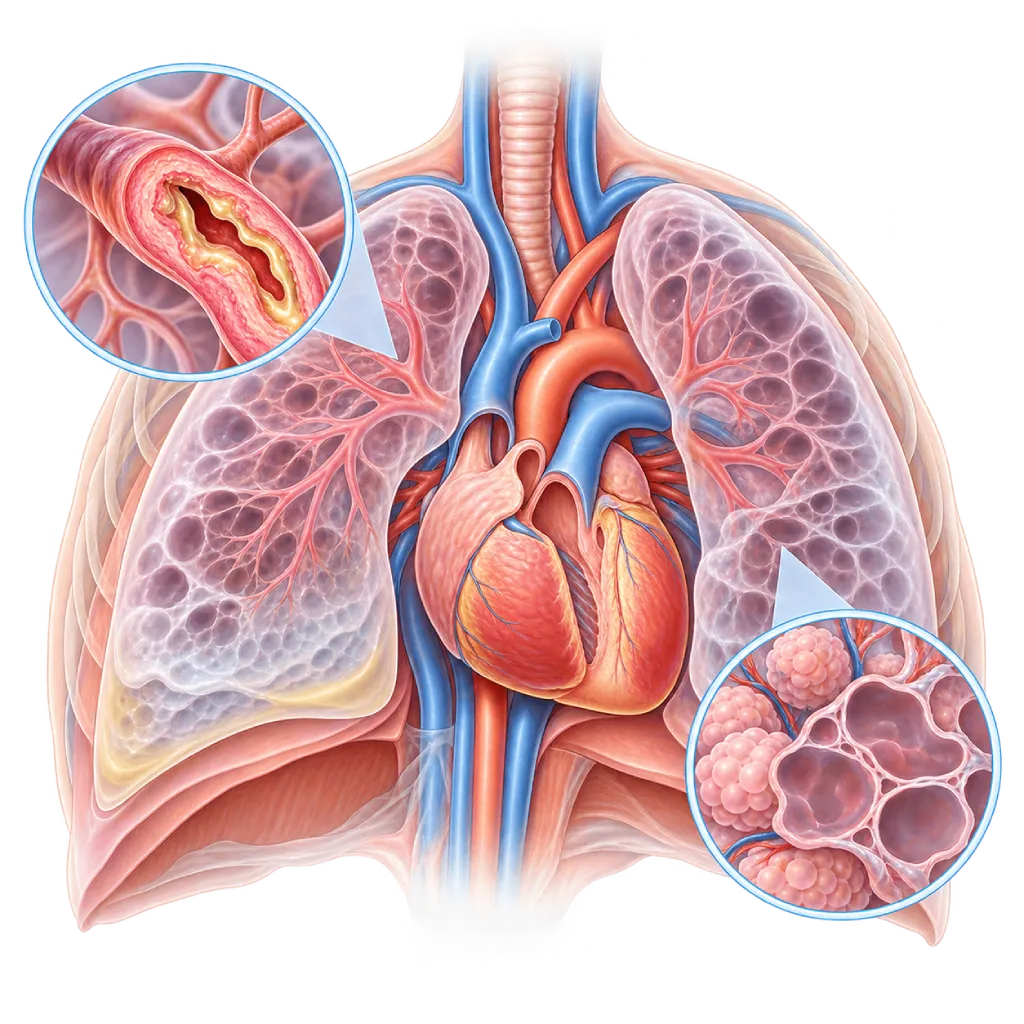
Chronic obstructive pulmonary disease (COPD) is a long-term lung disease that makes it hard for air to flow out of the lungs. The small airways narrow and become inflamed, known as chronic bronchitis, and the walls of the air sacs are damaged so the lungs lose their elasticity, known as emphysema. The two often occur together. This airflow obstruction is permanent, but the symptoms and course of the disease can be controlled. The main cause is cigarette smoke, followed by smoke from cooking with firewood, air pollution, dust and fumes at work, and impaired lung growth from early childhood.
COPD and the Heart
COPD and heart disease are often found together. They share risk factors such as smoking and age, and the long-term inflammation in COPD also damages blood vessels. Low oxygen levels make the blood vessels in the lungs narrow, so pressure in the lungs rises and the right side of the heart is strained, covered on the Cor Pulmonale page. Overinflated lungs also press on the heart and reduce its filling. Because shortness of breath from COPD resembles shortness of breath from heart failure, one of them is often missed. Research shows that the risk of heart attack, heart rhythm problems, and heart failure rises in the weeks after a COPD flare-up.
Flare-Ups or Exacerbations
A flare-up is a period when shortness of breath, cough, and phlegm get worse over less than two weeks, usually triggered by a respiratory infection or air pollution. Flare-ups need prompt treatment, and some require a hospital stay. Each flare-up can reduce lung function, so preventing them is a main goal of treatment. A written action plan from your doctor helps you recognize the signs of a flare-up early and know when to contact your doctor or go to the emergency room.
Long-Term Treatment
Quitting smoking brings major benefits for the lungs and heart at any stage. Long-acting inhaled medicines that open the airways (bronchodilators) are the basis of treatment, and your doctor checks how you use your inhaler at every visit. Pulmonary rehabilitation, vaccination, and long-term oxygen for people whose oxygen levels are very low complete the treatment. The GOLD guidelines emphasize that accompanying heart disease should still be treated according to its own guidelines, because COPD is not a reason to delay heart medicines that are needed.
02 / Understanding the condition
Symptoms to Recognize.
Common Symptoms
- Shortness of breath that first appears during activity and gradually worsens over months to years
- Long-lasting cough, often worse in the morning
- Phlegm almost every day
- Wheezing or a heavy feeling in the chest
- Tiring easily and a reduced ability to be active
- Respiratory infections that are more frequent and take longer to clear up
- Weight loss and muscle wasting in later stages
03 / Understanding the condition
What Causes This Condition?
- Long-term smoking, including clove cigarettes (kretek), and exposure to other people's cigarette smoke
- Smoke from cooking with firewood, charcoal, or other solid fuels in poorly ventilated spaces
- Dust, chemical vapors, and fumes at work inhaled over many years
- Outdoor air pollution, especially fine particles from vehicles and industry
- Impaired lung growth before birth or in childhood, including severe respiratory infections at an early age
- Past pulmonary tuberculosis, or asthma that has been uncontrolled for a long time
- Alpha-1 antitrypsin deficiency, a rare inherited condition
04 / Understanding the condition
Who Is at Higher Risk?
Lifestyle
Smoking, with a risk that rises as the amount and duration increase, and exposure to cigarette smoke at home. Physical inactivity speeds up the loss of physical capacity.
Medical
Long-standing asthma, past pulmonary tuberculosis, severe respiratory infections in childhood, and low birth weight.
Genetic
Alpha-1 antitrypsin deficiency and a family history of COPD, especially when symptoms appear at a young age.
Age
Symptoms usually appear after age 40, because lung damage builds up gradually over years of exposure.
Other
Smoke from cooking with firewood, dust from mining, cement, or textiles, or chemicals at work, and living in an area with high air pollution.
Groups at Higher Risk
- Current and Former Smokers: Years of smoking are the main cause of COPD. If you are over 40 and have a cough or shortness of breath, ask for a spirometry test.
- People with Heart Disease: Shortness of breath in people with heart disease sometimes comes from COPD that has not been recognized. Spirometry helps, especially if you have ever smoked.
- Workers Exposed to Dust and Fumes: Long-term exposure to dust from mining, cement, or textiles and to chemical fumes at work damages the airways.
- Families Who Cook with Firewood: Smoke from firewood or charcoal in an enclosed kitchen is an important cause of COPD, especially in people who cook every day.
- Pulmonary Tuberculosis Survivors: Past tuberculosis can leave permanent airway damage, so shortness of breath after recovery should be checked with spirometry.
05 / Understanding the condition
How Is It Diagnosed?
Your doctor suspects COPD if you have shortness of breath, a long-lasting cough, or phlegm, especially if you are over 40 and have been exposed to cigarette smoke, cooking smoke, or workplace dust. The diagnosis is confirmed with spirometry after you inhale a reliever medicine: an FEV1/FVC ratio below 0.7 indicates persistent airflow obstruction. The severity of the obstruction is assessed from the FEV1 value, while the severity of symptoms and the history of flare-ups determine the treatment group according to GOLD.
A chest X-ray helps rule out other causes of shortness of breath, and a chest CT scan is used in certain situations, for example to assess emphysema or to screen for lung cancer in heavy smokers. A blood eosinophil count helps weigh the benefit of inhaled corticosteroids. Because shortness of breath from COPD is easily confused with shortness of breath caused by the heart, the doctor checks the heart with an ECG, echocardiography, and an NT-proBNP test if heart failure, coronary artery disease, a heart rhythm problem, or high lung pressure is suspected. Oxygen levels are measured to assess the need for oxygen at home. A one-time test of the alpha-1 antitrypsin level is recommended, especially if COPD appears at a young age.
Lung Function Test (Spirometry)
The main test to confirm COPD: an FEV1/FVC ratio below 0.7 after a reliever medicine indicates persistent airflow obstruction.
Chest X-Ray
Rules out other causes of shortness of breath such as pneumonia, tumors, or fluid, and shows overinflated lungs.
Complete Blood Count (CBC)
A blood eosinophil count helps the doctor weigh the benefit of inhaled corticosteroids in patients who have frequent flare-ups.
Electrocardiogram (ECG)
Looks for rhythm problems such as atrial fibrillation, signs of an old heart attack, or strain on the right side of the heart.
Echocardiography
Assesses the pumping of the left and right sides of the heart and estimates lung pressure, especially when shortness of breath is out of proportion to the spirometry results.
NT-proBNP and BNP Test
Helps identify accompanying heart failure, because its shortness of breath is easily confused with shortness of breath from COPD.
Oximetry and blood gas analysis: measure oxygen and carbon dioxide levels to assess the need for long-term oxygen.
06 / Understanding the condition
Treatment Options.
Treatment is decided by a doctor after an assessment. The categories below can help you follow the conversation with your doctor.
Quitting Smoking
Counseling together with stop-smoking medicine chosen by your doctor. This step slows lung damage and lowers heart risk. Covered on the Lifestyle Counseling and Risk Management page.
Inhaled Bronchodilators
Long-acting bronchodilators of the LAMA or LABA type, or a combination of both, are the basis of treatment. Your doctor chooses the type of inhaler and checks how you use it at every visit.
Inhaled Corticosteroids for Selected Patients
Added for people who have frequent flare-ups and a high blood eosinophil level. The doctor weighs the benefit against the risk of pneumonia and may choose other add-on medicines.
Pulmonary Rehabilitation
A program of supervised exercise, breathing techniques, and education over several weeks. It reduces shortness of breath and hospital stays, and is recommended after a hospital stay for a flare-up.
Vaccination
Influenza, pneumococcal, and COVID-19 vaccines, and other vaccines such as RSV or pertussis as recommended by your doctor, to prevent infections that trigger flare-ups.
Long-Term Oxygen
For people with COPD who have very low blood oxygen levels at rest. How many hours to use it each day is decided by the doctor.
Treating Accompanying Heart Disease
Heart failure, coronary disease, and heart rhythm problems are treated according to their guidelines. Cardioselective beta blockers can usually still be used. Covered on the Integrated Medication Therapy page.
07 / Understanding the condition
Complications to Watch For.
Flare-Ups or Exacerbations
A period when shortness of breath, cough, and phlegm get worse in less than two weeks. A severe flare-up can require a hospital stay and reduce lung function.
Heart Events After a Flare-Up
The risk of heart attack, heart rhythm problems, and heart failure rises in the weeks after a COPD flare-up, especially after a flare-up that requires a hospital stay.
Pulmonary Hypertension and Cor Pulmonale
Long-term low oxygen levels raise the pressure in the lungs and strain the right side of the heart, so the legs may swell. Covered on the Cor Pulmonale page.
Heart Rhythm Disorders
Atrial fibrillation and other fast rhythms are more common in COPD, especially during a flare-up or when oxygen levels are low. Covered on the Atrial Fibrillation page.
Chronic Respiratory Failure
In advanced stages, oxygen levels stay low or carbon dioxide builds up, so oxygen at home or a breathing support device is needed.
Lung Cancer
People with COPD, especially smokers, have a higher risk of lung cancer. Your doctor may recommend screening with low-dose CT.
Muscle Weakness and Bone Loss
Inactivity, inflammation, and certain medicines cause muscle wasting and brittle bones, so it is important to keep up exercise and adequate nutrition.
08 / Understanding the condition
What Can You Do?
- Do not smoke; if you smoke, ask your doctor for help quitting, because the benefits come at any age.
- Keep your home free of cigarette smoke and smoke from cooking with firewood, and make sure the kitchen is well ventilated.
- Wear a suitable protective mask if you work in a dusty or smoky environment.
- Limit outdoor activity when air pollution is high and check the air quality index.
- Keep up with influenza, pneumococcal, and COVID-19 vaccines as recommended by your doctor.
- Get a spirometry test if you are a smoker or former smoker over 40 with a cough or shortness of breath.
- If you already have COPD, use your inhaler as scheduled and ask your doctor to check how you use it.
09 / Understanding the condition
When Should You See a Doctor?
See a doctor if you are over 40, smoke or used to smoke, or are often exposed to smoke and dust, and you have a long-lasting cough with phlegm or shortness of breath during activity. If you have already been diagnosed with COPD, contact your doctor when your symptoms change, and go to the emergency room right away if you have severe shortness of breath.
- Shortness of breath when climbing stairs or walking fast that is getting worse
- Coughing up phlegm almost every day for months
- Phlegm that changes color or increases in amount, with a fever
- Needing your reliever medicine more often than usual
- Leg swelling, chest pain, or a pounding heartbeat
- Severe shortness of breath, bluish lips, or confusion: go straight to the emergency room
Don't Wait in an Emergency.
If symptoms are severe or come on suddenly, go to the nearest emergency department right away or call Heart Attack Center 1500 258, rather than waiting for an appointment.
10 / Common questions
Questions You May Have.
Frequently asked questions about COPD and its link to the heart.
Is COPD the same as asthma?
No, although both make the airways narrow. Asthma usually starts at a young age, its symptoms come and go, and the airflow obstruction can return to normal with medicine. COPD usually appears after age 40 in people with long-term smoke exposure, its symptoms persist, and the airflow obstruction does not fully recover. Some people have features of both. Spirometry and your symptom history help the doctor tell them apart and choose suitable medicines.
Can COPD be cured?
Lung damage in COPD cannot return to how it was, but the disease can be controlled. Quitting smoking slows the decline in lung function. Regular inhaled medicines, pulmonary rehabilitation, and vaccination reduce shortness of breath and flare-ups, so many people with COPD can keep working and staying active. Regular checkups help your doctor adjust medicines when symptoms change and spot accompanying conditions, including heart disease, early.
Why does a cardiologist also examine people with COPD?
Because COPD and heart disease often occur together and have similar symptoms. Shortness of breath and tiring easily can come from the lungs, the heart, or both. COPD can also raise the pressure in the lungs and strain the right side of the heart. In addition, the risk of heart attack and heart rhythm problems rises in the weeks after a COPD flare-up. An ECG, echocardiography, and an NT-proBNP test help make sure the heart is also treated if it is affected.
Are heart medicines such as beta blockers safe for people with COPD?
Cardioselective beta blockers, the type that acts mainly on the heart, can usually still be used by people with COPD who have a heart-related reason, such as heart failure or a past heart attack. The GOLD and ESC guidelines do not consider COPD a reason to stop this medicine. Your doctor chooses the type of medicine and monitors your breathing symptoms. Do not stop or change your heart medicines on your own, and tell your doctor if your shortness of breath gets worse after starting the medicine.
Is exercise safe if I get short of breath from COPD?
Yes, it is safe and recommended when done gradually. Inactivity actually weakens the muscles, so shortness of breath comes on more easily. Pulmonary rehabilitation combines supervised exercise, breathing techniques, and education, and has been shown to reduce shortness of breath and improve the ability to be active. The ATS 2023 guideline recommends pulmonary rehabilitation, including starting it within a few weeks after leaving the hospital for a flare-up. If you also have heart disease, ask your doctor about safe exercise limits.
Is quitting smoking still worthwhile if I already have COPD?
Yes, very much so, at any age and stage of the disease. Quitting smoking slows the decline in lung function, reduces coughing and flare-ups, and lowers the risk of heart attack, stroke, and lung cancer. Many people need several attempts before they succeed. Combining counseling with stop-smoking medicine chosen by your doctor improves the chance of success. Also stay away from other people's cigarette smoke and cooking smoke at home.
Sources and Medical Review
Translated from the Indonesian edition medically reviewed by dr. Santi R. Dewayanti, Sp.P.
Sources as cited in the Indonesian edition.
- Agustí A, Celli BR, Criner GJ, Halpin D, Anzueto A, Barnes P, et al. Global Initiative for Chronic Obstructive Lung Disease 2023 Report: GOLD Executive Summary. Eur Respir J. 2023;61(4):2300239.
- Kostikas K, Hillas G, Gogali A. 2025 GOLD Report: What is New and What is Noteworthy for the Practicing Clinician. COPD. 2025;22(1):2451613.
- Rabe KF, Hurst JR, Suissa S. Cardiovascular disease and COPD: dangerous liaisons? Eur Respir Rev. 2018;27(149):180057.
- Kunisaki KM, Dransfield MT, Anderson JA, Brook RD, Calverley PMA, Celli BR, et al. Exacerbations of Chronic Obstructive Pulmonary Disease and Cardiac Events. A Post Hoc Cohort Analysis from the SUMMIT Randomized Clinical Trial. Am J Respir Crit Care Med. 2018;198(1):51-7.
- Graul EL, Nordon C, Rhodes K, Marshall J, Menon S, Kallis C, et al. Temporal Risk of Nonfatal Cardiovascular Events After Chronic Obstructive Pulmonary Disease Exacerbation: A Population-based Study. Am J Respir Crit Care Med. 2024;209(8):960-72.
- Celli BR, Fabbri LM, Aaron SD, Agusti A, Brook R, Criner GJ, et al. An Updated Definition and Severity Classification of Chronic Obstructive Pulmonary Disease Exacerbations: The Rome Proposal. Am J Respir Crit Care Med. 2021;204(11):1251-8.
- Rochester CL, Alison JA, Carlin B, Jenkins AR, Cox NS, Bauldoff G, et al. Pulmonary Rehabilitation for Adults with Chronic Respiratory Disease: An Official American Thoracic Society Clinical Practice Guideline. Am J Respir Crit Care Med. 2023;208(4):e7-26.
Doctors Who Treat This Condition

dr. Santi R. Dewayanti, Sp.P
Pulmonology
Clinical focusLung and Respiratory Disease · Asthma and COPD
View Profile
Dr. med. dr. Denio A. Ridjab, Sp.JP(K)
Interventional Cardiology
Coronary Intervention Procedures +2 centers
Clinical focusInterventional Cardiology · Coronary Artery Disease
View Profile
dr. Debby C. Soemitha, Sp.PD
Internal Medicine
Clinical focusDiabetes and Diabetes Complications · Obesity and Metabolic Disease
View Profile