
Quick answer
What Is Chronic Heart Failure?
Chronic heart failure is heart failure that lasts a long time, with symptoms that are relatively stable thanks to treatment. It is managed with regular medicines, self-care at home, rehabilitation, and regular follow-up visits to prevent flare-ups.
SourcesSigns That Need Urgent Help
- Severe shortness of breath at rest or being unable to lie down
- Frothy white or pink phlegm
- Chest pain that does not go away with rest
- Fainting or nearly fainting
- Sudden confusion or extreme drowsiness
- Rapidly increasing swelling with severe shortness of breath and very little urine
If these signs appear, go to the nearest emergency department right away or call Heart Attack Center 1500 258.
01 / Understanding the condition
About Chronic Heart Failure
Chronic heart failure is a long-term condition in which the heart can no longer pump or fill with blood as the body needs, but the symptoms are relatively stable with treatment. The majority of people with heart failure live with this chronic form and continue their daily activities, with occasional episodes of worsening that are covered on the Acute Heart Failure page.
Chronic heart failure is still classified by ejection fraction, the percentage of blood pumped out of the left ventricle with each beat: reduced, mid-range or mildly reduced, and preserved. The type determines the choice of medicines, while the recommended daily routine is basically similar. The cause is also still looked for and treated, because coronary artery disease, hypertension, valve disease, or rhythm disorders that are under control can make heart failure more stable. In some people, pumping function even improves after the cause is treated.
Measuring How Severe Symptoms Are
Doctors use the NYHA class to describe how severe the complaints are. Class I means no complaints during ordinary activity. Class II means shortness of breath or fatigue during ordinary activity, such as climbing stairs. Class III means complaints appear with light activity, and class IV means complaints are present even at rest. The class can go up or down with treatment, so it helps assess progress.
Your Role in Your Care
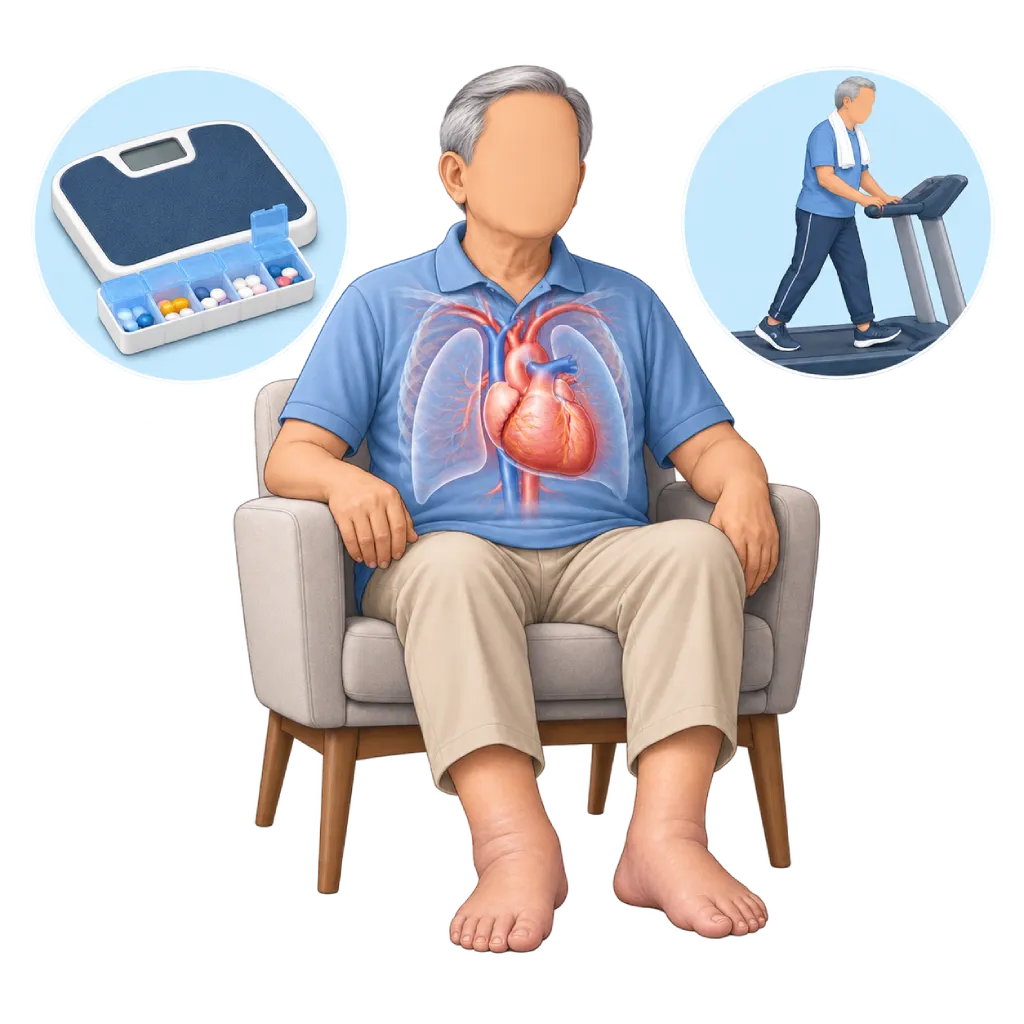
Self-care is a key part of treatment. ESC guidelines recommend that patients understand their medicines, weigh themselves every day, limit salt, stay active, and recognize signs of worsening early. The guidelines also recommend a care program run by a team of doctors, nurses, and other health professionals, because it has been shown to reduce hospital admissions. Family members who also understand the care plan are very helpful, especially for older adults. A daily record of body weight, blood pressure, and complaints also makes it easier for your doctor to adjust your medicines at follow-up visits.
When Symptoms Get Worse
In some people, heart failure keeps progressing even with complete treatment. This is called advanced heart failure. The team will discuss options such as a mechanical heart pump, a heart transplant, or palliative care that focuses on comfort and quality of life. Palliative care can be given alongside other treatments and is not only for the end of life.
02 / Understanding the condition
Symptoms to Recognize.
Common Symptoms
- Shortness of breath during everyday activities
- Tiring easily and a reduced ability to be active
- Ankle swelling that increases toward evening
- Needing more pillows to breathe comfortably when sleeping
- A dry cough that gets worse when lying down
- Frequent urination at night
- Reduced appetite and a feeling of fullness in the stomach
Symptoms in Older Adults
In older adults, worsening sometimes shows up as changes in behavior or independence.
- Increasing confusion or forgetfulness
- Sleeping or lying down more
- Weight loss due to muscle wasting
- Falling easily or being unable to walk far
- Not wanting to eat
03 / Understanding the condition
What Causes This Condition?
- Coronary artery disease and a previous heart attack
- Hypertension that has gone uncontrolled for a long time
- Cardiomyopathy, including types that run in families
- Heart valve disease
- Heart rhythm disorders, especially atrial fibrillation
- Diabetes and obesity that strain the heart over the long term
- Excessive alcohol, certain cancer treatments, or past inflammation of the heart muscle
04 / Understanding the condition
Who Is at Higher Risk?
Medical
Hypertension, diabetes, coronary artery disease, chronic kidney disease, atrial fibrillation, anemia, and iron deficiency make chronic heart failure worse.
Lifestyle
High salt intake, alcohol, smoking, lack of physical activity, and not taking medicines regularly are preventable causes of flare-ups.
Age
Heart failure is much more common in older age. According to the 2021 ESC guidelines, about 10% or more of people over age 70 have it.
Genetic
Inherited cardiomyopathy can underlie chronic heart failure at a young age; close relatives are advised to have screening.
Groups at Higher Risk
- Patients After a Heart Failure Hospital Stay: The first months after going home are a vulnerable period for flare-ups; early follow-up and medicine adjustments help prevent them.
- Older Adults Who Live Alone: It is harder for them to recognize signs of worsening and manage medicines; support from family or a nurse is very helpful.
- People with Chronic Kidney Disease: The kidneys and heart affect each other, so fluid balance and potassium need closer monitoring.
- People with Diabetes: Diabetes speeds up damage to the heart and blood vessels, so doctors choose medicines that protect both.
05 / Understanding the condition
How Is It Diagnosed?
Diagnosing chronic heart failure follows the same steps as heart failure in general: an assessment of complaints, a physical examination, an ECG, an NT-proBNP or BNP test, and echocardiography to determine the type by ejection fraction. The doctor also looks for the cause, for example with coronary angiography or cardiac MRI.
After diagnosis, regular tests are used for monitoring. Blood tests for kidney function and potassium are checked after a medicine is started or its dose is increased. Iron levels are checked regularly because iron deficiency is common and treatable. Echocardiography is repeated if symptoms change or to help decide on device implantation. For people with an implanted device, data from the device can be monitored remotely. A six-minute walk test or a cardiopulmonary exercise test helps assess physical capacity.
Echocardiography
Determines the type by ejection fraction, then is repeated if symptoms change or to help decide on device implantation.
NT-proBNP and BNP Test
Monitors the course of the disease; a rise from your usual level can be a sign of worsening.
Laboratory Tests
Kidney function, potassium, sodium, complete blood count, and iron status to monitor medicine safety and coexisting conditions.
Electrocardiogram (ECG)
Monitors heart rhythm, heart rate, and QRS width to assess the need for a device.
Remote Heart Monitoring
For people with an ICD or CRT, rhythm and device data can be monitored from home between follow-up visits.
Six-minute walk test: measures the distance you can walk in six minutes to assess physical capacity and progress in rehabilitation.
06 / Understanding the condition
Treatment Options.
Treatment is decided by a doctor after an assessment. The categories below can help you follow the conversation with your doctor.
Medicines Based on the Type of Heart Failure
Four main classes of medicines for reduced ejection fraction, SGLT2 inhibitors for all types, and diuretics for excess fluid. The doctor adjusts the combination and doses gradually.
Heart Failure Care Program
A team of doctors, nurses, and other health professionals provides education, monitoring, and medicine adjustments. Guidelines recommend it to reduce hospital admissions and deaths.
Cardiac Rehabilitation
Supervised exercise improves your ability to be active and your quality of life, and reduces hospital admissions.
Iron Therapy
If you are iron deficient, iron given by IV improves symptoms and can reduce hospital admissions in reduced and mildly reduced ejection fraction.
Implanted Devices
An ICD or resynchronization therapy (CRT) for patients with a low ejection fraction who meet the criteria.
Vaccination
Influenza and pneumococcal vaccines are recommended to reduce the risk of infections that can trigger worsening.
Advanced Heart Failure Care
A mechanical heart pump (LVAD), a heart transplant, or palliative care for those who still have severe symptoms despite complete treatment.
07 / Understanding the condition
Complications to Watch For.
Acute Worsening
Symptoms can worsen quickly and require hospital care, which is covered on the Acute Heart Failure page.
Heart Rhythm Disorders
Atrial fibrillation and dangerous ventricular rhythms occur more often; some patients with a low ejection fraction need an ICD.
Kidney Function and Electrolyte Problems
The disease and its medicines can affect the kidneys, potassium, and sodium, so routine blood tests are needed.
Iron Deficiency and Anemia
These are common, worsen fatigue and shortness of breath, and can be corrected with intravenous iron based on your doctor's assessment.
Muscle and Weight Loss
In advanced heart failure, muscles waste away and the body becomes weaker; adequate nutrition and exercise help.
Depression and Anxiety
Living with a long-term illness can affect your mood. Tell your doctor, because these conditions can be treated.
08 / Understanding the condition
What Can You Do?
- Weigh yourself every morning after urinating and before eating.
- Contact your doctor if your weight goes up by 2 kg or more in 3 days.
- Take your medicines on schedule; use a weekly pill organizer if needed.
- Limit salt and follow a fluid limit if your doctor recommends one.
- Stay physically active and follow a cardiac rehabilitation program.
- Avoid smoking and limit alcohol as your doctor advises.
- Ask your doctor before using NSAID pain relievers, herbal remedies, or supplements.
- Get influenza and pneumococcal vaccines as your doctor recommends.
09 / Understanding the condition
When Should You See a Doctor?
Attend your follow-up visits as scheduled even when you feel well, because medicine doses often need to be adjusted step by step. Contact your doctor or heart failure care team sooner if any of the following occur.
- Your weight goes up by 2 kg or more in 3 days.
- Shortness of breath or swelling increases, or you need more pillows.
- You feel dizzy or weak, or you pass much less urine, after a change in medicines.
- You have a fever, diarrhea, or vomiting, because your diuretic dose may need adjusting.
- Go to the emergency room right away if you have severe shortness of breath at rest, chest pain, or fainting.
Don't Wait in an Emergency.
If symptoms are severe or come on suddenly, go to the nearest emergency department right away or call Heart Attack Center 1500 258, rather than waiting for an appointment.
10 / Common questions
Questions You May Have.
Frequently asked questions about living with chronic heart failure.
Do I have to take medicines for life?
For most people, yes. Heart failure medicines do not only relieve symptoms, they also protect the heart from getting worse. Even when the ejection fraction improves, the TRED-HF study showed that pumping function can drop again if the medicines are stopped. The number and doses of medicines can change over time, but every change should be decided together with your doctor.
Why do I need to weigh myself every day?
Weight gain over a few days usually comes from fluid, not fat, and often appears before shortness of breath is felt. By weighing yourself every morning at the same time and under the same conditions, you can recognize fluid buildup earlier. If your weight goes up by 2 kg or more in 3 days, contact your doctor, because adjusting medicines early can prevent a hospital stay.
Which foods and drinks should I limit?
Limit salt to no more than 5 grams per day, about one teaspoon, including the salt in soy sauce, other sauces, processed foods, instant foods, and salty snacks. Limit alcohol, and stop it completely if your doctor finds that alcohol is contributing to the cause. Not everyone needs to limit fluids; follow your doctor's advice. If your appetite drops or your weight keeps falling, consult a clinical nutrition specialist.
Can I travel or fly?
Generally yes, if your condition is stable. Carry enough medicine in your cabin bag along with a list of your medicines, keep taking them on schedule, including when crossing time zones, and watch your salt and fluid intake at your destination. On long flights, move your legs often and walk around briefly. If your symptoms have recently worsened or you have just come home from the hospital, ask your doctor first.
What is palliative care, and does it mean giving up?
No. Palliative care focuses on comfort: easing shortness of breath, pain, and anxiety, and helping you and your family make decisions that match your values and hopes. Guidelines recommend it for advanced heart failure, and this care can be given alongside heart treatment. Many patients feel a better quality of life with this support.
Sources and Medical Review
Translated from the Indonesian edition medically reviewed by dr. Siska S. Danny, Sp.JP(K).
Sources as cited in the Indonesian edition.
- McDonagh TA, Metra M, Adamo M, Gardner RS, Baumbach A, Böhm M, et al. 2021 ESC Guidelines for the diagnosis and treatment of acute and chronic heart failure. Eur Heart J. 2021;42(36):3599-3726.
- McDonagh TA, Metra M, Adamo M, Gardner RS, Baumbach A, Böhm M, et al. 2023 Focused Update of the 2021 ESC Guidelines for the diagnosis and treatment of acute and chronic heart failure. Eur Heart J. 2023;44(37):3627-3639.
- Heidenreich PA, Bozkurt B, Aguilar D, Allen LA, Byun JJ, Colvin MM, et al. 2022 AHA/ACC/HFSA Guideline for the Management of Heart Failure: A Report of the American College of Cardiology/American Heart Association Joint Committee on Clinical Practice Guidelines. Circulation. 2022;145(18):e895-e1032.
- Jaarsma T, Hill L, Bayes-Genis A, La Rocca HPB, Castiello T, Čelutkienė J, et al. Self-care of heart failure patients: practical management recommendations from the Heart Failure Association of the European Society of Cardiology. Eur J Heart Fail. 2021;23(1):157-174.
- Taylor RS, Long L, Mordi IR, Madsen MT, Davies EJ, Dalal H, et al. Exercise-based rehabilitation for heart failure: Cochrane systematic review, meta-analysis, and trial sequential analysis. JACC Heart Fail. 2019;7(8):691-705.
- Halliday BP, Wassall R, Lota AS, Khalique Z, Gregson J, Newsome S, et al. Withdrawal of pharmacological treatment for heart failure in patients with recovered dilated cardiomyopathy (TRED-HF): an open-label, pilot, randomised trial. Lancet. 2019;393(10166):61-73.
- Crespo-Leiro MG, Metra M, Lund LH, Milicic D, Costanzo MR, Filippatos G, et al. Advanced heart failure: a position statement of the Heart Failure Association of the European Society of Cardiology. Eur J Heart Fail. 2018;20(11):1505-1535.
Doctors Who Treat This Condition

dr. Siska S. Danny, Sp.JP(K)
Interventional Cardiology
Coronary Intervention Procedures
Clinical focusPCI for Acute Coronary Syndrome · Primary Coronary Intervention
View Profile
dr. Ayu Amalia U. Putri, Sp.KFR
Physical Medicine & Rehabilitation
Clinical focusCardiac Rehabilitation · Postoperative Rehabilitation
View Profile
dr. Juweni Joe, Sp.GK
Clinical Nutrition
Clinical focusMedical Nutrition Intervention · Nutrition for Cardiovascular Patients
View Profile