
Quick answer
What Is Heart Failure with Preserved Ejection Fraction?
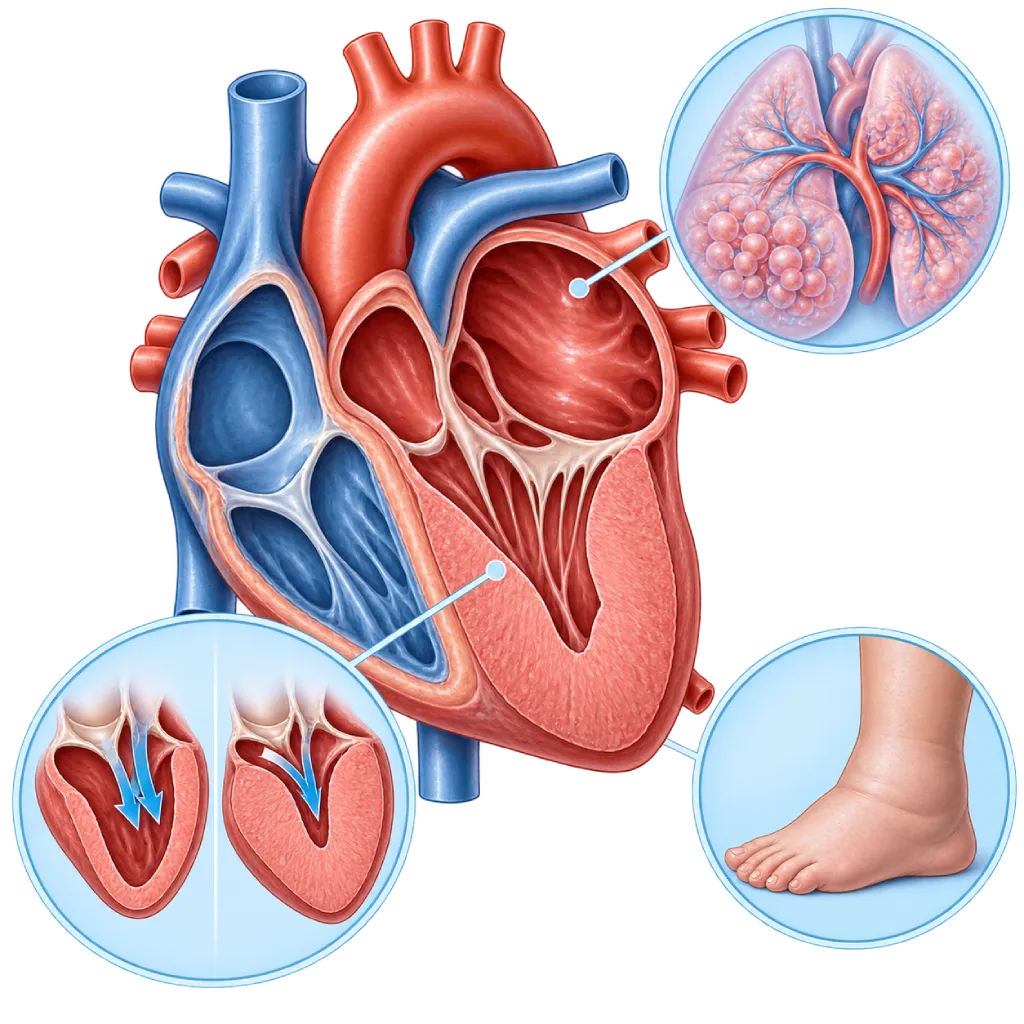
Heart failure with preserved ejection fraction is heart failure with an ejection fraction of 50% or more: the pumping strength looks normal, but the left ventricle is stiff, so it has trouble filling with blood and the pressure inside the heart rises.
SourcesSigns That Need Urgent Help
- Severe shortness of breath at rest or being unable to lie down
- Frothy white or pink sputum
- Sudden shortness of breath with very high blood pressure
- Chest pain that does not go away with rest
- Fainting, confusion, or extreme sleepiness
- A very fast and irregular heartbeat with shortness of breath
If these signs appear, go to the nearest emergency department right away or call Heart Attack Center 1500 258.
01 / Understanding the condition
About Heart Failure with Preserved Ejection Fraction
Heart failure with preserved ejection fraction, known internationally as HFpEF, is heart failure with a left ventricular ejection fraction of 50% or more. Ejection fraction is the percentage of blood in the left ventricle that is pumped out with each heartbeat. In this type the number is normal, but the muscle of the left ventricle is stiff and does not stretch easily as it fills with blood.
Because it is hard to fill, the pressure inside the heart rises, especially during activity, when the heart has to fill faster. That pressure is passed back to the blood vessels of the lungs, causing shortness of breath. This is why the main complaints in this type are shortness of breath and tiring quickly when moving, while at rest you may feel fine.
Who Gets It
This type accounts for about half of all heart failure cases and is more common in older adults and women. It usually comes with other conditions: hypertension, obesity, diabetes, atrial fibrillation, chronic kidney disease, and sleep apnea. These coexisting conditions trigger inflammation and stiffness in the heart muscle and blood vessels. For this reason, this type is seen as a whole-body disease, not just a heart disease. Each person may have a different mix of coexisting conditions, so the treatment plan is tailored accordingly.
Why It Is Often Recognized Late
Because the ejection fraction result is normal, symptoms are often blamed on age, body weight, or lung disease. Tests at rest may also look almost normal, because the pressure inside the heart only rises clearly during activity. Diagnosis requires additional evidence from echocardiography and an NT-proBNP test, and sometimes a stress test or right heart catheterization. Doctors also look for specific causes that mimic this type, such as amyloidosis and hypertrophic cardiomyopathy, because their treatment is different. Amyloidosis is covered on the Cardiac Amyloidosis page.
Treatment Approach
The 2023 ESC guideline update recommends SGLT2 inhibitors because they reduce hospitalizations for heart failure. Diuretics relieve fluid congestion. Other equally important parts are controlling blood pressure, treating atrial fibrillation, losing weight if you are overweight, and regular physical exercise, which has been shown to improve exercise capacity and quality of life. Treating this type is a joint effort between cardiologists and the doctors who manage the coexisting conditions.
02 / Understanding the condition
Symptoms to Recognize.
Common Symptoms
- Shortness of breath when walking, climbing stairs, or carrying loads
- Tiring quickly and a reduced ability to be active
- Shortness of breath when lying down, or waking at night short of breath
- Swelling in the ankles and legs
- Rapid weight gain from fluid buildup
- Palpitations, often due to atrial fibrillation
Symptoms in Older Adults
Symptoms are often mistaken for signs of aging or the result of being inactive.
- Breathlessness during light activities such as bathing or getting dressed
- Weakness and spending more time sitting or lying down
- Leg swelling that is dismissed as normal
- Reduced appetite
- Frequent urination at night
03 / Understanding the condition
What Causes This Condition?
- Long-standing hypertension that makes the left ventricular muscle thick and stiff
- Obesity and diabetes, which trigger inflammation and stiffness of the heart muscle
- Aging, which makes the heart and blood vessels less flexible
- Atrial fibrillation, which interferes with filling of the heart
- Coronary artery disease
- Chronic kidney disease, which adds fluid and strain on the heart
- Narrowing of the aortic valve or other valve disease
- Specific causes such as cardiac amyloidosis or hypertrophic cardiomyopathy
04 / Understanding the condition
Who Is at Higher Risk?
Age
Risk rises sharply after age 65. Most people with this type are older adults.
Medical
Hypertension, obesity, diabetes, atrial fibrillation, chronic kidney disease, sleep apnea, and anemia often occur together and make each other worse.
Lifestyle
Physical inactivity, excess weight, and high-salt foods increase blood pressure and stiffness of the heart.
Other
Women develop this type more often than men, especially after menopause.
Groups at Higher Risk
- Older Adults with Hypertension: The combination of age and long-standing high blood pressure is a common background for this type.
- People with Obesity and Diabetes: Excess body fat and high blood sugar trigger inflammation that makes the heart stiff.
- Postmenopausal Women: Women develop this type more often, and their risk increases after menopause.
- People with Atrial Fibrillation: An irregular rhythm interferes with filling of the heart, and the two conditions often occur together.
05 / Understanding the condition
How Is It Diagnosed?
Doctors look for three things: symptoms or signs of heart failure, an ejection fraction of 50% or more, and evidence that the filling pressure of the heart is raised. This evidence comes from echocardiography, for example an enlarged left atrium, thickened ventricular walls, or an impaired filling pattern, and from high levels of NT-proBNP or BNP. In people with obesity, NT-proBNP levels can be lower, so they need to be interpreted with care.
If the results at rest are not clear, your doctor may recommend a stress echocardiogram or right heart catheterization to measure the pressure directly. Scores such as H2FPEF and HFA-PEFF help weigh the likelihood. Doctors also rule out other causes of shortness of breath, such as lung disease, anemia, and coronary disease, and look for specific causes such as amyloidosis with cardiac MRI or bone scintigraphy.
Echocardiography
Confirms an ejection fraction of 50% or more and looks for signs of high filling pressure: an enlarged left atrium, thickened walls, and an impaired ventricular filling pattern.
NT-proBNP and BNP Test
High levels support the diagnosis. Levels can be lower in obesity, and higher in atrial fibrillation or kidney disease.
Stress Echocardiography
Assesses filling pressure while the heart is under stress, useful when the results at rest are not convincing.
Right Heart Catheterization
Measures the pressure in the heart and lungs directly, at rest and during exercise, when the diagnosis is still uncertain.
Cardiac MRI
Looks for specific causes such as amyloidosis, hypertrophic cardiomyopathy, or inflammation of the heart muscle.
Bone Scintigraphy (Bone Scan)
Helps detect transthyretin amyloidosis in older adults with thickened heart walls.
Electrocardiogram (ECG)
Looks for atrial fibrillation, thickening of the heart muscle, and signs of other causes.
06 / Understanding the condition
Treatment Options.
Treatment is decided by a doctor after an assessment. The categories below can help you follow the conversation with your doctor.
SGLT2 Inhibitors
Recommended by the 2023 ESC guideline update based on the EMPEROR-Preserved and DELIVER trials, to reduce hospitalizations for heart failure.
Diuretics
Relieve shortness of breath and swelling caused by excess fluid. The dose is adjusted by your doctor to avoid dehydration.
Blood Pressure Control
Reduces the strain on the heart and its stiffness. Your doctor chooses the class of medicine based on your coexisting conditions.
Atrial Fibrillation Treatment
Rhythm or rate control, plus blood thinners to prevent stroke based on a risk assessment.
Weight Loss
In obesity, weight loss improves symptoms and exercise capacity. Your doctor may discuss options for diet, activity, and weight-loss medicines.
Supervised Exercise Training
Cardiac rehabilitation improves exercise capacity and quality of life in this type.
Treating Specific Causes
If amyloidosis, hypertrophic cardiomyopathy, or valve disease is found, treatment follows that condition.
07 / Understanding the condition
Complications to Watch For.
Repeated Hospital Stays
Worsening is often triggered by high blood pressure, atrial fibrillation, infection, or too much salt, covered on the Acute Heart Failure page.
Pulmonary Hypertension
High pressure in the left side of the heart is passed on to the lung vessels, straining the right side of the heart, covered on the Pulmonary Hypertension page.
Atrial Fibrillation and Stroke
An enlarged left atrium makes atrial fibrillation more likely, which worsens shortness of breath and increases the risk of stroke.
Declining Physical Ability
Shortness of breath and fatigue reduce activity, weaken the muscles, and reduce independence in older adults if not balanced with exercise.
Impaired Kidney Function
The heart and kidneys affect each other; declining kidney function worsens fluid buildup and makes adjusting medicines harder.
08 / Understanding the condition
What Can You Do?
- Control your blood pressure according to your doctor's target.
- Maintain a healthy weight, and lose weight gradually if you are overweight.
- Manage diabetes and have your kidney function checked regularly.
- Stay active every day, for example by walking.
- Limit salt and processed foods.
- Get checked if you snore loudly and often stop breathing during sleep.
- Take your medicines as prescribed and attend regular checkups.
09 / Understanding the condition
When Should You See a Doctor?
Many people think shortness of breath during activity is just a sign of age or lack of exercise. See a cardiologist if this symptom is new or getting worse, especially if you have hypertension, diabetes, obesity, or atrial fibrillation. If you have already been diagnosed, contact your doctor early if any of the following occurs.
- Your weight goes up by 2 kg or more in 3 days.
- Shortness of breath or swelling is worse than usual.
- Your heart beats irregularly.
- Your blood pressure at home is often well above target.
- Go to the emergency room right away if you have severe shortness of breath at rest, chest pain, or fainting.
Don't Wait in an Emergency.
If symptoms are severe or come on suddenly, go to the nearest emergency department right away or call Heart Attack Center 1500 258, rather than waiting for an appointment.
10 / Common questions
Questions You May Have.
Frequently asked questions about heart failure with preserved ejection fraction.
My ejection fraction is normal, so why is it called heart failure?
Ejection fraction only measures pumping strength. In this type, the problem is with filling: the muscle of the left ventricle is stiff, so the pressure inside the heart rises, especially during activity. That pressure causes shortness of breath and fluid buildup, as in other types of heart failure. The diagnosis is made from a combination of symptoms, echocardiography, and NT-proBNP, not from the ejection fraction number alone.
Is this type milder than heart failure with reduced ejection fraction?
Not always. People with this type are also often hospitalized for worsening symptoms, and many have several coexisting conditions at once. That is why treatment is not only for the heart but also for blood pressure, weight, blood sugar, the kidneys, and heart rhythm. With good control, many people can stay active and independent.
What medicines are used for this type?
The 2023 ESC guideline update and the 2022 AHA/ACC/HFSA guideline recommend SGLT2 inhibitors to reduce hospitalizations for heart failure. Diuretics are used when there is excess fluid. Beyond that, medicines are chosen for the coexisting conditions: blood pressure, atrial fibrillation, diabetes, and obesity. Research on other medicines for this type is ongoing, so your doctor will match the choice to the evidence and your situation.
Does losing weight help?
Yes, for people with obesity. Research shows that weight loss, whether through diet, physical exercise, or certain weight-loss medicines, improves shortness of breath, walking ability, and quality of life. Weight loss should be gradual and supervised by a doctor, especially if you take diuretics or diabetes medicines, because their doses may need to be adjusted.
Why does the doctor check for amyloidosis?
Transthyretin amyloidosis, a buildup of protein in the heart muscle, is found in some older adults with this type of heart failure, especially when the heart walls are thickened without severe hypertension. The symptoms are similar, but the treatment is different and specific medicines are now available for it. So if there are clues, your doctor may recommend bone scintigraphy, cardiac MRI, and certain blood tests.
Can I exercise?
Yes, and it is recommended. Regular physical exercise, especially endurance training such as walking or stationary cycling, improves exercise capacity and quality of life in this type. Start at a light intensity and increase it gradually. A cardiac rehabilitation program helps determine a safe amount of exercise. Stop exercising and contact your doctor if you have chest pain, severe dizziness, or shortness of breath that does not improve with rest.
Sources and Medical Review
Translated from the Indonesian edition medically reviewed by dr. Sri Diniharini, Sp.JP(K).
Sources as cited in the Indonesian edition.
- McDonagh TA, Metra M, Adamo M, Gardner RS, Baumbach A, Böhm M, et al. 2021 ESC Guidelines for the diagnosis and treatment of acute and chronic heart failure. Eur Heart J. 2021;42(36):3599-3726.
- McDonagh TA, Metra M, Adamo M, Gardner RS, Baumbach A, Böhm M, et al. 2023 Focused Update of the 2021 ESC Guidelines for the diagnosis and treatment of acute and chronic heart failure. Eur Heart J. 2023;44(37):3627-3639.
- Heidenreich PA, Bozkurt B, Aguilar D, Allen LA, Byun JJ, Colvin MM, et al. 2022 AHA/ACC/HFSA Guideline for the Management of Heart Failure: A Report of the American College of Cardiology/American Heart Association Joint Committee on Clinical Practice Guidelines. Circulation. 2022;145(18):e895-e1032.
- Pieske B, Tschöpe C, de Boer RA, Fraser AG, Anker SD, Donal E, et al. How to diagnose heart failure with preserved ejection fraction: the HFA-PEFF diagnostic algorithm: a consensus recommendation from the Heart Failure Association (HFA) of the European Society of Cardiology (ESC). Eur Heart J. 2019;40(40):3297-3317.
- Anker SD, Butler J, Filippatos G, Ferreira JP, Bocchi E, Böhm M, et al. Empagliflozin in heart failure with a preserved ejection fraction. N Engl J Med. 2021;385(16):1451-1461.
- Kittleson MM, Panjrath GS, Amancherla K, Davis LL, Deswal A, Dixon DL, et al. 2023 ACC Expert Consensus Decision Pathway on Management of Heart Failure with Preserved Ejection Fraction: A Report of the American College of Cardiology Solution Set Oversight Committee. J Am Coll Cardiol. 2023;81(18):1835-1878.
- Redfield MM, Borlaug BA. Heart failure with preserved ejection fraction: a review. JAMA. 2023;329(10):827-838.
Doctors Who Treat This Condition

dr. Siska S. Danny, Sp.JP(K)
Interventional Cardiology
Coronary Intervention Procedures
Clinical focusPCI for Acute Coronary Syndrome · Primary Coronary Intervention
View Profile
dr. Sri Diniharini, Sp.JP(K)
Echocardiography & Cardiovascular Imaging
Cardiovascular Diagnostic Center +1 center
Clinical focusAdvanced Echocardiography · Transesophageal Echocardiography
View Profile
dr. Debby C. Soemitha, Sp.PD
Internal Medicine
Clinical focusDiabetes and Diabetes Complications · Obesity and Metabolic Disease
View Profile