
Quick answer
What Is Heart-Related Fatigue?
Heart-related fatigue is tiredness or tiring easily linked to how the heart and blood vessels work, for example in heart failure or coronary artery disease. Fatigue also often comes from causes outside the heart, so the cause needs to be checked.
SourcesSigns That Need Urgent Help
- Chest pain or pressure lasting more than a few minutes
- Severe shortness of breath at rest or being unable to lie down
- Fainting or nearly fainting
- A very fast heartbeat with dizziness or severe weakness
- Weakness on one side of the body, a lopsided face, or slurred speech
- Sudden weakness with a cold sweat and nausea
If these signs appear, go to the nearest emergency department right away or call Heart Attack Center 1500 258.
01 / Understanding the condition
About Heart-Related Fatigue
Heart-related fatigue is a term for feeling tired, weak, or worn out quickly because the heart and blood vessels cannot deliver enough blood to meet the body's needs, especially during activity. Fatigue is not a diagnosis but a symptom that can have many causes. This page helps you recognize when tiredness should be checked by a doctor, without replacing a medical examination.
Features of Heart-Related Fatigue
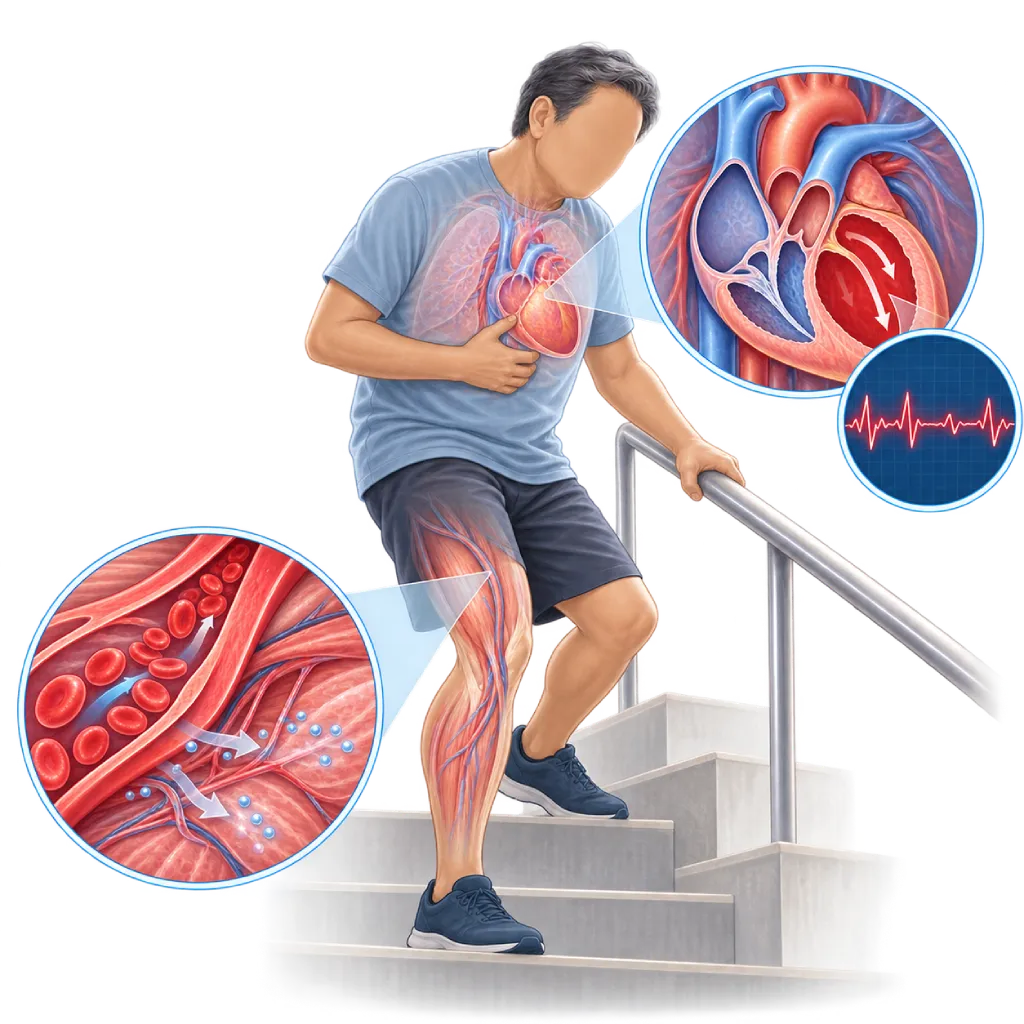
Heart-related fatigue usually appears or gets worse during activity, such as climbing stairs, walking, or carrying groceries, and often comes with shortness of breath, palpitations, or swollen legs. Your ability to be active declines gradually compared with a few months earlier. In heart failure, fatigue often comes with shortness of breath when lying down and rapid weight gain from fluid retention; this is covered on the Heart Failure page. In coronary artery disease, especially in women, older adults, and people with diabetes, fatigue or shortness of breath during activity can be a sign of reduced blood flow to the heart muscle, even without chest pain. Sudden, unusual fatigue with a cold sweat or nausea can be a sign of a heart attack and needs urgent help.
Causes Inside and Outside the Heart
Heart-related causes include heart failure, coronary artery disease, valve disease, rhythm disorders that are too slow, too fast, or irregular, and cardiomyopathy. Certain heart medicines, such as beta blockers or diuretics, can also make you feel weak; do not stop them on your own, and talk to your doctor. Outside the heart, fatigue often comes from a low blood count (anemia), thyroid disorders, diabetes, kidney disease, sleep disorders such as sleep apnea, infection, depression, or anxiety. Sometimes several causes occur together.
Why the Cause Needs to Be Found
Tiredness is very common and often improves with enough sleep and a healthy lifestyle. However, new fatigue that lasts more than a few weeks, or that comes with heart symptoms, should be checked. Recognizing the cause early allows the right treatment, such as heart failure medicines that improve exercise capacity, treatment of iron deficiency, or management of rhythm disorders. Shortness of breath that comes with fatigue is covered on the Shortness of Breath page.
02 / Understanding the condition
Symptoms to Recognize.
Common Symptoms
Symptoms that often come with heart-related fatigue.
- Tiring quickly during activities that used to feel easy
- Shortness of breath when climbing stairs or walking
- Shortness of breath when lying down, needing extra pillows
- Swelling in the legs or ankles
- Palpitations, or a heartbeat that feels too fast, too slow, or irregular
- Dizziness or seeing spots during activity
- Rapid weight gain over a few days
Symptoms in Adult Women
In women, coronary artery disease more often appears with atypical symptoms.
- Unusual fatigue for several days or weeks
- Shortness of breath without obvious chest pain
- Trouble sleeping and feeling weak
- Nausea, a cold sweat, or discomfort in the back or jaw
Symptoms in Older Adults
In older adults, heart symptoms are often vague and easily put down to age.
- Gradually declining ability to walk
- Feeling sleepy or weak more often
- Confusion or difficulty concentrating
- Reduced appetite
- Falls or nearly fainting
03 / Understanding the condition
What Causes This Condition?
- Heart failure, when the heart's pumping or filling cannot meet the body's needs
- Coronary artery disease that reduces blood flow to the heart muscle during activity
- Rhythm disorders, such as atrial fibrillation or a heartbeat that is too slow
- Heart valve disease, such as aortic stenosis or mitral regurgitation
- Side effects of medicines, such as beta blockers, diuretics, or sedatives
- Causes outside the heart: anemia, thyroid disorders, diabetes, kidney disease, or sleep apnea
- Lack of sleep, stress, depression, or anxiety
04 / Understanding the condition
Who Is at Higher Risk?
Lifestyle
Smoking, inactivity, a high-salt diet, and drinking too much alcohol increase the likelihood of heart disease that causes fatigue. Lack of sleep also makes tiredness worse.
Medical
High blood pressure, diabetes, high cholesterol, chronic kidney disease, sleep apnea, and a history of heart attack or valve disease make it more likely that fatigue comes from the heart.
Genetic
A family history of coronary artery disease at a young age or of cardiomyopathy makes a heart-related cause more likely.
Age
The likelihood of heart-related causes, such as heart failure and atrial fibrillation, increases with age, especially after 60.
Other
A history of chemotherapy or chest radiotherapy, and pregnancy or the first few months after giving birth, can be linked to weakening of the heart muscle.
Groups at Higher Risk
- People with High Blood Pressure or Diabetes: Both conditions strain the heart and blood vessels over the long term, so new fatigue should be assessed as a possible heart symptom.
- Older Adults: Heart symptoms in older adults are often vague, such as weakness or reduced walking ability, and are easily put down to age.
- Middle-Aged and Older Women: Coronary artery disease in women more often appears as fatigue and shortness of breath rather than typical chest pain.
- Survivors of a Heart Attack or Heart Surgery: Fatigue that increases after the recovery period can signal a weakening heart pump or a new narrowing.
- Cancer Survivors Who Had Chemotherapy: Some cancer medicines and chest radiotherapy can weaken the heart muscle, covered on the Cancer Therapy-Related Heart Disease page.
05 / Understanding the condition
How Is It Diagnosed?
The doctor starts by asking when your tiredness began, whether it appears during activity or throughout the day, and about your sleep, mood, weight, and the medicines you take. The physical examination looks for signs such as abnormal blood pressure and pulse, a heart murmur, sounds of fluid in the lungs, or swollen legs. Initial blood tests usually include a complete blood count to look for anemia, iron stores, blood sugar, kidney function, electrolytes, and thyroid function. If a heart cause is suspected, an NT-proBNP test helps assess the likelihood of heart failure, an ECG looks for rhythm disorders or signs of a previous heart attack, and echocardiography assesses the heart's pumping and valves. A treadmill exercise test assesses how the heart responds as the workload increases, while a rhythm recording of 24 hours or longer is used if fatigue comes with palpitations or dizziness. If no heart cause is found, the doctor directs testing toward other causes.
Physical Examination
Measures blood pressure, pulse, and weight, listens to the heart and lungs, and looks for swelling in the legs.
Complete Blood Count (CBC)
Looks for anemia and infection, two common causes of fatigue. Iron stores are checked at the same time if needed.
Thyroid Function Test
Assesses an underactive or overactive thyroid gland, which can cause fatigue and affect the heart rate.
NT-proBNP and BNP Test
A normal level makes heart failure unlikely, while a high level should be followed by echocardiography.
Electrocardiogram (ECG)
Looks for rhythm disorders, a heart rate that is too slow or too fast, and signs of a previous heart attack.
Echocardiography
Assesses pumping strength, muscle stiffness, and the heart valves.
Treadmill Stress Test
Assesses exercise capacity and how the heart responds as the workload increases, including signs of reduced blood flow to the heart.
06 / Understanding the condition
Treatment Options.
Treatment is decided by a doctor after an assessment. The categories below can help you follow the conversation with your doctor.
Treating Heart Causes
For example, heart failure medicines increased step by step, treatment of coronary disease, valve repair, or control of rhythm disorders. Treatment is tailored to the test results.
Medication Review
The doctor assesses whether the medicines you take are causing weakness and may adjust the type or timing. Do not change your medicines on your own.
Correcting Iron Deficiency and Anemia
In heart failure with iron deficiency, intravenous iron can improve symptoms and exercise capacity. The cause of anemia is also investigated.
Cardiac Rehabilitation
A structured, supervised exercise program helps build endurance and reduce fatigue in stable heart disease.
Treating Causes Outside the Heart
Thyroid disorders, diabetes, sleep disorders such as sleep apnea, depression, and anxiety are treated by the appropriate doctors.
07 / Understanding the condition
Complications to Watch For.
Unrecognized Heart Failure
Fatigue that is dismissed as normal can delay the diagnosis of heart failure until severe shortness of breath develops or hospital care is needed. Early treatment helps slow the decline.
Delayed Heart Attack Treatment
In some people, fatigue and shortness of breath are early signs of reduced blood flow to the heart. Delays in reaching the emergency room increase damage to the heart muscle.
Reduced Exercise Capacity
Persistent fatigue makes people cut back on activity, so the muscles weaken and fitness declines further.
Falls and Injuries
In older adults, weakness from a slow heartbeat, low blood pressure, or anemia can cause dizziness and falls.
08 / Understanding the condition
What Can You Do?
- Control your blood pressure, blood sugar, and cholesterol to your doctor's targets
- Quit smoking and limit alcohol
- Stay active for at least 150 minutes a week at moderate intensity, within your ability
- Get enough sleep, seven to nine hours, and get checked if you snore loudly or often wake up
- Limit salt if you have heart failure or high blood pressure
- Take your heart medicines regularly and discuss side effects with your doctor
- Weigh yourself every morning if you have heart failure
09 / Understanding the condition
When Should You See a Doctor?
Occasional tiredness after a lack of sleep or hard work usually improves with rest. See a doctor if new fatigue lasts more than two to three weeks, keeps getting worse, or comes with any of the following. Go to the emergency room right away if sudden fatigue comes with chest pain, severe shortness of breath, or fainting.
- Tiring quickly or getting short of breath during activities that used to feel easy
- Swollen legs or rapid weight gain over a few days
- Palpitations, or a heartbeat that is too slow or irregular
- Dizziness or nearly fainting during activity
- Weakness after starting a new medicine
- You have high blood pressure, diabetes, or heart disease and are tiring more quickly
Don't Wait in an Emergency.
If symptoms are severe or come on suddenly, go to the nearest emergency department right away or call Heart Attack Center 1500 258, rather than waiting for an appointment.
10 / Common questions
Questions You May Have.
Frequently asked questions about heart-related tiredness.
How can I tell ordinary tiredness from heart-related fatigue?
Ordinary tiredness usually has a clear trigger, such as lack of sleep or hard work, and improves after rest. Heart-related fatigue tends to appear during activity, makes you stop sooner than usual, and often comes with shortness of breath, palpitations, or swollen legs. However, these features are not always clear-cut, so new fatigue that persists should still be checked by a doctor.
Can tiredness be a sign of a heart attack?
Yes, especially in women, older adults, and people with diabetes. A study of women who had a heart attack found that about 70 percent of them felt unusual fatigue in the few weeks before. If fatigue comes on suddenly with chest discomfort, shortness of breath, a cold sweat, or nausea, go to the emergency room right away.
Can heart medicines make me feel weak?
Some medicines can cause weakness, such as beta blockers that slow the heart rate, diuretics that can lower blood salt levels, or medicines that lower blood pressure too much. Do not stop or reduce your medicines on your own, because this can worsen heart disease. Tell your doctor about your symptoms, so they can check your electrolytes, blood pressure, and heart rate, and adjust your treatment if needed.
Is iron deficiency linked to fatigue in heart disease?
Yes. Iron deficiency is common in people with heart failure, even when hemoglobin levels are still normal, and it can add to fatigue and shortness of breath. ESC guidelines recommend regular checks of iron stores in heart failure. If iron is low, the doctor may give intravenous iron, which has been shown to improve symptoms and exercise capacity in selected patients.
Can I exercise if heart disease makes me tire easily?
In many stable heart conditions, guided physical exercise actually helps reduce fatigue and improve exercise capacity. Cardiac rehabilitation plans exercise based on exercise test results and monitors its safety. Start after talking to your doctor, increase gradually, and stop exercising if you develop chest pain, dizziness, or severe shortness of breath.
What happens if my heart tests are normal but I am still tired?
Normal heart test results are good news, but your tiredness is still real and its cause needs to be found. The doctor can direct testing toward other possibilities, such as anemia, thyroid disorders, diabetes, sleep disorders, medicine effects, depression, or anxiety, and refer you to the appropriate specialist. A daily diary of your fatigue, sleep, and activity patterns can help with this process.
Sources and Medical Review
Translated from the Indonesian edition medically reviewed by dr. Ayu Amalia U. Putri, Sp.KFR.
Sources as cited in the Indonesian edition.
- McDonagh TA, Metra M, Adamo M, Gardner RS, Baumbach A, Böhm M, et al. 2021 ESC Guidelines for the diagnosis and treatment of acute and chronic heart failure. Eur Heart J. 2021;42(36):3599-726.
- McDonagh TA, Metra M, Adamo M, Gardner RS, Baumbach A, Böhm M, et al. 2023 Focused Update of the 2021 ESC Guidelines for the diagnosis and treatment of acute and chronic heart failure. Eur Heart J. 2023;44(37):3627-39.
- Vrints C, Andreotti F, Koskinas KC, Rossello X, Adamo M, Ainslie J, et al. 2024 ESC Guidelines for the management of chronic coronary syndromes. Eur Heart J. 2024;45(36):3415-537.
- Heidenreich PA, Bozkurt B, Aguilar D, Allen LA, Byun JJ, Colvin MM, et al. 2022 AHA/ACC/HFSA Guideline for the Management of Heart Failure: A Report of the American College of Cardiology/American Heart Association Joint Committee on Clinical Practice Guidelines. Circulation. 2022;145(18):e895-e1032.
- McSweeney JC, Cody M, O'Sullivan P, Elberson K, Moser DK, Garvin BJ. Women's early warning symptoms of acute myocardial infarction. Circulation. 2003;108(21):2619-23.
- Stadje R, Dornieden K, Baum E, Becker A, Biroga T, Bösner S, et al. The differential diagnosis of tiredness: a systematic review. BMC Fam Pract. 2016;17(1):147.
Doctors Who Treat This Condition

Dr. med. dr. Denio A. Ridjab, Sp.JP(K)
Interventional Cardiology
Coronary Intervention Procedures +2 centers
Clinical focusInterventional Cardiology · Coronary Artery Disease
View Profile
dr. Ayu Amalia U. Putri, Sp.KFR
Physical Medicine & Rehabilitation
Clinical focusCardiac Rehabilitation · Postoperative Rehabilitation
View Profile
Dr. dr. Faris Basalamah, Sp.JP(K)
Interventional Cardiology
Coronary Intervention Procedures +1 center
Clinical focusComplex Coronary Intervention · Cardiac Electrophysiology
View Profile