
Quick answer
What Is Thyroid Function Test?
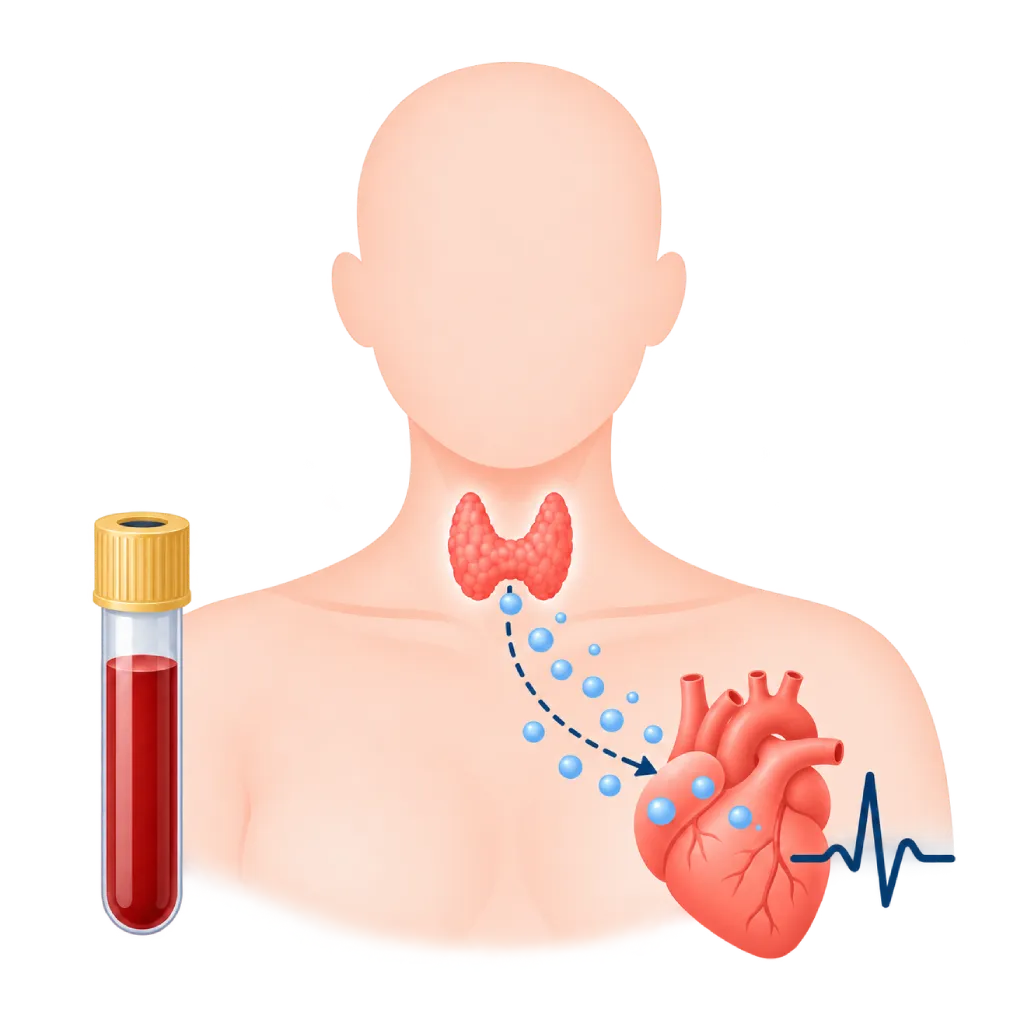
A thyroid function test is a blood test that measures TSH and thyroid hormone, usually FT4. The results show whether the thyroid gland is overactive (hyperthyroidism) or underactive (hypothyroidism). Both can affect the heart, for example by causing palpitations, atrial fibrillation, a slow heart rate, or high cholesterol.
Sources01 / Understanding the procedure
About Thyroid Function Test
What Is a Thyroid Function Test
The thyroid gland in your neck produces hormones that regulate how fast your body works, including your heart rate, blood pressure, and how your body processes fat. This gland is controlled by TSH, a hormone from a small gland in the brain. A thyroid function test measures TSH and thyroid hormone in the blood to assess whether the thyroid gland is working normally.
How It Works in Brief
Blood is drawn from a vein in your arm, then the laboratory measures TSH and usually FT4, the active free thyroid hormone. The two results are read together, because TSH moves in the opposite direction to thyroid hormone: when there is too much thyroid hormone, TSH falls, and when there is too little, TSH rises.
Types of Tests
- TSH: a sensitive initial test to screen for thyroid disorders.
- FT4: free thyroid hormone, to confirm a disorder and assess its severity.
- FT3 or T3: checked in some cases of an overactive thyroid.
- Thyroid antibodies: such as anti-TPO or TRAb, to look for an autoimmune cause when needed.
Reading the Results
- Low TSH and high FT4: an overactive thyroid (hyperthyroidism).
- High TSH and low FT4: an underactive thyroid (hypothyroidism).
- Abnormal TSH with normal FT4: a mild or subclinical disorder, which is often monitored with repeat tests.
The normal range for TSH is generally about 0.4 to 4 mIU/L, but each laboratory has its own range, and the values are different during pregnancy. The doctor interprets the results together with your symptoms and the medicines you take.
The Thyroid and the Heart
An overactive thyroid can cause palpitations, trigger atrial fibrillation, raise blood pressure, and worsen heart failure. An underactive thyroid can slow the heart rate, raise LDL cholesterol, and cause fluid to build up in the sac around the heart. That is why a thyroid function test is recommended when atrial fibrillation or heart failure is newly diagnosed, and periodically in people taking amiodarone.
02 / Understanding the procedure
When Is This Procedure Considered?
A doctor may consider this procedure in the situations below. The decision is always made after a thorough assessment.
- Palpitations or Atrial FibrillationAn overactive thyroid is one of the causes of a fast, irregular heart rhythm.
- Heart Failure or CardiomyopathyThyroid disorders can cause or worsen heart failure.
- Slow Heart RateAn underactive thyroid can slow the heart rate.
- Taking AmiodaroneThis heart rhythm medicine can affect the thyroid, so thyroid function is checked before and during treatment.
- Symptoms of a Thyroid DisorderSuch as unexplained weight changes, tiring easily, trembling, intolerance to heat or cold, or a lump in the neck.
- Monitoring Thyroid TreatmentTo adjust the dose of thyroid medicine so it is neither too low nor too high.
Situations to Consider First
- Taking Biotin SupplementsHigh-dose biotin, for example in hair and nail supplements, can cause incorrect results. Stop taking it before the test as directed by your doctor.
- Serious Illness or Recent Intensive CareSerious illness can temporarily change the results, so the test may be repeated after you recover.
- Certain MedicinesFor example amiodarone, corticosteroids, or heparin. Tell the staff so the results are interpreted correctly.
- Recent Iodinated Contrast DyeThe iodine in contrast dye for a CT scan or catheterization can affect thyroid function for several weeks.
- PregnancyThe normal range differs in each trimester, so the results are read using pregnancy-specific ranges.
03 / Before the procedure
How Should You Prepare?
A thyroid function test uses a blood sample and generally does not require special preparation.
No fasting needed. You may eat and drink as usual, unless another test done at the same time requires fasting.
Thyroid medicine. If you take levothyroxine, ask whether you should take it after your blood is drawn on the day of the test, so the FT4 result is not affected.
Biotin supplements. If you take biotin supplements or hair and nail vitamins, tell the staff. These supplements may need to be stopped a few days before the test.
Important information. Tell the staff if you are pregnant, have recently been seriously ill, have recently had a CT scan or catheterization with contrast dye, or take medicines such as amiodarone.
Previous results. Bring your previous thyroid test results so the doctor can see any changes.
Unsure about the preparation instructions? Ask our team before the procedure.
04 / During the procedure
How Is the Procedure Done?
The blood draw is usually finished within 10 minutes, and the results are usually available on the same day or the next day.
Identity Check
The staff match your identity with the test request and ask about the medicines and supplements you take.
Blood Draw
Blood is drawn from a vein in the crook of your elbow into a tube. You may feel a brief prick.
Laboratory Testing
An analyzer measures the levels of TSH and thyroid hormone in the blood. If the results are abnormal, other tests such as FT3 or thyroid antibodies may be added.
Reading the Results
The doctor reads the results together with your symptoms, heart examination, and medicines, then decides whether you need a repeat test, a thyroid ultrasound, treatment, or a referral.
05 / Benefits and risks
Benefits and Risks Should Be Discussed Together.
Every medical procedure has benefits and risks. Your doctor will explain both for your situation before the procedure.
Benefits You Can Expect
- Simple and No Fasting NeededIt requires only a small amount of blood and can be done at any time.
- Finding the Cause of Heart SymptomsA thyroid disorder can explain palpitations, atrial fibrillation, or a slow heart rate.
- Thyroid Disorders Can Usually Be TreatedTreating the thyroid often improves the heart symptoms it causes.
- Monitoring Medicine SafetyHelps detect the effects of amiodarone on the thyroid earlier.
- Adjusting Thyroid Medicine DosesHelps the doctor set the dose so it is neither too low nor too high.
The benefits of a procedure are not a promise of a cure. Ask how the results will affect your care plan.
Risks You Should Know
- Pain or a Small BruiseAt the needle puncture site, usually mild and goes away quickly.
- Brief Dizziness or FaintingSome people feel dizzy when blood is drawn. Tell the staff so you can lie down.
- Results Affected by Medicines or SupplementsBiotin, amiodarone, and certain other medicines can change the results, so tell the staff.
- Results That Change During Serious IllnessSerious illness can temporarily change hormone levels, so the test sometimes needs to be repeated.
- Infection at the Puncture SiteVery rare, because the skin is cleaned and the equipment used is sterile and single-use.
Risks can differ from person to person. A full explanation and consent are given after an individual assessment.
06 / After the procedure
What Is Recovery Like?
There is no recovery period. You can return to your activities right away.
Puncture site. A small bruise is normal and goes away within a few days.
Delayed medicines. Take any medicine you delayed, such as levothyroxine, after your blood is drawn, as directed.
If the results are abnormal. The doctor explains the next steps. Thyroid disorders can generally be treated, and the heart symptoms they cause often improve once thyroid function returns to normal.
Regular monitoring. People taking thyroid medicine or amiodarone need repeat tests regularly, according to the schedule set by the doctor.
Warning signs. Go to the emergency room right away or contact the medical team if you experience:
- A very fast or irregular heartbeat with dizziness or shortness of breath
- Chest pain or nearly fainting
- High fever, restlessness, or confusion in people with an overactive thyroid
- Extreme weakness, severe drowsiness, or a very slow heart rate
Know the Signs That Need Prompt Care.
Follow the team's guidance on warning signs. If severe or sudden symptoms appear after the procedure, go to the nearest emergency department right away or call Heart Attack Center 1500 258.
07 / Team and support
Doctors and Procedure Support
The doctors below are listed for this procedure. Listed by name, not by ranking.

dr. Debby C. Soemitha, Sp.PD
Internal Medicine
Clinical focusDiabetes and Diabetes Complications · Obesity and Metabolic Disease
View Profile
dr. Siska S. Danny, Sp.JP(K)
Interventional Cardiology
Coronary Intervention Procedures
Clinical focusPCI for Acute Coronary Syndrome · Primary Coronary Intervention
View Profile
dr. Sunu B. Raharjo, Sp.JP(K), Ph.D.
Arrhythmia and Electrophysiology
Arrhythmia and Device Center
Clinical focusClinical and Interventional Electrophysiology · Cardiac Arrhythmia Ablation
View Profile08 / Common questions
Before You Plan the Procedure.
Frequently asked questions about the thyroid function test. Your doctor will explain what the results mean for your condition.
Do I need to fast before a thyroid function test?
No. A thyroid function test is not affected by food, so you can eat and drink as usual. If this test is done at the same time as other tests that require fasting, such as fasting blood sugar or cholesterol, follow the fasting instructions from the staff for those tests.
How is the thyroid related to the heart?
Thyroid hormone regulates how fast the body works, including the heart. An overactive thyroid can cause palpitations, trigger atrial fibrillation, and worsen heart failure. An underactive thyroid can slow the heart rate and raise cholesterol. Treating a thyroid disorder often helps improve these heart symptoms.
Why do I need to mention biotin supplements?
High-dose biotin, which is often found in hair, skin, and nail supplements, can interfere with how the testing equipment works. As a result, the results may look like an overactive thyroid even though thyroid function is normal. Tell the staff if you take biotin, because this supplement may need to be stopped a few days before the test.
I take amiodarone. Why does my thyroid need to be checked?
Amiodarone is a heart rhythm medicine that contains a lot of iodine, so it can make the thyroid underactive or overactive. That is why thyroid function is usually checked before treatment starts and then periodically, generally every six months. Do not stop taking amiodarone without your doctor's direction.
What does high TSH with normal FT4 mean?
This condition is called subclinical hypothyroidism, a mild thyroid disorder. Often the doctor repeats the test a few weeks later, because TSH can rise temporarily, for example after an illness. Whether treatment is needed depends on your TSH level, symptoms, age, pregnancy plans, and heart condition.
Can I take my thyroid medicine before the test?
Ask your doctor. If you take levothyroxine, the doctor often asks you to take it after your blood is drawn on the day of the test, because FT4 levels can rise temporarily for a few hours after taking the medicine. The main thing is to take your medicine regularly every day so the results reflect your actual dose.
Sources and Medical Review
Translated from the Indonesian edition medically reviewed by dr. Debby C. Soemitha, Sp.PD.
Sources as cited in the Indonesian edition.
- Ross DS, Burch HB, Cooper DS, et al. 2016 American Thyroid Association Guidelines for Diagnosis and Management of Hyperthyroidism and Other Causes of Thyrotoxicosis. Thyroid. 2016;26(10):1343-1421.
- Jonklaas J, Bianco AC, Bauer AJ, et al. Guidelines for the Treatment of Hypothyroidism: Prepared by the American Thyroid Association Task Force on Thyroid Hormone Replacement. Thyroid. 2014;24(12):1670-1751.
- Van Gelder IC, Rienstra M, Bunting KV, et al. 2024 ESC Guidelines for the management of atrial fibrillation developed in collaboration with the European Association for Cardio-Thoracic Surgery (EACTS). Eur Heart J. 2024;45(36):3314-3414.
- Jabbar A, Pingitore A, Pearce SHS, et al. Thyroid hormones and cardiovascular disease. Nat Rev Cardiol. 2017;14(1):39-55.
- Li D, Radulescu A, Shrestha RT, et al. Association of Biotin Ingestion With Performance of Hormone and Nonhormone Assays in Healthy Adults. JAMA. 2017;318(12):1150-1160.