
Quick answer
What Is Primary Hypertension?
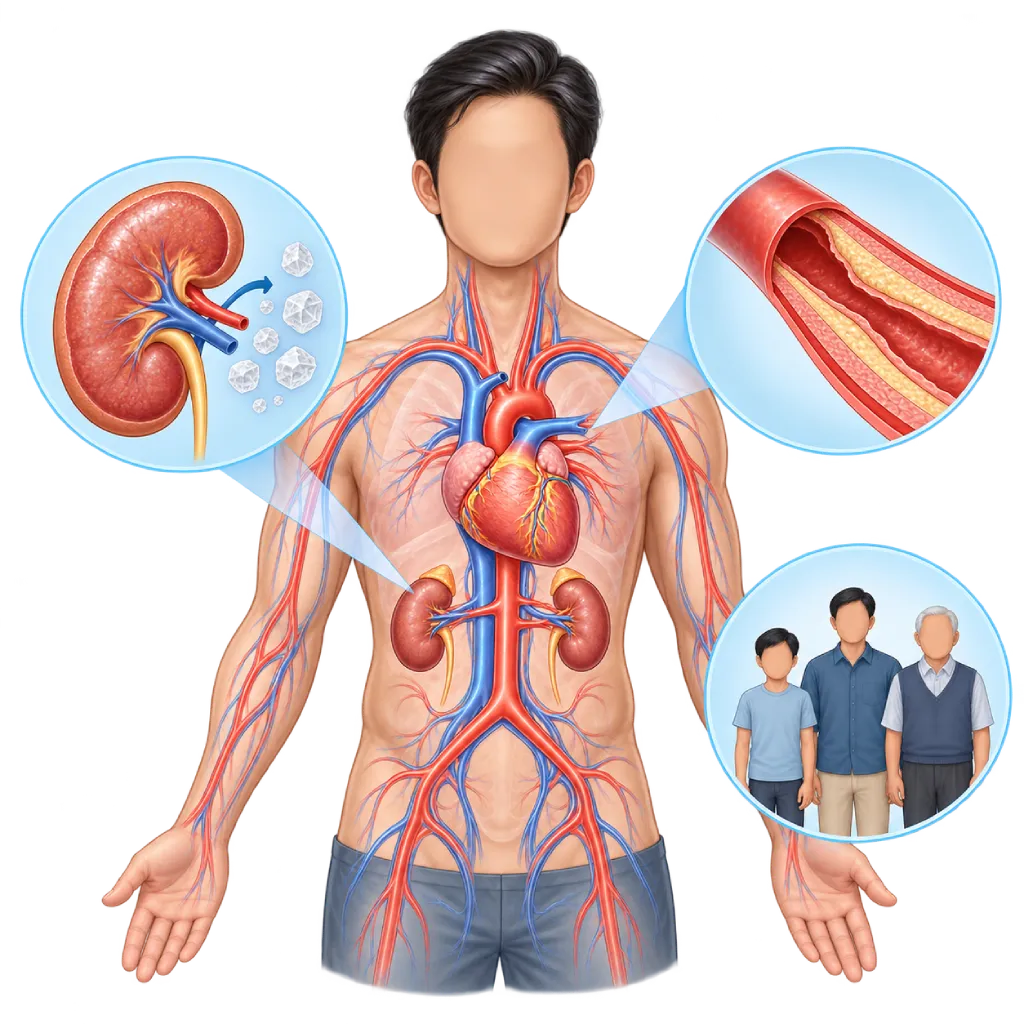
Primary or essential hypertension is high blood pressure with no single identifiable cause, and it affects about 9 in 10 people with hypertension. It develops slowly from a combination of inherited factors, age, and lifestyle.
SourcesSigns That Need Urgent Help
- Chest pain or a feeling of pressure in the chest
- Severe shortness of breath
- A drooping face, weakness in an arm or leg on one side, or slurred speech
- A sudden severe headache with vomiting or confusion
- Sudden blurred or lost vision
If these signs appear, go to the nearest emergency department right away or call Heart Attack Center 1500 258.
01 / Understanding the condition
About Primary Hypertension
Primary hypertension, also called essential hypertension, is blood pressure that stays at 140/90 mmHg or higher without another disease causing it. This type accounts for about 9 in 10 adults with hypertension. Its counterpart is secondary hypertension, which results from a specific disorder such as kidney disease or excess hormones and is covered on the Secondary Hypertension page.
How Primary Hypertension Develops
There is no single mechanism. Many genes, each with a small effect, make a person more prone to rising blood pressure. In some people, the kidneys tend to retain salt and water, so blood volume increases. The nervous system that controls heart rate and blood vessel width can be overactive, for example because of prolonged stress or lack of sleep. The hormones renin, angiotensin, and aldosterone also narrow blood vessels and retain salt. With age, artery walls become stiffer, so the top number tends to rise. The mix of these factors differs from person to person, so responses to salt, exercise, or types of medicine can also differ.
The Role of Lifestyle
An inherited tendency more easily develops into hypertension when it meets less healthy daily habits. High salt intake, too few vegetables and fruits, little physical activity, excess weight, alcohol, and smoking make blood pressure rise little by little over the years. The good news is that these factors can be changed. Cutting salt, eating plenty of vegetables and fruits, exercising regularly, and losing weight can each lower the top number by a few mmHg, and the effect adds up when they are done together.
Long-Term Course
Primary hypertension usually does not go away on its own, but it can be controlled. Without control, high pressure slowly thickens the heart muscle and damages the blood vessels in the brain, kidneys, and eyes. With a healthy lifestyle and medicines when needed, most people with this condition can reach their target and lead an active life. The key is continuous treatment and regular home measurements, because blood pressure usually rises again when medicines or healthy habits are stopped. The ESC 2024 guideline recommends a target top number of 120 to 129 mmHg if tolerated. An overview of all types of hypertension is covered on the Hypertension page.
02 / Understanding the condition
Symptoms to Recognize.
Common Symptoms
Primary hypertension usually causes no symptoms. The following complaints are not specific and can have other causes.
- Usually no symptoms for years
- High blood pressure found only during a health check or a visit for another reason
- Headache or a heavy feeling at the back of the neck in some people
- Dizziness or a light-headed feeling
- Tiring easily or shortness of breath during activity once the heart starts to be affected
03 / Understanding the condition
What Causes This Condition?
- An inherited tendency from many genes, each with a small effect
- Salt sensitivity, which makes the kidneys retain more sodium and water
- An overactive sympathetic nervous system, for example because of prolonged stress or lack of sleep
- The hormones renin, angiotensin, and aldosterone, which narrow blood vessels and retain salt
- Arteries that become stiffer with age
- Excess weight and insulin resistance
04 / Understanding the condition
Who Is at Higher Risk?
Lifestyle
High salt intake, frequently eating processed foods, too few vegetables and fruits, little physical activity, smoking, and drinking alcohol.
Medical
Excess weight, diabetes, metabolic syndrome, and blood pressure in the elevated range (120 to 139 for the top number or 70 to 89 for the bottom number).
Genetic
The risk is higher if a parent or sibling has hypertension, especially if it appeared at a young age.
Age
Blood pressure tends to rise with age as the arteries stiffen, so primary hypertension is more common after age 40.
Other
Prolonged stress, lack of sleep, and work patterns that involve little movement also play a role in some people.
Groups at Higher Risk
- People with Elevated Blood Pressure: Readings of 120 to 139 or 70 to 89 mmHg carry a risk of progressing to hypertension. This is covered on the Prehypertension page.
- Family Members of People with Hypertension: An inherited tendency means regular checkups and a healthy lifestyle should start earlier.
- People with Excess Weight: Belly fat and insulin resistance are linked to higher blood pressure.
- People Aged 40 or Older: Arteries that grow stiffer make blood pressure tend to rise with age.
- People with Diabetes or Metabolic Syndrome: Blood sugar and blood fat disorders often occur together with hypertension and add to each other's risks.
05 / Understanding the condition
How Is It Diagnosed?
Primary hypertension is diagnosed in two steps. The first step is to confirm that blood pressure is truly high through repeated measurements in the clinic and, when possible, home measurements over 7 days or 24-hour monitoring. The next step is to make sure no other disease is causing it.
For this, the doctor asks about your medical history, the medicines and herbal remedies you use, snoring habits, and family history, then examines you and orders basic blood and urine tests. If hypertension appears before age 40, blood potassium is low, blood pressure rises suddenly, or it is hard to lower with medicines, testing for secondary causes continues. At the same time, an ECG and urine tests help assess whether high pressure has already affected the heart and kidneys.
Hypertension and Blood Pressure Screening
Proper measurement in the clinic to detect high blood pressure, which often causes no symptoms.
Home Blood Pressure Monitoring
Self-measurement morning and evening for 7 days; an average of 135/85 mmHg or higher confirms hypertension.
Ambulatory Blood Pressure Monitoring
Automatic measurement over 24 hours, including during sleep; an average of 130/80 mmHg or higher confirms hypertension.
Laboratory Tests
Kidney function, potassium, sodium, blood sugar, and cholesterol to assess risk and rule out common secondary causes.
Urine Protein Test
Looks for albumin in the urine as an early sign of kidney and blood vessel damage.
Electrocardiogram (ECG)
Looks for signs of left heart muscle thickening and rhythm disturbances caused by long-standing high pressure.
06 / Understanding the condition
Treatment Options.
Treatment is decided by a doctor after an assessment. The categories below can help you follow the conversation with your doctor.
Reducing Salt
Limit salt to about 5 grams per day. Salt substitutes containing potassium can help if your doctor allows it, especially if your kidney function is normal.
A Diet Rich in Vegetables and Fruits
Eating patterns such as DASH, which is rich in vegetables, fruits, nuts, whole grains, and low-fat dairy products, have been shown to help lower blood pressure.
Regular Physical Activity
Moderate-intensity aerobic exercise for at least 150 minutes per week, plus strength training 2 to 3 times a week.
Losing Weight
Losing weight in people with excess weight helps lower blood pressure and the risk of diabetes.
Blood Pressure Medicines
ACE inhibitors, ARBs, calcium antagonists, and diuretics, usually started as two low-dose medicines in a single tablet. Your doctor decides the type and dose.
Controlling Other Risk Factors
Cholesterol, blood sugar, and smoking are also managed because their risks add to one another.
07 / Understanding the condition
Complications to Watch For.
Thickening of the Left Heart Muscle
The left ventricle thickens because it keeps pumping against high pressure. If this continues, the heart becomes stiff and may weaken.
Coronary Artery Disease
High pressure speeds up plaque buildup in the coronary arteries, which increases the risk of angina and heart attack.
Stroke
Blood vessels in the brain can become blocked or burst. Controlling blood pressure clearly lowers this risk.
Heart Failure
A heart that has been under strain for a long time may be unable to pump or fill with blood properly. This is covered on the Heart Failure page.
Chronic Kidney Disease
Small blood vessels in the kidneys are slowly damaged, shown by protein in the urine and then declining kidney function.
Memory Decline
Long-standing high pressure damages small blood vessels in the brain and is linked to memory problems in older age.
08 / Understanding the condition
What Can You Do?
- Limit salt to about 5 grams, or one teaspoon, per day, including salt from soy sauce, other sauces, instant noodles, and packaged foods
- Fill half your plate with vegetables and fruits
- Be active for at least 150 minutes per week
- Keep your weight and waist size healthy
- Quit smoking and avoid alcohol
- Check your blood pressure regularly, especially if hypertension runs in your family
09 / Understanding the condition
When Should You See a Doctor?
Primary hypertension is often found by chance. Make an appointment if:
- Your clinic reading is 140/90 mmHg or higher, or your home average is 135/85 mmHg or higher
- Your blood pressure is in the elevated range and you have diabetes, kidney disease, or a family history of heart disease
- Your target has not been reached after several months of lifestyle changes or treatment
- You have medicine side effects, such as dizziness when standing up, a dry cough, or ankle swelling
- Hypertension appears before age 40, so possible secondary causes need to be looked for
Go to the emergency room right away if your blood pressure is 180/120 mmHg or higher with chest pain, shortness of breath, weakness on one side of the body, slurred speech, or vision problems.
Don't Wait in an Emergency.
If symptoms are severe or come on suddenly, go to the nearest emergency department right away or call Heart Attack Center 1500 258, rather than waiting for an appointment.
10 / Common questions
Questions You May Have.
Frequently asked questions about primary or essential hypertension.
What is the difference between primary and secondary hypertension?
In primary hypertension, no single disease is found to be the cause; blood pressure rises from a combination of inherited factors, age, and lifestyle. In secondary hypertension, there is an identifiable cause, such as kidney disease, excess aldosterone, or sleep apnea. Telling them apart is important because secondary hypertension can improve when its cause is treated. This is covered on the Secondary Hypertension page.
Is primary hypertension inherited?
Heredity plays a role, but not on its own. Many genes, each with a small effect, make a person more prone to hypertension, especially when combined with high salt intake, excess weight, and little physical activity. If one of your parents or siblings has hypertension, start checking your blood pressure regularly and keep a healthy lifestyle from a young age.
Can blood pressure come down without medicine?
For mildly elevated blood pressure, lifestyle changes alone may be enough if they are followed consistently for about 3 months. Cutting salt, eating more vegetables and fruits, exercising regularly, losing weight, and avoiding alcohol can each lower blood pressure by a few mmHg. If your blood pressure stays at 140/90 mmHg or higher, or your heart risk is high, your doctor will usually add medicine.
Why does the doctor start with two medicines right away?
European guidelines recommend that most people with hypertension start with two low-dose medicines, preferably in a single tablet. Combining two medicines that work in different ways lowers blood pressure faster and causes milder side effects than one high-dose medicine. One tablet a day also makes it easier for you to take your medicine regularly. In frail older adults, the doctor may start with one medicine.
What is the blood pressure target for people with primary hypertension?
The ESC 2024 guideline recommends a top number of 120 to 129 mmHg for most people already on treatment, if tolerated. The ESH 2023 guideline recommends below 140/90 mmHg for everyone with hypertension, and lower still if tolerated. For frail older adults or people who easily get dizzy when standing up, the target is more relaxed. Your doctor sets a target that suits your condition.
Sources and Medical Review
Translated from the Indonesian edition medically reviewed by Dr. med. dr. Denio A. Ridjab, Sp.JP(K).
Sources as cited in the Indonesian edition.
- McEvoy JW, McCarthy CP, Bruno RM, et al. 2024 ESC Guidelines for the management of elevated blood pressure and hypertension. Eur Heart J. 2024;45(38):3912-4018.
- Mancia G, Kreutz R, Brunström M, et al. 2023 ESH Guidelines for the management of arterial hypertension The Task Force for the management of arterial hypertension of the European Society of Hypertension: Endorsed by the International Society of Hypertension (ISH) and the European Renal Association (ERA). J Hypertens. 2023;41(12):1874-2071.
- Oparil S, Acelajado MC, Bakris GL, et al. Hypertension. Nat Rev Dis Primers. 2018;4:18014.
- Carey RM, Muntner P, Bosworth HB, Whelton PK. Prevention and Control of Hypertension: JACC Health Promotion Series. J Am Coll Cardiol. 2018;72(11):1278-1293.
- Neal B, Wu Y, Feng X, et al. Effect of Salt Substitution on Cardiovascular Events and Death. N Engl J Med. 2021;385(12):1067-1077.
Doctors Who Treat This Condition

dr. Siska S. Danny, Sp.JP(K)
Interventional Cardiology
Coronary Intervention Procedures
Clinical focusPCI for Acute Coronary Syndrome · Primary Coronary Intervention
View Profile
Dr. med. dr. Denio A. Ridjab, Sp.JP(K)
Interventional Cardiology
Coronary Intervention Procedures +2 centers
Clinical focusInterventional Cardiology · Coronary Artery Disease
View Profile
dr. Juweni Joe, Sp.GK
Clinical Nutrition
Clinical focusMedical Nutrition Intervention · Nutrition for Cardiovascular Patients
View Profile