
Quick answer
What Is Urine Protein Test?
A urine protein test looks for protein, especially albumin, in your urine. In healthy kidneys, almost no albumin passes into the urine. Albumin in the urine is an early sign of kidney and blood vessel damage, often caused by high blood pressure or diabetes, and signals a higher risk of heart disease.
Sources01 / Understanding the procedure
About Urine Protein Test
What Is a Urine Protein Test
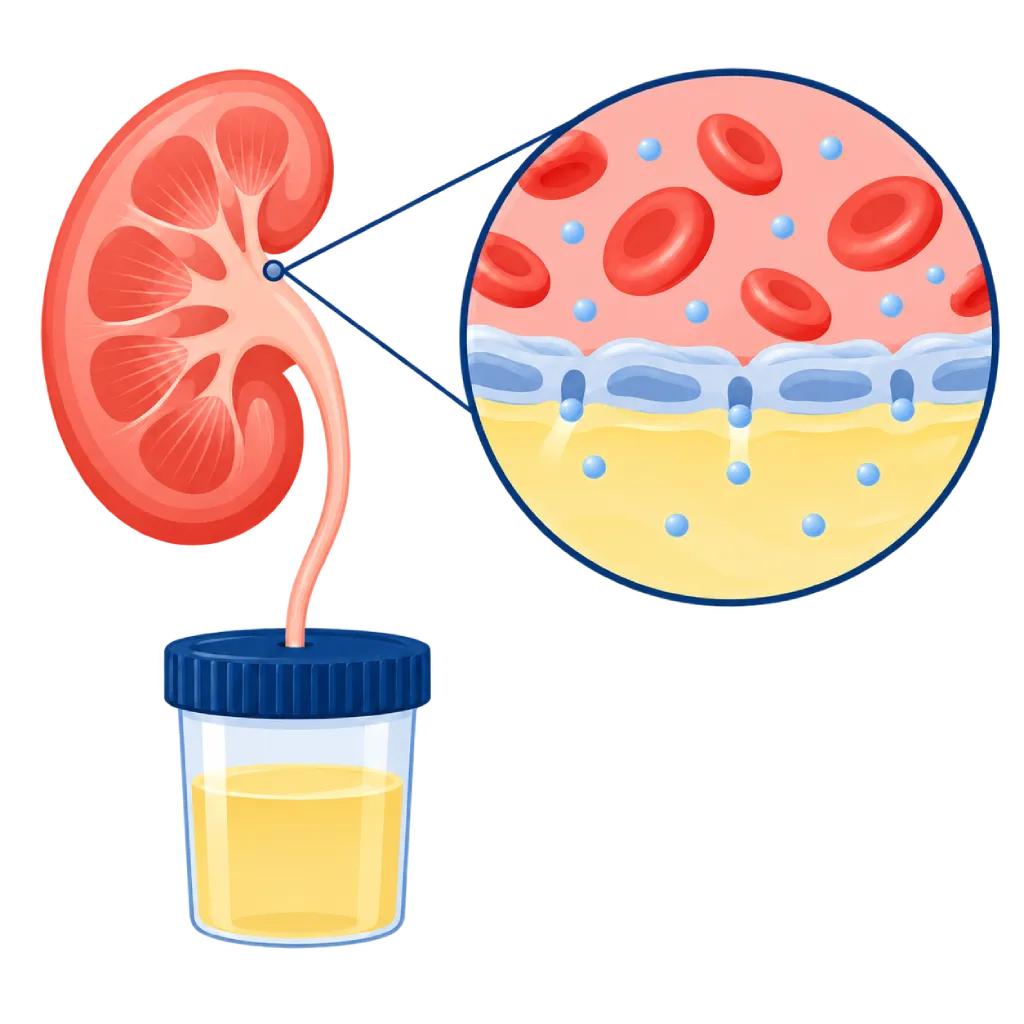
The kidneys filter the blood and remove metabolic waste into the urine, while important proteins such as albumin are kept in the blood. When the kidney filters are damaged, albumin and other proteins begin to leak into the urine. A urine protein test detects this leak, often long before any symptoms appear.
How It Works in Brief
You collect a small amount of urine in a sterile container, preferably early morning urine. The laboratory measures albumin and creatinine in the same sample, then calculates the ratio between them. This ratio adjusts for how concentrated the urine is, so a single random sample is enough to be representative.
Types of Tests
- Urine albumin-to-creatinine ratio (UACR): the main test for screening and monitoring, sensitive to small albumin leaks.
- Dipstick: a strip dipped into urine, quick but only picks up fairly large leaks.
- 24-hour urine protein: all urine over 24 hours is collected, now used less often.
- Urine protein-to-creatinine ratio (UPCR): measures all types of protein and is covered on its own page.
Reading UACR Results
- Below 30 mg/g: normal or mildly increased.
- 30 to 300 mg/g: moderately increased, formerly called microalbuminuria.
- Above 300 mg/g: severely increased.
Urine albumin levels can rise temporarily after strenuous exercise, fever, urinary tract infection, menstruation, or very high blood pressure and blood sugar. For this reason, an increased result is usually confirmed with a repeat test within 3 to 6 months.
Urine Protein and the Heart
Albumin leaking into the urine signals damage to small blood vessels, not only in the kidneys. People with albuminuria have a higher risk of heart attack, stroke, and heart failure. For this reason, hypertension and diabetes guidelines recommend checking urine albumin regularly, and the results help your doctor choose medicines that protect both the kidneys and the heart.
02 / Understanding the procedure
When Is This Procedure Considered?
A doctor may consider this procedure in the situations below. The decision is always made after a thorough assessment.
- High Blood PressureTo assess whether hypertension has already affected the kidneys and blood vessels.
- DiabetesRecommended at least once a year to detect diabetes-related kidney damage early.
- Chronic Kidney DiseaseTo determine the stage of the disease and monitor treatment results.
- Heart Disease or Heart FailureAlbuminuria helps assess risk and choose suitable medicines.
- High Blood Pressure During PregnancyProtein in the urine helps identify preeclampsia.
- Monitoring TreatmentAssesses whether blood pressure-lowering or kidney-protecting medicines are successfully reducing albumin leakage.
Situations to Consider First
- Urinary Tract InfectionCan temporarily raise urine protein. The test is postponed until the infection is treated.
- MenstruationMenstrual blood can affect the results, so the test should ideally be done outside your period.
- Strenuous Exercise in the Past 24 HoursCan temporarily raise urine albumin.
- Fever or Serious IllnessResults may rise temporarily, so the test is repeated after you recover.
- Very High Blood Pressure or Blood SugarCan temporarily raise urine albumin, so results are interpreted with caution.
03 / Before the procedure
How Should You Prepare?
This test does not require special preparation, but a few things help make the results more accurate.
Collection time. Early morning urine is preferred. If that is not possible, a random urine sample can still be tested.
Activity. Avoid strenuous exercise the day before the test.
Food, drink, and medicines. No fasting is needed. Drink as usual, and keep taking your regular medicines.
Important information. Tell the staff if you are menstruating, have a fever, are pregnant, or feel pain or a frequent, uncomfortable urge when urinating.
24-hour urine. If your doctor requests a 24-hour urine collection, you will be given a large container and written instructions.
Unsure about the preparation instructions? Ask our team before the procedure.
04 / During the procedure
How Is the Procedure Done?
Collecting the urine sample usually takes 10 minutes, and results are usually available on the same day.
Collecting a Midstream Urine Sample
After washing your hands and cleaning your genital area, pass the initial stream of urine into the toilet, then collect the next urine in the sterile container until it is about half full. Pass the rest into the toilet. Close the container tightly and hand it to the staff.
Laboratory Analysis
The laboratory measures albumin and creatinine in the urine, then calculates their ratio. For a dipstick test, the strip is dipped into the urine and its color change is read.
24-Hour Urine If Requested
When you wake up in the morning, pass your urine into the toilet and note the time. After that, collect all your urine over the next 24 hours in the container provided, including the urine you pass when you wake up the following morning, then bring the container to the laboratory. Keep the container in a cool place during the collection.
Reading the Results
Your doctor reads the results together with your blood pressure, blood sugar, and kidney function (eGFR), then decides whether a repeat test or a change in treatment is needed.
05 / Benefits and risks
Benefits and Risks Should Be Discussed Together.
Every medical procedure has benefits and risks. Your doctor will explain both for your situation before the procedure.
Benefits You Can Expect
- Easy and Needle-FreeOnly requires a urine sample.
- Detecting Kidney Damage EarlyOften before kidney function declines or symptoms appear.
- A Picture of Heart RiskAlbuminuria helps your doctor assess the risk of heart attack, stroke, and heart failure.
- Guiding Medicine ChoicesThe results help choose medicines that protect both the kidneys and the heart.
- Monitoring Treatment SuccessA decrease in urine albumin indicates that treatment is working well.
The benefits of a procedure are not a promise of a cure. Ask how the results will affect your care plan.
Risks You Should Know
- Temporarily Increased ResultsExercise, fever, infection, or menstruation can raise the results, so a repeat test is sometimes needed.
- Contaminated SampleCollecting the sample in a way that is not clean enough can affect the results. Follow the staff's instructions.
- Dipstick Is Less SensitiveSmall albumin leaks can be missed, so UACR is preferred for screening.
- Incomplete 24-Hour CollectionMissed urine makes the result lower than it really is.
Risks can differ from person to person. A full explanation and consent are given after an individual assessment.
06 / After the procedure
What Is Recovery Like?
There is no recovery period. You can return to your activities right away.
If the result is increased. Your doctor usually asks for a repeat test to confirm it, because urine albumin levels can rise temporarily.
Protecting your kidneys and heart. Controlling blood pressure and blood sugar, cutting down on salt, quitting smoking, and taking medicines as prescribed help reduce albumin leakage.
Regular monitoring. People with hypertension, diabetes, or chronic kidney disease are usually retested at least once a year, or more often as advised by their doctor.
Warning signs to watch for. Go to the emergency room right away or contact the medical team if you experience:
- Swelling of the face, eyelids, or both legs that increases quickly
- Very little urine, dark urine, or blood in the urine
- Shortness of breath or chest pain
- Severe headache, blurred vision, or sudden swelling during pregnancy
Know the Signs That Need Prompt Care.
Follow the team's guidance on warning signs. If severe or sudden symptoms appear after the procedure, go to the nearest emergency department right away or call Heart Attack Center 1500 258.
07 / Team and support
Doctors and Procedure Support
The doctors below are listed for this procedure. Listed by name, not by ranking.

dr. Debby C. Soemitha, Sp.PD
Internal Medicine
Clinical focusDiabetes and Diabetes Complications · Obesity and Metabolic Disease
View Profile
dr. Khaira U. Yusrie, Sp.PD-KGEH
Gastroenterology & Hepatology
Clinical focusInternal Medicine · Gastroenterology and Hepatology
View Profile
dr. Siska S. Danny, Sp.JP(K)
Interventional Cardiology
Coronary Intervention Procedures
Clinical focusPCI for Acute Coronary Syndrome · Primary Coronary Intervention
View Profile08 / Common questions
Before You Plan the Procedure.
Frequently asked questions about the urine protein test. Your doctor will explain what the results mean for your condition.
What is the difference between a urine protein test and a urinalysis?
A urinalysis checks many things at once, such as color, sugar, blood, and cells, and usually uses a dipstick for protein. A urine protein test, especially the albumin-to-creatinine ratio, measures albumin leakage more sensitively and precisely, so it is better suited for detecting kidney damage early.
Why do people with hypertension or diabetes need this test?
High blood pressure and high blood sugar slowly damage the kidney filters, often without symptoms. Albumin in the urine is one of the early signs. Hypertension and diabetes guidelines recommend this test regularly, usually once a year, so the damage can be slowed with the right treatment.
How is urine albumin related to heart disease?
Albumin leaks into the urine because the small blood vessels in the kidneys are damaged, and similar damage usually also occurs in other blood vessels. For this reason, albuminuria is linked to a higher risk of heart attack, stroke, and heart failure. This result helps your doctor assess your risk and choose medicines that protect the heart and kidneys.
Does a high result mean my kidneys are permanently damaged?
Not necessarily. Urine albumin can rise temporarily after strenuous exercise, fever, a urinary tract infection, or menstruation. For this reason, an increased result is usually confirmed with a repeat test. If albuminuria persists, the right treatment can often lower it and slow further kidney damage.
When should I collect my urine?
Early morning urine is preferred because the results are more stable. If that is not possible, a random urine sample can still be tested. Collect a midstream urine sample after cleaning your genital area, avoid strenuous exercise the day before, and tell the staff if you are menstruating or have a fever.
What can be done to lower urine albumin?
Controlling blood pressure and blood sugar, cutting down on salt, losing weight if you are overweight, and quitting smoking help a great deal. Your doctor may also prescribe medicines proven to lower albuminuria while protecting the kidneys and heart. Take your medicines regularly and have follow-up tests on the schedule set by your doctor.
Sources and Medical Review
Translated from the Indonesian edition medically reviewed by dr. Debby C. Soemitha, Sp.PD.
Sources as cited in the Indonesian edition.
- Kidney Disease: Improving Global Outcomes (KDIGO) CKD Work Group. KDIGO 2024 Clinical Practice Guideline for the Evaluation and Management of Chronic Kidney Disease. Kidney Int. 2024;105(4S):S117-S314.
- McEvoy JW, McCarthy CP, Bruno RM, et al. 2024 ESC Guidelines for the management of elevated blood pressure and hypertension. Eur Heart J. 2024;45(38):3912-4018.
- American Diabetes Association Professional Practice Committee for Diabetes. 11. Chronic Kidney Disease and Risk Management: Standards of Care in Diabetes, 2026. Diabetes Care. 2026;49(Suppl 1):S246-S260.
- Chronic Kidney Disease Prognosis Consortium; Matsushita K, van der Velde M, Astor BC, et al. Association of estimated glomerular filtration rate and albuminuria with all-cause and cardiovascular mortality in general population cohorts: a collaborative meta-analysis. Lancet. 2010;375(9731):2073-2081.