
Quick answer
What Is Hypertension?
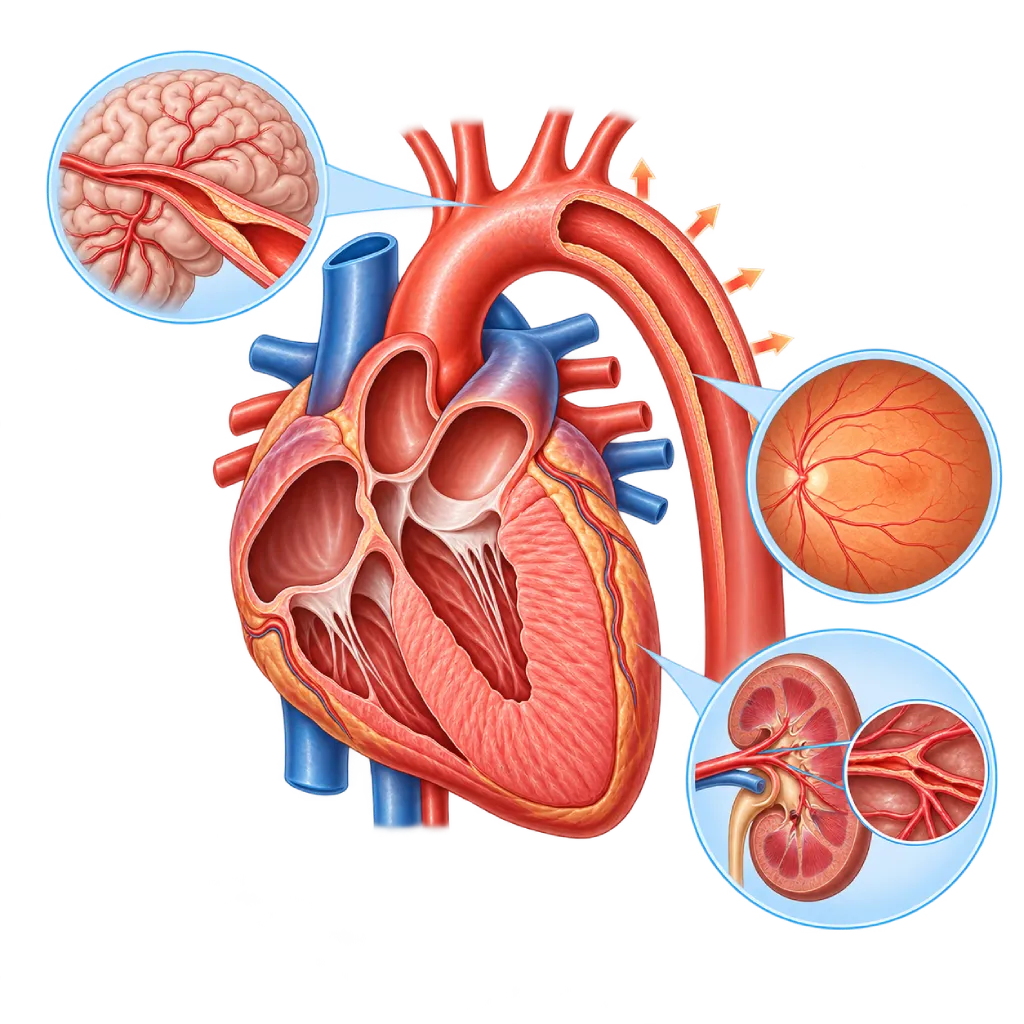
Hypertension is blood pressure that stays at 140/90 mmHg or higher. It usually causes no symptoms, but over the years it strains the heart and damages blood vessels in the brain, kidneys, and eyes. Controlling it early lowers the risk of these complications.
SourcesSigns That Need Urgent Help
- Chest pain or a feeling of pressure in the chest
- Severe shortness of breath or a cough with frothy sputum
- Facial drooping, weakness of the arm or leg on one side, or slurred speech
- Sudden severe headache with vomiting or confusion
- Sudden blurred vision or loss of vision
- Seizures or reduced consciousness
- Severe tearing pain in the chest or back
If these signs appear, go to the nearest emergency department right away or call Heart Attack Center 1500 258.
01 / Understanding the condition
About Hypertension
Blood pressure is the force of blood pushing against the artery walls each time the heart pumps. A reading has two numbers: the top number (systolic), when the heart contracts, and the bottom number (diastolic), when the heart rests between beats. Hypertension, or high blood pressure, means this pressure stays above the normal limit, not just a brief rise from tension or after physical activity.
Blood Pressure Thresholds in European Guidelines
The 2024 ESC guidelines divide blood pressure measured in the clinic into three groups: non-elevated if below 120/70 mmHg, elevated if the top number is 120 to 139 or the bottom number is 70 to 89 mmHg, and hypertension if 140/90 mmHg or higher. The 2023 ESH guidelines use the same hypertension threshold and further divide it into grades 1 to 3. The diagnosis should be confirmed with measurements outside the clinic: a home average of 135/85 mmHg or higher, or a 24-hour average of 130/80 mmHg or higher.
Types of Hypertension
About 9 in 10 people with hypertension have primary or essential hypertension, meaning no single cause can be found. Secondary hypertension is caused by another condition, such as a kidney disorder, excess hormones, or pauses in breathing during sleep. Resistant hypertension is blood pressure that stays high despite taking three types of medication. White coat hypertension and masked hypertension describe differences between readings in the clinic and outside it. There is also hypertension in pregnancy, hypertensive crisis, which needs urgent care, and prehypertension, an older term for elevated blood pressure. Pulmonary hypertension is different from all of these: the pressure is high in the blood vessels of the lungs and cannot be measured with a blood pressure cuff on the arm.
Why It Needs to Be Controlled
High pressure makes the artery walls thicken and stiffen, while the heart muscle also thickens because it has to pump harder. Over time, this raises the risk of stroke, heart attack, heart failure, atrial fibrillation, chronic kidney disease, and damage to the blood vessels of the eyes. Pooled analyses of many studies show that every drop of about 10 mmHg in the top number reduces major heart and blood vessel events by roughly one fifth. Worldwide, nearly half of people with hypertension do not know they have it, so regular measurement is the main way to find it.
02 / Understanding the condition
Types and Related Conditions
The following conditions belong to the Hypertension group. Open each one for a full explanation.
03 / Understanding the condition
Symptoms to Recognize.
Common Symptoms
Most people with hypertension feel nothing at all. The complaints below are not specific and cannot be used to guess your blood pressure.
- No symptoms at all, so it is only discovered when measured
- Headache or a heavy feeling in the back of the neck
- Dizziness or a light-headed feeling
- Heart palpitations
- Tiring easily or shortness of breath during activity once the heart is affected
Symptoms in Older Adults
In older adults, stiff arteries make blood pressure patterns and responses to medication slightly different.
- A high top number while the bottom number is normal or low
- Dizziness, vision going dark, or nearly falling when standing up
- Gradual decline in memory and concentration
- Shortness of breath or swelling in the legs when the heart starts to weaken
04 / Understanding the condition
What Causes This Condition?
- In most people there is no single cause, but rather a combination of heredity, age, and lifestyle factors
- High salt intake, too little physical activity, excess body weight, and alcohol use
- Arteries becoming stiffer with age
- Kidney disease, including narrowing of the kidney arteries
- Hormonal disorders, such as excess aldosterone, thyroid disorders, or adrenal gland tumors
- Repeated pauses in breathing during sleep (obstructive sleep apnea)
- Certain medications or substances, such as nonsteroidal anti-inflammatory drugs, cold decongestants, birth control pills, corticosteroids, and stimulants
05 / Understanding the condition
Who Is at Higher Risk?
Lifestyle
Diets high in salt and processed foods, too few vegetables and fruits, rarely moving, smoking, and drinking alcohol. These habits raise blood pressure little by little over many years.
Medical
Excess body weight, diabetes, chronic kidney disease, obstructive sleep apnea, and high cholesterol. These conditions often occur together with hypertension and add to each other's risk.
Genetic
A parent or sibling with hypertension, especially one diagnosed at a young age, signals an inherited tendency that calls for regular checkups.
Age
The risk rises with age as the arteries become stiffer. Hypertension with a high top number and a normal bottom number is more common in older adults.
Other
Prolonged stress, lack of sleep, and the use of medications that raise blood pressure. Pregnancy can also trigger high blood pressure, covered on the Hypertension in Pregnancy page.
Groups at Higher Risk
- Age 40 or Older: Blood pressure tends to rise with age, so measuring it at least once a year is recommended from this age.
- People with Diabetes: Diabetes and hypertension often occur together and speed up damage to the blood vessels, kidneys, and eyes.
- People with Chronic Kidney Disease: Impaired kidneys have difficulty removing salt and fluid, while high pressure speeds up the decline in kidney function.
- People Who Are Overweight: Excess body fat, especially around the abdomen, is linked to higher blood pressure and obstructive sleep apnea.
- Family Members of People with Hypertension: Having a parent or sibling with hypertension signals an inherited risk that calls for regular checkups.
06 / Understanding the condition
How Is It Diagnosed?
Hypertension is not diagnosed from a single measurement. Your doctor measures your blood pressure the correct way, repeats it, and then confirms it with home measurements over 7 days or 24-hour monitoring. This step also helps identify white coat hypertension, where blood pressure is high only in the clinic, and masked hypertension, where it is normal in the clinic but high outside it.
Once the diagnosis is confirmed, your doctor assesses its effect on your organs and looks for other risk factors through blood tests, urine tests, and an ECG. Echocardiography or an eye examination is done when needed. In certain people, for example those with hypertension under age 40, low blood potassium, a sudden rise, or blood pressure that is hard to bring down, the doctor looks for secondary causes. The results of all these tests are used to set your target and treatment plan.
Physical Examination
Blood pressure is measured after sitting quietly for a few minutes with a cuff that fits your arm, repeated two to three times, and on both arms at the first visit.
Home Blood Pressure Monitoring
Self-measurement in the morning and evening for 7 days with a validated upper-arm device; an average of 135/85 mmHg or higher supports the diagnosis.
Ambulatory Blood Pressure Monitoring
An automatic device measures every 15 to 30 minutes for 24 hours, including during sleep; an average of 130/80 mmHg or higher supports the diagnosis.
Laboratory Tests
Blood and urine tests for kidney function, potassium, sodium, blood sugar, cholesterol, and protein in the urine as a sign of organ damage.
Electrocardiogram (ECG)
Looks for signs of thickening of the left heart muscle and rhythm disorders such as atrial fibrillation.
Echocardiography
Assesses wall thickness and the heart's pumping strength if there are symptoms or ECG findings that suggest heart damage.
An examination of the inside of the eye (funduscopy) to look for changes in the retinal blood vessels, especially in grade 2 or 3 hypertension and diabetes.
07 / Understanding the condition
Treatment Options.
Treatment is decided by a doctor after an assessment. The categories below can help you follow the conversation with your doctor.
Lifestyle Changes
Reducing salt to about 5 grams per day, eating more vegetables and fruits, being active for at least 150 minutes per week, losing weight if overweight, quitting smoking, and limiting alcohol.
Blood Pressure Medications
The main classes are ACE inhibitors, ARBs, calcium channel blockers, and diuretics. Beta-blockers are used in certain situations. Your doctor chooses the type and dose based on your condition.
Two-Drug Combination in a Single Tablet
European guidelines recommend that most people start with two low-dose medications in one tablet so the target is reached faster and the medication is easier to take regularly.
Home Monitoring
Home blood pressure records help your doctor assess the results of treatment. The target for the top number is generally 120 to 129 mmHg if tolerated.
Treating the Cause and Coexisting Conditions
Secondary hypertension is treated according to its cause, while diabetes, cholesterol, and kidney disease are also controlled because their risks add to each other.
Renal Denervation in Selected Cases
May be considered for some people with resistant hypertension after other causes have been ruled out. Covered on the Renal Denervation page.
08 / Understanding the condition
Complications to Watch For.
Stroke
High pressure can block or rupture blood vessels in the brain. Hypertension is a stroke risk factor that can be controlled. Covered on the Stroke page.
Coronary Artery Disease and Heart Attack
High pressure speeds up plaque buildup in the coronary arteries, reducing blood flow to the heart muscle.
Thickened Heart Muscle and Heart Failure
A heart that keeps pumping against high pressure becomes thick and stiff, and over time it can weaken. Covered on the Heart Failure page.
Atrial Fibrillation
Upper heart chambers enlarged by high pressure are prone to an irregular rhythm, which raises the risk of stroke.
Chronic Kidney Disease
The small blood vessels in the kidneys are slowly damaged, so the kidneys become less able to filter blood. Covered on the Chronic Kidney Disease page.
Hypertensive Retinopathy
Blood vessels in the retina narrow, thicken, or leak, which can affect your vision.
Aortic Aneurysm and Dissection
An aortic wall under constant pressure can widen or tear. A tear in the aorta is an emergency that needs immediate treatment.
09 / Understanding the condition
What Can You Do?
- Limit salt to about 5 grams, or one teaspoon, per day, including the salt in soy sauce, sauces, and processed foods
- Eat more vegetables, fruits, nuts and legumes, and whole grains
- Stay active for at least 150 minutes per week, for example brisk walking for 30 minutes five days a week
- Keep your body weight and waist size healthy
- Quit smoking and limit alcohol, or better yet, avoid it
- Get enough sleep and manage stress
- Check your blood pressure regularly, at least once a year from age 40
10 / Understanding the condition
When Should You See a Doctor?
Because hypertension rarely causes symptoms, you should not wait for symptoms before getting checked. Make an appointment if:
- Your blood pressure is 140/90 mmHg or higher on several readings, or your home average is 135/85 mmHg or higher
- Your blood pressure is in the elevated range and you have diabetes, kidney disease, or a family history of heart disease
- You are already taking medication but your blood pressure has not reached the target
- You feel dizzy when standing, weak, or have other side effects after starting medication
- You are pregnant or planning a pregnancy and have high blood pressure
Go to the emergency room right away if your blood pressure is 180/120 mmHg or higher with chest pain, shortness of breath, weakness on one side of the body, slurred speech, or vision problems.
Don't Wait in an Emergency.
If symptoms are severe or come on suddenly, go to the nearest emergency department right away or call Heart Attack Center 1500 258, rather than waiting for an appointment.
11 / Common questions
Questions You May Have.
Frequently asked questions about hypertension, or high blood pressure.
Does hypertension always cause symptoms?
No. Most people with hypertension feel healthy, even when their blood pressure is quite high. A headache or a heavy feeling in the back of the neck can have many other causes and cannot be used to guess your blood pressure. The reliable way to find out is to measure your blood pressure regularly with a validated device, both in the clinic and at home.
What blood pressure is considered normal?
According to the 2024 ESC guidelines, clinic blood pressure below 120/70 mmHg is classed as non-elevated. A top number of 120 to 139 or a bottom number of 70 to 89 mmHg is classed as elevated, and 140/90 mmHg or higher points to hypertension. The threshold for home measurements is lower: 135/85 mmHg. Your doctor interprets your numbers together with your age and other risk factors.
Can hypertension be cured?
Primary hypertension usually does not go away, but it can be well controlled. Lifestyle changes can lower blood pressure and, in some people, reduce the need for medication. In secondary hypertension, treating the cause, such as an adrenal gland tumor or narrowing of a kidney artery, can lower blood pressure and sometimes means medication is no longer needed. Any decision to reduce medication is always made together with your doctor.
What is the difference between hypertension and pulmonary hypertension?
The commonly known form of hypertension is high pressure in the arteries throughout the body, measured with a blood pressure cuff on the arm. Pulmonary hypertension is high pressure in the blood vessels of the lungs, which strains the right side of the heart. It does not show up on a blood pressure cuff, is confirmed with echocardiography and right heart catheterization, and is treated differently. Covered on the Pulmonary Hypertension page.
Do blood pressure medications have to be taken for life?
For most people, medication is needed long term because blood pressure usually rises again when it is stopped. Having no symptoms is not a sign that your blood pressure is under control. If you lose weight, cut down on salt, and exercise regularly, your doctor may adjust the dose based on your blood pressure records. Do not stop or change your medication on your own.
When does high blood pressure become an emergency?
Blood pressure of 180/120 mmHg or higher with chest pain, shortness of breath, a severe headache, confusion, weakness on one side of the body, slurred speech, or vision problems is an emergency and needs immediate treatment in the emergency room. If a reading this high appears without symptoms, measure again after sitting quietly and contact your doctor the same day. Covered on the Hypertensive Crisis page.
Sources and Medical Review
Translated from the Indonesian edition medically reviewed by Dr. med. dr. Denio A. Ridjab, Sp.JP(K).
Sources as cited in the Indonesian edition.
- McEvoy JW, McCarthy CP, Bruno RM, et al. 2024 ESC Guidelines for the management of elevated blood pressure and hypertension. Eur Heart J. 2024;45(38):3912-4018.
- Mancia G, Kreutz R, Brunström M, et al. 2023 ESH Guidelines for the management of arterial hypertension The Task Force for the management of arterial hypertension of the European Society of Hypertension: Endorsed by the International Society of Hypertension (ISH) and the European Renal Association (ERA). J Hypertens. 2023;41(12):1874-2071.
- Stergiou GS, Palatini P, Parati G, et al. 2021 European Society of Hypertension practice guidelines for office and out-of-office blood pressure measurement. J Hypertens. 2021;39(7):1293-1302.
- NCD Risk Factor Collaboration (NCD-RisC). Worldwide trends in hypertension prevalence and progress in treatment and control from 1990 to 2019: a pooled analysis of 1201 population-representative studies with 104 million participants. Lancet. 2021;398(10304):957-980.
- Ettehad D, Emdin CA, Kiran A, et al. Blood pressure lowering for prevention of cardiovascular disease and death: a systematic review and meta-analysis. Lancet. 2016;387(10022):957-967.
- Mills KT, Stefanescu A, He J. The global epidemiology of hypertension. Nat Rev Nephrol. 2020;16(4):223-237.
Doctors Who Treat This Condition

dr. Siska S. Danny, Sp.JP(K)
Interventional Cardiology
Coronary Intervention Procedures
Clinical focusPCI for Acute Coronary Syndrome · Primary Coronary Intervention
View Profile
Dr. med. dr. Denio A. Ridjab, Sp.JP(K)
Interventional Cardiology
Coronary Intervention Procedures +2 centers
Clinical focusInterventional Cardiology · Coronary Artery Disease
View Profile
dr. Debby C. Soemitha, Sp.PD
Internal Medicine
Clinical focusDiabetes and Diabetes Complications · Obesity and Metabolic Disease
View Profile