
Quick answer
What Is Secondary Pulmonary Hypertension?
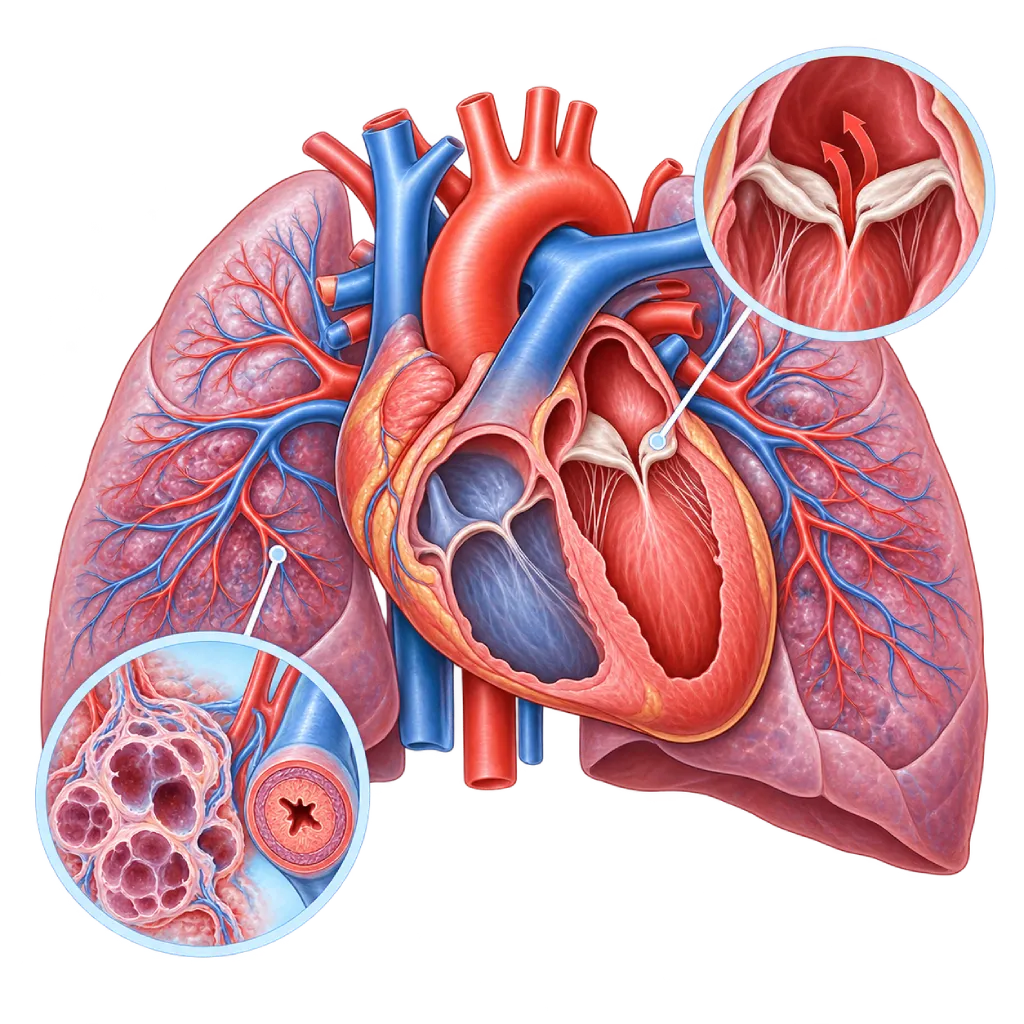
Secondary pulmonary hypertension is high pressure in the lung arteries caused by another disease, mainly left heart disease and lung disease. Treatment focuses on the underlying disease while protecting the work of the heart's right ventricle.
SourcesSigns That Need Urgent Help
- Severe shortness of breath at rest or being unable to lie flat
- Fainting
- Bluish lips, tongue, or fingertips
- Severe or prolonged chest pain
- Coughing up blood
- Swelling and rapid weight gain over a few days
- Confusion or extreme sleepiness
If these signs appear, go to the nearest emergency department right away or call Heart Attack Center 1500 258.
01 / Understanding the condition
About Secondary Pulmonary Hypertension
Pulmonary hypertension is high blood pressure in the pulmonary arteries, the vessels that carry blood from the right ventricle of the heart to the lungs. It is called secondary when another disease is the cause. The 2022 ESC/ERS guidelines no longer divide pulmonary hypertension into primary and secondary, but into five groups by cause. The secondary type accounts for the majority of pulmonary hypertension cases seen in everyday practice. An overview of all types is covered on the Pulmonary Hypertension page.
Due to Left Heart Disease
Left heart disease is a common cause (group 2). When the left ventricle is weak or stiff, or the mitral or aortic valve is narrowed or leaky, the pressure in the left side of the heart rises and is passed back to the lung vessels. Examples include heart failure, including heart failure with preserved ejection fraction, which is common in older adults, as well as heart valve disease. In some patients, the lung vessels also change, so the pressure stays high.
Due to Lung Disease and Low Oxygen
Chronic obstructive pulmonary disease (COPD), fibrosis and other interstitial lung diseases, breathing problems during sleep, and living at high altitude for a long time can lower oxygen levels (group 3). Low oxygen makes the lung arteries narrow, and over time their walls thicken. When this strain weakens the right side of the heart, the condition is also covered on the Cor Pulmonale page.
Other Causes
Pulmonary arterial hypertension can accompany connective tissue diseases such as systemic sclerosis, congenital heart disease with a hole that has not closed, liver cirrhosis, and HIV infection (part of group 1). Group 5 covers a variety of causes, such as chronic hemolytic anemia, sarcoidosis, and chronic kidney disease treated with dialysis. Pulmonary hypertension caused by long-standing blockage from blood clots (group 4) is covered on the Chronic Thromboembolic Pulmonary Hypertension page.
Why the Group Matters
Each group is treated differently. In the secondary type, the main step is treating the underlying disease. Medicines specific to pulmonary arterial hypertension benefit only certain groups and can be harmful when used in other groups. That is why your doctor first confirms the group through a series of tests before making a treatment plan with you.
02 / Understanding the condition
Symptoms to Recognize.
Common Symptoms
Symptoms often overlap with those of the underlying disease, so increasing shortness of breath deserves attention.
- Shortness of breath during activity that keeps getting worse
- Tiring quickly and a reduced ability to be active
- Swelling in the ankles and legs
- A full or swollen abdomen
- Chest pain or pressure during activity
- Dizziness or nearly fainting during activity
- Palpitations
03 / Understanding the condition
What Causes This Condition?
- Left-sided heart failure, including heart failure with preserved ejection fraction
- Mitral or aortic valve disease with narrowing or leakage
- COPD, pulmonary fibrosis, and other interstitial lung diseases
- Obstructive sleep apnea, obesity hypoventilation, or living at high altitude for a long time
- Connective tissue diseases such as systemic sclerosis and lupus
- Congenital heart disease with a hole that has not closed, up to Eisenmenger syndrome
- Liver cirrhosis with portal hypertension, HIV infection, or chronic hemolytic anemia
- Long-standing blockage of the lung arteries by blood clots, covered on the Chronic Thromboembolic Pulmonary Hypertension page.
04 / Understanding the condition
Who Is at Higher Risk?
Medical
Heart failure, heart valve disease, COPD, interstitial lung disease, systemic sclerosis, congenital heart disease, liver cirrhosis, and HIV infection.
Lifestyle
Smoking, which damages the lungs; obesity, which triggers breathing problems during sleep and heart failure; and methamphetamine use.
Age
More common in older adults, as heart failure with preserved ejection fraction and chronic lung disease become more frequent.
Other
Living at high altitude, exposure to dust or fumes at work, and air pollution that worsens lung disease.
Groups at Higher Risk
- People with Heart Failure or Valve Disease: High pressure in the left side of the heart can be passed back to the lungs. Pulmonary hypertension in this group signals more advanced disease.
- People with COPD or Interstitial Lung Disease: Low oxygen levels over a long period make the lung arteries narrow and thicken.
- People with Systemic Sclerosis: The 2022 ESC/ERS guidelines recommend a yearly risk assessment for pulmonary arterial hypertension because the risk is high. Covered on the Systemic Sclerosis page.
- People with Congenital Heart Disease: A hole in the wall between the heart chambers or a vessel channel that has not closed can send too much blood to the lungs and damage the lung vessels.
- People with Liver Cirrhosis: Portal hypertension can be accompanied by pulmonary hypertension, which needs to be checked, especially before a liver transplant.
05 / Understanding the condition
How Is It Diagnosed?
Your doctor reviews your symptoms, existing heart and lung conditions, and the medicines you take, and performs a physical examination. Echocardiography is the key step: it estimates the pressure in the lung arteries, assesses the right ventricle, and at the same time looks for causes in the left side of the heart, such as a damaged valve or a stiff left ventricle.
To look for lung causes, tests include a lung function test, a chest CT scan, measurement of blood oxygen levels, and a sleep study if needed. A ventilation-perfusion scan rules out long-standing blockage by blood clots. Blood tests check NT-proBNP, liver function, HIV, and autoimmune markers. Right heart catheterization confirms the diagnosis and distinguishes pressure coming from the left side of the heart from changes in the lung vessels themselves. This test is mainly recommended when its results will change management, for example before valve surgery, during a transplant evaluation, or when specific pulmonary hypertension medicines are being considered.
Echocardiography
Estimates the pressure in the lung arteries, assesses the right ventricle, and looks for causes in the left side of the heart, such as valve problems.
Lung Function Test (Spirometry)
Assesses COPD, interstitial lung disease, and the lungs' ability to absorb gas as causes of pulmonary hypertension.
A high-resolution chest CT scan to look for emphysema, fibrosis, and other lung tissue changes.
Ventilation-Perfusion Scan
Rules out long-standing blockage by blood clots, which needs specific treatment.
Right Heart Catheterization
Confirms the diagnosis and shows where the high pressure comes from: the left side of the heart or the lung vessels themselves.
NT-proBNP and BNP Test
Assesses strain on the heart and helps monitor the response to treatment of the underlying disease.
A sleep study (polysomnography) if sleep apnea or breathing that is too shallow during sleep is suspected.
06 / Understanding the condition
Treatment Options.
Treatment is decided by a doctor after an assessment. The categories below can help you follow the conversation with your doctor.
Treating Left Heart Disease
Proper heart failure treatment, blood pressure control, and management of rhythm disorders lower the pressure in the left side of the heart and in the lungs. Covered on the Heart Failure page.
Valve Repair or Replacement
A severely damaged mitral or aortic valve is repaired or replaced through surgery or a catheter procedure, which can lower lung pressure.
Treating Lung Disease
Inhaled medicines, quitting smoking, pulmonary rehabilitation, and treatment of sleep apnea with CPAP, depending on the underlying disease.
Long-Term Oxygen Therapy
Given when blood oxygen levels stay low at rest, to reduce narrowing of the lung arteries and strain on the right side of the heart.
Diuretics to Reduce Fluid
Reduce fluid buildup in the legs, abdomen, and lungs. The type and dose of medicine are decided by your doctor.
Specific Pulmonary Hypertension Medicines for Certain Types
Used for pulmonary arterial hypertension that accompanies connective tissue disease, congenital heart disease, cirrhosis, or HIV. They are generally not recommended in left heart disease; in interstitial lung disease, inhaled treprostinil may be considered.
07 / Understanding the condition
Complications to Watch For.
Right Heart Failure
Persistent pressure overload makes the right ventricle enlarge and weaken, causing swelling and shortness of breath that keep getting worse.
Heart Rhythm Disorders
Enlargement of the atria can trigger atrial fibrillation or flutter, which worsens shortness of breath and needs treatment.
Low Blood Oxygen Levels
Disrupted blood flow in the lungs and the underlying lung disease lower oxygen levels, so some patients need oxygen at home.
Repeated Hospital Stays
Pulmonary hypertension makes heart failure or lung disease more likely to flare up and require hospital care.
Reduced Exercise Capacity
Shortness of breath and fatigue limit daily activities and work, so rehabilitation becomes part of treatment.
08 / Understanding the condition
What Can You Do?
- Quit smoking and avoid secondhand smoke and air pollution.
- Keep heart failure, blood pressure, and rhythm disorders under control as your doctor advises.
- Have heart valve problems checked regularly so that procedures are not delayed.
- Get checked if you snore loudly, choke during sleep, or feel excessively sleepy during the day.
- Complete your influenza and pneumococcal vaccinations to prevent lung infections.
- If you have systemic sclerosis, have a pulmonary hypertension risk assessment every year.
- Weigh yourself every day and report rapid weight gain to your doctor.
09 / Understanding the condition
When Should You See a Doctor?
If you have heart, valve, or lung disease, see a doctor if your shortness of breath increases despite treatment, or your ability to be active keeps declining. Go to the emergency room right away if you have severe shortness of breath at rest, faint, or your lips look bluish. Make an appointment if:
- You are short of breath with light activity, such as walking around the house
- Your legs or abdomen keep swelling more
- You feel dizzy or nearly faint during activity
- You have scleroderma, liver cirrhosis, or congenital heart disease and are starting to get short of breath easily
- Your need for oxygen at home is increasing
Don't Wait in an Emergency.
If symptoms are severe or come on suddenly, go to the nearest emergency department right away or call Heart Attack Center 1500 258, rather than waiting for an appointment.
10 / Common questions
Questions You May Have.
Frequently asked questions about secondary pulmonary hypertension.
What does secondary mean in pulmonary hypertension?
Secondary means the high pressure in the lung arteries is caused by another disease, such as left heart disease, lung disease, or an autoimmune disease. The 2022 ESC/ERS guidelines now use five groups based on cause instead of the terms primary and secondary. Knowing the group matters, because each group is treated differently and some medicines only help certain groups.
What causes are commonly found?
Left heart disease, such as heart failure and mitral or aortic valve disease, is a common cause, followed by chronic lung diseases such as COPD and interstitial lung disease. Breathing problems during sleep, congenital heart disease, and autoimmune diseases can also be causes. Your doctor looks for these causes one by one before deciding on a treatment plan.
Can medicines for primary pulmonary hypertension also be used?
Not always. Specific medicines for pulmonary arterial hypertension were developed for group 1. In pulmonary hypertension due to left heart disease, these medicines are generally not recommended because they can increase fluid in the lungs. In lung disease, some of them can even lower oxygen levels. That is why the decision is made after right heart catheterization and assessment by an experienced team.
Can lung pressure go back down?
In many patients, lung pressure can go down when the underlying disease is treated well, for example after heart failure is controlled, a damaged valve is repaired, or oxygen levels are improved with oxygen therapy. However, if the lung vessels have been thickened for a long time, some of the pressure may remain. Follow-up echocardiography helps track how it changes.
Do I need oxygen at home?
It depends on your blood oxygen level. If your oxygen saturation stays low at rest, long-term oxygen therapy is recommended because it helps reduce strain on the right side of the heart, especially in chronic lung disease. Some patients need it only during sleep or activity. Your doctor decides whether you need it and for how long based on test results, not on breathlessness alone.
Why do I need right heart catheterization?
Echocardiography only estimates lung pressure. Right heart catheterization measures it directly and shows whether the high pressure comes from the left side of the heart or from the lung vessels themselves. This result is important before valve surgery, closure of a heart defect, a transplant, or starting specific medicines. Not every patient needs it; your doctor weighs its benefit for your situation.
Sources and Medical Review
Translated from the Indonesian edition medically reviewed by dr. Santi R. Dewayanti, Sp.P.
Sources as cited in the Indonesian edition.
- Humbert M, Kovacs G, Hoeper MM, et al. 2022 ESC/ERS Guidelines for the diagnosis and treatment of pulmonary hypertension. Eur Heart J. 2022;43(38):3618-731.
- Kovacs G, Bartolome S, Denton CP, et al. Definition, classification and diagnosis of pulmonary hypertension. Eur Respir J. 2024;64(4):2401324.
- Maron BA, Bortman G, De Marco T, et al. Pulmonary hypertension associated with left heart disease. Eur Respir J. 2024;64(4):2401344.
- Shlobin OA, Adir Y, Barbera JA, et al. Pulmonary hypertension associated with lung diseases. Eur Respir J. 2024;64(4):2401200.
- Waxman A, Restrepo-Jaramillo R, Thenappan T, et al. Inhaled Treprostinil in Pulmonary Hypertension Due to Interstitial Lung Disease. N Engl J Med. 2021;384(4):325-34.
Doctors Who Treat This Condition

dr. Santi R. Dewayanti, Sp.P
Pulmonology
Clinical focusLung and Respiratory Disease · Asthma and COPD
View Profile
dr. Sri Diniharini, Sp.JP(K)
Echocardiography & Cardiovascular Imaging
Cardiovascular Diagnostic Center +1 center
Clinical focusAdvanced Echocardiography · Transesophageal Echocardiography
View Profile
dr. Siska S. Danny, Sp.JP(K)
Interventional Cardiology
Coronary Intervention Procedures
Clinical focusPCI for Acute Coronary Syndrome · Primary Coronary Intervention
View Profile