
Quick answer
What Is Recurrent Pericarditis?
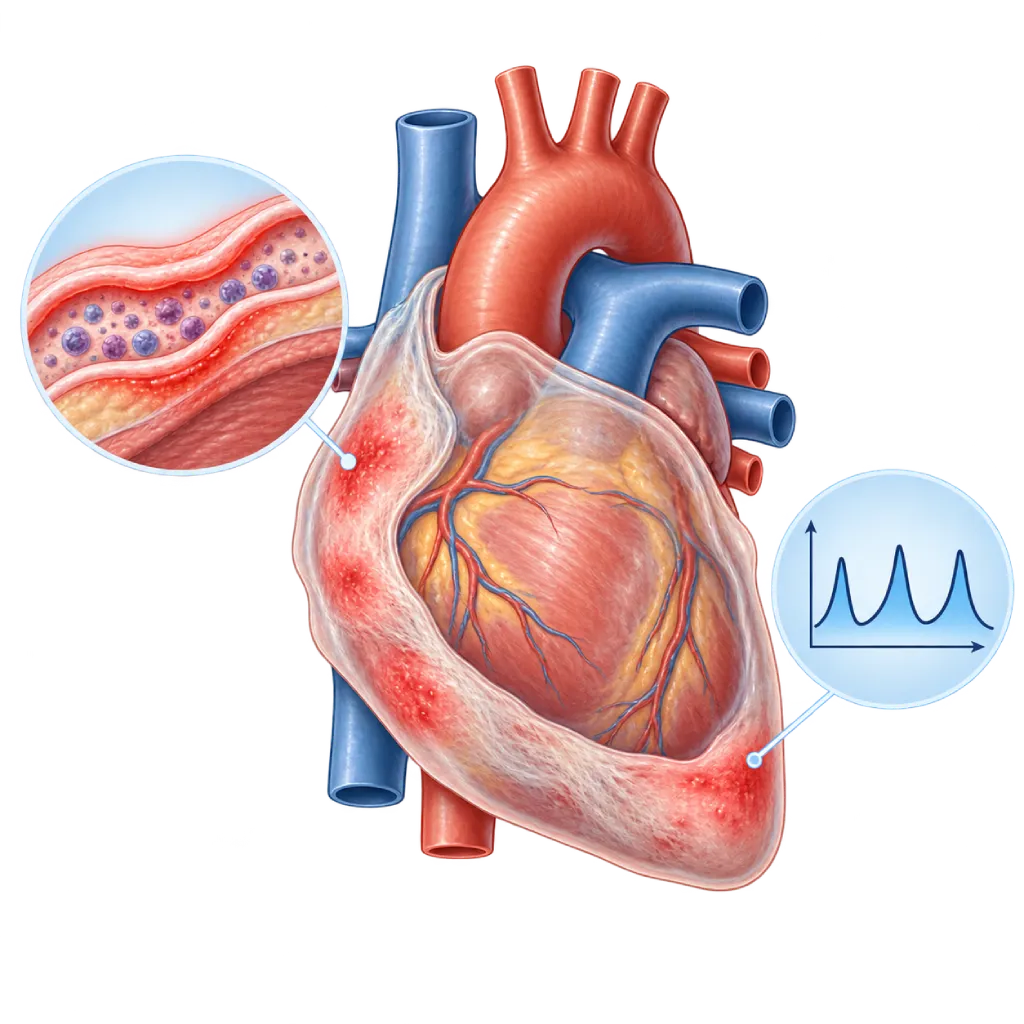
Recurrent pericarditis is inflammation of the lining around the heart that comes back after a symptom-free period of at least 4 to 6 weeks. It can recur many times, but it rarely causes serious complications when treated appropriately.
SourcesSigns That Need Urgent Help
- Severe shortness of breath or breathlessness that worsens over a few hours
- Fainting or nearly fainting
- Pale, cold, sweaty skin with a very fast heartbeat
- Severe, pressing chest pain that is different from your usual flare-ups
- Confusion or unusual drowsiness
If these signs appear, go to the nearest emergency department right away or call Heart Attack Center 1500 258.
01 / Understanding the condition
About Recurrent Pericarditis
After an episode of acute pericarditis, about 15 to 30 out of 100 people have a recurrence. In people who have already had a recurrence without colchicine, the risk of another one can reach about half. It is called recurrent when pain and signs of inflammation return after a symptom-free gap of at least 4 to 6 weeks. If the inflammation never fully settles, the condition is called incessant or chronic pericarditis, covered on the Chronic Pericarditis page.
Symptoms during a flare-up are usually similar to the first episode: sharp chest pain that gets worse when breathing or lying down, sometimes with fever. Recurrences often happen when medicines are being reduced or within a few weeks after they are stopped.
Why Pericarditis Comes Back
In many people, a recurrence is not caused by a new infection but by the immune system continuing to trigger inflammation. The risk of recurrence increases if the first episode was not treated with colchicine, anti-inflammatory medicines were stopped too soon, or corticosteroids were used, especially at high doses. Research shows a role for the inflammatory substance interleukin-1 in many cases, and it is now a target of treatment. A small number of cases are caused by autoimmune disease, TB, or a syndrome after heart injury, so these causes still need to be looked for.
Principles of Treatment
Treatment focuses on relieving flare-ups and preventing the next ones. Anti-inflammatory medicines are given together with colchicine, which is usually continued for at least six months. Medicines are tapered very slowly, one at a time, while symptoms and CRP are monitored. Low-dose corticosteroids are used when first-line medicines are not enough or cannot be used. For recurrences that keep coming back despite colchicine and that depend on corticosteroids, the ESC guidelines include a role for interleukin-1 blocking medicines. Surgery to remove the pericardium is considered only when all treatments have failed.
Prognosis
Although exhausting, recurrent pericarditis without a specific cause rarely progresses to tamponade or constriction, and the heart's pumping strength usually stays good. Recurrences usually become less frequent over time with planned treatment. Family support and open communication with your doctor help you get through the long treatment period.
02 / Understanding the condition
Symptoms to Recognize.
Common Symptoms
- Sharp chest pain that returns, similar to the previous episode
- Pain that gets worse when breathing in or lying down and eases when sitting up and leaning forward
- Mild fever or body aches
- Pain that appears when medicines are reduced or after they are stopped
- Pain on the side of the chest when breathing because the lining of the lungs is also inflamed
- Tiredness and difficulty doing your usual activities
03 / Understanding the condition
What Causes This Condition?
- Inflammation that the immune system keeps triggering after the first episode (autoinflammation)
- Treatment of the first episode that was too short, or medicines tapered too quickly
- Corticosteroid use, especially at high doses or tapered too quickly
- A first episode that was not treated with colchicine
- Autoimmune diseases such as lupus, or certain autoinflammatory diseases
- A syndrome after heart surgery, a heart attack, or a catheter procedure
- TB or another undetected infection, although this is less common
04 / Understanding the condition
Who Is at Higher Risk?
Medical
A first episode not treated with colchicine, corticosteroid use, a poor response to aspirin or nonsteroidal anti-inflammatory drugs, and autoimmune disease.
Genetic
A small number of patients have a family history of recurrent pericarditis or a gene abnormality linked to autoinflammatory disease, such as familial Mediterranean fever.
Other
Returning to strenuous exercise before the inflammation settles and stopping medicines on your own when the pain goes away are thought to contribute to recurrences.
Groups at Higher Risk
- Patients Receiving Corticosteroids: Corticosteroids, especially at high doses, are linked to more frequent recurrences, so they are used at low doses and tapered slowly.
- Patients After Heart Surgery: Post-cardiac injury syndrome can come back, especially if the initial inflammation was not fully treated.
- People with Autoimmune Diseases: Lupus and other autoimmune diseases can cause repeated inflammation of the heart lining while the underlying disease is active.
05 / Understanding the condition
How Is It Diagnosed?
A recurrence is confirmed with the same criteria as the first episode: typical chest pain, a rubbing sound from the heart lining, ECG changes, or new fluid in the sac around the heart. A rise in CRP is very helpful, because during a recurrence the ECG changes and fluid are often less pronounced.
If symptoms are not typical or CRP is normal, cardiac MRI can show whether the lining is still inflamed. This helps your doctor decide whether medicines need to be extended or added. Echocardiography assesses fluid and signs of constriction. With frequent recurrences, your doctor looks for a specific cause, such as autoimmune disease with an ANA test, TB, or autoinflammatory disease, because these causes need their own treatment.
C-Reactive Protein (CRP) Test
A rise in CRP confirms that inflammation is active again and guides when medicines can be tapered.
Electrocardiogram (ECG)
Looks for changes typical of pericarditis, although during a recurrence the changes are often milder or not visible.
Echocardiography
Assesses fluid in the sac around the heart and makes sure there are no signs of pressure on the heart or constriction.
Cardiac MRI
Shows inflammation of the lining that is still active, helping confirm the diagnosis when symptoms are vague and adjust the length of treatment.
Antinuclear Antibody Test (ANA Test)
Screening for autoimmune disease in repeated recurrences or when there are signs such as joint pain and rash.
Tests for TB, kidney function, and other markers based on your doctor's suspicion, to make sure no specific cause is missed.
06 / Understanding the condition
Treatment Options.
Treatment is decided by a doctor after an assessment. The categories below can help you follow the conversation with your doctor.
Aspirin or Nonsteroidal Anti-Inflammatory Drugs
Given during a flare-up until symptoms go away and CRP is normal, then tapered very slowly as directed by your doctor, along with stomach protection.
Long-Term Colchicine
Added to anti-inflammatory medicines and usually continued for at least six months, because it has been shown to lower the risk of further recurrences.
Low-Dose Corticosteroids
An option when first-line medicines cannot be used or are not enough, after infection has been ruled out. Tapered very slowly to prevent recurrence.
Interleukin-1 Blocking Medicines
For recurrences with high CRP that do not improve with colchicine and that depend on corticosteroids. The medicine is given by injection under the skin and monitored by your doctor.
Other Immunosuppressive Medicines
Other immunosuppressive medicines or immunoglobulin given through an IV are considered in certain cases that do not improve with the treatments above.
Pericardiectomy
Surgery to remove the pericardium is considered only when recurrences keep happening even though all treatments have been tried.
07 / Understanding the condition
Complications to Watch For.
Repeated Recurrences
Some patients have several recurrences over a few years. They usually become less frequent over time and with planned treatment.
Corticosteroid Dependence
Recurrences every time corticosteroids are reduced can lead to long-term use, with side effects such as bone thinning, high blood sugar, and weight gain.
Pericardial Effusion and Tamponade
Fluid can increase during a flare-up. Tamponade is rare in recurrent pericarditis without a specific cause, but its signs need to be recognized.
Constrictive Pericarditis
The risk of constriction in recurrent pericarditis without a specific cause is low, lower than in pericarditis caused by TB or bacterial infection.
Reduced Quality of Life
Repeated pain, exercise restrictions, and months of treatment can affect work, sleep, and mood.
08 / Understanding the condition
What Can You Do?
- Take colchicine for as long as your doctor prescribes, even after the pain has gone
- Do not reduce or stop anti-inflammatory medicines and corticosteroids on your own
- Follow the gradual tapering schedule and CRP checks
- Postpone strenuous exercise until your doctor says the inflammation has settled
- Note the date and trigger of each recurrence to discuss at your follow-up visit
- Tell your doctor about all other medicines you take, because some interact with colchicine
- If you are planning a pregnancy, discuss safe medicine options with your doctor first
09 / Understanding the condition
When Should You See a Doctor?
Contact your doctor if the typical chest pain of pericarditis comes back, especially while your medicines are being tapered or after they have been stopped. Do not increase or start medicines on your own without guidance, because your doctor needs to confirm the recurrence with a CRP test and, if needed, echocardiography. Also contact your doctor if you have medicine side effects, such as severe diarrhea, stomach pain, or high blood sugar while taking corticosteroids.
Go to the emergency room right away if you have:
- Severe shortness of breath or breathlessness that worsens over a few hours
- Fainting or nearly fainting
- Severe, pressing chest pain that is different from your usual flare-ups
- Pale, cold, sweaty skin with a very fast heartbeat
Don't Wait in an Emergency.
If symptoms are severe or come on suddenly, go to the nearest emergency department right away or call Heart Attack Center 1500 258, rather than waiting for an appointment.
10 / Common questions
Questions You May Have.
Frequently asked questions about recurrent pericarditis.
Why does my pericarditis keep coming back?
In many people, recurrences happen because the immune system keeps triggering inflammation, not because of a new infection. The risk of recurrence increases if the first episode was not treated with colchicine, medicines were stopped too soon, or high-dose corticosteroids were used. Your doctor will also check for possible specific causes, such as autoimmune disease or TB, especially if recurrences are frequent or come with symptoms in other organs.
How long do I need to take colchicine?
In recurrent pericarditis, colchicine is usually taken for at least six months, and it may be longer if recurrences are frequent. Your doctor decides how long based on your symptoms, CRP, and imaging results. Colchicine is usually well tolerated, but it can cause diarrhea or nausea. Do not stop it on your own, and tell your doctor about all other medicines you take, because some medicines interact with colchicine.
What are interleukin-1 blocking medicines?
Interleukin-1 is a messenger substance in the immune system that helps trigger inflammation in recurrent pericarditis. Medicines that block it are given by injection under the skin, and in clinical trials they reduced recurrences in patients who kept having recurrences despite colchicine and who depended on corticosteroids. A specialist decides how they are used, including how long and how to stop them, because recurrences can appear after the medicine is stopped.
Is recurrent pericarditis dangerous for the heart?
In recurrent pericarditis without a specific cause, the risk of serious complications such as tamponade and constriction is low, and the heart's pumping strength usually stays good. The main challenges are the repeated pain and the long treatment. Even so, every recurrence still needs to be checked to assess fluid in the sac around the heart and to adjust medicines.
Can I get pregnant if I have recurrent pericarditis?
Many women with recurrent pericarditis can go through pregnancy well when it is planned, ideally while the disease is quiet. Some medicines need to be adjusted, because nonsteroidal anti-inflammatory drugs are avoided in late pregnancy and the safety of other medicines varies. Discuss your pregnancy plans with your cardiologist and obstetrician before becoming pregnant, and do not stop or change medicines on your own.
Sources and Medical Review
Translated from the Indonesian edition medically reviewed by dr. Radityo Prakoso, Sp.JP(K).
Sources as cited in the Indonesian edition.
- Schulz-Menger J, Collini V, Gröschel J, Adler Y, Brucato A, Christian V, et al. 2025 ESC Guidelines for the management of myocarditis and pericarditis. Eur Heart J. 2025;46(40):3952-4041.
- Adler Y, Charron P, Imazio M, Badano L, Barón-Esquivias G, Bogaert J, et al. 2015 ESC Guidelines for the diagnosis and management of pericardial diseases: The Task Force for the Diagnosis and Management of Pericardial Diseases of the European Society of Cardiology (ESC). Eur Heart J. 2015;36(42):2921-2964.
- Imazio M, Brucato A, Cemin R, Ferrua S, Belli R, Maestroni S, et al. Colchicine for Recurrent Pericarditis (CORP): A Randomized Trial. Ann Intern Med. 2011;155(7):409-414.
- Imazio M, Belli R, Brucato A, Cemin R, Ferrua S, Beqaraj F, et al. Efficacy and safety of colchicine for treatment of multiple recurrences of pericarditis (CORP-2): a multicentre, double-blind, placebo-controlled, randomised trial. Lancet. 2014;383(9936):2232-2237.
- Klein AL, Imazio M, Cremer P, Brucato A, Abbate A, Fang F, et al. Phase 3 Trial of Interleukin-1 Trap Rilonacept in Recurrent Pericarditis. N Engl J Med. 2021;384(1):31-41.
- Brucato A, Imazio M, Gattorno M, Lazaros G, Maestroni S, Carraro M, et al. Effect of Anakinra on Recurrent Pericarditis Among Patients With Colchicine Resistance and Corticosteroid Dependence: The AIRTRIP Randomized Clinical Trial. JAMA. 2016;316(18):1906-1912.
- Imazio M, Brucato A, Cumetti D, Brambilla G, Demichelis B, Ferro S, et al. Corticosteroids for Recurrent Pericarditis: High Versus Low Doses: A Nonrandomized Observation. Circulation. 2008;118(6):667-671.
Doctors Who Treat This Condition

Dr. med. dr. Denio A. Ridjab, Sp.JP(K)
Interventional Cardiology
Coronary Intervention Procedures +2 centers
Clinical focusInterventional Cardiology · Coronary Artery Disease
View Profile
dr. Sri Diniharini, Sp.JP(K)
Echocardiography & Cardiovascular Imaging
Cardiovascular Diagnostic Center +1 center
Clinical focusAdvanced Echocardiography · Transesophageal Echocardiography
View Profile
dr. Radityo Prakoso, Sp.JP(K)
Pediatrics & Congenital Heart Disease
Congenital and Structural Heart Center
Clinical focusPediatric Cardiology Consultation · Congenital Heart Disease Care
View Profile