
Quick answer
What Is Klippel-Trenaunay Syndrome?
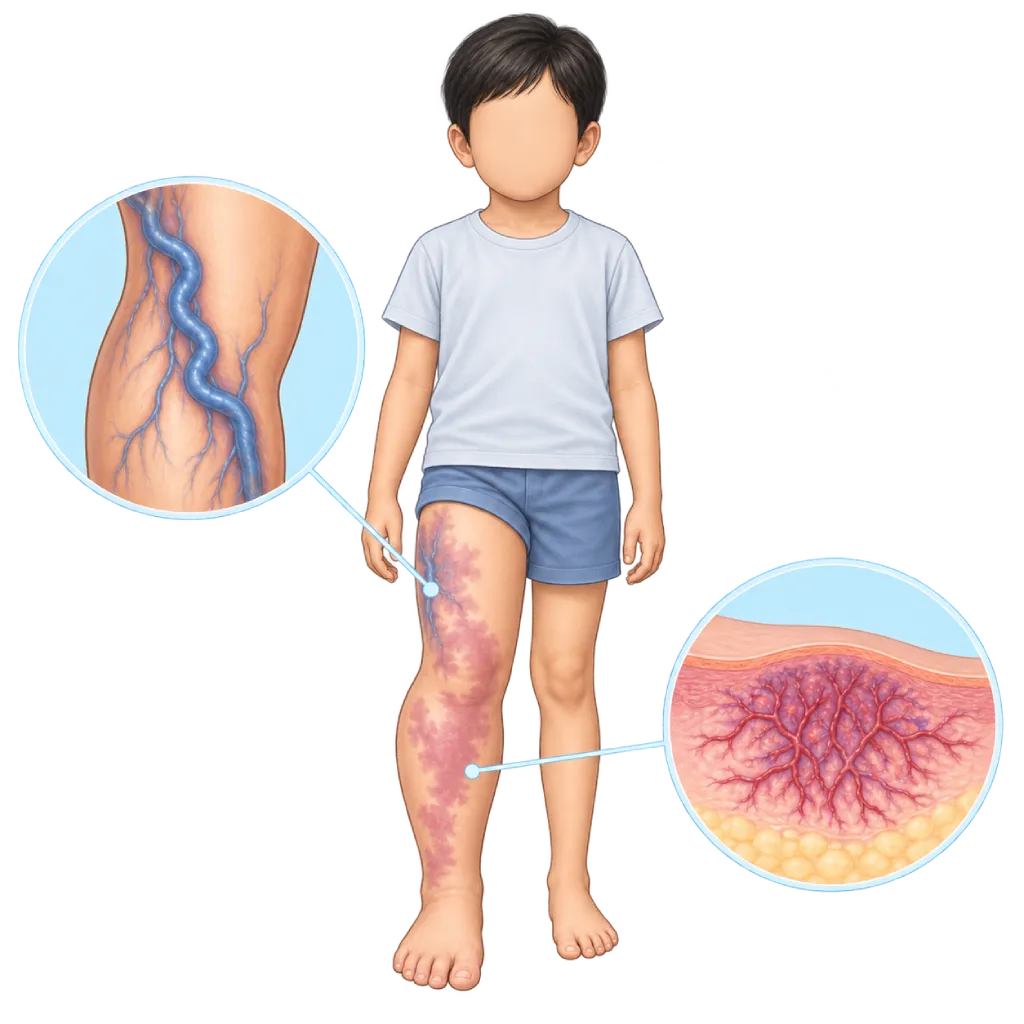
Klippel-Trenaunay syndrome is a rare congenital blood vessel disorder marked by a reddish purple birthmark on the skin, varicose veins or unusual veins, and overgrowth of one leg or part of the body.
SourcesSigns That Need Urgent Help
- A leg that suddenly becomes more swollen, painful, and warm than usual
- Sudden shortness of breath or chest pain
- Bleeding from the skin or a vein that is hard to stop
- Blood in the urine or stool
- Skin redness that spreads quickly, with fever
- A vein lump that suddenly becomes hard, red, and very painful
If these signs appear, go to the nearest emergency department right away or call Heart Attack Center 1500 258.
01 / Understanding the condition
About Klippel-Trenaunay Syndrome
Klippel-Trenaunay syndrome is a rare congenital blood vessel disorder. It forms before birth and is usually visible at birth or in the first years of life. Usually only one leg is affected, but the disorder can also involve the pelvis, abdomen, chest, or arm. Both males and females can have it.
Three Main Features
The first feature is a pink to purplish birthmark on the skin, called a capillary malformation or port-wine stain. The second feature is vein abnormalities, including varicose veins from a young age, an unusual large vein on the outer side of the leg (lateral marginal vein), and sometimes underdeveloped deep veins. The third feature is overgrowth of soft tissue or bone, so the affected leg is larger or longer. Some people also have lymphatic vessel abnormalities that cause swelling or small fluid-filled blisters on the skin.
What Causes It
Most cases are linked to a change in the PIK3CA gene that occurs after conception and is present in only some of the body's cells. For this reason, the syndrome is generally not inherited from parents and rarely recurs in siblings or children. Experts place it within the group of PIK3CA-related overgrowth disorders (PROS).
Course of the Disease
The disorder is lifelong, and its severity varies greatly from one person to another. Some people have only a birthmark and a slight difference in leg size. Others experience pain, swelling, and skin changes like those in chronic venous insufficiency, covered on the Chronic Venous Insufficiency page. Blood that flows slowly in widened veins makes clots form more easily, including in the deep veins, covered on the Deep Vein Thrombosis page.
Treatment is tailored to the symptoms and carried out together by several specialists, for example a vascular specialist, dermatologist, orthopedic specialist, pediatrician, and physical medicine and rehabilitation specialist. Compression is the foundation of care, while procedures and medications are chosen for more severe symptoms. With regular checkups, many people with this syndrome can go to school, work, and carry on with daily activities as usual.
02 / Understanding the condition
Symptoms to Recognize.
Common Symptoms
- A pink to purplish birthmark on the skin of the leg, pelvis, or trunk
- One leg or arm that is larger, longer, or heavier
- Varicose veins that appear in childhood or adolescence
- A large visible vein on the outer side of the leg
- A heavy, achy, or painful leg, especially after standing for a long time
- Persistent swelling of the affected leg
- Small blisters filled with clear fluid or blood on the skin surface
Symptoms in Children
The birthmark is usually visible from birth, while the difference in leg size often becomes clearer as the child grows.
- A red or purplish birthmark visible from birth
- Different foot or shoe sizes between left and right
- Limping or tiring easily during play
- A pelvis or spine that looks tilted because the legs are not the same length
- Toes or fingers that look larger on the affected side
03 / Understanding the condition
What Causes This Condition?
- A change in the PIK3CA gene that occurs after conception and is present in only some of the body's cells
- Abnormal development of the capillaries, veins, and lymphatic vessels during fetal life
- Fetal veins that should disappear remain in place, for example the lateral marginal vein on the outer side of the leg
- Overgrowth of soft tissue and bone driven by the same gene pathway
04 / Understanding the condition
Who Is at Higher Risk?
Genetic
This syndrome is linked to a change in the PIK3CA gene that occurs randomly after conception and is not inherited. So far, no habit or condition during pregnancy is known to trigger it.
Medical
Extensive vein abnormalities, abnormalities involving the pelvis, underdeveloped deep veins, and high D-dimer levels are linked to a higher risk of clots and bleeding.
Other
The risk of complications increases during pregnancy, after surgery, during long periods without movement, and when using hormonal medications that contain estrogen.
Groups at Higher Risk
- Growing Children: Differences in leg length can increase during growth, so they need regular monitoring with a pediatrician and an orthopedic specialist.
- Pregnant Women with This Syndrome: Pregnancy increases pressure in the veins and the risk of clots and bleeding, so it should be planned with an obstetrician and a vascular specialist from the start.
- People Scheduled for Surgery: Surgery and bed rest increase the risk of blood clots. The doctor assesses D-dimer levels and the need for clot prevention medication before the procedure.
- People with Extensive Vein Abnormalities: Vein abnormalities that are extensive or involve the pelvis are linked to a higher risk of clots, pulmonary embolism, and bleeding.
05 / Understanding the condition
How Is It Diagnosed?
The diagnosis is usually made from a physical examination by a doctor familiar with blood vessel disorders: the birthmark on the skin, vein abnormalities, and the difference in leg size. The doctor also distinguishes it from similar disorders, for example Parkes Weber syndrome, which has direct connections between arteries and veins.
Duplex ultrasound is used to map the superficial and deep veins, including checking whether the deep veins have developed normally. This is important before any procedure on varicose veins, because the superficial veins are sometimes the main route for blood returning to the heart. MRI with contrast or MR venography shows the extent of blood vessel and lymphatic abnormalities, including into the pelvis and abdomen.
X-rays of the legs measure differences in bone length. Blood tests such as D-dimer and fibrinogen help assess clotting within the vein abnormalities. Testing for the PIK3CA gene in a sample of affected tissue may be considered, especially if the diagnosis is unclear or targeted drug therapy is planned.
Physical Examination
Assesses the birthmark, vein abnormalities, swelling, and differences in leg size, and distinguishes them from other blood vessel disorders.
Duplex Ultrasound
Maps the superficial and deep veins, including the lateral marginal vein, and confirms that the deep veins are developed enough before any procedure.
MRI with contrast or MR venography to view the extent of vein and lymphatic abnormalities, including in the pelvis and abdomen.
Leg X-rays to measure differences in bone length and monitor growth in children.
D-Dimer Test
Together with fibrinogen levels, helps assess clotting within the vein abnormalities and the need for clot prevention medication before a procedure.
Lymphoscintigraphy (Lymphatic Scan)
Used in certain cases to assess lymphatic flow when swelling is suspected to involve lymphatic abnormalities.
Testing for the PIK3CA gene in a sample of affected tissue, not blood, when the diagnosis is unclear or targeted therapy is planned.
06 / Understanding the condition
Treatment Options.
Treatment is decided by a doctor after an assessment. The categories below can help you follow the conversation with your doctor.
Compression Therapy
Custom-fitted compression stockings or garments reduce swelling, pain, and the risk of wounds, and protect the skin. This is the foundation of long-term care.
Skin Care and Infection Prevention
Keeping the skin clean and moisturized, caring for lymphatic blisters, and treating small wounds promptly to prevent cellulitis.
Laser for Birthmarks
Certain types of laser can fade the reddish purple birthmark and reduce bleeding from skin blisters, usually over several sessions.
Sclerotherapy and Vein Closure
Injection of a vein-sealing medication or catheter-based ablation for varicose veins and the lateral marginal vein, only when the deep veins have been shown to work.
Medications to Prevent Clots
Your doctor may prescribe anticoagulant medication to treat clots, or to prevent them around the time of surgery, during pregnancy, or when D-dimer levels are high.
Orthopedic Treatment
A shoe lift for the shorter leg, or a procedure on a child's bone growth plate to even out leg length.
Targeted Medication for the PIK3CA Pathway
In severe cases, a specialist may consider medications that block the growth pathway, such as sirolimus or alpelisib. Their use is still limited and requires close monitoring.
07 / Understanding the condition
Complications to Watch For.
Blood Clots and Pulmonary Embolism
Slow blood flow in widened veins makes clots form more easily, and they can break off and travel to the lungs. Covered on the Pulmonary Embolism page.
Superficial Thrombophlebitis
A clot in a surface vein that causes a hard, red, painful lump. Covered on the Superficial Thrombophlebitis page.
Bleeding
Widened veins in the skin, urinary tract, or digestive tract can bleed, for example showing up as blood in the urine or stool.
Cellulitis and Lymphatic Leakage
Lymphatic blisters on the skin can leak and become an entry point for bacteria, so skin infections can recur.
Leg Length Difference and Scoliosis
A longer leg tilts the pelvis and curves the spine if not corrected, and affects the way you walk.
Chronic Pain
Pain can come from blood pooling in the veins, small clots, or inflammation, and affects daily activities and quality of life.
08 / Understanding the condition
What Can You Do?
- Wear compression garments every day, in the right size and as your doctor advises.
- Stay active and avoid sitting or lying still for long periods.
- Keep your skin clean and promptly care for small wounds or leaking blisters.
- Tell your doctor about this syndrome before surgery, pregnancy, or long-distance travel.
- Discuss contraceptive options with your doctor, because medications that contain estrogen can increase the risk of clots.
- Monitor your child's height and leg length regularly with the doctor.
- Keep up routine checkups even if symptoms are mild, so changes can be recognized early.
09 / Understanding the condition
When Should You See a Doctor?
Take your baby or child to a doctor if you notice a large reddish purple birthmark along with a larger leg or varicose veins from an early age. People already diagnosed need regular checkups. Go to the emergency room right away if a leg suddenly becomes swollen and painful, you develop shortness of breath, or bleeding is hard to stop.
- A large birthmark along with a difference in the size of the legs or arms
- A child who limps or has different left and right shoe sizes
- Leg pain or swelling that occurs more often
- A hard, red, painful vein lump
- Blood in the urine or stool
- Plans for pregnancy, surgery, or using birth control pills
Don't Wait in an Emergency.
If symptoms are severe or come on suddenly, go to the nearest emergency department right away or call Heart Attack Center 1500 258, rather than waiting for an appointment.
10 / Common questions
Questions You May Have.
Frequently asked questions about Klippel-Trenaunay syndrome.
Is Klippel-Trenaunay syndrome passed on to children?
Usually not. The PIK3CA gene change in this syndrome occurs randomly after conception and is present in only some of the body's cells, not in the parents' eggs or sperm. For this reason, the chance that a sibling or child of a person with the syndrome will have the same condition is very small. If the family still has concerns, genetic counseling can help them understand the risk.
Can this syndrome be cured?
This syndrome is lifelong, and there is no treatment yet that makes it go away completely. However, the majority of symptoms can be controlled with compression, skin care, procedures on certain veins, and orthopedic treatment. Targeted medications for the PIK3CA pathway continue to be studied for severe cases. With regular checkups, many people with the syndrome can go to school, work, and carry on with daily activities as usual.
How is it different from Parkes Weber syndrome?
Both can cause a birthmark and a larger leg. In Parkes Weber syndrome, there are direct connections between arteries and veins, so blood flow is fast, and the genetic cause is different. In Klippel-Trenaunay syndrome, the flow is slow, and the abnormalities mainly involve the capillaries, veins, and lymphatic vessels. This difference determines the choice of tests and procedures.
Can a woman with this syndrome get pregnant?
Yes, but the pregnancy needs to be planned. Pregnancy increases pressure on the veins of the pelvis and legs, so swelling, pain, and the risk of clots and bleeding may increase. You should consult a vascular specialist and an obstetrician before becoming pregnant. Your doctors will assess the extent of the abnormalities, the need for clot prevention medication, and a safe delivery plan.
Can varicose veins in this syndrome be operated on right away?
Not always. In some people with this syndrome, the deep veins are underdeveloped and the superficial veins become the main route for blood returning to the heart. If these veins are closed or removed, swelling can actually get worse. For this reason, the doctor first maps the deep veins with duplex ultrasound or MRI before deciding on sclerotherapy, ablation, or surgery.
What types of exercise are safe for people with this syndrome?
People with this syndrome are generally encouraged to stay active. Swimming, cycling, and walking help the calf muscle pump and help maintain a healthy weight. Wear compression garments during activity if recommended. Avoid sports with a risk of hard impact to the affected leg, because this can cause bleeding or large bruises. Discuss your exercise options with your doctor based on the extent of your condition.
Sources and Medical Review
Translated from the Indonesian edition medically reviewed by dr. Emanoel Oepangat, Sp.JP(K).
Sources as cited in the Indonesian edition.
- Wassef M, Blei F, Adams D, Alomari A, Baselga E, Berenstein A, et al. Vascular Anomalies Classification: Recommendations From the International Society for the Study of Vascular Anomalies. Pediatrics. 2015;136(1):e203-14.
- Oduber CE, van der Horst CM, Hennekam RC. Klippel-Trenaunay syndrome: diagnostic criteria and hypothesis on etiology. Ann Plast Surg. 2008;60(2):217-23.
- John PR. Klippel-Trenaunay Syndrome. Tech Vasc Interv Radiol. 2019;22(4):100634.
- Keppler-Noreuil KM, Rios JJ, Parker VE, Semple RK, Lindhurst MJ, Sapp JC, et al. PIK3CA-related overgrowth spectrum (PROS): diagnostic and testing eligibility criteria, differential diagnosis, and evaluation. Am J Med Genet A. 2015;167A(2):287-95.
- Vahidnezhad H, Youssefian L, Uitto J. Klippel-Trenaunay syndrome belongs to the PIK3CA-related overgrowth spectrum (PROS). Exp Dermatol. 2016;25(1):17-9.
- Adams DM, Trenor CC 3rd, Hammill AM, Vinks AA, Patel MN, Chaudry G, et al. Efficacy and Safety of Sirolimus in the Treatment of Complicated Vascular Anomalies. Pediatrics. 2016;137(2):e20153257.
- Canaud G, Lopez Gutierrez JC, Irvine AD, Vabres P, Hansford JR, Ankrah N, et al. Alpelisib for treatment of patients with PIK3CA-related overgrowth spectrum (PROS). Genet Med. 2023;25(12):100969.
Doctors Who Treat This Condition

dr. Suko Adiarto, Sp.JP(K), Ph.D.
Interventional Cardiology
Vascular Diagnostic and Therapeutic Center +1 center
Clinical focusCoronary Intervention · Peripheral Vascular Intervention
View Profile
dr. Emanoel Oepangat, Sp.JP(K)
Interventional Cardiology
Vascular Diagnostic and Therapeutic Center +1 center
Clinical focusCoronary Intervention · Peripheral Vascular Intervention
View Profile
dr. Radityo Prakoso, Sp.JP(K)
Pediatrics & Congenital Heart Disease
Congenital and Structural Heart Center
Clinical focusPediatric Cardiology Consultation · Congenital Heart Disease Care
View Profile