
Quick answer
What Is Anticoagulation Therapy and Stroke Prevention?
Anticoagulation therapy is treatment with blood-thinning medicines (anticoagulants) to prevent blood clots. In atrial fibrillation, these medicines lower the risk of stroke by about two thirds. Your doctor assesses your risk of stroke and bleeding, chooses the type of medicine and the dose based on your kidney function, then monitors you regularly so treatment stays safe.
Sources01 / Understanding the procedure
About Anticoagulation Therapy and Stroke Prevention
What Is Anticoagulation Therapy
Anticoagulants, often called blood thinners, work by blocking clotting factors so blood clots form less easily. These medicines do not actually thin the blood; they slow down the clotting process. Anticoagulation therapy is used to prevent stroke in atrial fibrillation, to treat and prevent clots in the leg veins and lungs, and to protect people with mechanical heart valves.
How It Works in Brief
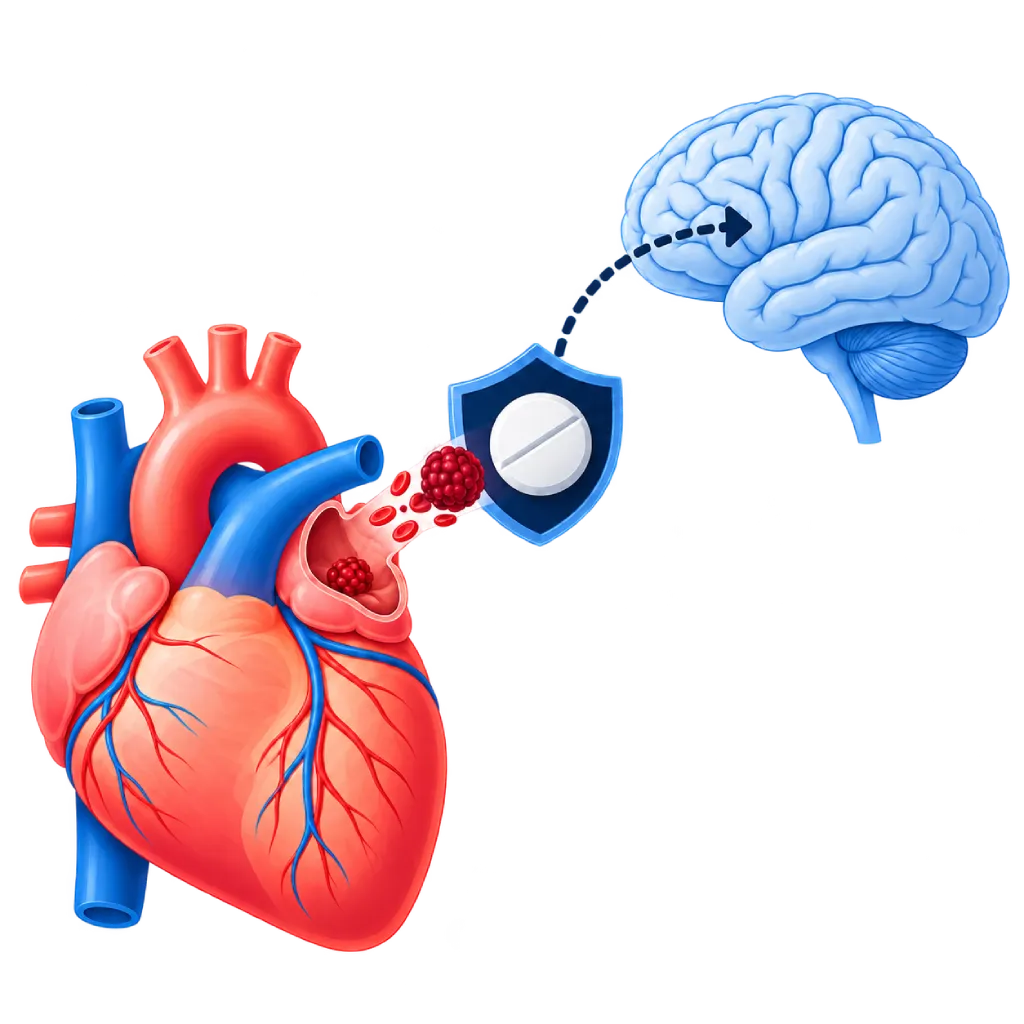
In atrial fibrillation, the upper chambers of the heart quiver irregularly, so blood can pool and form clots, especially in a small pouch of the left atrium called the appendage (auricle). These clots can break loose, travel to the brain, and block a blood vessel, causing a stroke. Anticoagulants prevent clots from forming and lower the risk of stroke by about two thirds. Because these medicines also slow clotting when you have a wound, the dose needs to be right to balance the benefits against the risk of bleeding.
Types of Medicines
- Direct oral anticoagulants: such as apixaban, rivaroxaban, edoxaban, and dabigatran. These are the main choice in atrial fibrillation, because they do not require routine INR tests and cause bleeding in the brain less often than warfarin. The dose is adjusted to kidney function, age, and body weight.
- Warfarin: still needed for mechanical heart valves and moderate to severe narrowing of the mitral valve. Its use is monitored with the INR test, usually with a target of 2 to 3. This is covered on the Coagulation Tests page.
- Heparin injections: used in the hospital or temporarily, for example around the time of a procedure or at the start of treatment for a vein clot.
Assessing the Risk of Stroke and Bleeding
In atrial fibrillation, your doctor calculates the risk of stroke with the CHA2DS2-VA score, which takes into account heart failure, hypertension, age, diabetes, history of stroke, and blood vessel disease. Anticoagulants are recommended for a score of 2 or more and considered for a score of 1. Your doctor also addresses risk factors for bleeding, such as high blood pressure, certain pain relievers, or alcohol, without automatically stopping stroke prevention. Aspirin is not recommended as a substitute for anticoagulants to prevent stroke in atrial fibrillation.
When Long-Term Medicine Is Not Possible
For some people who cannot take anticoagulants long term, for example because they have had severe bleeding, the doctor may consider left atrial appendage closure through a catheter. This procedure closes off the pouch where the majority of clots form.
02 / Understanding the procedure
When Is This Procedure Considered?
A doctor may consider this procedure in the situations below. The decision is always made after a thorough assessment.
- Atrial Fibrillation or Atrial FlutterEspecially with a stroke risk score of 2 or more.
- Deep Vein ThrombosisA clot in a leg vein, usually treated for at least 3 months.
- Pulmonary EmbolismA clot that blocks a blood vessel in the lungs.
- Mechanical Heart ValveRequires lifelong warfarin.
- Moderate to Severe Narrowing of the Mitral ValveEspecially when accompanied by atrial fibrillation; requires warfarin.
- Clot Inside the HeartFor example, in the left ventricle after a heart attack.
Situations to Consider First
- Active BleedingSuch as ongoing bleeding in the digestive tract or brain.
- Severe Kidney or Liver DiseaseThe choice and dose of medicine need to be adjusted; some medicines cannot be used.
- Pregnant or Planning a PregnancyWarfarin and direct oral anticoagulants are usually avoided; your doctor chooses a safe injectable medicine.
- Very Low Platelet CountIncreases the risk of bleeding.
- Upcoming Surgery or Tooth ExtractionThe medicine may need to be paused temporarily as directed by your doctor; do not stop it on your own.
03 / Before the procedure
How Should You Prepare?
The main preparation is bringing complete information about your health and medicines.
List of medicines. Include pain relievers, stomach medicines, supplements, and herbal remedies, because some of them can interact with blood thinners.
Bleeding history. Tell your doctor if you have ever had bleeding in the digestive tract, bleeding in the brain, repeated nosebleeds, or easy bruising.
Test results. Bring your ECG, Holter, echocardiography, and kidney function test results, plus your last INR result if you take warfarin.
Planned procedures. Tell your doctor if you will have surgery, a tooth extraction, or another procedure in the near future.
Unsure about the preparation instructions? Ask our team before the procedure.
04 / During the procedure
How Is the Procedure Done?
A consultation usually takes about 30 minutes. The therapy itself is long term, with regular follow-up visits.
Initial Assessment
Your doctor confirms the diagnosis, calculates your risk of stroke and bleeding, and checks your kidney function, liver function, and complete blood count.
Choosing the Medicine
Your doctor chooses the type of anticoagulant and a dose suited to your age, body weight, kidney function, and the other medicines you take, then explains how to take it correctly.
Monitoring
People taking warfarin have their INR checked regularly, more often at the start of therapy. People taking direct oral anticoagulants have their kidney function and complete blood count checked at least once a year, and more often in older age or with kidney problems.
Education and Medicine Record
You receive an explanation about signs of bleeding, drug interactions, and preparation before procedures. Always carry a note stating the blood thinner you take.
05 / Benefits and risks
Benefits and Risks Should Be Discussed Together.
Every medical procedure has benefits and risks. Your doctor will explain both for your situation before the procedure.
Benefits You Can Expect
- Prevents StrokeIn atrial fibrillation, the risk of stroke drops by about two thirds.
- Treats Clots in the Veins and LungsPrevents clots from growing and coming back.
- Protects Mechanical ValvesPrevents clots from forming on the artificial valve.
- More Practical Medicine OptionsDirect oral anticoagulants do not require routine INR tests.
- A Dose Suited to Your ConditionAdjusted to your kidney function, age, and other medicines.
The benefits of a procedure are not a promise of a cure. Ask how the results will affect your care plan.
Risks You Should Know
- Minor BleedingSuch as bleeding gums, nosebleeds, or easy bruising.
- Major BleedingSuch as bleeding in the digestive tract or brain; rare, but requires immediate treatment.
- Drug and Food InteractionsEspecially with warfarin.
- Stroke If the Medicine Is Missed or StoppedProtection wears off quickly when the medicine is not taken.
Risks can differ from person to person. A full explanation and consent are given after an individual assessment.
06 / After the procedure
What Is Recovery Like?
There is no recovery period. You can go about your usual activities with a few new habits.
Take your medicine on time. Direct oral anticoagulants are short-acting, so missing a single dose already reduces protection. Use an alarm or a pill organizer.
Be careful with other medicines. Avoid anti-inflammatory pain relievers such as ibuprofen without your doctor's approval, and ask before taking supplements or herbal remedies.
Diet for people taking warfarin. Eat green vegetables in consistent amounts rather than avoiding them, because sudden changes can alter your INR.
Tell health care workers. Let them know you take a blood thinner before a tooth extraction, surgery, or an injection.
Warning signs. Go to the emergency room right away if you have:
- Vomiting blood, black stools, or blood in your urine
- A sudden severe headache, especially after a blow to the head
- Bleeding that does not stop after 10 minutes of pressure
- A drooping face, arm weakness, or slurred speech
Know the Signs That Need Prompt Care.
Follow the team's guidance on warning signs. If severe or sudden symptoms appear after the procedure, go to the nearest emergency department right away or call Heart Attack Center 1500 258.
07 / Team and support
Doctors and Procedure Support
The doctors below are listed for this procedure. Listed by name, not by ranking.

Dr. dr. Faris Basalamah, Sp.JP(K)
Interventional Cardiology
Coronary Intervention Procedures +1 center
Clinical focusComplex Coronary Intervention · Cardiac Electrophysiology
View Profile
dr. Indah A. Putri, Sp.N, Subsp, NIOO(K), MSc
Neurovascular, Interventional, Otology, Imaging, and Ophthalmology
Clinical focusStroke and Cerebrovascular Disease · Neurosonology
View Profile
dr. Mery Krismanto, Sp.N
Neurology
Clinical focusStroke and Cerebrovascular Disease · Vascular Neurointervention
View ProfileFARAPULSE Pulsed Field Ablation (PFA)
A catheter ablation system made by Boston Scientific that uses pulsed electrical fields, rather than heat or cold, to isolate the…
The availability of technology and test support is confirmed with the team. Technology is chosen according to clinical need.
08 / Common questions
Before You Plan the Procedure.
Frequently asked questions about anticoagulation therapy and stroke prevention. Your doctor determines the right medicine and dose for you.
Do blood thinners really thin the blood?
No. These medicines do not change how thick your blood is; they slow down the clotting process by blocking clotting factors. As a result, dangerous clots are less likely to form in the heart or blood vessels, but small cuts may also bleed a little longer than usual. Press on a cut for longer until the bleeding stops.
What is the difference between anticoagulants and aspirin?
Aspirin is an antiplatelet medicine that acts on platelets and is mainly used for coronary artery disease. Anticoagulants act on clotting factors and are much more effective at preventing stroke caused by atrial fibrillation. Guidelines do not recommend aspirin as a substitute for anticoagulants to prevent stroke in atrial fibrillation.
Which is better, warfarin or a direct oral anticoagulant?
For the majority of people with atrial fibrillation, direct oral anticoagulants are the main choice because they are as effective or more effective, cause bleeding in the brain less often, and do not require routine INR tests. Warfarin is still needed for mechanical heart valves and moderate to severe narrowing of the mitral valve.
What if I am going to have a tooth extraction or surgery?
Tell your cardiologist and the doctor performing the procedure early on. For minor procedures, the medicine often does not need to be stopped. For larger procedures, the medicine is paused for one to several days depending on the type of medicine and your kidney function. Do not stop or restart the medicine without guidance.
Can I eat green vegetables if I take warfarin?
Yes. Green vegetables contain vitamin K, which affects how warfarin works, but what matters is eating a consistent amount from day to day rather than avoiding them. Sudden changes in eating habits, such as a strict diet or starting to take herbal remedies, can change your INR. Direct oral anticoagulants are not affected by vitamin K.
How long do I need to take blood thinners?
In atrial fibrillation with a risk of stroke, the medicine is usually taken long term, including after the heart rhythm returns to normal with medicine or ablation, because the risk of stroke remains. For clots in the leg veins or lungs, treatment lasts at least 3 months and may be extended depending on the cause. Your doctor reassesses this regularly.
Sources and Medical Review
Translated from the Indonesian edition medically reviewed by Dr. dr. Faris Basalamah, Sp.JP(K).
Sources as cited in the Indonesian edition.
- Van Gelder IC, Rienstra M, Bunting KV, et al. 2024 ESC Guidelines for the management of atrial fibrillation developed in collaboration with the European Association for Cardio-Thoracic Surgery (EACTS). Eur Heart J. 2024;45(36):3314-3414.
- Steffel J, Collins R, Antz M, et al. 2021 European Heart Rhythm Association Practical Guide on the Use of Non-Vitamin K Antagonist Oral Anticoagulants in Patients with Atrial Fibrillation. Europace. 2021;23(10):1612-1676.
- Ruff CT, Giugliano RP, Braunwald E, et al. Comparison of the efficacy and safety of new oral anticoagulants with warfarin in patients with atrial fibrillation: a meta-analysis of randomised trials. Lancet. 2014;383(9921):955-962.
- Hart RG, Pearce LA, Aguilar MI. Meta-analysis: antithrombotic therapy to prevent stroke in patients who have nonvalvular atrial fibrillation. Ann Intern Med. 2007;146(12):857-867.
- Vahanian A, Beyersdorf F, Praz F, et al. 2021 ESC/EACTS Guidelines for the management of valvular heart disease. Eur Heart J. 2022;43(7):561-632.
- Konstantinides SV, Meyer G, Becattini C, et al. 2019 ESC Guidelines for the diagnosis and management of acute pulmonary embolism developed in collaboration with the European Respiratory Society (ERS). Eur Heart J. 2020;41(4):543-603.