
Quick answer
What Is Lymphedema Management?
Lymphedema management is a series of therapies to reduce and control long-term swelling caused by poor lymph flow. The main therapies are lymphatic drainage massage, compression bandages or stockings, exercise, and skin care. Lymphedema usually does not go away completely, but with regular therapy and self-care, swelling can be controlled and infections prevented.
Sources01 / Understanding the procedure
About Lymphedema Management
What Is Lymphedema
Lymphedema is persistent swelling that occurs because lymph fluid cannot drain properly, mainly in the legs or arms. Causes include lymphatic vessel abnormalities present from birth, removal of lymph nodes or radiation during cancer treatment, recurrent infections, injury, obesity, or long-term vein problems. In Indonesia, filarial worm infection, known as elephantiasis, is also one of the causes.
How It Works in Brief
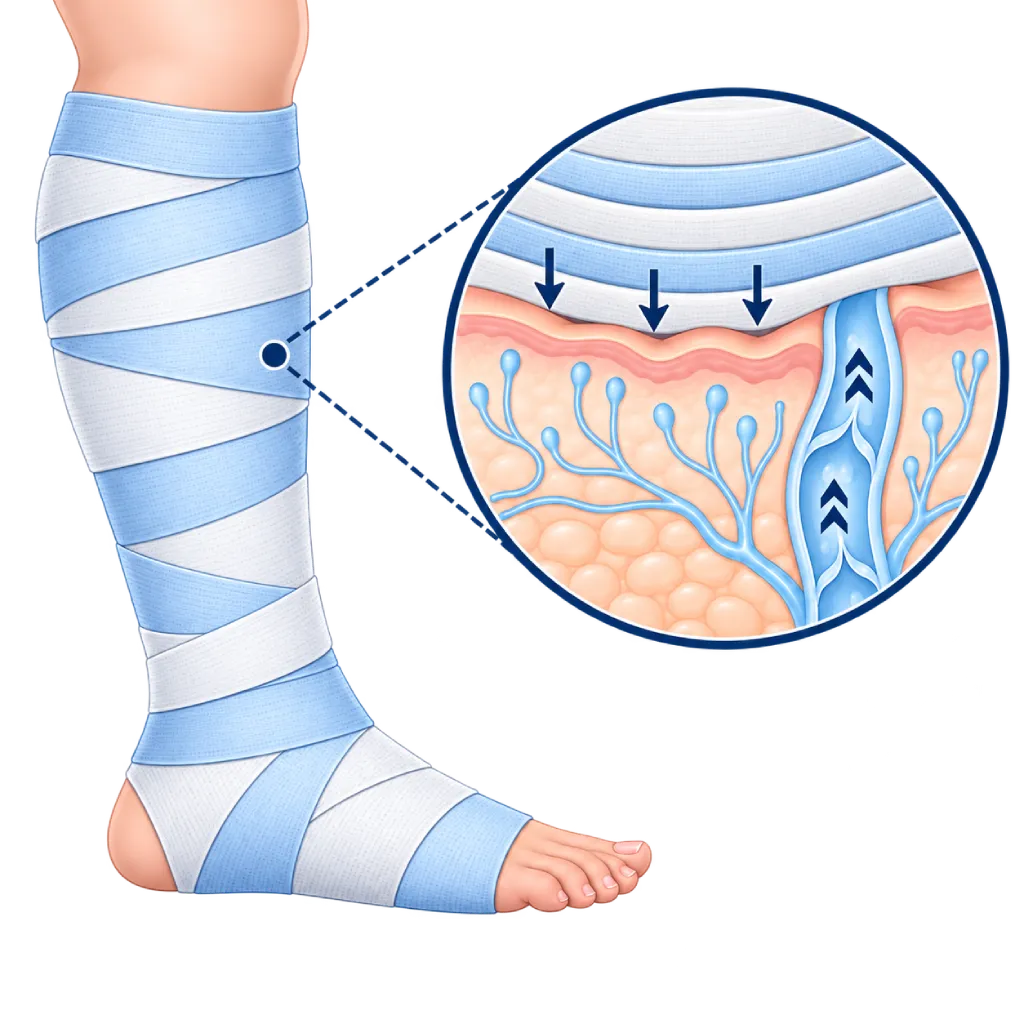
Complete decongestive therapy combines four elements: gentle lymphatic drainage massage to direct fluid toward lymph vessels that still work, multilayer compression bandaging so fluid does not build up again, movement exercises that help the muscles pump lymph, and skin care to prevent infection.
Two Phases of Therapy
- Swelling reduction phase: therapy at the hospital several times a week for several weeks, until the size of the leg or arm shrinks and stabilizes.
- Maintenance phase: you wear a compression stocking or sleeve every day, continue exercises and skin care at home, and have regular follow-up visits.
Why the Heart and Blood Vessels Are Checked
Leg swelling can have many causes, for example heart failure, a blood clot in a vein, long-term vein problems, kidney disease, or certain medicines. These causes need to be confirmed beforehand because their treatment differs. Compression also needs to be adjusted if you have heart failure or narrowing of the leg arteries, so heart function and arterial blood flow are checked before therapy begins.
Other Options
Pneumatic compression pumps can help some patients at home. Surgery, for example connecting lymph vessels to veins or transferring lymph nodes, may be considered in certain cases that do not improve enough with therapy, through referral to the surgical team that handles it.
02 / Understanding the procedure
When Is This Procedure Considered?
A doctor may consider this procedure in the situations below. The decision is always made after a thorough assessment.
- Arm Swelling After Breast Cancer TreatmentAfter removal of the armpit lymph nodes or radiation.
- Persistent Leg SwellingSwelling that does not go away with rest or raising the legs, after other causes have been ruled out.
- Lymphedema from Birth or at a Young AgeDue to congenital abnormalities of the lymph vessels.
- Lymphedema Due to Filarial InfectionTo reduce swelling, care for the skin, and prevent repeated attacks of infection.
- Combined Venous and Lymphatic SwellingIn long-term vein disease or after a blood clot in a vein, which over time also disrupts lymph flow.
- Recurrent Skin Infections in a Swollen LegTherapy and skin care help reduce recurrences of cellulitis.
Situations to Consider First
- Uncontrolled Heart FailureMassage and compression can send large amounts of fluid to the heart, so therapy is postponed until the heart condition is stable.
- Severe Narrowing of the Leg ArteriesStrong compression can reduce blood flow to the feet. An ABI test is done beforehand, then the compression pressure is adjusted or compression is avoided.
- A New, Untreated Blood Clot in a VeinTherapy is postponed until anticoagulant (blood thinner) treatment has started and your doctor allows it.
- Active Skin InfectionMassage and bandaging are stopped temporarily until the cellulitis is treated.
- Open Wounds or Very Fragile SkinWound care takes priority, and compression materials are adjusted.
- Severely Reduced Sense of TouchFor example in diabetic neuropathy, compression is monitored more closely because excess pressure may not be felt.
03 / Before the procedure
How Should You Prepare?
Before therapy begins, your doctor confirms the cause of the swelling and assesses whether the therapy is safe for you.
Initial examination. Your doctor asks about your medical history and examines your legs or arms. Tests that may be done include a venous ultrasound, an ABI test, heart tests, and blood tests. If needed, a lymphatic scan (lymphoscintigraphy) is done to confirm the diagnosis.
Baseline measurements. The circumference or volume of your leg or arm is measured and photographed as a reference to assess the progress of therapy.
Medicines and history. Bring a list of your medicines, previous test results, and records of any surgery or radiation. Tell the team if you have heart failure, a history of blood clots, diabetes, or skin wounds.
Clothing and hygiene. Wear loose clothing. Clean and dry your skin before the session, without using very oily lotions.
Time. The initial phase usually requires several visits each week for several weeks. Plan your schedule with the team.
Unsure about the preparation instructions? Ask our team before the procedure.
04 / During the procedure
How Is the Procedure Done?
One therapy session usually lasts about 45 to 60 minutes. The number of sessions depends on how severe the swelling is.
Skin Care
Your skin is checked, cleaned, and moisturized. Small wounds, fungal infections between the toes or fingers, or cracked skin are treated beforehand because they can become entry points for infection.
Lymphatic Drainage Massage
The therapist massages with gentle, rhythmic movements, starting at the neck and trunk, then moving toward the swollen leg or arm. This massage is not deep or painful. Its purpose is to direct fluid toward lymph vessels that still work.
Compression Bandaging
After the massage, the leg or arm is wrapped in multilayer compression bandages. The bandages are worn until the next session so fluid does not build up again.
Exercise
You are taught gentle movement exercises to do with the bandages on, so your muscles help pump lymph fluid.
Compression Stockings or Sleeves
Once the swelling has decreased and stabilized, your leg or arm is measured for a compression stocking or sleeve to wear every day. You are also taught how to put it on, care for it, and replace it regularly.
05 / Benefits and risks
Benefits and Risks Should Be Discussed Together.
Every medical procedure has benefits and risks. Your doctor will explain both for your situation before the procedure.
Benefits You Can Expect
- Reduced and Controlled SwellingThe size of the leg or arm shrinks and is easier to maintain.
- Lighter Limbs and Easier MovementFeelings of heaviness and stiffness decrease, making daily activities more comfortable.
- Fewer Skin InfectionsSkin care and controlled swelling help prevent recurrent cellulitis.
- Preventing Skin HardeningEarly therapy helps prevent the skin and underlying tissue from thickening.
- Independent Self-CareYou learn how to care for your skin, exercise, and wear compression at home.
The benefits of a procedure are not a promise of a cure. Ask how the results will affect your care plan.
Risks You Should Know
- Discomfort from BandagesBandages feel tight and warm, especially at the start. Tell the therapist if they are too tight.
- Skin Irritation or ChafingMay appear under bandages or stockings, so your skin is checked at every session.
- Reduced Blood Flow If Compression Is Too StrongEspecially with narrowed leg arteries. Remove the compression if your toes or fingers turn pale, cold, or numb.
- Extra Strain on the HeartIn heart conditions, shifting fluid can increase the heart's workload, so therapy is adjusted.
- Swelling ReturnsIf compression and self-care are not continued, the swelling can come back.
Risks can differ from person to person. A full explanation and consent are given after an individual assessment.
06 / After the procedure
What Is Recovery Like?
Lymphedema is a long-term condition. The results of therapy last if you do self-care every day.
Daily compression. Wear your compression stocking or sleeve as recommended, usually from when you wake up until night. Replace it when it becomes loose, usually every few months.
Skin care. Keep your skin clean and moisturized, dry between your toes, trim your nails carefully, and protect your skin from cuts, insect bites, and sunburn.
Stay active. Walking, swimming, and recommended exercises help lymph flow. Maintain a healthy weight.
Regular follow-up visits. Your leg or arm is measured again to assess the results and adjust the compression.
Warning signs to watch for. Go to the emergency room right away or contact the medical team if you experience:
- Red, hot, and painful skin, with fever or chills
- Swelling that increases quickly, especially with calf pain
- Shortness of breath or worsening swelling in both legs
- Toes or fingers that become pale, cold, or numb while wearing compression
Know the Signs That Need Prompt Care.
Follow the team's guidance on warning signs. If severe or sudden symptoms appear after the procedure, go to the nearest emergency department right away or call Heart Attack Center 1500 258.
07 / Team and support
Doctors and Procedure Support
The doctors below are listed for this procedure. Listed by name, not by ranking.

dr. Ayu Amalia U. Putri, Sp.KFR
Physical Medicine & Rehabilitation
Clinical focusCardiac Rehabilitation · Postoperative Rehabilitation
View Profile
dr. Emanoel Oepangat, Sp.JP(K)
Interventional Cardiology
Vascular Diagnostic and Therapeutic Center +1 center
Clinical focusCoronary Intervention · Peripheral Vascular Intervention
View Profile
dr. Suko Adiarto, Sp.JP(K), Ph.D.
Interventional Cardiology
Vascular Diagnostic and Therapeutic Center +1 center
Clinical focusCoronary Intervention · Peripheral Vascular Intervention
View Profile08 / Common questions
Before You Plan the Procedure.
Frequently asked questions about lymphedema management. The therapy plan is tailored to your condition.
Can lymphedema be completely cured?
Lymphedema usually cannot be completely cured because damaged lymph vessels do not return to their original state. However, with regular therapy and self-care, swelling can be reduced and controlled over the long term. The earlier therapy begins, the better the results, because the skin and underlying tissue have not yet had time to harden.
Can water pills reduce lymphedema swelling?
Water pills, or diuretics, are not effective for lymphedema and are not recommended as its main treatment, because lymph fluid is rich in protein and is not easily removed through the kidneys. Diuretics may still be needed if you have another condition such as heart failure. Do not stop or start any medicine without your doctor's guidance.
Does lymphatic drainage massage hurt?
No. Lymphatic drainage massage is different from regular massage. The movements are very gentle and only shift the skin with a slow rhythm, because the lymph vessels lie just beneath the skin. Firm massage is actually not recommended. The majority of patients feel relaxed. Tell the therapist if any area hurts or your skin feels hot.
How long do I need to wear compression stockings?
With lymphedema, compression is usually worn long term, every day from when you wake up until night. Compression stockings or sleeves need to be replaced every few months because their pressure decreases. Your doctor and therapist will determine the right type, size, and pressure level, including if you have heart or artery problems.
Why does my heart need to be checked for leg swelling?
Swelling in both legs is often caused by heart failure, kidney disease, or certain medicines, not lymphedema. Swelling in one leg that appears suddenly may signal a blood clot in a vein. These causes need to be confirmed beforehand because their treatment differs, and strong massage or compression can be dangerous if the heart is not yet stable.
How can I prevent infection in a swollen leg?
Keep your skin clean, the spaces between your toes dry, and your skin moisturized so it does not crack. Wear footwear, avoid cuts and insect bites, and treat fungal skin infections promptly. If your skin becomes red, hot, and painful with a fever, get checked right away because cellulitis needs to be treated with antibiotics as soon as possible.
Sources and Medical Review
Translated from the Indonesian edition medically reviewed by dr. Emanoel Oepangat, Sp.JP(K).
Sources as cited in the Indonesian edition.
- International Society of Lymphology. The Diagnosis and Treatment of Peripheral Lymphedema: 2023 Consensus Document of the International Society of Lymphology. Lymphology. 2023;56(4).
- Grada AA, Phillips TJ. Lymphedema: Diagnostic workup and management. J Am Acad Dermatol. 2017;77(6):995-1006.
- Rabe E, Partsch H, Hafner J, et al. Indications for medical compression stockings in venous and lymphatic disorders: An evidence-based consensus statement. Phlebology. 2018;33(3):163-184.
- Rabe E, Partsch H, Morrison N, et al. Risks and contraindications of medical compression treatment: A critical reappraisal. An international consensus statement. Phlebology. 2020;35(7):447-460.