
Quick answer
What Is Dyslipidemia Management?
Dyslipidemia management is the long-term treatment of abnormal blood fat levels to lower your risk of heart attack and stroke. Your doctor assesses your risk level, sets an LDL cholesterol target, and then combines a healthy diet, physical activity, and medicines such as statins. Your lipid profile is rechecked regularly until the target is reached.
Sources01 / Understanding the procedure
About Dyslipidemia Management
What Is Dyslipidemia Management
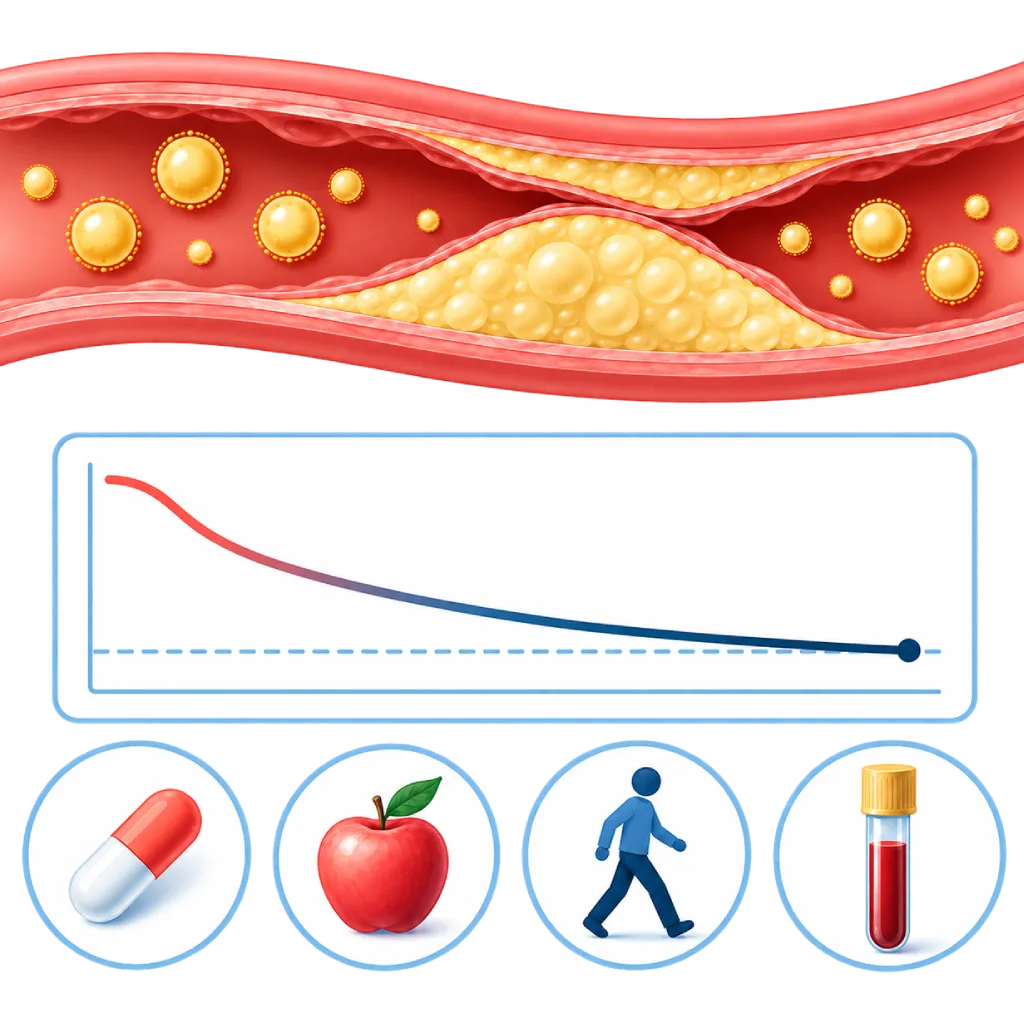
Dyslipidemia is an abnormal level of fats in the blood, mainly high LDL cholesterol, high triglycerides, or low HDL cholesterol. This condition usually causes no symptoms, but high LDL over a long period builds up in the walls of blood vessels as plaque and raises the risk of heart attack and stroke. Dyslipidemia management is long-term treatment to lower your blood fat levels to a target that matches your risk level.
How It Works at a Glance
The lower your LDL cholesterol and the longer it is kept low, the lower your risk of heart attack and stroke. A combined analysis of many studies shows that every reduction in LDL of about 39 mg/dL lowers major cardiovascular events by roughly one fifth. Statins block cholesterol production in the liver, so the liver pulls more LDL out of the blood, while add-on medicines strengthen this effect in different ways.
Targets by Risk Level
Your doctor assesses your risk level beforehand, then sets your LDL cholesterol target. This is covered on the Individual Heart Risk Screening page.
- Low risk: LDL below 116 mg/dL.
- Moderate risk: LDL below 100 mg/dL.
- High risk: LDL below 70 mg/dL and reduced by half or more from the starting value.
- Very high risk: LDL below 55 mg/dL and reduced by half or more, for example after a heart attack or stroke.
Treatment Steps
- Diet and lifestyle: limit saturated and trans fats, eat more fiber, stay active, maintain a healthy weight, stop smoking, and cut down on alcohol if your triglycerides are high. This is covered on the Lifestyle Counseling and Risk Management page.
- Statins: the main LDL-lowering medicines, with the dose adjusted to your target.
- Add-on medicines: ezetimibe if the target has not been reached, then PCSK9 inhibitor injections for very high risk or inherited high cholesterol. Bempedoic acid is an option for people who cannot take statins. This is covered on the Integrated Medication Therapy page.
- High triglycerides: managed by improving blood sugar, weight, and drinking habits, then with medicines if needed. Very high triglycerides, for example above 880 mg/dL, can trigger inflammation of the pancreas (pancreatitis) and need prompt treatment.
- Inherited high cholesterol: LDL of 190 mg/dL or higher may indicate familial hypercholesterolemia; close family members should also be tested.
- High Lp(a): its level is determined by genetics and no specific medicine is widely available yet, so other risk factors are controlled more strictly.
Monitoring
Your lipid profile is rechecked 4 to 12 weeks after a medicine is started or changed, then about once a year once the target is reached. This is covered on the Cholesterol and Lipid Profile Screening page. Liver function is usually checked before and a few weeks after starting a statin, while creatine kinase is checked if muscle symptoms appear. These are covered on the Liver Function Test and Creatine Kinase (CK) Test pages.
02 / Understanding the procedure
When Is This Procedure Considered?
A doctor may consider this procedure in the situations below. The decision is always made after a thorough assessment.
- LDL Cholesterol Above TargetFound on a lipid profile test or a medical check-up.
- High TriglyceridesEspecially when accompanied by diabetes, obesity, or fatty liver.
- After a Heart Attack or StrokeA stricter LDL target to prevent recurrent events.
- Diabetes or Chronic Kidney DiseaseConditions that raise your risk, so the LDL target is lower.
- Suspected Inherited High CholesterolLDL of 190 mg/dL or higher, or a heart attack at a young age in the family.
- High Lp(a)Adds to your risk even when other cholesterol levels are normal.
Situations to Consider First
- Pregnant, Breastfeeding, or Planning a PregnancyStatins are usually not used; discuss your pregnancy plans with your doctor.
- Active Liver DiseaseThe choice and dose of medicines need to be adjusted.
- Previous Muscle Symptoms from StatinsTell your doctor; there is often a solution, for example switching the type or dose.
- Taking Interacting MedicinesSome antibiotics, antifungals, and certain HIV medicines can raise statin levels.
- Severe Abdominal Pain with Very High TriglyceridesIt may be inflammation of the pancreas; go to the emergency room right away rather than waiting for a scheduled follow-up visit.
03 / Before the procedure
How Should You Prepare?
The main preparation is bringing your health records.
Lab results. Bring your previous lipid profile results, including Lp(a) if it has been tested, as well as your blood sugar and kidney function results.
Medication list. Bring all the medicines, supplements, and herbal remedies you are taking, including any cholesterol medicines you have stopped and the reasons why.
Family history. Note any close family members with very high cholesterol or a heart attack at a young age.
Fasting. A lipid profile usually does not require fasting. If your triglycerides were very high before or your doctor asks you to fast, follow the fasting instructions given.
Unsure about the preparation instructions? Ask our team before the procedure.
04 / During the procedure
How Is the Procedure Done?
Each consultation visit usually takes about 30 minutes.
Risk Assessment
Your doctor asks about your medical history, family history, eating habits, physical activity, and smoking, then checks your blood pressure, weight, and waist circumference.
Laboratory Tests
Lipid profile, blood sugar, kidney function, and liver function, plus thyroid function if needed, because thyroid disorders can raise cholesterol.
Setting Your Target and Plan
Your doctor explains your LDL target, starts or adjusts your medicines, and gives dietary advice. A referral to a clinical nutrition doctor is given if needed.
Follow-Up Visits
Your lipid profile is rechecked after 4 to 12 weeks to see whether the target has been reached, then the dose is increased or another medicine is added if needed.
05 / Benefits and risks
Benefits and Risks Should Be Discussed Together.
Every medical procedure has benefits and risks. Your doctor will explain both for your situation before the procedure.
Benefits You Can Expect
- Lower Risk of Heart Attack and StrokeThe benefit is proportional to how much and for how long LDL is lowered.
- A Clear TargetYour LDL target is matched to your risk level.
- Plaque Can Become More StableA large reduction in LDL can slow plaque growth.
- Your Family Is Protected TooFamily testing is recommended if inherited high cholesterol is found.
- Long-Term SupportResults are monitored regularly and medicines are adjusted.
The benefits of a procedure are not a promise of a cure. Ask how the results will affect your care plan.
Risks You Should Know
- Muscle SymptomsThe majority of muscle complaints in people taking statins turn out not to be caused by the statin; tell your doctor so they can be assessed.
- Raised Liver EnzymesUsually mild and rarely harmful; monitored through blood tests.
- Slight Rise in Blood SugarStatins slightly increase the risk of diabetes, but the benefit for the heart is far greater.
- Drug InteractionsSome medicines can raise statin levels; tell your doctor about all the medicines you take.
Risks can differ from person to person. A full explanation and consent are given after an individual assessment.
06 / After the procedure
What Is Recovery Like?
There is no recovery period for a consultation. The key is to follow your treatment plan consistently.
Take your medicine every day. Cholesterol rises again if the medicine is stopped, so do not stop it on your own even when your results look good.
Diet. Replace saturated fats, such as thick coconut milk, fried foods, and fatty meat, with unsaturated fats from fish, nuts, and vegetable oils; eat more vegetables, fruit, and whole grains.
Stay active. Aim for 150 minutes or more of moderate-intensity physical activity per week.
Report symptoms. Tell your doctor if you have unusual muscle pain or weakness, dark urine, or yellowing of the skin and eyes.
Warning signs. Go to the emergency room right away if you have:
- Chest pain, shortness of breath, or cold sweats that do not go away
- Sudden facial drooping, arm weakness, or slurred speech
- Severe upper abdominal pain spreading to the back, especially if your triglycerides are very high
Know the Signs That Need Prompt Care.
Follow the team's guidance on warning signs. If severe or sudden symptoms appear after the procedure, go to the nearest emergency department right away or call Heart Attack Center 1500 258.
07 / Team and support
Doctors and Procedure Support
The doctors below are listed for this procedure. Listed by name, not by ranking.

dr. Debby C. Soemitha, Sp.PD
Internal Medicine
Clinical focusDiabetes and Diabetes Complications · Obesity and Metabolic Disease
View Profile
Dr. med. dr. Denio A. Ridjab, Sp.JP(K)
Interventional Cardiology
Coronary Intervention Procedures +2 centers
Clinical focusInterventional Cardiology · Coronary Artery Disease
View Profile
dr. Juweni Joe, Sp.GK
Clinical Nutrition
Clinical focusMedical Nutrition Intervention · Nutrition for Cardiovascular Patients
View Profile08 / Common questions
Before You Plan the Procedure.
Frequently asked questions about dyslipidemia management. Your target and medicine options are decided together with your doctor.
Do I need to take cholesterol medicine for life?
For the majority of people, yes. Cholesterol medicines control LDL levels rather than removing the cause, so cholesterol usually rises again within a few weeks after the medicine is stopped. Protection for the heart and blood vessels grows the longer LDL is kept low. The dose may be adjusted if your diet and weight improve, but that decision is made together with your doctor.
Do statins damage the liver or kidneys?
Statins rarely cause serious liver damage. A mild rise in liver enzymes can occur and is usually not harmful, which is why your doctor checks them before and a few weeks after the medicine is started. Statins also do not damage the kidneys; in chronic kidney disease, the type and dose are adjusted. Contact your doctor if your skin or eyes turn yellow or your urine becomes dark.
My cholesterol is already normal, so why isn't the medicine stopped?
A normal number often shows that the medicine is working. In people at high risk, for example after a heart attack, the LDL target is lower than the laboratory's normal limit. Stopping the medicine will cause LDL to rise again and increase the risk of cardiovascular events. Talk with your doctor before changing the dose or stopping the medicine.
Is diet alone enough, without medicine?
If your risk is low or moderate and your LDL is slightly above target, diet and lifestyle changes can be tried initially for a few months. Diet usually lowers LDL by a limited amount, while high-dose statins can lower it by half or more. In people at high risk, after a heart attack, or with inherited high cholesterol, medicine is usually needed from the start along with diet.
Can LDL cholesterol be too low?
Studies of strong LDL-lowering medicines, including those that reached very low LDL levels, found no specific harm and instead showed benefits for the heart. The body makes the cholesterol its cells need on its own, so low LDL in the blood does not mean the body is short of cholesterol. Your doctor still monitors your lab results and any symptoms regularly.
What if my Lp(a) is high?
Lp(a) is mainly determined by genetics and is hardly affected by diet or exercise. Medicines that specifically lower Lp(a) are still being studied. For now, if your Lp(a) is high, your doctor controls other risk factors more strictly, for example by bringing LDL and blood pressure down further. Close family members may also be advised to have their Lp(a) checked.
Sources and Medical Review
Translated from the Indonesian edition medically reviewed by dr. Debby C. Soemitha, Sp.PD.
Sources as cited in the Indonesian edition.
- Mach F, Baigent C, Catapano AL, et al. 2019 ESC/EAS Guidelines for the management of dyslipidaemias: lipid modification to reduce cardiovascular risk. Eur Heart J. 2020;41(1):111-188.
- Mach F, Koskinas KC, Roeters van Lennep JE, et al. 2025 Focused Update of the 2019 ESC/EAS Guidelines for the management of dyslipidaemias. Eur Heart J. 2025;46(42):4359-4378.
- Cholesterol Treatment Trialists' (CTT) Collaboration. Efficacy and safety of more intensive lowering of LDL cholesterol: a meta-analysis of data from 170 000 participants in 26 randomised trials. Lancet. 2010;376(9753):1670-1681.
- Cholesterol Treatment Trialists' Collaboration. Effect of statin therapy on muscle symptoms: an individual participant data meta-analysis of large-scale, randomised, double-blind trials. Lancet. 2022;400(10355):832-845.
- Kronenberg F, Mora S, Stroes ESG, et al. Lipoprotein(a) in atherosclerotic cardiovascular disease and aortic stenosis: a European Atherosclerosis Society consensus statement. Eur Heart J. 2022;43(39):3925-3946.