
Quick answer
What Is Coronary Artery Disease?
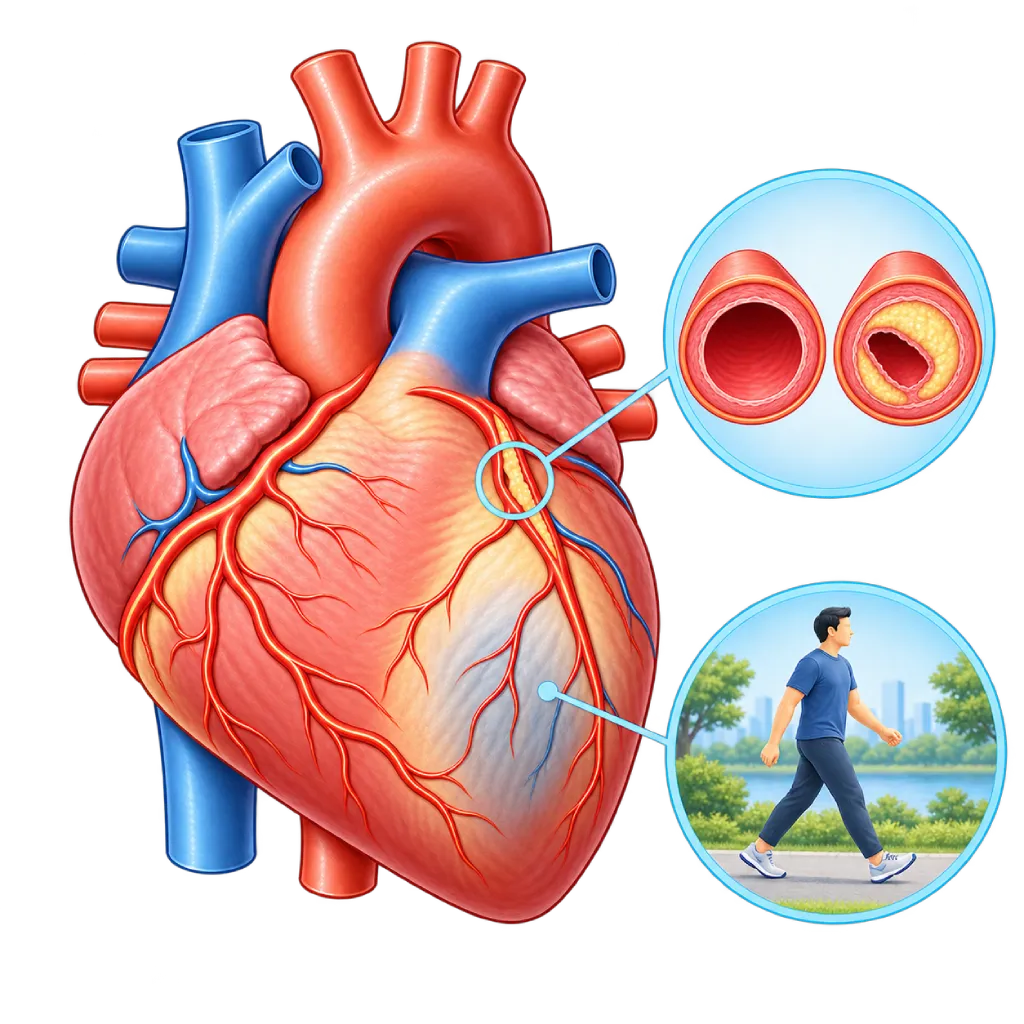
Coronary artery disease occurs when the coronary arteries, the blood vessels of the heart muscle, become narrowed or do not work properly, usually because of fatty plaque. It can lead to angina, a heart attack, or heart failure, and long-term treatment can lower this risk.
SourcesSigns That Need Urgent Help
- Chest pain lasting more than 5 minutes or not easing with rest
- Chest pain that is new, more frequent, more severe, or occurs at rest
- Chest pain with cold sweats, nausea, or shortness of breath
- Severe shortness of breath that comes on suddenly
- Fainting, or a very irregular heartbeat with weakness
If these signs appear, go to the nearest emergency department right away or call Heart Attack Center 1500 258.
01 / Understanding the condition
About Coronary Artery Disease
Coronary artery disease (CAD) is a disorder of the coronary arteries, the blood vessels that wrap around the surface of the heart and supply oxygen to the heart muscle. In most people, it takes the form of plaque buildup in the artery walls that forms slowly over many years. CAD is one of the main causes of death worldwide, including in Indonesia, but many of its triggers can be controlled.
How Plaque Forms
High LDL cholesterol, high blood pressure, high blood sugar, and substances from cigarette smoke injure the inner lining of the arteries. Fat and inflammatory cells then build up and form plaque, a process called atherosclerosis. As plaque grows, it narrows the artery so that blood flow is not enough when the heart works harder. Plaque can also rupture without prior warning and become covered by a blood clot that suddenly blocks the artery.
Forms of Coronary Artery Disease
The 2024 ESC guidelines distinguish between chronic coronary syndromes and acute coronary syndromes. In chronic coronary syndromes, symptoms are stable or even absent. Forms include chest pain during activity, covered on the Angina Pectoris page, and reduced blood flow that is not felt, covered on the Silent Myocardial Ischemia page. Acute coronary syndromes occur when blood flow drops suddenly, for example in unstable angina and heart attack, covered on the Myocardial Infarction / Heart Attack page.
The same guidelines emphasize that the problem is not always a narrowing of the large arteries. The very small blood vessels in the heart muscle may fail to widen, and the coronary arteries may briefly go into spasm. Both can cause symptoms even when catheterization results look normal.
A Long-Term Disease That Can Be Controlled
Plaque does not go away on its own, so CAD needs lifelong management, like hypertension or diabetes. Quitting smoking, staying active, eating a healthy diet, and taking cholesterol-lowering medication, antiplatelets, and medications that control blood pressure and blood sugar have been shown to lower the risk of heart attack. A stent or bypass surgery is chosen when symptoms remain bothersome or the narrowing carries a high risk. With regular care, many people with CAD continue to work, exercise, and lead active lives.
02 / Understanding the condition
Symptoms to Recognize.
Common Symptoms
- Pain, heaviness, or pressure in the chest during activity or emotional stress that eases with rest
- Pain spreading to the arm, shoulder, neck, jaw, or back
- Shortness of breath during activities that used to feel light
- Tiring quickly, or a reduced ability to walk and climb stairs
- Discomfort in the upper abdomen that appears during activity
- Some people have no symptoms, and the disease is found only during a checkup
Symptoms in Adult Women
Chest pain is still the main symptom, but women more often feel the following accompanying symptoms.
- Unusual shortness of breath or fatigue
- Nausea or discomfort in the upper abdomen
- Pain in the upper back, neck, or jaw
- Chest pain that is more often triggered by emotional stress
- Chest pain at rest or during sleep due to small vessel disorders or artery spasm
Symptoms in Older Adults
In older adults, and also in people with diabetes, symptoms are often vague and easily mistaken for signs of aging.
- Shortness of breath during light activity
- Weakness or tiring quickly for no clear reason
- Dizziness or feeling faint during activity
- Vague discomfort in the chest or upper abdomen
03 / Understanding the condition
What Causes This Condition?
- Fatty plaque buildup in the walls of the coronary arteries, covered on the Atherosclerosis page.
- Plaque that ruptures and becomes covered by a blood clot, so blood flow drops suddenly
- A disorder of the very small blood vessels in the heart muscle, which cannot widen as needed
- Spasm of the coronary arteries that narrows the vessel temporarily
- A spontaneous tear in the coronary artery wall, which is rare and covered on the Spontaneous Coronary Artery Dissection page.
- Congenital coronary artery abnormalities or scarring from blood vessel inflammation, for example after Kawasaki disease
04 / Understanding the condition
Who Is at Higher Risk?
Lifestyle
Smoking, including frequent exposure to secondhand smoke, physical inactivity, a diet high in saturated fat, salt, and sugar, and excess weight, especially belly fat.
Medical
High LDL cholesterol, high blood pressure, diabetes, and chronic kidney disease. The risk grows when several of these factors are present together and are not controlled.
Genetic
Early CAD in close family members, meaning a father or brother before age 55 or a mother or sister before age 65, and inherited high cholesterol (familial hypercholesterolemia).
Age
The risk rises with age, especially in men over 45 and in women after menopause.
Other
Long-term stress and depression, lack of sleep, pauses in breathing during sleep (sleep apnea), air pollution, autoimmune diseases such as lupus, and a history of preeclampsia or diabetes during pregnancy.
Groups at Higher Risk
- People with Diabetes: Diabetes speeds up atherosclerosis and can dull the sensation of pain, so CAD sometimes feels only like shortness of breath or fatigue.
- Active and Passive Smokers: Substances in cigarette smoke damage the inner lining of the arteries, speed up plaque formation, and make blood clot more easily.
- People with Hypertension and High Cholesterol: Years of high blood pressure and high LDL cholesterol damage the coronary artery walls and speed up their narrowing.
- Families of People with Early CAD: A parent or sibling who developed CAD at a young age suggests a family susceptibility, including inherited high cholesterol.
- Postmenopausal Women: After menopause, the risk of CAD rises, and disorders of the heart's small blood vessels are found more often in women.
05 / Understanding the condition
How Is It Diagnosed?
Your doctor starts by asking about your symptoms, medical history, and risk factors, then checks your blood pressure, heart, and lungs. An ECG, blood tests, and echocardiography are done to assess the basic condition of your heart and make sure no heart attack is currently happening.
The 2024 ESC guidelines recommend choosing further tests based on the estimated likelihood of CAD, which is calculated from age, sex, type of symptoms, and number of risk factors. If the likelihood is low to moderate, CT coronary angiography can show whether there is plaque and narrowing. If the likelihood is higher, stress testing with imaging, such as stress echocardiography, myocardial perfusion imaging, or cardiac MRI, shows whether the heart muscle is getting too little blood and how large the affected area is.
Coronary angiography with a catheter is done when the likelihood of CAD is very high, test results show high risk, or symptoms remain severe despite treatment. During angiography, the doctor can measure blood flow inside the artery to confirm whether a narrowing needs to be opened.
Electrocardiogram (ECG)
Records the heart's electrical activity to look for signs of reduced blood flow, a previous heart attack, or rhythm disorders. A normal result does not rule out CAD.
Laboratory Tests
Blood lipid profile, blood sugar or HbA1c, kidney function, and hemoglobin to assess risk factors and other causes of symptoms.
Echocardiography
Heart ultrasound to assess pumping strength and heart wall motion, which helps determine risk and the next tests.
CT Coronary Angiography
Shows plaque and narrowing in the coronary arteries without a catheter. Recommended by the 2024 ESC guidelines when the likelihood of CAD is low to moderate.
Stress Echocardiography
Assesses heart wall motion under exercise or medication stress to find areas of heart muscle that lack blood.
Myocardial Perfusion Imaging
Imaging with a tracer to assess the extent and location of heart muscle that lacks blood flow under stress.
Coronary Angiography
Takes X-ray images of the coronary arteries with a catheter and contrast dye, and may include flow measurement (FFR) to confirm whether an artery needs to be opened.
06 / Understanding the condition
Treatment Options.
Treatment is decided by a doctor after an assessment. The categories below can help you follow the conversation with your doctor.
Lifestyle Changes
Quitting smoking, staying active, eating a heart-healthy diet, getting enough sleep, and maintaining a healthy weight form the foundation of all CAD treatment.
Medications to Prevent Heart Attack
Antiplatelets such as aspirin prevent clots, and statins lower LDL cholesterol and stabilize plaque. If the LDL target has not been reached, your doctor may add ezetimibe or a PCSK9 inhibitor.
Medications to Relieve Angina
Beta blockers, calcium channel blockers, and nitrates relieve or prevent angina. Other medications can be added if symptoms are not yet controlled; the type and dose are determined by your doctor.
Blood Pressure and Blood Sugar Control
Blood pressure and blood sugar are controlled to the targets set by your doctor. In diabetes, certain medications in the SGLT2 inhibitor or GLP-1 receptor agonist classes also protect the heart.
Stent Placement Through a Catheter
Percutaneous coronary intervention opens narrowings with a balloon and stent. In stable CAD, this procedure mainly relieves symptoms that are not controlled with medication, and it is chosen based on test results.
Coronary Bypass Surgery
Creates a detour using blood vessels from the chest, arm, or leg. It is considered for narrowing at the base of the left coronary artery or in many arteries, especially when diabetes or a weak heart pump is present.
Cardiac Rehabilitation
Supervised exercise, education, and psychological support to restore fitness and lower the risk of repeat heart events.
07 / Understanding the condition
Complications to Watch For.
Heart Attack
Plaque that ruptures can trigger a clot that blocks the artery, so part of the heart muscle is damaged. Covered on the Myocardial Infarction / Heart Attack page.
Heart Failure
Repeated episodes of reduced blood flow or scarring from a heart attack can weaken the heart's pumping. This condition is covered on the Ischemic Cardiomyopathy page.
Heart Rhythm Disorders
Heart muscle that lacks blood or is scarred can trigger irregular rhythms, from mild ones to those that need urgent treatment.
Sudden Cardiac Arrest
A chaotic rhythm in the ventricles can suddenly stop the heart from pumping. Chest compressions and an AED in the first few minutes play a major role in survival.
Activity Limitations
Frequent angina makes people limit work, exercise, and social activities, and can lead to anxiety or depression.
08 / Understanding the condition
What Can You Do?
- Quit smoking and avoid secondhand smoke.
- Stay active for about 150 minutes per week at moderate intensity, for example brisk walking.
- Choose foods rich in vegetables, fruit, whole grains, fish, and nuts; limit salt, sugar, and saturated fat.
- Keep your weight and waist size within a healthy range.
- Check your blood pressure, cholesterol, and blood sugar regularly, starting earlier if you have a family history.
- If you have been diagnosed with CAD, take your medications as prescribed and do not stop them without talking to your doctor.
- Ask your doctor about a yearly flu vaccine, which is recommended for people with CAD.
09 / Understanding the condition
When Should You See a Doctor?
CAD often causes no symptoms in its early stages, so checkups even before symptoms appear are useful for people at risk. If chest pain lasts more than 5 minutes, does not ease with rest, or comes with cold sweats and shortness of breath, go to the nearest emergency room right away or call an ambulance (119). Do not drive yourself.
Make an appointment with a cardiologist if:
- Pain, heaviness, or shortness of breath appears during activity and goes away with rest.
- Your ability to walk or climb stairs declines for no clear reason.
- You have diabetes, hypertension, high cholesterol, or a family history of early CAD and have never been checked.
- You have been diagnosed with CAD and your symptoms change, your medication causes side effects, or it is time for your checkup.
Don't Wait in an Emergency.
If symptoms are severe or come on suddenly, go to the nearest emergency department right away or call Heart Attack Center 1500 258, rather than waiting for an appointment.
10 / Common questions
Questions You May Have.
Frequently asked questions about coronary artery disease.
What is the difference between coronary artery disease, angina, and a heart attack?
Coronary artery disease is the disease itself, a disorder of the coronary arteries. Angina is a symptom that appears when the heart muscle temporarily lacks blood, usually during activity. A heart attack occurs when an artery is blocked long enough that part of the heart muscle is damaged. A person with CAD may have angina for years, while another person may have a heart attack without any earlier symptoms.
Can coronary artery disease be cured?
Plaque that has already formed usually does not go away, so CAD is managed for life, like hypertension or diabetes. However, plaque growth can be slowed and plaque becomes more stable with statins and lifestyle changes. Many people stay free of symptoms and avoid a heart attack when they take their medication regularly, keep their risk factors under control, and attend checkups on schedule.
Does every coronary artery narrowing need a stent?
Not always. In stable CAD, the ISCHEMIA trial (2020) showed that opening the arteries early did not lower the overall risk of heart attack or death compared with well-managed medical treatment, but it relieved angina better. For this reason, a stent is chosen based on the severity of symptoms, the extent of ischemia, the location of the narrowing, and flow measurement results. During a heart attack, the artery is opened as quickly as possible.
Do I need CT coronary angiography even if I have no symptoms?
Usually not as a routine test. In people without symptoms, doctors usually start by assessing risk factors through blood pressure, cholesterol, blood sugar, and family history. In some people at intermediate risk, a coronary calcium score CT can help decide whether cholesterol-lowering medication is needed. CT coronary angiography is more useful when there are symptoms suspected to come from the heart.
Can people with coronary artery disease exercise?
Yes, and it is recommended after your doctor has assessed your condition. Regular aerobic exercise, for example brisk walking for about 150 minutes per week, improves fitness, blood pressure, cholesterol, and blood sugar. A cardiac rehabilitation program helps determine a safe amount of exercise. Stop exercising if you develop chest pain, severe shortness of breath, or dizziness, then tell your doctor at your next checkup.
Is coronary artery disease inherited?
A family history raises the risk, especially if your father or brother developed it before age 55, or your mother or sister before age 65. Some families carry inherited high cholesterol that should be checked from a young age. However, genes are not destiny: controlling cholesterol, blood pressure, and blood sugar and not smoking still lower your risk.
Sources and Medical Review
Translated from the Indonesian edition medically reviewed by Dr. med. dr. Denio A. Ridjab, Sp.JP(K).
Sources as cited in the Indonesian edition.
- Vrints C, Andreotti F, Koskinas KC, Rossello X, Adamo M, Ainslie J, et al. 2024 ESC Guidelines for the management of chronic coronary syndromes. Eur Heart J. 2024;45(36):3415-537.
- Virani SS, Newby LK, Arnold SV, Bittner V, Brewer LC, Demeter SH, et al. 2023 AHA/ACC/ACCP/ASPC/NLA/PCNA Guideline for the Management of Patients With Chronic Coronary Disease: A Report of the American Heart Association/American College of Cardiology Joint Committee on Clinical Practice Guidelines. Circulation. 2023;148(9):e9-119.
- Maron DJ, Hochman JS, Reynolds HR, Bangalore S, O'Brien SM, Boden WE, et al. Initial Invasive or Conservative Strategy for Stable Coronary Disease. N Engl J Med. 2020;382(15):1395-407.
- Lawton JS, Tamis-Holland JE, Bangalore S, Bates ER, Beckie TM, Bischoff JM, et al. 2021 ACC/AHA/SCAI Guideline for Coronary Artery Revascularization: A Report of the American College of Cardiology/American Heart Association Joint Committee on Clinical Practice Guidelines. Circulation. 2022;145(3):e18-114.
- Byrne RA, Rossello X, Coughlan JJ, Barbato E, Berry C, Chieffo A, et al. 2023 ESC Guidelines for the management of acute coronary syndromes. Eur Heart J. 2023;44(38):3720-826.
- Visseren FLJ, Mach F, Smulders YM, Carballo D, Koskinas KC, Back M, et al. 2021 ESC Guidelines on cardiovascular disease prevention in clinical practice. Eur Heart J. 2021;42(34):3227-337.
- Mach F, Baigent C, Catapano AL, Koskinas KC, Casula M, Badimon L, et al. 2019 ESC/EAS Guidelines for the management of dyslipidaemias: lipid modification to reduce cardiovascular risk. Eur Heart J. 2020;41(1):111-88.
Doctors Who Treat This Condition

dr. Puti S. Saus, Sp.JP(K)
Interventional Cardiology
Coronary Intervention Procedures
Clinical focusAcute Coronary Syndrome · Primary Coronary Intervention
View Profile
Dr. med. dr. Denio A. Ridjab, Sp.JP(K)
Interventional Cardiology
Coronary Intervention Procedures +2 centers
Clinical focusInterventional Cardiology · Coronary Artery Disease
View Profile
Dr. dr. Dudy A. Hanafy, Sp.BTKV, Subsp. JD(K), MARS
Adult Cardiac Surgery
Advanced Cardiovascular Surgical Care +1 center
Clinical focusMinimally Invasive Cardiac Surgery · Coronary Artery Bypass Surgery
View Profile