
Quick answer
What Is Metabolic Syndrome?
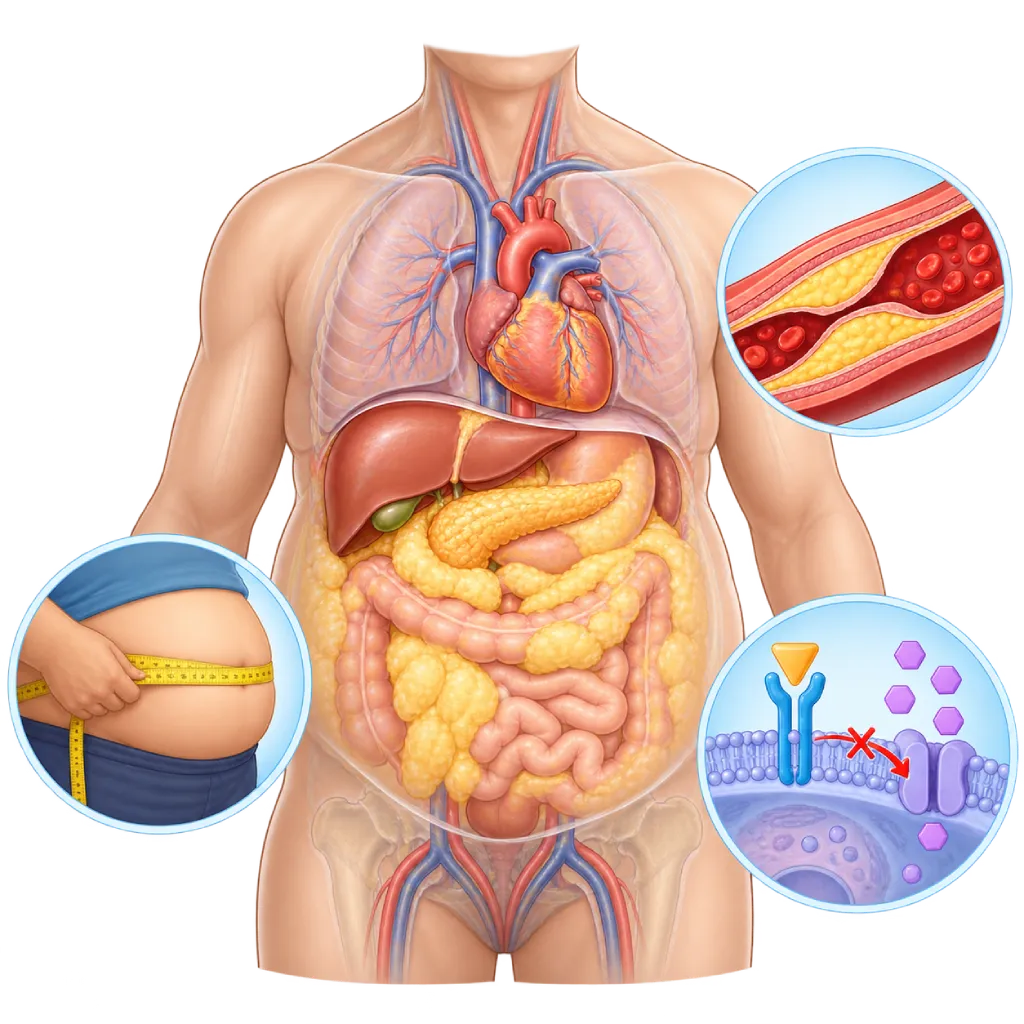
Metabolic syndrome is a cluster of problems that occur together: excess belly fat, high blood pressure, high blood sugar, high triglycerides, and low HDL cholesterol. This combination raises the risk of type 2 diabetes, heart disease, and stroke.
SourcesSigns That Need Urgent Help
- Chest pain or pressure that may spread to the arm, neck, or jaw
- Sudden shortness of breath, cold sweats, or weakness
- Sudden facial drooping, arm or leg weakness, or slurred speech
- Severe headache or blurred vision with very high blood pressure
- Extreme thirst, severe weakness, confusion, or extreme drowsiness
If these signs appear, go to the nearest emergency department right away or call Heart Attack Center 1500 258.
01 / Understanding the condition
About Metabolic Syndrome
Metabolic syndrome is not a single disease but a cluster of related problems that often occur together. Its five components are a large waist circumference, high blood pressure, high fasting blood sugar, high triglycerides, and low HDL cholesterol (good cholesterol). A person is said to have metabolic syndrome if they have at least three of these five components.
Starting with Belly Fat and Insulin Resistance
The core problem is insulin resistance, a state in which the body's cells are less sensitive to insulin, the hormone that helps sugar enter cells. As a result, the pancreas has to make more insulin, and over time blood sugar rises as well. Fat that builds up inside the abdominal cavity, around the liver, intestines, and other organs, plays a major role. This fat actively releases substances that trigger inflammation, which worsens insulin resistance, raises blood pressure, and changes blood fat levels. In Asian people, these problems can appear at a body weight that does not look very excessive.
Effects on the Heart and Blood Vessels
Each component of metabolic syndrome damages the blood vessels, and when they occur together, their effects reinforce one another. According to a joint statement by the IDF, AHA, and NHLBI, metabolic syndrome roughly doubles the risk of heart and blood vessel disease over 5 to 10 years and raises the risk of type 2 diabetes about fivefold. This condition is also linked to fatty liver, chronic kidney disease, heart failure, and pauses in breathing during sleep (sleep apnea). That is why people with metabolic syndrome need to have their blood pressure, blood sugar, cholesterol, and kidney function checked regularly, even if they have no symptoms at all.
It Can Be Improved
The good news is that metabolic syndrome can improve and even go away. Losing about 5 to 10 percent of body weight, regular physical activity, and a healthy diet can improve almost all of its components at once. If needed, your doctor adds medicines for blood pressure, blood sugar, or cholesterol based on your test results. Because it does not always cause symptoms, regular health checkups are the main way to detect it early, before diabetes or heart disease develops.
02 / Understanding the condition
Symptoms to Recognize.
Common Symptoms
The majority of metabolic syndrome components cause no symptoms and are only found during a health checkup.
- Often no symptoms at all
- A growing waistline or a protruding belly
- Thickened, darkened skin on the neck, armpits, or body folds
- Loud snoring or daytime sleepiness
- Frequent thirst and urination once blood sugar is high
- High blood pressure or blood sugar on a routine checkup
03 / Understanding the condition
What Causes This Condition?
- Insulin resistance, in which the body's cells are less sensitive to insulin, so blood sugar has difficulty entering cells
- Fat buildup inside the abdominal cavity and around internal organs (visceral fat)
- A diet high in calories, sugar, refined flour, and sweetened drinks
- Too little movement and sitting for too long
- Inherited factors that affect how the body processes sugar and fat
- Lack of sleep and pauses in breathing during sleep (obstructive sleep apnea)
- Certain medicines, such as long-term corticosteroids and some antipsychotic medicines
04 / Understanding the condition
Who Is at Higher Risk?
Lifestyle
Excess body weight, too little movement, frequent consumption of sweetened drinks and processed foods, smoking, and lack of sleep.
Medical
Prediabetes, a history of gestational diabetes, polycystic ovary syndrome, fatty liver, and obstructive sleep apnea.
Genetic
A parent or sibling with type 2 diabetes, hypertension, or early heart disease. Asian people tend to store fat in the abdomen at a lower body weight.
Age
The risk increases with age, especially after 40, and in women after menopause.
Groups at Higher Risk
- People with a Large Waistline: Belly fat is closely linked to insulin resistance, even when total body weight looks normal.
- Family Members of People with Diabetes or Heart Disease: A family history increases susceptibility to insulin resistance and blood fat disorders.
- Women with Polycystic Ovary Syndrome: Polycystic ovary syndrome is closely linked to insulin resistance, so the components of metabolic syndrome need to be checked regularly.
- People with Fatty Liver: Fatty liver is often a sign of insulin resistance and often occurs together with other components of metabolic syndrome.
- People Aged 40 or Older: The risk increases with age because muscle mass decreases and belly fat tends to increase.
05 / Understanding the condition
How Is It Diagnosed?
Metabolic syndrome is diagnosed with simple tests, without special equipment. According to the widely used harmonized criteria, a person has metabolic syndrome if they meet at least three of the following five components: a waist circumference of 90 cm or more in Asian men and 80 cm or more in Asian women; triglycerides of 150 mg/dL or more; HDL cholesterol below 40 mg/dL in men or below 50 mg/dL in women; blood pressure of 130/85 mmHg or more; and fasting blood sugar of 100 mg/dL or more. A component still counts if you are already taking medicine for that condition.
After that, your doctor assesses your overall risk of heart disease and looks for conditions that often occur alongside it, such as diabetes, fatty liver, kidney disease, and sleep apnea. The results form the basis for your weight loss target and for deciding whether you need medicine.
Physical Examination
Measures waist circumference, weight and height, and blood pressure. In Asian people, a waist circumference of 90 cm or more in men and 80 cm or more in women counts as a component of metabolic syndrome.
Cholesterol and Lipid Profile Screening
Measures triglycerides and HDL cholesterol, two components of metabolic syndrome, as well as LDL cholesterol to assess heart risk.
Blood Sugar Test
Fasting blood sugar of 100 mg/dL or more counts as a component of metabolic syndrome and is a clue to prediabetes or diabetes.
HbA1c Test
Reflects average blood sugar over two to three months, helping confirm prediabetes or diabetes.
Liver Function Test
Looks for signs of fatty liver, which often accompanies metabolic syndrome.
Individual Heart Risk Screening
Combines all risk factors to estimate the risk of heart attack and stroke over the next 10 years.
06 / Understanding the condition
Treatment Options.
Treatment is decided by a doctor after an assessment. The categories below can help you follow the conversation with your doctor.
Gradual Weight Loss
Losing about 5 to 10 percent of body weight over 6 to 12 months improves blood pressure, blood sugar, and blood fats at the same time.
Healthy Eating
Eat more vegetables, fruit, nuts and legumes, whole grains, and fish; cut back on sweetened drinks, refined flour, salt, and saturated fat.
Regular Physical Activity
About 150 to 300 minutes of aerobic activity per week plus muscle-strengthening exercise twice a week helps your body become more sensitive to insulin.
Quitting Smoking and Getting Enough Sleep
Quitting smoking lowers heart risk, while enough sleep and treatment of sleep apnea help control weight and blood pressure.
Medicines for Each Component
If lifestyle changes are not enough, your doctor may prescribe blood pressure medicines, cholesterol-lowering medicines such as statins, or blood sugar-lowering medicines based on your test results.
Obesity Treatment
For obesity, your doctor may consider weight loss medicines such as GLP-1 receptor agonists, or bariatric surgery in certain cases.
07 / Understanding the condition
Complications to Watch For.
Type 2 Diabetes
Long-standing insulin resistance overwhelms the pancreas, so blood sugar stays high. Covered on the Type 2 Diabetes page.
Coronary Artery Disease
Abnormal blood pressure, blood sugar, and blood fats together speed up plaque buildup in the coronary arteries. Covered on the Coronary Artery Disease page.
Stroke
Damage to the blood vessels of the brain and high blood pressure raise the risk of stroke. Covered on the Stroke page.
Heart Failure
High blood pressure, obesity, and diabetes make the heart muscle thick and stiff, so over time the heart's pumping is impaired. Covered on the Heart Failure page.
Fatty Liver
Fat builds up in the liver and can progress to inflammation and scarring of the liver if not treated.
Chronic Kidney Disease
High blood pressure and high blood sugar gradually damage the tiny filters in the kidneys. Covered on the Chronic Kidney Disease page.
08 / Understanding the condition
What Can You Do?
- Measure your waist regularly and keep it below the healthy limit
- Replace sweetened drinks with plain water and eat less food made from refined flour
- Stay active for about 150 minutes per week and break up long periods of sitting by standing or walking
- Fill half your plate with vegetables and choose protein dishes that are grilled, boiled, or steamed
- Get enough sleep, about 7 to 9 hours every night
- Stop smoking and limit alcohol
- Have your blood pressure, blood sugar, and lipid profile checked regularly
09 / Understanding the condition
When Should You See a Doctor?
Get checked if your waist size is above the healthy limit or you have risk factors, even if you feel well. Simple tests can show whether you have metabolic syndrome and how high your heart risk is. Go to the emergency room right away if you have chest pain, signs of stroke, or symptoms of very high blood sugar.
- A waist circumference of 90 cm or more in men, or 80 cm or more in women
- Blood pressure, blood sugar, or triglyceride results above normal
- A close family member with diabetes or early heart disease
- Darkened skin on the neck or armpits, or loud snoring
- A history of gestational diabetes, or having polycystic ovary syndrome
Don't Wait in an Emergency.
If symptoms are severe or come on suddenly, go to the nearest emergency department right away or call Heart Attack Center 1500 258, rather than waiting for an appointment.
10 / Common questions
Questions You May Have.
Frequently asked questions about metabolic syndrome and heart health.
What is the difference between metabolic syndrome and diabetes?
Diabetes is a disease in which blood sugar stays high. Metabolic syndrome is a cluster of risk factors: abnormal belly fat, blood pressure, blood sugar, triglycerides, and HDL. A person can have metabolic syndrome without diabetes, and metabolic syndrome is often a stage before type 2 diabetes. Both raise the risk of heart disease, so both need to be controlled.
What waist size should I watch out for?
For Asian people, including Indonesians, a waist circumference of 90 cm or more in men and 80 cm or more in women counts as a component of metabolic syndrome. Measure while standing, midway between the bottom rib and the hip bone, after breathing out normally. Waist size reflects the fat inside the abdomen, which is more closely linked to heart risk than body weight alone.
Can metabolic syndrome go away?
Yes. Many people manage to improve its components until they no longer meet the criteria for metabolic syndrome. Losing about 5 to 10 percent of body weight, regular physical activity, and a healthy diet can lower blood pressure, blood sugar, and triglycerides while raising HDL. These improvements need to be maintained in the long term, because the components can return if the weight and old habits come back.
Can people with a normal body weight have metabolic syndrome?
Yes, especially Asian people. Some people store fat inside the abdominal cavity even though their body weight looks normal. This fat actively drives insulin resistance. That is why waist size, blood pressure, blood sugar, and lipid profile still need to be checked, especially if a family member has diabetes or heart disease, or if you are rarely active.
Does metabolic syndrome always need medicine?
Not always. The first step is lifestyle change, because it can improve all the components at once. Medicine is given if one of the components is already quite high or your heart risk is high, for example blood pressure medicine, a statin, or blood sugar-lowering medicine. Your doctor decides whether medicine is needed based on your test results, and lifestyle changes continue even when you are taking medicine.
Sources and Medical Review
Translated from the Indonesian edition medically reviewed by dr. Debby C. Soemitha, Sp.PD.
Sources as cited in the Indonesian edition.
- Alberti KGMM, Eckel RH, Grundy SM, Zimmet PZ, Cleeman JI, Donato KA, et al. Harmonizing the Metabolic Syndrome: A Joint Interim Statement of the International Diabetes Federation Task Force on Epidemiology and Prevention; National Heart, Lung, and Blood Institute; American Heart Association; World Heart Federation; International Atherosclerosis Society; and International Association for the Study of Obesity. Circulation. 2009;120(16):1640-1645.
- Neeland IJ, Lim S, Tchernof A, Gastaldelli A, Rangaswami J, Ndumele CE, et al. Metabolic syndrome. Nat Rev Dis Primers. 2024;10(1):77.
- Visseren FLJ, Mach F, Smulders YM, Carballo D, Koskinas KC, Bäck M, et al. 2021 ESC Guidelines on cardiovascular disease prevention in clinical practice. Eur Heart J. 2021;42(34):3227-3337.
- American Diabetes Association Professional Practice Committee for Diabetes. 3. Prevention or Delay of Diabetes and Associated Comorbidities: Standards of Care in Diabetes, 2026. Diabetes Care. 2026;49(Suppl 1):S50-S60.
- Ndumele CE, Rangaswami J, Chow SL, Neeland IJ, Tuttle KR, Khan SS, et al. Cardiovascular-Kidney-Metabolic Health: A Presidential Advisory From the American Heart Association. Circulation. 2023;148(20):1606-1635.
Doctors Who Treat This Condition

dr. Debby C. Soemitha, Sp.PD
Internal Medicine
Clinical focusDiabetes and Diabetes Complications · Obesity and Metabolic Disease
View Profile
Dr. med. dr. Denio A. Ridjab, Sp.JP(K)
Interventional Cardiology
Coronary Intervention Procedures +2 centers
Clinical focusInterventional Cardiology · Coronary Artery Disease
View Profile
dr. Juweni Joe, Sp.GK
Clinical Nutrition
Clinical focusMedical Nutrition Intervention · Nutrition for Cardiovascular Patients
View Profile