
Quick answer
What Is Thrombectomy?
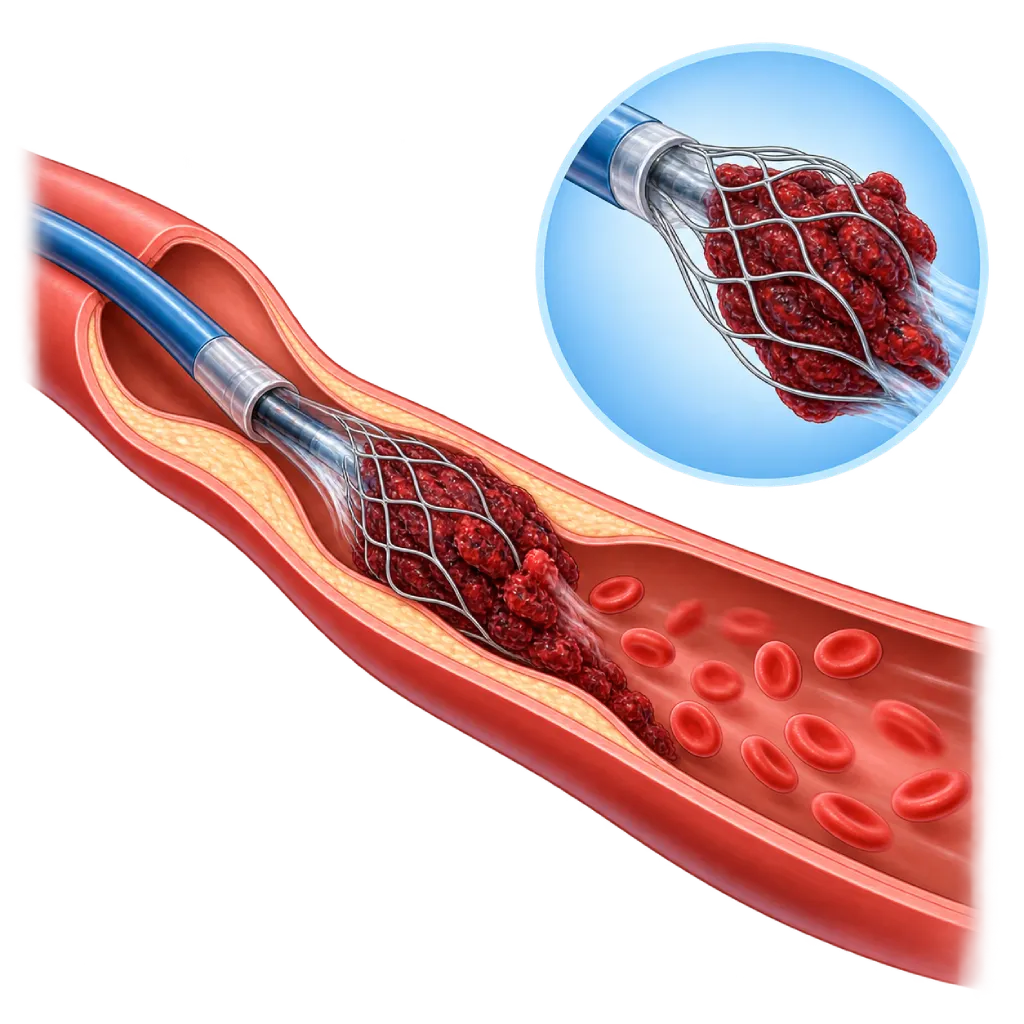
Thrombectomy is a procedure to remove a thrombus, a blood clot inside a blood vessel, so blood flow is restored. It is usually done through a catheter with a suction or clot-breaking device, for blockages in a leg artery, deep vein thrombosis, or pulmonary embolism. The procedure takes about 1 to 3 hours under local anesthesia.
Sources01 / Understanding the procedure
About Thrombectomy
What Is Thrombectomy
A thrombus is a blood clot inside a blood vessel that blocks blood flow. Thrombectomy is a procedure to remove that clot. Today, thrombectomy is usually done through a catheter, a thin tube inserted through a small puncture in the groin, neck, or behind the knee, guided by X-rays. In some situations, the clot is removed with open surgery.
How It Works in Brief
The catheter is guided to the clot. The clot is then suctioned out with an aspiration catheter, or broken up and suctioned out with a mechanical device. Often, clot-dissolving medication is also delivered directly into the clot through the catheter to help, which is called catheter-directed thrombolysis.
Leg Artery Thrombectomy
A clot can form suddenly in a leg artery that is already narrowed by plaque, inside a stent, or in a bypass. The leg becomes painful, pale, cold, and tingly, and this is an emergency. After the clot is removed, the underlying narrowing is usually opened with a balloon or stent, which is covered on the Peripheral Angioplasty page. A clot that has traveled from the heart is more often removed with a balloon catheter through a small incision, which is covered on the Embolectomy page.
Leg and Pelvic Vein Thrombectomy
In deep vein thrombosis, the main treatment is blood-thinning medication, which is covered on the Anticoagulation Therapy and Stroke Prevention page. Thrombectomy is not done routinely, but it may be considered in selected patients with a large, recent clot in the pelvic and thigh veins, severe swelling, or a threatened leg. The goal is to relieve symptoms faster and reduce the severity of long-term swelling and pain later on. If a narrowing of the pelvic vein is found, the doctor may place a vein stent.
Thrombectomy for Pulmonary Embolism
In pulmonary embolism, a clot from a leg vein travels in the bloodstream and blocks a lung artery. If the pulmonary embolism is severe and clot-dissolving medication through an IV cannot be given or does not work, the clot can be reduced with a catheter inserted from a vein in the groin up to the lung artery. This procedure may also be considered if the condition worsens despite blood-thinning medication. If a catheter is not possible, the clot is removed with heart surgery.
A Decision Made with the Team
The choice between medication alone, thrombectomy, or surgery depends on the location and age of the clot, the severity of symptoms, the risk of bleeding, and your general condition. Your doctor explains these options before the procedure.
02 / Understanding the procedure
When Is This Procedure Considered?
A doctor may consider this procedure in the situations below. The decision is always made after a thorough assessment.
- Sudden Clot Blockage in a Leg ArteryThe leg suddenly becomes painful, pale, cold, or tingly because of a clot.
- Clot in a Leg Stent or BypassA stent or bypass is blocked by a clot, so symptoms appear suddenly.
- Extensive Pelvic and Thigh Vein ThrombosisSevere swelling and pain in selected patients, especially if the leg is threatened.
- Severe Pulmonary EmbolismWhen clot-dissolving medication through an IV cannot be given or does not work.
- Worsening Pulmonary EmbolismThe condition worsens despite blood-thinning medication.
Situations to Consider First
- Very High Bleeding RiskEspecially if clot-dissolving medication is planned; carefully assessed by the team.
- Leg Tissue That Can No Longer Be SavedSevere muscle and nerve damage; other treatment such as amputation is considered.
- Limited or Older Vein ClotsClots only in the calf, or clots that are several weeks old, are usually treated with medication alone.
- Mild Pulmonary EmbolismUsually treated with blood-thinning medication and monitoring.
- Severe Allergy to Contrast DyeRequires special medication before the procedure.
03 / Before the procedure
How Should You Prepare?
Thrombectomy is often done urgently, so preparation is done quickly in the emergency room or hospital ward.
Blood-thinning medication. Usually given right away through an IV or injection to prevent the clot from spreading.
Imaging tests. Ultrasound for leg vein clots, and CT angiography for the leg arteries or lung arteries. These are covered on the Duplex Ultrasound and Peripheral CT Angiography pages.
Blood tests. Complete blood count, blood clotting, and kidney function.
Important information. Tell the team about the medications you take, any history of bleeding, stroke, or recent surgery, any contrast allergy, and when you last ate.
Consent. The doctor explains the options, the risk of bleeding, and the possibility of additional procedures such as a balloon or stent.
Unsure about the preparation instructions? Ask our team before the procedure.
04 / During the procedure
How Is the Procedure Done?
Thrombectomy is done in the catheterization lab under local anesthesia, and a sedative may be given. The procedure takes about 1 to 3 hours. If clot-dissolving medication needs to be delivered through the catheter, the infusion may continue for several hours to about one day in the intensive care unit, followed by a repeat check.
Blood Vessel Access
After local anesthesia, a small sheath is inserted into an artery or vein, usually in the groin. For leg vein clots, the puncture is often made behind the knee while you lie face down.
Mapping the Clot
Contrast dye is injected and recorded with X-rays to see the location and length of the clot.
Removing the Clot
An aspiration catheter or mechanical device is run through the clot to suction it out or break it up. If needed, clot-dissolving medication is delivered directly into the clot.
Treating the Cause
After blood flow is restored, any remaining narrowing in the artery or vein can be widened with a balloon or stent.
Closing the Puncture Site
The sheath is removed and the puncture site is pressed until the bleeding stops.
05 / Benefits and risks
Benefits and Risks Should Be Discussed Together.
Every medical procedure has benefits and risks. Your doctor will explain both for your situation before the procedure.
Benefits You Can Expect
- Faster Restoration of Blood FlowThe clot is removed directly, rather than only waiting for medication to dissolve it.
- No Large IncisionDone through a small puncture under local anesthesia.
- Less Clot-Dissolving MedicationThe medication is delivered directly into the clot, so the dose can be reduced or it may not be needed.
- Helps Save the LegEspecially when done promptly for a sudden blockage of a leg artery.
- Relief of Swelling and PainIn extensive vein clots, symptoms can ease more quickly.
The benefits of a procedure are not a promise of a cure. Ask how the results will affect your care plan.
Risks You Should Know
- BleedingAt the puncture site or, less often, in other organs when clot-dissolving medication is used.
- Clot Fragments Carried by the BloodstreamCan block smaller branch vessels downstream; usually treated right away.
- Damage to the Vessel WallRare; usually treatable with a balloon or stent.
- Breakdown of Red Blood CellsSome devices break down red blood cells, so urine may temporarily turn dark.
- Kidney ProblemsFrom contrast dye or broken-down blood cells; kidney function is checked.
- Repeat BlockageA clot can form again, which is why blood-thinning medication and monitoring are important.
Risks can differ from person to person. A full explanation and consent are given after an individual assessment.
06 / After the procedure
What Is Recovery Like?
Patients stay in the hospital for several days. The length of stay depends on the location of the clot and the underlying disease. After thrombectomy for pulmonary embolism, monitoring is usually done in the intensive care unit.
Monitoring. The puncture site, pulse, leg color and temperature, blood pressure, and breathing are checked regularly.
Blood-thinning medication. For vein clots and pulmonary embolism, this medication is usually taken for at least 3 months, sometimes longer depending on the cause.
Compression stockings and activity. After vein thrombectomy, compression stockings may be recommended to reduce swelling. Walking starts gradually as instructed by the team.
Follow-up. Duplex ultrasound or other tests are done to confirm that the blood vessel stays open.
Warning signs. Go to the emergency room right away if you have:
- A leg that becomes painful, pale, cold, or tingly again
- A leg that becomes more swollen and painful
- Sudden shortness of breath, chest pain, or coughing up blood
- Bleeding or growing swelling at the puncture site
- A severe headache, weakness on one side of the body, or slurred speech
- Black stools or red urine
Know the Signs That Need Prompt Care.
Follow the team's guidance on warning signs. If severe or sudden symptoms appear after the procedure, go to the nearest emergency department right away or call Heart Attack Center 1500 258.
07 / Team and support
Doctors and Procedure Support
The doctors below are listed for this procedure. Listed by name, not by ranking.

dr. Emanoel Oepangat, Sp.JP(K)
Interventional Cardiology
Vascular Diagnostic and Therapeutic Center +1 center
Clinical focusCoronary Intervention · Peripheral Vascular Intervention
View Profile
dr. Suko Adiarto, Sp.JP(K), Ph.D.
Interventional Cardiology
Vascular Diagnostic and Therapeutic Center +1 center
Clinical focusCoronary Intervention · Peripheral Vascular Intervention
View ProfileVascular Interventional Suite
A procedure room with X-ray imaging for diagnosing and treating narrowed, blocked, or enlarged blood vessels outside the heart…
The availability of technology and test support is confirmed with the team. Technology is chosen according to clinical need.
08 / Common questions
Before You Plan the Procedure.
Frequently asked questions about thrombectomy. In an emergency, contact the emergency room right away.
What is the difference between thrombectomy and embolectomy?
Both remove blood clots. Thrombectomy usually removes a clot that formed where it is, for example in an artery that is already narrowed, in a stent, or in a leg vein, and is often done through a catheter. Embolectomy removes a clot that traveled from elsewhere, usually from the heart, typically with a balloon catheter through a small incision. This is covered on the Embolectomy page.
Does thrombectomy hurt?
The puncture site is numbed with local anesthesia, so you usually only feel pressure. Sedatives and pain relievers can be given, especially if the procedure takes a long time or you need to lie face down. After the procedure, the puncture site may be slightly sore or bruised for a few days.
Do all leg vein clots need thrombectomy?
No. The majority of deep vein thromboses are treated adequately with blood-thinning medication alone. Large studies show that thrombectomy does not need to be done routinely, but it may help selected patients with a large, recent clot in the pelvic and thigh veins, severe swelling, or a threatened leg. The decision is made with the team based on the age of the clot, the severity of symptoms, and the risk of bleeding.
Is thrombectomy also used for stroke?
Yes. In stroke caused by a blockage of a large blood vessel in the brain, thrombectomy can be done within a certain time window by a neurology and brain vessel intervention team. The information here covers thrombectomy in leg arteries, deep veins, and lung arteries. If you notice a drooping face, weakness on one side of the body, or slurred speech, go to the emergency room right away without waiting for the symptoms to improve.
How long will I stay in the hospital?
Usually several days. If clot-dissolving medication is delivered through a catheter, you are monitored in the intensive care unit for about one day before a repeat check. After thrombectomy for pulmonary embolism, intensive monitoring is also needed. The length of stay depends on the location of the clot, the underlying disease, and how you respond to treatment.
Do I need to take blood thinners afterward?
Yes. Thrombectomy removes the existing clot, but it does not prevent new clots. For vein clots and pulmonary embolism, blood thinners are usually taken for at least 3 months, and longer if the cause persists. After a leg artery procedure, antiplatelet medication or blood thinners are given depending on your condition. Do not stop your medications without consulting your doctor.
Sources and Medical Review
Translated from the Indonesian edition medically reviewed by dr. Emanoel Oepangat, Sp.JP(K).
Sources as cited in the Indonesian edition.
- Björck M, Earnshaw JJ, Acosta S, et al. European Society for Vascular Surgery (ESVS) 2020 Clinical Practice Guidelines on the Management of Acute Limb Ischaemia. Eur J Vasc Endovasc Surg. 2020;59(2):173-218.
- Mazzolai L, Teixido-Tura G, Lanzi S, et al. 2024 ESC Guidelines for the management of peripheral arterial and aortic diseases. Eur Heart J. 2024;45(36):3538-3700.
- Kakkos SK, Gohel M, Baekgaard N, et al. European Society for Vascular Surgery (ESVS) 2021 Clinical Practice Guidelines on the Management of Venous Thrombosis. Eur J Vasc Endovasc Surg. 2021;61(1):9-82.
- Vedantham S, Goldhaber SZ, Julian JA, et al. Pharmacomechanical catheter-directed thrombolysis for deep-vein thrombosis. N Engl J Med. 2017;377(23):2240-2252.
- Konstantinides SV, Meyer G, Becattini C, et al. 2019 ESC Guidelines for the diagnosis and management of acute pulmonary embolism developed in collaboration with the European Respiratory Society (ERS). Eur Heart J. 2020;41(4):543-603.
- Giri J, Sista AK, Weinberg I, et al. Interventional therapies for acute pulmonary embolism: current status and principles for the development of novel evidence: a scientific statement from the American Heart Association. Circulation. 2019;140(20):e774-e801.