
Quick answer
What Is Antiphospholipid Syndrome?
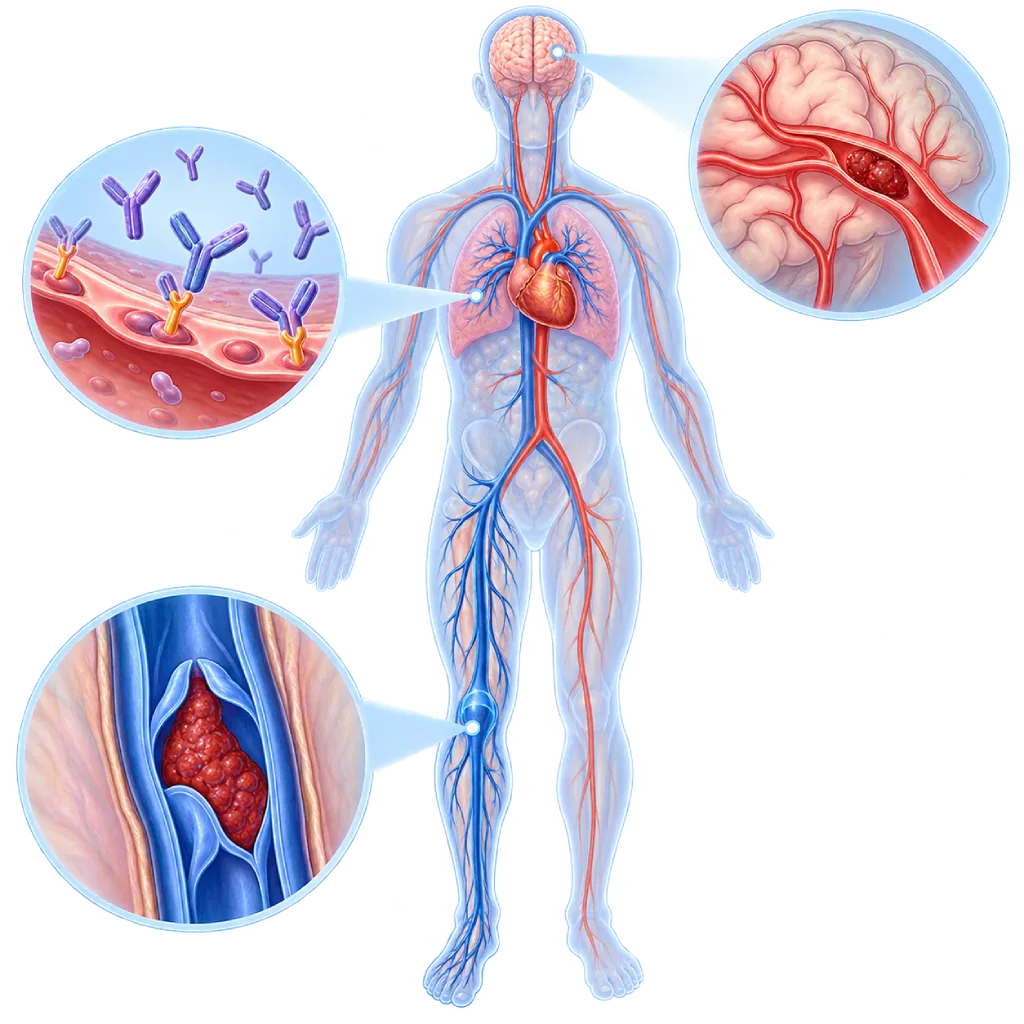
Antiphospholipid syndrome is an autoimmune disease in which certain antibodies make the blood clot easily. This can lead to clots in the leg veins, lungs, brain, or heart, as well as repeated miscarriages and pregnancy complications.
SourcesSigns That Need Urgent Help
- Sudden shortness of breath or chest pain that gets worse when you breathe in
- Coughing up blood
- Chest pain or pressure that spreads to the arm or jaw
- Sudden facial drooping, arm weakness, or slurred speech
- Sudden pain, paleness, and coldness in a leg or arm
- Severe abdominal pain that comes on suddenly
- Problems in several organs at once over a few days, such as shortness of breath, reduced urine output, and confusion
If these signs appear, go to the nearest emergency department right away or call Heart Attack Center 1500 258.
01 / Understanding the condition
About Antiphospholipid Syndrome
Antiphospholipid syndrome is an autoimmune disease in which the immune system makes antibodies that cause the blood to clot more easily. Clots can form in the veins, especially the deep veins of the legs, as well as in the arteries that carry blood to the brain, heart, kidneys, or other organs. In women, the syndrome can also disrupt blood flow to the placenta, leading to repeated miscarriages or pregnancy complications.
The syndrome can occur on its own (primary) or alongside another autoimmune disease, especially systemic lupus erythematosus (secondary). It affects more women than men and is usually diagnosed between young adulthood and middle age. Some people have antiphospholipid antibodies without ever having a clot; this is not yet called the syndrome, but the risk still needs to be assessed with a doctor.
Effects on the Heart and Blood Vessels
A common event is deep vein thrombosis in the legs, where a clot can break off and travel to the lungs, causing a pulmonary embolism. On the arterial side, stroke and transient ischemic attack (TIA), a temporary stroke, are common, so the syndrome should be looked for in young people who have a stroke with no clear cause. Antiphospholipid syndrome can also cause a heart attack at a young age, thickening or deposits on the heart valves, especially the mitral and aortic valves, and high pressure in the blood vessels of the lungs from repeated clots.
In a small number of people with the syndrome, clots form in many organs at once over a few days. This condition, called catastrophic antiphospholipid syndrome, is rare but is an emergency that requires intensive care.
Long-Term Treatment
Antiphospholipid syndrome cannot yet be cured, but the risk of clots can be lowered. After a clot, most people with the syndrome need long-term blood thinners, usually warfarin with INR monitoring. EULAR guidelines do not recommend rivaroxaban for people who are positive for all three antibodies, and direct oral anticoagulants are generally avoided after a clot in an artery. During pregnancy, doctors use heparin injections and aspirin because warfarin can harm the baby. With good treatment and monitoring, many people with the syndrome can lead active lives and go through pregnancy well.
02 / Understanding the condition
Symptoms to Recognize.
Common Symptoms
Symptoms depend on where the clot forms. Some people have the antibodies without any symptoms until the first clot occurs.
- One leg that is swollen, painful, warm, or red
- Purplish, net-like patches on the skin, especially on the legs
- Sores on the legs that are slow to heal
- Brief weakness or numbness on one side of the body that then recovers
- Brief vision problems in one eye
- Bruising or small red spots on the skin due to a low platelet count
- Shortness of breath with activity due to a heart valve problem
Symptoms in Adult Women
Antiphospholipid antibodies can disrupt blood flow to the placenta, so the first signs often appear during pregnancy.
- Repeated miscarriages early in pregnancy
- Death of the baby in the womb after 10 weeks of pregnancy
- Severe preeclampsia or premature birth before 34 weeks of pregnancy
- Restricted growth of the baby due to placental problems
03 / Understanding the condition
What Causes This Condition?
- The immune system makes antiphospholipid antibodies that target fat-binding proteins on the surface of cells
- These antibodies activate the inner lining of the blood vessels, the platelets, and the clotting system, so the blood clots easily
- Other autoimmune diseases, especially systemic lupus erythematosus (secondary antiphospholipid syndrome)
- A genetic susceptibility that runs in families
- Clot triggers in people who already have the antibodies, such as infection, surgery, pregnancy, or long periods of not moving
- Certain infections or medicines that can cause antiphospholipid antibodies to appear, usually temporarily
04 / Understanding the condition
Who Is at Higher Risk?
Lifestyle
Smoking, long periods of not moving such as long trips or bed rest, and obesity add to the risk of clots in people with antiphospholipid antibodies.
Medical
Lupus or other autoimmune diseases, high blood pressure, high cholesterol, diabetes, pregnancy, surgery, and birth control pills or hormone therapy that contain estrogen.
Genetic
A family history of autoimmune disease or blood clotting disorders can increase susceptibility.
Age
Usually diagnosed between young adulthood and middle age, and more common in women.
Other
A high-risk antibody profile, for example a positive lupus anticoagulant or all three antibody types positive at once, especially if it persists.
Groups at Higher Risk
- People with Lupus: About one third of people with lupus have antiphospholipid antibodies, so testing is recommended. Covered on the Systemic Lupus Erythematosus page.
- Women with Repeated Miscarriages: Repeated miscarriages or severe pregnancy complications with no clear cause can be a sign of antiphospholipid syndrome.
- Young People with Blood Clots or Stroke: A blood clot, stroke, or heart attack before age 50 without clear risk factors needs to have its cause investigated, including antiphospholipid antibodies.
- People with Recurrent Blood Clots: Clots that come back or appear in unusual places, such as the blood vessels of the abdomen or brain, need further testing.
05 / Understanding the condition
How Is It Diagnosed?
Antiphospholipid syndrome is diagnosed when two things are present together: a clinical event, such as a blood clot or a pregnancy complication, and antiphospholipid antibodies that persist. The antibodies are checked with a blood test, which is repeated after at least 12 weeks, because antibodies can appear temporarily during an infection or while taking certain medicines.
Three types of antibodies are tested: lupus anticoagulant, anticardiolipin, and anti-beta2 glycoprotein I. Being positive for all three at once indicates a higher risk of clots. The 2023 ACR/EULAR classification criteria assign points for the type of clotting event, pregnancy complications, heart valve abnormalities, a low platelet count, and the antibody profile.
The timing of the test matters because blood thinners can affect lupus anticoagulant results. Your doctor also looks for lupus or other autoimmune diseases, as well as blood vessel risk factors such as high blood pressure, high cholesterol, and smoking.
Antiphospholipid Antibody Test
Looks for lupus anticoagulant, anticardiolipin, and anti-beta2 glycoprotein I. A positive result needs to be repeated after at least 12 weeks to confirm that the antibodies persist.
Coagulation Tests
Assesses blood clotting time. Lupus anticoagulant can prolong the result of this test even though it actually makes the blood clot easily.
Complete Blood Count (CBC)
Looks for a low platelet count, which can accompany antiphospholipid syndrome.
Duplex Ultrasound
Looks for clots in the veins of the legs or arms when there is swelling and pain.
Echocardiography
Looks for thickening or deposits on the heart valves, which can accompany antiphospholipid syndrome.
Antinuclear Antibody Test (ANA Test)
Looks for lupus or other autoimmune diseases that often accompany antiphospholipid syndrome.
A CT scan or MRI of the brain if there are symptoms of a stroke or nerve problems, to look for blocked blood vessels in the brain.
06 / Understanding the condition
Treatment Options.
Treatment is decided by a doctor after an assessment. The categories below can help you follow the conversation with your doctor.
Vitamin K Antagonist Anticoagulants
Warfarin is the main choice after a blood clot and is usually taken long term. Your doctor adjusts the dose based on regular INR test results.
Direct Oral Anticoagulants
Drugs such as rivaroxaban are not recommended for a high-risk antibody profile or after a clot in an artery, but may be considered in certain situations when warfarin cannot be used.
Aspirin
May be considered for people with a high-risk antibody profile who have never had a clot, based on the doctor's assessment.
Heparin and Aspirin During Pregnancy
During pregnancy, low molecular weight heparin injections and aspirin are used to protect the pregnancy and prevent clots, with monitoring together with an obstetrician.
Hydroxychloroquine
In people with lupus, this medicine helps control the disease and may lower the risk of clots.
Control of Blood Vessel Risk Factors
Quitting smoking, controlling blood pressure and cholesterol, staying active, and avoiding birth control pills that contain estrogen.
Treatment of the Catastrophic Form
This emergency is treated in intensive care with a combination of anticoagulants, corticosteroids, and plasma exchange or immunoglobulin.
07 / Understanding the condition
Complications to Watch For.
Blood Clots in the Leg Veins
A clot in the deep veins of the leg causes swelling and pain and can come back if treatment is stopped. Covered on the Deep Vein Thrombosis page.
Pulmonary Embolism
A clot that breaks off and travels to the lungs causes sudden shortness of breath and chest pain and needs urgent care. Covered on the Pulmonary Embolism page.
Ischemic Stroke
A clot in an artery of the brain can cause a stroke or a transient ischemic attack, even at a young age. Covered on the Ischemic Stroke page.
Heart Attack
A clot in a coronary artery can cause a heart attack even when the arteries have little plaque. Covered on the Myocardial Infarction / Heart Attack page.
Heart Valve Abnormalities
Thickening or sterile deposits on the valves can make them leak or narrow and become a source of clots that travel to the brain. Covered on the Heart Valve Disease page.
Chronic Thromboembolic Pulmonary Hypertension
Repeated clots in the lungs can permanently block the blood vessels of the lungs and strain the right side of the heart. Covered on the Chronic Thromboembolic Pulmonary Hypertension page.
Pregnancy Complications
Repeated miscarriages, severe preeclampsia, restricted growth of the baby, and premature birth due to reduced blood flow to the placenta.
08 / Understanding the condition
What Can You Do?
- Take your blood thinners on schedule and have your INR checked as advised
- Do not stop or switch blood thinners without talking to your doctor
- Quit smoking and keep a healthy weight
- Move around and drink enough fluids during long trips or after surgery
- Avoid birth control pills and hormone therapy that contain estrogen; discuss other contraception with your doctor
- Plan any pregnancy with your doctor before you become pregnant
- Keep your blood pressure, cholesterol, and blood sugar under control
09 / Understanding the condition
When Should You See a Doctor?
See a doctor if you have had a blood clot or a pregnancy complication with no clear cause, especially at a young age. People with lupus are also advised to be tested for antiphospholipid antibodies. Go to the emergency room right away if you have sudden shortness of breath, chest pain, or signs of a stroke.
- Swelling and pain in one leg
- A history of repeated miscarriages or the death of a baby in the womb
- A stroke, transient ischemic attack, or heart attack before age 50
- Having lupus and planning a pregnancy
- Bruising, nosebleeds, or bleeding while taking blood thinners
- Purplish, net-like patches on the skin of the legs
Don't Wait in an Emergency.
If symptoms are severe or come on suddenly, go to the nearest emergency department right away or call Heart Attack Center 1500 258, rather than waiting for an appointment.
10 / Common questions
Questions You May Have.
Frequently asked questions about antiphospholipid syndrome and blood thinners.
Is antiphospholipid syndrome the same as having thick blood?
People often call it thick blood, but the blood is not actually any thicker. What happens is that certain antibodies make the blood's clotting system switch on more easily, so clots form in the blood vessels. The term thick blood is also used for other conditions, such as too many red blood cells or high cholesterol. That is why antiphospholipid syndrome can only be confirmed with repeated antibody tests.
Why do antiphospholipid antibody tests need to be repeated?
Antiphospholipid antibodies can appear temporarily, for example during an infection or after taking certain medicines, and then go away on their own. Temporary antibodies like these do not always raise the risk of clots. That is why a positive result needs to be repeated after at least 12 weeks. Antiphospholipid syndrome can only be diagnosed when the antibodies persist and there is a clinical event, such as a blood clot or a pregnancy complication.
Can people with antiphospholipid syndrome get pregnant?
Yes. With the right planning and treatment, many people with antiphospholipid syndrome can give birth to a healthy baby. During pregnancy, warfarin is usually replaced with heparin injections, often combined with aspirin, because warfarin can harm the baby. The pregnancy needs to be monitored together with an internal medicine doctor and an obstetrician, including blood pressure, the baby's growth, and signs of preeclampsia.
Why are newer blood thinners not always recommended?
The TRAPS study found that in people positive for all three antibodies, rivaroxaban was followed by clots in the arteries, such as stroke and heart attack, more often than warfarin. That is why EULAR guidelines recommend warfarin as the main choice, especially for a high-risk antibody profile or after a clot in an artery. Do not switch the type of blood thinner on your own; this decision is made by your doctor.
Do blood thinners have to be taken for life?
For many people who have already had a clot, long-term blood thinners are recommended because the risk of another clot stays high if the medicine is stopped. Your doctor decides how long treatment lasts based on the type of clot, the antibody profile, and the risk of bleeding. Regular checkups are needed to weigh the benefits and risks. Do not stop the medicine on your own, even if you feel well.
What should you watch for when taking warfarin?
Have your INR checked on schedule, because the warfarin dose is adjusted based on this test. Eat green vegetables in fairly consistent amounts, because vitamin K affects how warfarin works. Tell every doctor and pharmacist that you take warfarin, because many medicines and herbal remedies can interact with it. Get checked right away if you have bleeding that is hard to stop, reddish urine, or black stools.
Sources and Medical Review
Translated from the Indonesian edition medically reviewed by dr. Debby C. Soemitha, Sp.PD.
Sources as cited in the Indonesian edition.
- Barbhaiya M, Zuily S, Naden R, Hendry A, Manneville F, Amigo MC, et al. The 2023 ACR/EULAR Antiphospholipid Syndrome Classification Criteria. Arthritis Rheumatol. 2023;75(10):1687-1702.
- Tektonidou MG, Andreoli L, Limper M, Amoura Z, Cervera R, Costedoat-Chalumeau N, et al. EULAR recommendations for the management of antiphospholipid syndrome in adults. Ann Rheum Dis. 2019;78(10):1296-1304.
- Garcia D, Erkan D. Diagnosis and Management of the Antiphospholipid Syndrome. N Engl J Med. 2018;378(21):2010-2021.
- Pengo V, Denas G, Zoppellaro G, Jose SP, Hoxha A, Ruffatti A, et al. Rivaroxaban vs warfarin in high-risk patients with antiphospholipid syndrome. Blood. 2018;132(13):1365-1371.
- Devreese KMJ, de Groot PG, de Laat B, Erkan D, Favaloro EJ, Mackie I, et al. Guidance from the Scientific and Standardization Committee for lupus anticoagulant/antiphospholipid antibodies of the International Society on Thrombosis and Haemostasis: Update of the guidelines for lupus anticoagulant detection and interpretation. J Thromb Haemost. 2020;18(11):2828-2839.
- Drosos GC, Vedder D, Houben E, Boekel L, Atzeni F, Badreh S, et al. EULAR recommendations for cardiovascular risk management in rheumatic and musculoskeletal diseases, including systemic lupus erythematosus and antiphospholipid syndrome. Ann Rheum Dis. 2022;81(6):768-779.
Doctors Who Treat This Condition

dr. Debby C. Soemitha, Sp.PD
Internal Medicine
Clinical focusDiabetes and Diabetes Complications · Obesity and Metabolic Disease
View Profile
dr. Suko Adiarto, Sp.JP(K), Ph.D.
Interventional Cardiology
Vascular Diagnostic and Therapeutic Center +1 center
Clinical focusCoronary Intervention · Peripheral Vascular Intervention
View Profile
dr. Indah A. Putri, Sp.N, Subsp, NIOO(K), MSc
Neurovascular, Interventional, Otology, Imaging, and Ophthalmology
Clinical focusStroke and Cerebrovascular Disease · Neurosonology
View Profile