
Quick answer
What Is Individual Heart Risk Screening?
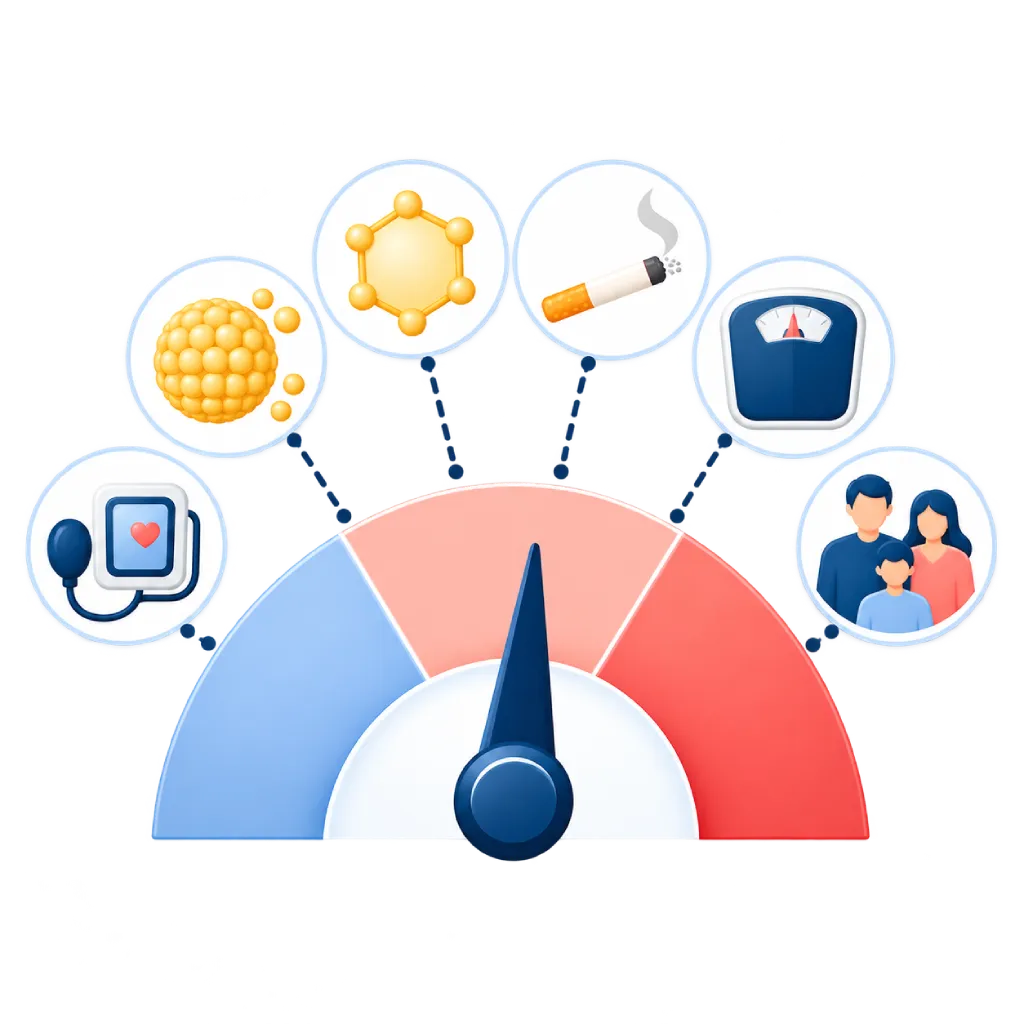
Individual heart risk screening is an assessment that estimates a person's chance of having a heart attack or stroke in the next 10 years. The doctor combines age, sex, blood pressure, cholesterol, blood sugar, and smoking habits into a risk score. The result determines how intensive your prevention needs to be.
Sources01 / Understanding the procedure
About Individual Heart Risk Screening
What Is Individual Heart Risk Screening
Heart attacks and strokes usually happen because several risk factors work together over many years. One slightly elevated factor may not be very dangerous, but several slightly elevated factors at once can make your overall risk high. Individual heart risk screening assesses all of these factors together to estimate your chance of having a heart attack or stroke in the next 10 years.
How It Works in Brief
The doctor collects data on your age, sex, smoking habits, blood pressure, and cholesterol, then enters them into a risk calculator developed from long-term studies of hundreds of thousands of people, such as SCORE2 from the European guidelines or the WHO risk charts. The result is a 10-year risk percentage grouped into low to moderate, high, or very high. The cutoffs for each group are adjusted for age, because the same risk number means something different for a person aged 45 and a person aged 70.
What Is Assessed
- Blood pressure: measured correctly after sitting quietly. This is covered on the Hypertension and Blood Pressure Screening page.
- Cholesterol: especially LDL and non-HDL cholesterol. This is covered on the Cholesterol and Lipid Profile Screening page.
- Blood sugar: to detect diabetes that has not yet been diagnosed. This is covered on the Diabetes Screening page.
- Lifestyle and body: smoking, physical activity, diet, body weight, and waist circumference.
- Family history and other conditions: early heart disease in the family, kidney disease, autoimmune disease, or a history of preeclampsia during pregnancy.
Reading the Results
The 10-year risk group cutoffs according to the European guidelines:
- Under age 50: below 2.5 percent is low to moderate, 2.5 to below 7.5 percent is high, and 7.5 percent or more is very high.
- Age 50 to 69: below 5 percent is low to moderate, 5 to below 10 percent is high, and 10 percent or more is very high.
- Age 70 and older: below 7.5 percent is low to moderate, 7.5 to below 15 percent is high, and 15 percent or more is very high.
People who already have heart disease or have had a stroke, moderate to severe chronic kidney disease, or inherited high cholesterol are directly classified as high or very high risk without needing a calculation. People with diabetes are assessed with a dedicated calculator. If the result is borderline, the doctor may add a test such as a coronary calcium score. This is covered on the Advanced Heart Screening page.
Who Should Be Assessed
Risk assessment is recommended for adults with risk factors, such as hypertension, high cholesterol, diabetes, smoking, excess body weight, or early heart disease in the family. Without risk factors, assessment can start for men at age 40 and for women at age 50 or after menopause. The assessment is repeated periodically, especially when new risk factors appear.
02 / Understanding the procedure
When Is This Procedure Considered?
A doctor may consider this procedure in the situations below. The decision is always made after a thorough assessment.
- Men Aged 40 and Over, Women Aged 50 and OverOr after menopause, even if you feel healthy.
- Hypertension, High Cholesterol, or DiabetesMajor risk factors that need to be assessed together, not one by one.
- Smoking or Recently Quit SmokingSmoking increases the risk of heart attack several times over.
- Early Heart Disease in the FamilyIn a father or brother before age 55, or a mother or sister before age 65.
- Excess Body Weight or Low Physical ActivityOften accompanied by other risk factors that have not yet been detected.
- History of Preeclampsia or Diabetes During PregnancyIncreases the risk of heart disease later in life.
Situations to Consider First
- Existing Heart Disease or Previous StrokeYour risk is already classified as very high, so what you need is treatment and regular follow-up visits, not screening.
- Current Heart SymptomsChest pain, shortness of breath, or palpitations require diagnostic tests or prompt treatment.
- Under 40 Years of AgeThe 10-year score is usually low because of age, so the doctor may use a lifetime risk estimate instead.
- Inherited High CholesterolRisk calculators are less accurate; the risk is directly assessed as high.
- Serious Illness or PregnancyBlood pressure, cholesterol, and blood sugar can change temporarily, so the assessment is postponed.
03 / Before the procedure
How Should You Prepare?
Preparation depends on the blood tests requested. The staff will let you know if you need to fast.
Fast if asked. A lipid profile usually does not require fasting, but a fasting blood sugar test requires fasting for 8 to 12 hours. You may still drink plain water.
Before blood pressure measurement. Avoid coffee, smoking, and exercise for at least 30 minutes beforehand.
Information to bring. A list of your medications, previous test results, and home blood pressure records if you have them.
Family history. Note whether your parents or siblings have had a heart attack or stroke, or died suddenly at a young age.
Unsure about the preparation instructions? Ask our team before the procedure.
04 / During the procedure
How Is the Procedure Done?
The assessment is usually completed in about 1 hour. Lab results and the risk calculation can usually be explained on the same day.
Interview
The doctor asks about your symptoms, smoking habits, physical activity, diet, the medications you take, and your family history.
Body Measurements
Your blood pressure is measured several times after you sit quietly, followed by your weight, height, and waist circumference. If needed, an ECG is also done.
Blood Tests
Blood is drawn to check your lipid profile and blood sugar or HbA1c, as well as kidney function if needed.
Calculation and Plan
The doctor calculates your 10-year risk, explains which factors have a large influence, and then develops a prevention plan with you.
05 / Benefits and risks
Benefits and Risks Should Be Discussed Together.
Every medical procedure has benefits and risks. Your doctor will explain both for your situation before the procedure.
Benefits You Can Expect
- A Complete Picture of Your RiskRisk factors are assessed together, not one by one.
- Prevention Tailored to Your NeedsHow strict your targets are and whether you need medication are determined by your risk level.
- Knowing Which Factors Have a Large InfluenceHelps you choose changes that are worthwhile.
- No Invasive ProceduresOnly an interview, measurements, and blood tests.
- A Baseline for Tracking ProgressA repeat assessment shows whether your risk has decreased.
The benefits of a procedure are not a promise of a cure. Ask how the results will affect your care plan.
Risks You Should Know
- Minor Pain or BruisingAt the needle site after a blood draw.
- The Score Is Only an EstimateRisk calculators estimate the risk for a group, so the doctor still considers your personal situation.
- Low Risk Does Not Mean No RiskRisk factors still need to be controlled, especially at a young age.
- Further TestingA borderline result sometimes requires additional tests such as a coronary calcium score.
Risks can differ from person to person. A full explanation and consent are given after an individual assessment.
06 / After the procedure
What Is Recovery Like?
There is no recovery period. You can return to your activities right away.
If your risk is low to moderate. Maintain a healthy lifestyle and repeat the assessment periodically as advised by your doctor.
If your risk is high or very high. In addition to lifestyle changes, the doctor may recommend cholesterol-lowering medication, blood pressure medication, or further tests, with targets adjusted to your risk level.
Steps with a large impact. Stop smoking, stay physically active for at least 150 minutes per week, reduce salt and saturated fat, and maintain your weight.
Warning signs to watch for. Go to the emergency room right away if you experience:
- Chest pain or pressure, especially with a cold sweat
- Sudden shortness of breath
- A drooping face, arm weakness, or slurred speech
- Fainting or a very fast, pounding heartbeat
Know the Signs That Need Prompt Care.
Follow the team's guidance on warning signs. If severe or sudden symptoms appear after the procedure, go to the nearest emergency department right away or call Heart Attack Center 1500 258.
07 / Team and support
Doctors and Procedure Support
The doctors below are listed for this procedure. Listed by name, not by ranking.

dr. Debby C. Soemitha, Sp.PD
Internal Medicine
Clinical focusDiabetes and Diabetes Complications · Obesity and Metabolic Disease
View Profile
Dr. med. dr. Denio A. Ridjab, Sp.JP(K)
Interventional Cardiology
Coronary Intervention Procedures +2 centers
Clinical focusInterventional Cardiology · Coronary Artery Disease
View Profile
dr. Juweni Joe, Sp.GK
Clinical Nutrition
Clinical focusMedical Nutrition Intervention · Nutrition for Cardiovascular Patients
View Profile08 / Common questions
Before You Plan the Procedure.
Frequently asked questions about individual heart risk screening. The doctor will explain what the results mean for your condition.
What does 10-year risk mean?
The 10-year risk is an estimate of the chance of having a heart attack or stroke in the next 10 years. For example, a risk of 5 percent means that out of 100 people with a profile like yours, about 5 are expected to have one within 10 years. This number helps the doctor decide how intensive your prevention needs to be.
Why is my cholesterol slightly high but my risk is said to be low?
Heart risk is determined by a combination of many factors. Slightly high cholesterol in a young person who does not smoke and has normal blood pressure can result in a low risk. On the other hand, several factors that are each only slightly elevated can result in a high risk. That is why treatment decisions are based on overall risk.
Which risk calculator is used?
The doctor may use SCORE2 and SCORE2-OP from the European guidelines, or the WHO risk charts adjusted for each region. These tools were developed from long-term studies and take into account age, sex, smoking, blood pressure, and cholesterol. The results are still interpreted together with other factors, such as family history and kidney disease.
I am still young. Do I need a heart risk assessment?
At a young age, the 10-year risk is almost always low because age has a strong influence on the calculation. However, risk factors such as smoking, high blood pressure, or high cholesterol still damage the blood vessels little by little. The doctor can estimate your lifetime risk to show the benefit of controlling risk factors early.
How often should the risk assessment be repeated?
If your risk is low and nothing has changed, the assessment is usually repeated every few years. It should be repeated sooner if new risk factors appear, for example higher blood pressure, weight gain, or a diabetes diagnosis. If you are undergoing treatment, the doctor assesses your progress at each follow-up visit.
Can a high risk be lowered?
Yes. Stopping smoking, lowering blood pressure and cholesterol, staying active, and maintaining your weight can lower your risk significantly. For people at high risk, medications such as statins or blood pressure medications have been shown to reduce heart attacks and strokes. A repeat assessment helps you see the results of the changes you have made.
Sources and Medical Review
Translated from the Indonesian edition medically reviewed by Dr. med. dr. Denio A. Ridjab, Sp.JP(K).
Sources as cited in the Indonesian edition.
- Visseren FLJ, Mach F, Smulders YM, et al. 2021 ESC Guidelines on cardiovascular disease prevention in clinical practice. Eur Heart J. 2021;42(34):3227-3337.
- SCORE2 working group and ESC Cardiovascular risk collaboration. SCORE2 risk prediction algorithms: new models to estimate 10-year risk of cardiovascular disease in Europe. Eur Heart J. 2021;42(25):2439-2454.
- SCORE2-OP working group and ESC Cardiovascular risk collaboration. SCORE2-OP risk prediction algorithms: estimating incident cardiovascular event risk in older persons in four geographical risk regions. Eur Heart J. 2021;42(25):2455-2467.
- WHO CVD Risk Chart Working Group. World Health Organization cardiovascular disease risk charts: revised models to estimate risk in 21 global regions. Lancet Glob Health. 2019;7(10):e1332-e1345.