
Quick answer
What Is Cardiovascular-Related Lung Disease?
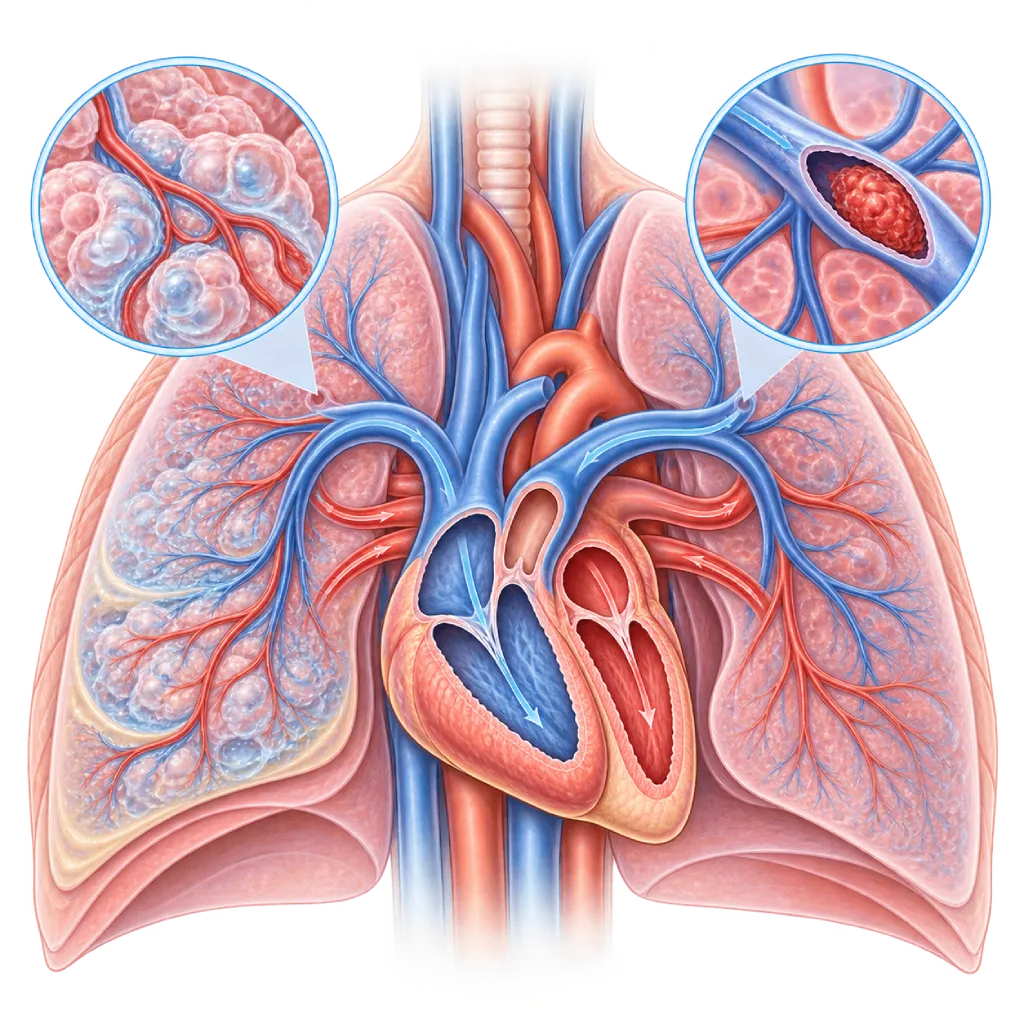
Cardiovascular-related lung disease is a group of lung disorders linked to the heart and blood vessels, such as fluid in the lungs due to heart failure, a clot in a lung artery, high lung pressure, and lung disease that strains the heart.
SourcesSigns That Need Urgent Help
- Sudden or very severe shortness of breath at rest
- Severe chest pain, or sharp chest pain when breathing in
- Coughing up pink froth or coughing up blood
- Bluish lips or fingertips
- Fainting or nearly fainting
- Confusion or extreme sleepiness with shortness of breath
If these signs appear, go to the nearest emergency department right away or call Heart Attack Center 1500 258.
01 / Understanding the condition
About Cardiovascular-Related Lung Disease
The heart and lungs work as a single circuit. The right ventricle pumps blood to the lungs to pick up oxygen, then the oxygen-rich blood returns to the left side of the heart and is pumped to the whole body. Because of this, a problem in one organ is quickly felt in the other. Cardiovascular-related lung disease is the group name for lung disorders linked to the heart and blood vessels. This page gives an overview, while each condition is covered in more detail on its own page.
Four Main Groups
- Lungs affected by heart disease. A weak left heart or a faulty valve raises the pressure in the lung blood vessels, so fluid builds up. The long-term picture is covered on the Lung Disease Caused by Heart Disease page, and the sudden form on the Cardiogenic Pulmonary Edema page.
- Disorders of the lung blood vessels. A clot blocking a lung artery is covered on the Pulmonary Embolism page, while persistently high lung pressure is covered on the Pulmonary Hypertension page.
- Lung disease that strains the heart. COPD is covered on the Chronic Obstructive Pulmonary Disease page, pauses in breathing during sleep on the Obstructive Sleep Apnea page, and strain on the right side of the heart due to lung disease on the Cor Pulmonale page.
- Lung injury that does not come from the heart. Severe infection, injury, or other triggers make the lung blood vessels leak. Covered on the Noncardiogenic Pulmonary Edema page.
When heart disease and chronic lung disease occur together and worsen each other, the condition is covered on the Cardiopulmonary Syndrome page.
Shortness of Breath from the Heart, Lungs, or Both
Shortness of breath is a shared symptom in almost all of these conditions. Several clues help doctors: shortness of breath when lying down and leg swelling point more toward the heart, a long-term cough with phlegm in a smoker points more toward the lungs, while shortness of breath that comes on suddenly should raise suspicion of pulmonary embolism. However, these clues are not always clear-cut, and both organs are often affected at the same time, so further tests are still needed. An overview of shortness of breath is covered on the Shortness of Breath page.
Shared Care by Heart and Lung Specialists
Treatment targets the main cause, for example heart failure medicines, blood thinners, or inhalers for the lungs. Because many of these conditions are linked, cardiologists and pulmonologists often work together. Stopping smoking, controlling blood pressure, vaccination, and supervised exercise benefit both organs at once.
02 / Understanding the condition
Symptoms to Recognize.
Common Symptoms
- Shortness of breath during activity that comes on more and more easily
- Shortness of breath when lying flat, or waking at night short of breath
- Long-term cough, with or without phlegm
- Swelling in the ankles or legs
- Tiring easily and a reduced ability to be active
- Palpitations
- Chest pain or heaviness during activity
03 / Understanding the condition
What Causes This Condition?
- Heart failure or valve disease that raises the pressure in the lung blood vessels, so fluid seeps into the lungs
- A blood clot that breaks loose from a leg vein and blocks a lung artery
- Narrowing and thickening of the walls of the lung blood vessels, which raises lung pressure
- Chronic lung disease such as COPD that lowers oxygen levels and strains the right side of the heart
- Repeated pauses in breathing during sleep that raise blood pressure and trigger rhythm disorders
- Lung injury due to severe infection or other triggers that make the lung blood vessels leak
- Congenital heart defects that send too much blood to the lungs
04 / Understanding the condition
Who Is at Higher Risk?
Lifestyle
Smoking damages the lungs and blood vessels at the same time. Lack of physical activity and excess weight add to the heart's workload and worsen shortness of breath.
Medical
Hypertension, diabetes, coronary artery disease, heart failure, valve disease, atrial fibrillation, a history of blood clots, COPD, asthma, and pauses in breathing during sleep.
Genetic
Congenital heart defects, inherited blood clotting disorders, and a small share of pulmonary arterial hypertension that runs in families.
Age
The risk increases with age, because chronic heart and lung diseases become more common and often occur together in older age.
Other
Air pollution, smoke from wood-burning stoves, dust and fumes at work, prolonged bed rest, and pregnancy for the risk of blood clots.
Groups at Higher Risk
- People with Heart Failure or Valve Disease: Rising pressure in the left side of the heart is easily passed on to the lungs, so shortness of breath and fluid in the lungs need to be monitored.
- Smokers and Former Smokers: Cigarette smoke damages the lungs and blood vessels at the same time, so COPD and heart disease often appear together.
- Post-Surgery and Hospitalized Patients: Bed rest slows blood flow in the veins and raises the risk of clots that can travel to the lungs.
- Older Adults with Multiple Conditions: Heart and lung problems often occur together in older age, with vague symptoms that are easily dismissed as part of aging.
- People with Congenital Heart Disease: A hole in the wall between the heart chambers or a vessel that stays open can send too much blood to the lungs and raise lung pressure.
05 / Understanding the condition
How Is It Diagnosed?
Your doctor starts by asking when the shortness of breath appears, whether it came on suddenly or gradually, what triggers it, and about any history of smoking, heart disease, and blood clots. A physical examination and measurement of oxygen levels give initial clues. Basic tests include an ECG, a chest X-ray, and an NT-proBNP blood test; a normal NT-proBNP level makes heart failure less likely.
Echocardiography assesses the heart's pumping, the valves, and an estimate of lung pressure, while spirometry assesses airflow in the lungs. If shortness of breath comes on suddenly and pulmonary embolism is suspected, your doctor adds a D-dimer test and CT pulmonary angiography or a ventilation-perfusion scan. If lung pressure is thought to be high, right heart catheterization is used to measure it directly and determine whether the source is the left side of the heart, the lungs, or the lung blood vessels themselves. A sleep study is done if pauses in breathing during sleep are suspected. The combined results of these tests determine which condition you have and which doctor leads the treatment.
Electrocardiogram (ECG)
Looks for rhythm disorders, signs of a past heart attack, and signs of strain on the right side of the heart as an initial test for shortness of breath.
Chest X-Ray
Shows the size of the heart, fluid in the lungs or chest cavity, and signs of lung disease such as overinflated lungs.
NT-proBNP and BNP Test
A normal level makes heart failure less likely; a high level indicates strain on the heart that needs to be investigated.
Echocardiography
Assesses the pumping of the left and right sides of the heart, the valves, and an estimate of lung pressure, to determine the heart's role in the symptoms.
Lung Function Test (Spirometry)
Assesses airflow in the lungs to confirm or rule out COPD and asthma as the cause of shortness of breath.
D-Dimer Test
Used when shortness of breath comes on suddenly and pulmonary embolism is suspected; a normal result when clinical probability is low can rule it out.
Right Heart Catheterization
Measures lung pressure directly and distinguishes whether the source is the left side of the heart, lung disease, or the lung blood vessels themselves.
06 / Understanding the condition
Treatment Options.
Treatment is decided by a doctor after an assessment. The categories below can help you follow the conversation with your doctor.
Treating the Main Cause
Treatment is tailored to the condition, for example heart failure medicines, valve repair, blood thinners for clots, or inhalers for the lungs.
Diuretics
Diuretics (water pills) reduce excess fluid in the lungs and legs in conditions that come from the heart. The type and dose are determined by your doctor.
Blood Thinners
For pulmonary embolism and for preventing clots in atrial fibrillation. Covered on the Anticoagulation Therapy and Stroke Prevention page.
Inhaled Medicines for Lung Disease
Bronchodilators and other inhaled medicines for COPD or asthma, chosen together with heart medicines so they are safe to use at the same time.
Oxygen and Breathing Support
Oxygen when levels are low, and a positive airway pressure device during sleep (CPAP) for people with pauses in breathing during sleep.
Heart and Lung Rehabilitation
Supervised exercise, education, and lifestyle support to improve the ability to be active. Covered on the Structured Cardiac Rehabilitation Program page.
Procedures or Surgery in Certain Cases
For example valve repair, closure of a congenital hole, or removal of a clot through a catheter, depending on the underlying condition.
07 / Understanding the condition
Complications to Watch For.
Right Heart Failure
High lung pressure or a blockage in a lung artery makes the right ventricle work hard until it weakens, causing swelling of the legs and abdomen.
Respiratory Failure
Fluid in the lungs, a blockage, or severe lung disease can lower oxygen levels to the point of needing extra oxygen or a breathing machine.
Heart Rhythm Disorders
Strain on the atria and low oxygen levels trigger an irregular rhythm, covered on the Atrial Fibrillation page.
Pulmonary Hypertension
Many conditions in this group can lead to persistently high lung pressure. Covered on the Pulmonary Hypertension page.
Repeated Hospital Stays
A flare in one organ often triggers worsening in the other. Regular checkups and a written action plan help prevent this.
08 / Understanding the condition
What Can You Do?
- Stop smoking and avoid secondhand smoke to protect your heart and lungs at the same time.
- Keep your blood pressure, blood sugar, and cholesterol within the targets set by your doctor.
- Stay active every day within your limits, and start walking soon after surgery or illness as directed by your care team.
- Keep up with influenza, pneumococcal, and COVID-19 vaccines as recommended by your doctor.
- Take your heart and lung medicines on schedule, and do not stop them on your own.
- Reduce exposure to cooking smoke, air pollution, and workplace dust with proper ventilation and suitable masks.
- Get new or worsening shortness of breath checked early; do not wait until it becomes severe.
09 / Understanding the condition
When Should You See a Doctor?
Get checked if shortness of breath appears during activities that used to feel easy, along with a long-term cough, leg swelling, or tiring easily, especially if you have heart disease, have smoked, or are older. Go to the emergency room right away if shortness of breath comes on suddenly or is severe.
- Shortness of breath when walking or climbing stairs that comes on more and more easily
- Shortness of breath when lying down, or waking at night short of breath
- Leg swelling or rapid weight gain over a few days
- A long-term cough or wheezing that does not get better
- Sudden shortness of breath, chest pain, coughing up blood, or fainting: go straight to the emergency room
Don't Wait in an Emergency.
If symptoms are severe or come on suddenly, go to the nearest emergency department right away or call Heart Attack Center 1500 258, rather than waiting for an appointment.
10 / Common questions
Questions You May Have.
Frequently asked questions about the link between lung disease and heart disease.
How does my doctor know whether my shortness of breath comes from my heart or my lungs?
Your doctor combines several clues. Shortness of breath when lying down, waking at night short of breath, and leg swelling point more toward the heart, while a long-term cough with phlegm in a smoker points more toward the lungs. Tests then confirm it: an ECG, chest X-ray, NT-proBNP test, and echocardiography for the heart, and spirometry for the lungs. In many people, especially older adults, both turn out to play a role, so treatment needs to cover both organs.
Can lung disease damage the heart?
Yes. Chronic lung diseases, such as COPD or pauses in breathing during sleep, can lower the oxygen level in the blood. As a result, the lung blood vessels narrow and lung pressure rises, so the right ventricle has to work harder and gradually enlarges. Treating the lung disease, giving oxygen when levels are low, and stopping smoking help ease the strain on the heart. This condition is covered on the Cor Pulmonale page.
Which specialist should I see?
You can start with a cardiologist or a pulmonologist, depending on your main symptoms and your medical history. If you already have heart disease, a cardiologist is usually the starting point. If you are a smoker with a long-term cough, a pulmonologist can start the evaluation. For many conditions in this group, both doctors work together. Bring a list of your medicines and previous test results so tests do not need to be repeated.
Can an NT-proBNP test confirm the cause of shortness of breath?
This test helps, but it does not stand on its own. A normal NT-proBNP level makes heart failure less likely as the cause of shortness of breath. A high level points to strain on the heart, but it can also rise in pulmonary embolism, pulmonary hypertension, kidney problems, atrial fibrillation, and older age. For this reason, your doctor reads the result together with your symptoms, physical examination, chest X-ray, and echocardiography before drawing a conclusion about the cause.
Is exercise safe if I have heart and lung problems?
Supervised exercise is generally safe and beneficial once your condition is stable. Exercise strengthens the muscles, so the body needs less oxygen during activity and shortness of breath appears less often. A heart or lung rehabilitation program starts with a test to set safe limits, then the intensity is increased gradually. Avoid strenuous exercise when your shortness of breath is getting worse, when you have a fever, or when new symptoms appear, and ask your doctor first.
Sources and Medical Review
Translated from the Indonesian edition medically reviewed by dr. Santi R. Dewayanti, Sp.P.
Sources as cited in the Indonesian edition.
- Humbert M, Kovacs G, Hoeper MM, Badagliacca R, Berger RMF, Brida M, et al. 2022 ESC/ERS Guidelines for the diagnosis and treatment of pulmonary hypertension. Eur Heart J. 2022;43(38):3618-731.
- McDonagh TA, Metra M, Adamo M, Gardner RS, Baumbach A, Böhm M, et al. 2021 ESC Guidelines for the diagnosis and treatment of acute and chronic heart failure. Eur Heart J. 2021;42(36):3599-726.
- Konstantinides SV, Meyer G, Becattini C, Bueno H, Geersing GJ, Harjola VP, et al. 2019 ESC Guidelines for the diagnosis and management of acute pulmonary embolism developed in collaboration with the European Respiratory Society (ERS). Eur Heart J. 2020;41(4):543-603.
- Agustí A, Celli BR, Criner GJ, Halpin D, Anzueto A, Barnes P, et al. Global Initiative for Chronic Obstructive Lung Disease 2023 Report: GOLD Executive Summary. Eur Respir J. 2023;61(4):2300239.
- Yeghiazarians Y, Jneid H, Tietjens JR, Redline S, Brown DL, El-Sherif N, et al. Obstructive Sleep Apnea and Cardiovascular Disease: A Scientific Statement From the American Heart Association. Circulation. 2021;144(3):e56-67.
- Rabe KF, Hurst JR, Suissa S. Cardiovascular disease and COPD: dangerous liaisons? Eur Respir Rev. 2018;27(149):180057.
Doctors Who Treat This Condition

dr. Santi R. Dewayanti, Sp.P
Pulmonology
Clinical focusLung and Respiratory Disease · Asthma and COPD
View Profile
dr. Sri Diniharini, Sp.JP(K)
Echocardiography & Cardiovascular Imaging
Cardiovascular Diagnostic Center +1 center
Clinical focusAdvanced Echocardiography · Transesophageal Echocardiography
View Profile
dr. Khaira U. Yusrie, Sp.PD-KGEH
Gastroenterology & Hepatology
Clinical focusInternal Medicine · Gastroenterology and Hepatology
View Profile