
Quick answer
What Is Hypertension in Pregnancy?
Hypertension in pregnancy is a blood pressure of 140/90 mmHg or higher during pregnancy. Its types include hypertension that existed before pregnancy, gestational hypertension, and preeclampsia, all of which need close monitoring for the safety of mother and baby.
SourcesSigns That Need Urgent Help
- Blood pressure of 160/110 mmHg or higher
- A severe, unbearable headache
- Very blurred, double, or partly lost vision
- Severe pain in the upper stomach or upper right abdomen, sometimes with vomiting
- Shortness of breath or difficulty breathing when lying down
- Seizures or reduced consciousness
- The baby moving much less than usual
- Vaginal bleeding with abdominal pain
If these signs appear, go to the nearest emergency department right away or call Heart Attack Center 1500 258.
01 / Understanding the condition
About Hypertension in Pregnancy
Hypertension in pregnancy is a blood pressure of 140/90 mmHg or higher found during pregnancy on repeated measurements. It is a common medical problem in pregnancy and one of the main causes of health problems for mothers and babies worldwide. With regular prenatal checkups, the majority of problems can be recognized early and managed together by an obstetrician and a cardiologist. Hypertension in general is covered on the Hypertension page.
Types of Hypertension in Pregnancy
ESC and ISSHP guidelines divide it into several types. Chronic hypertension exists before pregnancy or appears before 20 weeks of pregnancy. Gestational hypertension appears for the first time after 20 weeks without signs of organ problems. Preeclampsia is hypertension after 20 weeks together with protein in the urine, problems in the mother's organs such as the kidneys, liver, blood, or nervous system, or problems with the baby's growth. Preeclampsia can also develop in women who already have chronic hypertension. There is also blood pressure that is high only when measured at the clinic, covered on the White Coat Hypertension page.
Preeclampsia, Eclampsia, and HELLP Syndrome
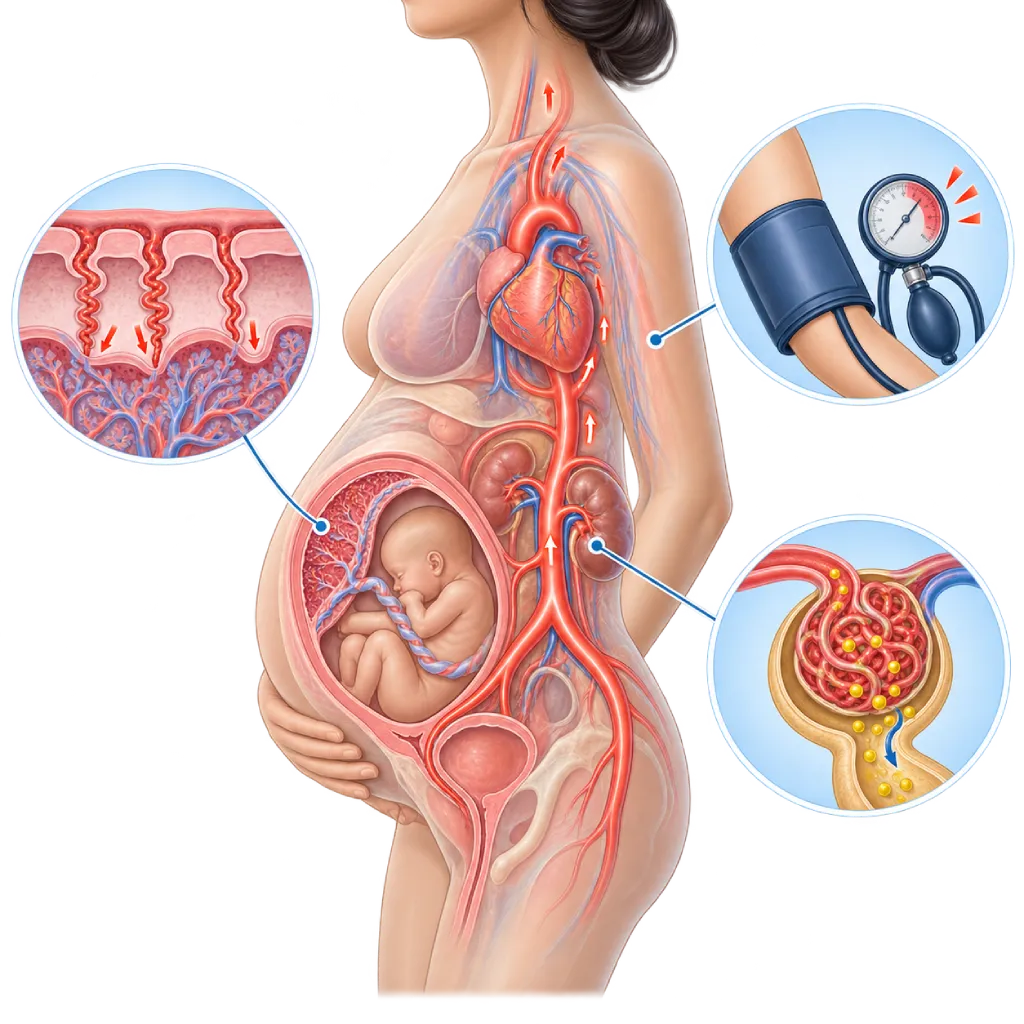
Preeclampsia starts with a placenta that does not form properly in early pregnancy. The placenta then releases certain substances into the mother's bloodstream that disrupt the inner lining of blood vessels throughout the body. If it progresses, eclampsia (seizures) or HELLP syndrome (breakdown of red blood cells, liver problems, and a low platelet count) can occur. Both are emergencies.
After Giving Birth
Blood pressure can stay high or even peak a few days after delivery, and preeclampsia can appear for the first time up to six weeks after giving birth. In the long term, women who have had hypertension or preeclampsia during pregnancy have a higher risk of hypertension, heart disease, and stroke. The 2024 ESC guidelines list this history as a risk-enhancing factor to consider when assessing heart health.
This page covers hypertension in pregnancy from the perspective of the heart and blood vessels, while care during pregnancy and delivery is led by an obstetrician. Weakening of the heart's pumping that appears near the end of pregnancy or after delivery is covered on the Peripartum Cardiomyopathy page.
02 / Understanding the condition
Symptoms to Recognize.
Common Symptoms
Many women have no symptoms, so hypertension is often found only at a prenatal checkup.
- Blood pressure of 140/90 mmHg or higher at a prenatal checkup
- A headache that does not improve with rest
- Sudden swelling of the face, hands, or around the eyes
- Rapid weight gain over a few days
- Blurred vision, seeing spots, or sensitivity to light
- Pain in the upper stomach or upper right abdomen
- Passing less urine than usual
03 / Understanding the condition
What Causes This Condition?
- A placenta that does not implant properly in the wall of the womb, so its blood flow is reduced, which is the basis of preeclampsia
- Substances from the abnormal placenta that disrupt the inner lining of the mother's blood vessels
- Hypertension that existed before pregnancy, often never detected before
- Kidney disease, diabetes, or autoimmune diseases such as lupus and antiphospholipid syndrome
- Secondary hypertension, for example from hormonal disorders or narrowing of the kidney arteries, that only becomes apparent during pregnancy
- A blood vessel response to pregnancy that is not yet fully understood, in gestational hypertension
04 / Understanding the condition
Who Is at Higher Risk?
Medical
Chronic hypertension, diabetes before pregnancy, chronic kidney disease, lupus or antiphospholipid syndrome, and a history of preeclampsia in a previous pregnancy.
Genetic
A history of preeclampsia in your biological mother or sister increases your chance of developing it.
Age
Pregnancy at age 40 or older increases the risk of preeclampsia and of chronic hypertension that has not yet been detected.
Lifestyle
Being overweight or obese before pregnancy and low physical activity also increase the risk.
Other
A first pregnancy, a twin pregnancy, a pregnancy through IVF, and a gap of more than 10 years since the previous pregnancy.
Groups at Higher Risk
- Women with a History of Preeclampsia: The risk of it happening again in the next pregnancy is higher, so doctors usually recommend prevention from early pregnancy.
- People with Chronic Hypertension: Blood pressure needs to be controlled before pregnancy, including switching, together with your doctor, any medicines that are not safe for the baby.
- People with Diabetes or Kidney Disease: Both conditions damage small blood vessels and increase the likelihood of preeclampsia.
- Women Pregnant with Their First Baby or Twins: First pregnancies and twin pregnancies are more often accompanied by preeclampsia than other pregnancies.
- Pregnant Women Aged 40 or Older: Older age is linked to a risk of preeclampsia and of chronic hypertension that has not been detected before.
05 / Understanding the condition
How Is It Diagnosed?
Blood pressure is measured at every prenatal checkup while you are seated after resting, using a cuff that fits the size of your arm. Hypertension is diagnosed when blood pressure is 140/90 mmHg or higher on repeated measurements. Home measurements or 24-hour monitoring help distinguish true hypertension from blood pressure that rises only when measured at the clinic.
Once hypertension is found, the doctor looks for signs of preeclampsia. Urine is checked for protein, ideally with a protein-to-creatinine ratio. Blood tests check platelets, hemoglobin, liver function, kidney function, and uric acid. The obstetrician assesses the baby's growth, the amniotic fluid, and umbilical cord blood flow with Doppler ultrasound. In some cases, an sFlt-1/PlGF blood test helps estimate the likelihood of preeclampsia in the near future. If you are short of breath or a heart problem is suspected, echocardiography is done.
Hypertension and Blood Pressure Screening
Correct blood pressure measurement at every prenatal checkup, seated, with a cuff that fits your arm.
Home Blood Pressure Monitoring
Self-measurement at home to track trends and confirm that hypertension does not appear only at the clinic.
Urine Protein-to-Creatinine Ratio (UPCR)
Measures protein leaking into the urine from a single urine sample, one of the signs of preeclampsia.
Laboratory Tests
Blood tests for platelets, hemoglobin, liver enzymes, creatinine, and uric acid to look for signs of preeclampsia and HELLP syndrome.
Pregnancy ultrasound and Doppler by the obstetrician to assess the baby's growth, amniotic fluid, and blood flow in the placenta and umbilical cord.
Echocardiography
Assesses the heart's structure and pumping strength if there is shortness of breath, severe swelling, or a suspected heart problem.
06 / Understanding the condition
Treatment Options.
Treatment is decided by a doctor after an assessment. The categories below can help you follow the conversation with your doctor.
More Frequent Monitoring
More frequent prenatal checkups, home blood pressure measurement, and regular urine tests, blood tests, and ultrasounds based on the type and severity of the condition.
Antihypertensive Medicines Safe for Pregnancy
Your doctor chooses medicines with a long track record in pregnancy, for example calcium channel blockers, certain beta blockers, or central alpha agonists. Current ESC guidelines generally recommend starting treatment at 140/90 mmHg.
Hospital Care
Needed for severe preeclampsia, blood pressure of 160/110 mmHg or higher, or signs of organ problems, for IV medicines and monitoring of mother and baby.
Medicine to Prevent Seizures
In severe preeclampsia or eclampsia, magnesium sulfate is given through an IV in the hospital to prevent and treat seizures.
Timing of Delivery
Delivery is the definitive treatment for preeclampsia. The obstetrician decides the timing by weighing the stage of pregnancy and the condition of mother and baby, usually at 37 weeks, or earlier if needed.
Monitoring After Delivery
Blood pressure is closely monitored in the first days after giving birth, medicines are adjusted, and heart risk factors are then checked regularly over the long term.
07 / Understanding the condition
Complications to Watch For.
Severe Preeclampsia and Eclampsia
Very high blood pressure with organ problems that can progress to seizures. This requires hospital care and often an earlier delivery.
HELLP Syndrome
Breakdown of red blood cells, liver problems, and a low platelet count that can develop quickly, marked by upper stomach pain, nausea, and weakness.
Placental Abruption
The placenta separates from the wall of the womb before the baby is born, causing abdominal pain and bleeding and disrupting the baby's oxygen supply.
Fetal Growth Restriction
Reduced blood flow through the placenta makes the baby smaller than expected for its age, so growth needs to be monitored with regular ultrasounds.
Preterm Birth
If the safety of the mother or baby is at risk, delivery may be needed before full term, so the baby may need special care.
Stroke and Pulmonary Edema
Very high blood pressure can cause bleeding in the brain or fluid in the lungs in the mother, so urgent treatment is needed.
Heart Disease Later in Life
A history of hypertension during pregnancy increases the risk of chronic hypertension, heart disease, and stroke years later.
08 / Understanding the condition
What Can You Do?
- Have your blood pressure checked before planning a pregnancy, especially if you have hypertension or diabetes.
- If you are at high risk of preeclampsia, your doctor may prescribe aspirin started before 16 weeks of pregnancy; do not start it on your own.
- Get enough calcium from food; if your intake is low, your doctor may recommend a calcium supplement.
- Keep a healthy weight before pregnancy and a reasonable weight gain during pregnancy.
- Stay active during pregnancy, for example by walking, if your obstetrician allows it.
- Attend every prenatal checkup and measure your blood pressure at home if advised.
- After giving birth, have your blood pressure and heart risk factors checked at least once a year.
09 / Understanding the condition
When Should You See a Doctor?
Contact your obstetrician so you can be examined within 24 hours if your blood pressure at home is 140/90 mmHg or higher, even without symptoms. If you have hypertension, diabetes, or kidney disease, get medical advice before pregnancy or as early as possible. Go to the emergency room or labor and delivery unit right away, including within six weeks after giving birth, if you have:
- Blood pressure of 160/110 mmHg or higher
- A severe headache or blurred vision
- Pain in the upper stomach or upper right abdomen
- Shortness of breath
- Sudden swelling of the face and hands
- Seizures, or the baby moving much less than usual
Don't Wait in an Emergency.
If symptoms are severe or come on suddenly, go to the nearest emergency department right away or call Heart Attack Center 1500 258, rather than waiting for an appointment.
10 / Common questions
Questions You May Have.
Frequently asked questions about hypertension in pregnancy.
Does hypertension during pregnancy always mean preeclampsia?
No. Some women have chronic hypertension that existed before pregnancy, or gestational hypertension without organ problems. However, some cases of gestational hypertension, especially those that appear earlier, can develop into preeclampsia. That is why urine tests, blood tests, and checks on the baby are still done regularly until delivery and for a few weeks afterward.
Are blood pressure medicines safe for the baby?
Some types of medicines have been used for a long time and are considered safe in pregnancy, while ACE inhibitors, ARBs, and renin inhibitors are not used because they can affect the baby's kidneys. The CHAP study (2022) showed that treating mild chronic hypertension during pregnancy reduced severe complications without increasing the risk of a small baby. Do not stop or change medicines on your own; discuss it with your doctor.
I take blood pressure medicine and am planning a pregnancy. What should I do?
Talk to your doctor before getting pregnant. If you take an ACE inhibitor or ARB, your doctor will usually switch it to a medicine that is safe in pregnancy, ideally before conception or as soon as you have a positive pregnancy test. Your doctor will also assess the possibility of secondary hypertension, your kidney function, and whether you need aspirin to prevent preeclampsia.
Will my blood pressure return to normal after giving birth?
In gestational hypertension and preeclampsia, blood pressure usually returns to normal within a few weeks to three months after giving birth. In the first few days, blood pressure can actually peak, so monitoring is still needed. If blood pressure is still high after three months, your doctor will assess the possibility of chronic hypertension.
Will preeclampsia come back in my next pregnancy?
The risk is higher than in women without this history, especially if the earlier preeclampsia appeared early or was severe. That is why your next pregnancy should be planned with your doctor: blood pressure is controlled from the start, aspirin may be started before 16 weeks of pregnancy if recommended, and monitoring is more frequent.
Why does a history of hypertension in pregnancy matter for my heart health?
Hypertension and preeclampsia during pregnancy point to blood vessels that are more vulnerable. Research shows that women with this history have a higher risk of hypertension, coronary artery disease, heart failure, and stroke later in life. Mention this history at every health checkup, and have your blood pressure, cholesterol, and blood sugar checked regularly.
Sources and Medical Review
Translated from the Indonesian edition medically reviewed by dr. Siska S. Danny, Sp.JP(K).
Sources as cited in the Indonesian edition.
- De Backer J, Haugaa KH, Hasselberg NE, et al. 2025 ESC Guidelines for the management of cardiovascular disease and pregnancy. Eur Heart J. 2025;46(43):4462-568.
- Magee LA, Brown MA, Hall DR, et al. The 2021 International Society for the Study of Hypertension in Pregnancy classification, diagnosis & management recommendations for international practice. Pregnancy Hypertens. 2022;27:148-69.
- McEvoy JW, McCarthy CP, Bruno RM, et al. 2024 ESC Guidelines for the management of elevated blood pressure and hypertension. Eur Heart J. 2024;45(38):3912-4018.
- Garovic VD, Dechend R, Easterling T, et al. Hypertension in Pregnancy: Diagnosis, Blood Pressure Goals, and Pharmacotherapy: A Scientific Statement From the American Heart Association. Hypertension. 2022;79(2):e21-e41.
- Tita AT, Szychowski JM, Boggess K, et al. Treatment for Mild Chronic Hypertension during Pregnancy. N Engl J Med. 2022;386(19):1781-92.
- Rolnik DL, Wright D, Poon LC, et al. Aspirin versus Placebo in Pregnancies at High Risk for Preterm Preeclampsia. N Engl J Med. 2017;377(7):613-22.
Doctors Who Treat This Condition

dr. Siska S. Danny, Sp.JP(K)
Interventional Cardiology
Coronary Intervention Procedures
Clinical focusPCI for Acute Coronary Syndrome · Primary Coronary Intervention
View Profile
Dr. med. dr. Denio A. Ridjab, Sp.JP(K)
Interventional Cardiology
Coronary Intervention Procedures +2 centers
Clinical focusInterventional Cardiology · Coronary Artery Disease
View Profile
dr. Sri Diniharini, Sp.JP(K)
Echocardiography & Cardiovascular Imaging
Cardiovascular Diagnostic Center +1 center
Clinical focusAdvanced Echocardiography · Transesophageal Echocardiography
View Profile