
Quick answer
What Is Urine Protein-to-Creatinine Ratio?
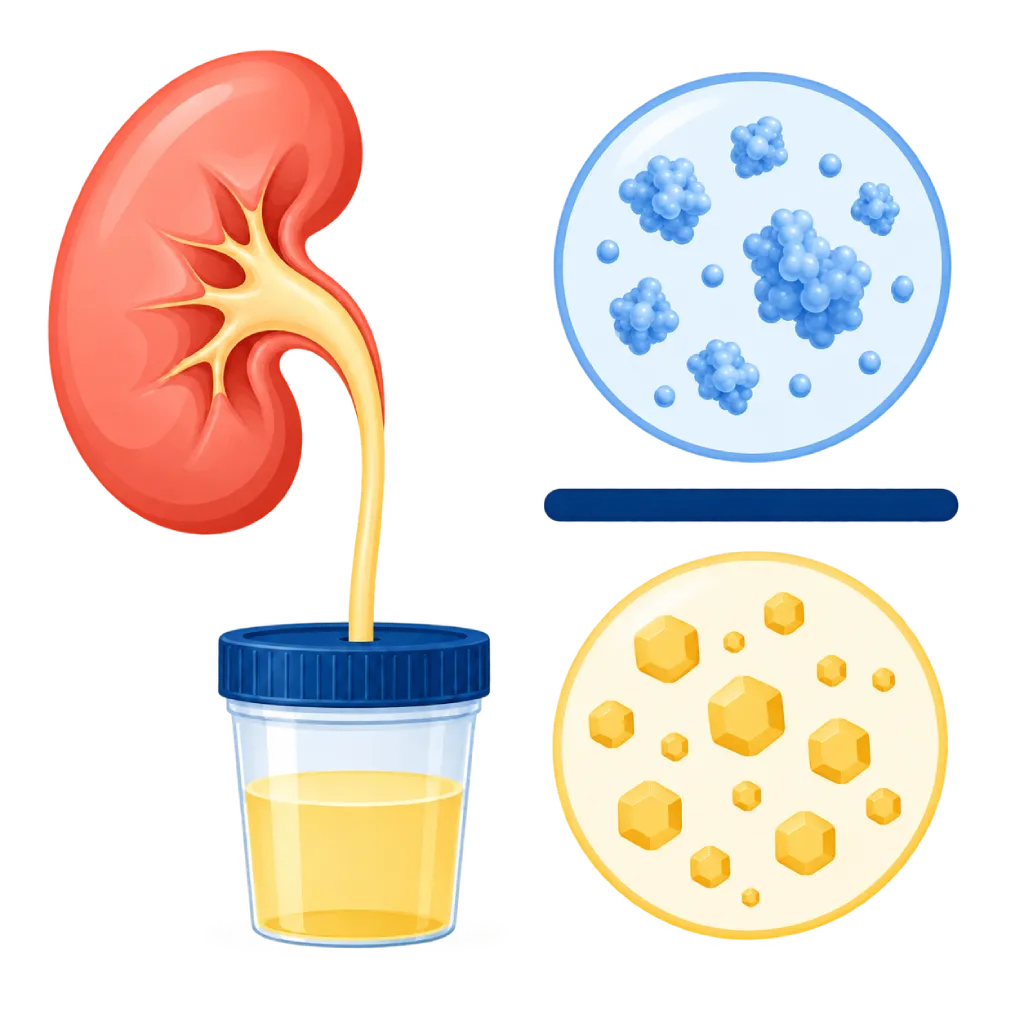
The urine protein-to-creatinine ratio (UPCR) compares total protein with creatinine in a single urine sample. The result estimates daily protein loss in the urine without a 24-hour urine collection. This test is used to assess kidney disease, protein in the urine during pregnancy, and diseases that can also affect the heart.
Sources01 / Understanding the procedure
About Urine Protein-to-Creatinine Ratio
What Is UPCR
Healthy kidneys let only a very small amount of protein pass into the urine. UPCR measures all types of protein in the urine, including albumin and other proteins, and then compares them with creatinine, a muscle waste product that the kidneys remove at a fairly steady rate. In this way, a single urine sample is enough to estimate protein leakage over a day.
How It Works in Brief
Urine is collected in a container, and the laboratory measures total protein and creatinine. The protein level is divided by the creatinine level, which corrects for urine that is diluted or concentrated. Roughly speaking, the result in mg/mg is close to the amount of protein lost in grams per day.
UPCR and UACR
UACR, covered on the Urine Protein Test page, measures only albumin and is more sensitive for detecting early kidney damage in diabetes and hypertension. UPCR measures all proteins, so it is better suited when there is already a large amount of protein in the urine, and for kidney inflammation, pregnancy, and proteins other than albumin.
Reading the Results
The following cutoffs are general guidance. Each laboratory may use its own units and ranges.
- Normal to mildly increased: below 150 mg/g (15 mg/mmol).
- Moderately increased: 150 to 500 mg/g.
- Severely increased: above 500 mg/g.
- Nephrotic range: about 3,000 mg/g or more, equivalent to a loss of more than 3 grams of protein per day, usually with swelling.
In pregnancy, a UPCR of 0.3 mg/mg (30 mg/mmol) or more together with high blood pressure supports a diagnosis of preeclampsia.
Urine Protein and the Heart
A high level of protein in the urine indicates kidney damage and is associated with a higher risk of heart attack, stroke, and heart failure. Nephrotic syndrome also raises cholesterol and the risk of blood clots. Preeclampsia increases the risk of heart disease later in life and is associated with peripartum cardiomyopathy. A high level of urine protein can also be a clue to amyloidosis or lupus, which can affect the heart.
02 / Understanding the procedure
When Is This Procedure Considered?
A doctor may consider this procedure in the situations below. The decision is always made after a thorough assessment.
- Positive Protein on a Urine Dipstick TestTo find out how much protein is actually leaking.
- Swelling in the Legs, Face, or AbdomenTo look for heavy protein leakage, as in nephrotic syndrome.
- High Blood Pressure in PregnancyHelps diagnose preeclampsia.
- Lupus or Autoimmune DiseaseTo detect and monitor kidney inflammation.
- Monitoring Kidney Disease and Its TreatmentChanges in UPCR show whether protein leakage is decreasing.
- Suspected Amyloidosis or Abnormal ProteinsUPCR also measures proteins other than albumin.
Situations to Consider First
- Strenuous ExerciseThis can temporarily raise urine protein. Avoid it the day before.
- Fever or Urinary Tract InfectionThese can raise the result, so the test is repeated after recovery.
- Menstruation or Vaginal DischargeBlood or fluid can contaminate the sample. Postpone the test until it is over.
- Very High or Very Low Muscle MassCreatinine changes as well, so the ratio is less accurate.
- Protein That Appears When StandingIn some young people, a first morning urine sample helps tell this apart.
03 / Before the procedure
How Should You Prepare?
A UPCR test requires only one urine sample.
Collection time. The first morning urine is usually used, or as instructed by your doctor.
Eating and drinking. No fasting is needed. Drink as usual, with no need to drink extra.
Activity. Avoid strenuous exercise the day before.
Menstruation. If you are menstruating, postpone the test until your period is over.
Important information. Tell the staff if you are pregnant, have a fever, or have symptoms when urinating, and bring a list of your medications.
Unsure about the preparation instructions? Ask our team before the procedure.
04 / During the procedure
How Is the Procedure Done?
Collecting the urine takes only a few minutes, and results are usually available on the same day.
Instructions and Container
The staff give you a sterile container labeled with your name and explain how to collect the urine.
Cleaning the Genital Area
Wash your hands, then clean the genital area with the tissue or cotton provided.
Collecting a Midstream Urine Sample
Pass a little urine into the toilet first, collect the middle part of the stream in the container, and then finish urinating in the toilet. Close the container tightly.
Laboratory Testing
The laboratory measures total protein and creatinine, then calculates the ratio. The doctor reads the result together with your blood pressure, kidney function, and other tests.
05 / Benefits and risks
Benefits and Risks Should Be Discussed Together.
Every medical procedure has benefits and risks. Your doctor will explain both for your situation before the procedure.
Benefits You Can Expect
- Only One Urine Sample NeededThere is no need to collect urine for 24 hours.
- Measures All Types of ProteinIncluding proteins other than albumin that are not measured by UACR.
- Monitors Treatment ResultsChanges in UPCR show whether protein leakage is decreasing.
- Helps Diagnose PreeclampsiaTogether with blood pressure, it helps identify preeclampsia earlier.
- A Marker of Kidney and Heart RiskA high level of urine protein signals the need to protect the kidneys and heart.
The benefits of a procedure are not a promise of a cure. Ask how the results will affect your care plan.
Risks You Should Know
- No Physical RiskThe test uses only urine, with no needles or medications.
- Results Affected by Temporary ConditionsFever, strenuous exercise, or a urinary tract infection can raise the result.
- Contaminated SampleAn incorrect collection method can mean the test needs to be repeated.
- Further Tests May Be NeededA high result is usually confirmed with a repeat test and other tests.
Risks can differ from person to person. A full explanation and consent are given after an individual assessment.
06 / After the procedure
What Is Recovery Like?
There is no recovery period. You can return to your activities right away.
If your UPCR is high. The test is usually repeated to confirm the result, followed by kidney function tests, a urinalysis, or a kidney ultrasound.
During pregnancy. If your UPCR is high and you also have high blood pressure, see your obstetrician promptly.
Monitoring. In kidney disease or lupus, UPCR is repeated periodically to assess the response to treatment.
Warning signs to watch for. Go to the emergency room right away or contact the medical team if you experience:
- Swelling in the legs, face, or abdomen that increases quickly
- Shortness of breath
- During pregnancy: a severe headache, blurred vision, or pain in the upper abdomen
- A sharp drop in the amount of urine
Know the Signs That Need Prompt Care.
Follow the team's guidance on warning signs. If severe or sudden symptoms appear after the procedure, go to the nearest emergency department right away or call Heart Attack Center 1500 258.
07 / Team and support
Doctors and Procedure Support
The doctors below are listed for this procedure. Listed by name, not by ranking.

dr. Debby C. Soemitha, Sp.PD
Internal Medicine
Clinical focusDiabetes and Diabetes Complications · Obesity and Metabolic Disease
View Profile
Dr. dr. Faris Basalamah, Sp.JP(K)
Interventional Cardiology
Coronary Intervention Procedures +1 center
Clinical focusComplex Coronary Intervention · Cardiac Electrophysiology
View Profile
dr. Khaira U. Yusrie, Sp.PD-KGEH
Gastroenterology & Hepatology
Clinical focusInternal Medicine · Gastroenterology and Hepatology
View Profile08 / Common questions
Before You Plan the Procedure.
Frequently asked questions about the urine protein-to-creatinine ratio. The doctor will explain what the results mean for your condition.
What is the difference between UPCR and UACR?
UACR measures only albumin and is more sensitive for detecting early kidney damage in diabetes and hypertension. UPCR measures all proteins in the urine, including proteins other than albumin. That is why UPCR is more often used when there is already a lot of protein in the urine, in kidney inflammation such as lupus, and during pregnancy.
Why is a 24-hour urine collection not needed?
The kidneys remove creatinine at a fairly steady rate throughout the day. By comparing protein with creatinine in a single sample, the effect of diluted or concentrated urine is corrected. The result is reasonably close to a 24-hour urine measurement, but it is much more practical and less prone to collection errors.
What is a normal UPCR value?
As general guidance, a UPCR below 150 mg/g or 15 mg/mmol is considered normal to mildly increased. A value of 150 to 500 mg/g is moderately increased, and above 500 mg/g is severely increased. Units and ranges may differ between laboratories, so review your results with your doctor.
What does a high UPCR mean in pregnancy?
In pregnancy, a UPCR of 0.3 mg/mg or more together with high blood pressure supports a diagnosis of preeclampsia. This condition requires close monitoring by an obstetrician because it can endanger both mother and baby. Preeclampsia also increases the risk of heart disease later in life, so regular heart checkups are recommended.
Does foamy urine mean high protein?
Not always. Urine can be foamy because of a strong stream or concentrated urine. Foam that persists and is abundant, especially with swelling, can indicate a high level of protein in the urine. The way to confirm it is with a urine test such as UPCR, not just by looking at the foam.
How is urine protein related to heart disease?
Protein in the urine indicates damage to the small blood vessels in the kidneys, which often goes along with damage to blood vessels elsewhere. That is why a high level of urine protein is associated with a higher risk of heart attack, stroke, and heart failure, so blood pressure and other risk factors need to be controlled more strictly.
Sources and Medical Review
Translated from the Indonesian edition medically reviewed by dr. Debby C. Soemitha, Sp.PD.
Sources as cited in the Indonesian edition.
- Kidney Disease: Improving Global Outcomes (KDIGO) CKD Work Group. KDIGO 2024 Clinical Practice Guideline for the Evaluation and Management of Chronic Kidney Disease. Kidney Int. 2024;105(4S):S117-S314.
- Price CP, Newall RG, Boyd JC. Use of protein:creatinine ratio measurements on random urine samples for prediction of significant proteinuria: a systematic review. Clin Chem. 2005;51(9):1577-1586.
- American College of Obstetricians and Gynecologists. Gestational Hypertension and Preeclampsia: ACOG Practice Bulletin, Number 222. Obstet Gynecol. 2020;135(6):e237-e260.
- Kidney Disease: Improving Global Outcomes (KDIGO) Lupus Nephritis Work Group. KDIGO 2024 Clinical Practice Guideline for the management of lupus nephritis. Kidney Int. 2024;105(1S):S1-S69.
- Chronic Kidney Disease Prognosis Consortium. Association of estimated glomerular filtration rate and albuminuria with all-cause and cardiovascular mortality in general population cohorts: a collaborative meta-analysis. Lancet. 2010;375(9731):2073-2081.