
Quick answer
What Is Primary Pulmonary Hypertension?
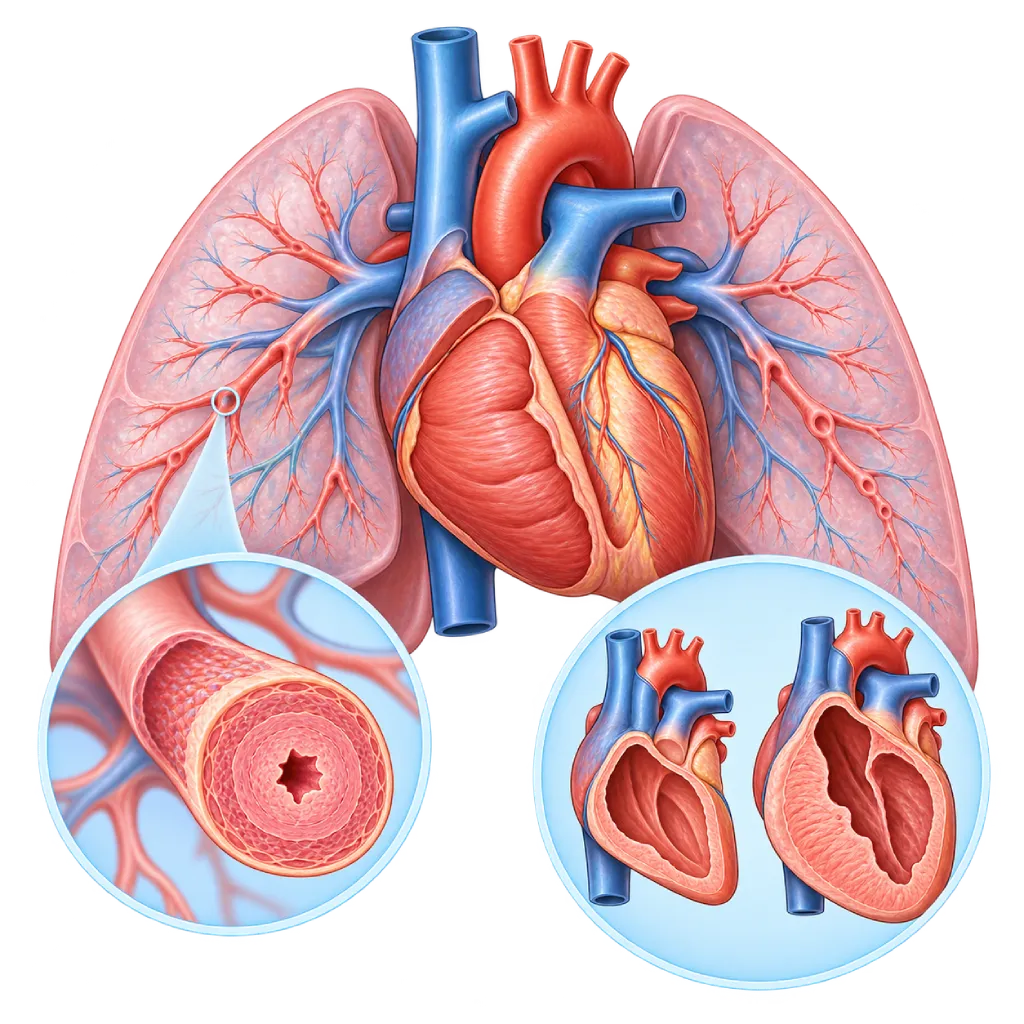
Primary pulmonary hypertension, now called idiopathic pulmonary arterial hypertension, is high blood pressure in the lung blood vessels with no known cause. The small lung arteries thicken and narrow, so the right ventricle of the heart has to work harder.
SourcesSigns That Need Urgent Help
- Fainting, especially during or after activity
- Severe chest pain or chest pain that does not ease with rest
- Shortness of breath at rest or being unable to lie flat
- Bluish lips or fingertips
- Coughing up blood
- Swelling that increases quickly, with weight gain of more than 2 kg in three days
- A very fast heartbeat with dizziness
If these signs appear, go to the nearest emergency department right away or call Heart Attack Center 1500 258.
01 / Understanding the condition
About Primary Pulmonary Hypertension
Pulmonary hypertension is high blood pressure in the pulmonary arteries, the vessels that carry blood from the right ventricle of the heart to the lungs to pick up oxygen. It is different from ordinary high blood pressure measured on the arm. The 2022 ESC/ERS guidelines define pulmonary hypertension as a mean pulmonary artery pressure above 20 mmHg at rest, measured by right heart catheterization. An overview of all types is covered on the Pulmonary Hypertension page.
From Primary to Idiopathic
The term primary pulmonary hypertension was once used for pulmonary hypertension without a clear cause. Guidelines now use the term idiopathic pulmonary arterial hypertension, which belongs to group 1 of the five groups of pulmonary hypertension. When the disease occurs in several family members or is linked to a gene change, it is called heritable pulmonary arterial hypertension. An idiopathic diagnosis is made only after other causes have been ruled out, such as left heart disease, lung disease, chronic blood clots, autoimmune disease, and certain drugs.
What Happens in the Lungs
In this disease, the walls of the small arteries in the lungs thicken because their cells grow excessively. At the same time, substances that widen blood vessels decrease, while substances that narrow them increase. The arteries become narrower, so the right ventricle has to pump harder. Over time, the right ventricle enlarges and weakens, a condition called right heart failure.
Rare but Treatable
Idiopathic pulmonary arterial hypertension is a rare disease. It affects women more often, but it can occur in men and at any age, including in children. Symptoms develop slowly and resemble other illnesses, so diagnosis is often delayed. The disease cannot yet be cured, but specific treatments developed over the past two decades can improve symptoms, exercise capacity, and life expectancy. Guidelines recommend care at a center experienced in treating pulmonary hypertension.
Treatment Based on Risk Level
The doctor classifies risk as low, intermediate, or high based on symptoms, walking ability, NT-proBNP level, and heart test results. This assessment is repeated every three to six months. The goal of treatment is to reach or maintain low risk, and medicines are added if that goal has not been reached.
02 / Understanding the condition
Symptoms to Recognize.
Common Symptoms
Early symptoms are often vague and develop slowly, so they are easily mistaken for being out of shape, asthma, or anxiety.
- Shortness of breath during activity that keeps getting worse
- Tiring easily and feeling weak
- Chest pain or pressure during activity
- Dizziness or nearly fainting when climbing stairs or walking fast
- Heart palpitations
- Swollen ankles or a swollen abdomen
Symptoms in Children
In children, fainting during play or exercise is more often an early sign than in adults.
- Tiring easily or stopping play earlier than other children the same age
- Fainting or nearly fainting during activity
- Fast breathing or shortness of breath while playing
- Difficulty gaining weight
03 / Understanding the condition
What Causes This Condition?
- The exact cause is unknown (idiopathic)
- Gene changes, especially in the BMPR2 gene, which can be passed down in families (heritable)
- Thickening of the small lung artery walls because the muscle cells and inner lining grow excessively
- An imbalance of substances that regulate blood vessels: endothelin increases, while nitric oxide and prostacyclin decrease
- Small clots that form inside lung arteries that are already narrowed
- If a trigger such as methamphetamine or certain diet pills is found, the condition is classified as drug-induced
04 / Understanding the condition
Who Is at Higher Risk?
Genetic
A family history of pulmonary arterial hypertension and gene changes such as BMPR2. Only some carriers of the gene change eventually develop the disease.
Other
Women are affected more often than men. In women who already have the disease, pregnancy can quickly make it worse.
Lifestyle
Using methamphetamine, amphetamines, or certain diet pills increases the risk of pulmonary arterial hypertension, although drug-induced cases are classified separately from the idiopathic type.
Age
It can occur at any age, including in children. Registry data show that many patients are now diagnosed in middle and older age.
Groups at Higher Risk
- Family Members of People with Heritable Pulmonary Arterial Hypertension: Blood relatives can undergo genetic counseling and testing, and should be checked promptly if symptoms appear.
- Women of Childbearing Age: The disease is more common in women, and pregnancy puts a heavy strain on the right side of the heart, so contraception planning should be discussed with a doctor.
- Users of Methamphetamine or Certain Diet Pills: These substances can damage the small lung arteries. Tell your doctor about your history of use so the cause can be properly assessed.
05 / Understanding the condition
How Is It Diagnosed?
The doctor starts with your symptoms, family history, any medicines and substances you have used, and a physical examination. An ECG, chest X-ray, and NT-proBNP test can give early clues. Echocardiography estimates the pulmonary artery pressure and assesses the size and strength of the right ventricle.
The next step is to look for other causes following the ESC/ERS 2022 pathway: lung function tests, a chest CT scan, a ventilation-perfusion scan to rule out chronic blood clots, and blood tests for autoimmune disease, HIV, liver disease, and thyroid disease. The diagnosis is confirmed with right heart catheterization, which measures the pressure directly. In the idiopathic type, this test is combined with a vasoreactivity test to identify the small number of patients who respond to calcium channel blockers. The six-minute walk test and NT-proBNP level are used to assess the risk level and monitor the results of treatment.
Echocardiography
Estimates pulmonary artery pressure from the flow across the tricuspid valve and assesses the size and function of the right ventricle.
Right Heart Catheterization
Directly measures pulmonary artery pressure, pulmonary wedge pressure, and pulmonary vascular resistance, combined with a vasoreactivity test.
Ventilation-Perfusion Scan
Rules out chronic blood clot blockages in the lungs, which are treated differently.
Lung Function Test (Spirometry)
Assesses lung disease as another possible cause, including the ability of the lungs to absorb gas (DLCO).
A chest CT scan to look at the lung tissue and blood vessels and rule out lung disease as a cause.
Laboratory Tests
Blood tests for autoimmune disease, HIV, liver function, and thyroid conditions that can cause pulmonary arterial hypertension.
NT-proBNP and BNP Test
Assesses the strain on the right side of the heart and is used with the six-minute walk test to determine the risk level and monitor treatment.
06 / Understanding the condition
Treatment Options.
Treatment is decided by a doctor after an assessment. The categories below can help you follow the conversation with your doctor.
Specific Pulmonary Arterial Hypertension Medicines
Endothelin receptor antagonists, phosphodiesterase-5 inhibitors, soluble guanylate cyclase stimulators, and prostacyclin pathway drugs. Treatment usually starts with a combination of two drugs, then is adjusted to the risk level.
Calcium Channel Blockers for Responsive Patients
Only for the small number of patients with a positive vasoreactivity test, with close monitoring. These drugs are not used without this test.
Intravenous or Subcutaneous Medicines
At high risk, prostacyclin analog medicines are given continuously through a small pump, usually together with oral medicines.
Activin Signaling Inhibitor
Sotatercept, an injectable medicine from a newer class, can be added to background therapy for selected patients. The STELLAR trial (2023) showed improved exercise capacity.
Supportive Therapy
Diuretics to reduce fluid, oxygen if oxygen levels are low, correction of iron deficiency, and vaccination against influenza, pneumococcus, and COVID-19.
Supervised Exercise Training
An exercise program supervised by the team improves exercise capacity and quality of life in patients whose condition is stable on medicines.
Lung Transplant
Considered if the disease remains severe despite full combination treatment.
07 / Understanding the condition
Complications to Watch For.
Right Heart Failure
The right ventricle enlarges and weakens from constantly pumping against high pressure, causing swelling in the legs and abdomen and worsening shortness of breath.
Heart Rhythm Disorders
An enlarged right atrium can trigger atrial flutter or atrial fibrillation, which can quickly worsen symptoms.
Fainting During Activity
The right side of the heart cannot increase blood flow during activity, so less blood reaches the brain. This needs prompt re-evaluation.
Coughing Up Blood
Small blood vessels in the airways can burst, ranging from light streaks to bleeding that needs urgent treatment.
High Risk During Pregnancy
Circulation changes during pregnancy and childbirth put a heavy strain on the right side of the heart and can endanger the mother's life.
08 / Understanding the condition
What Can You Do?
- Avoid methamphetamine, amphetamines, and diet pills without a doctor's prescription.
- If a family member has heritable pulmonary arterial hypertension, ask about genetic counseling and testing.
- Have shortness of breath that keeps getting worse for no clear reason checked; do not simply assume it is a lack of exercise.
- If you have the disease, take your medicines on schedule and do not stop them suddenly without your doctor's guidance.
- Get vaccinated against influenza, pneumococcus, and COVID-19 to prevent lung infections that make the disease worse.
- Talk to your doctor about effective contraception, because pregnancy is very risky for people with this disease.
- Limit salt and weigh yourself every day to detect fluid buildup.
09 / Understanding the condition
When Should You See a Doctor?
See a doctor if shortness of breath during activity keeps getting worse over several weeks or months, especially if earlier heart and lung tests did not find a cause. If you have already been diagnosed, contact your doctor right away or go to the emergency room if you faint, cough up blood, or are short of breath at rest. A consultation is also recommended if:
- You nearly faint or faint during activity
- You get chest pain when climbing stairs or walking fast
- Your legs or abdomen swell for no clear reason
- A family member has been diagnosed with pulmonary arterial hypertension
- You have used methamphetamine or diet pills and now get short of breath easily
Don't Wait in an Emergency.
If symptoms are severe or come on suddenly, go to the nearest emergency department right away or call Heart Attack Center 1500 258, rather than waiting for an appointment.
10 / Common questions
Questions You May Have.
Frequently asked questions about primary pulmonary hypertension.
What is the difference between pulmonary hypertension and ordinary high blood pressure?
Ordinary high blood pressure is high pressure in the arteries throughout the body, measured with a blood pressure cuff on the arm. Pulmonary hypertension is high pressure in the lung arteries, which cannot be measured with a blood pressure cuff. A person can have normal arm blood pressure but high lung pressure. Ordinary blood pressure medicines also do not treat pulmonary arterial hypertension.
Why is it now called idiopathic instead of primary?
The term primary was used before the causes and mechanisms of this disease were better understood. Since the international classification was updated, the name used is idiopathic pulmonary arterial hypertension when no cause is found, or heritable when it is linked to genes or family history. This naming helps doctors choose treatment, because other types of pulmonary hypertension are treated differently.
Can primary pulmonary hypertension be cured?
There is currently no medicine that cures it completely. However, combination treatment can lower lung pressure, ease shortness of breath, improve exercise capacity, and extend life expectancy. Results are better when the diagnosis is made earlier, treatment is adjusted to the risk level, and follow-up is regular. If the disease remains severe, a lung transplant may be considered.
Is this disease passed on to children?
Some cases are linked to gene changes, especially in BMPR2, which can be inherited. However, only some gene carriers eventually develop the disease, and many idiopathic cases are not inherited. The ESC/ERS 2022 guidelines recommend genetic counseling and testing for adult patients with the idiopathic or heritable type, so the family can understand their risk and when they should be checked.
Is it safe for people with pulmonary hypertension to become pregnant?
The ESC/ERS 2022 guidelines advise people with pulmonary arterial hypertension not to become pregnant, because circulation changes during pregnancy and childbirth are very risky for the right side of the heart and for the mother's life. Effective contraception should be discussed with your doctor, because some pulmonary hypertension medicines can harm the unborn baby. If you are already pregnant, contact the team caring for you right away.
Can I exercise?
Yes, with the right program. The ESC/ERS 2022 guidelines recommend supervised exercise training for patients whose condition is stable on medicines, because it can improve exercise capacity and quality of life. Avoid activities that make you very short of breath, dizzy, or cause chest pain, as well as heavy lifting. Discuss the type and intensity of exercise with your doctor.
Sources and Medical Review
Translated from the Indonesian edition medically reviewed by dr. Santi R. Dewayanti, Sp.P.
Sources as cited in the Indonesian edition.
- Humbert M, Kovacs G, Hoeper MM, et al. 2022 ESC/ERS Guidelines for the diagnosis and treatment of pulmonary hypertension. Eur Heart J. 2022;43(38):3618-731.
- Kovacs G, Bartolome S, Denton CP, et al. Definition, classification and diagnosis of pulmonary hypertension. Eur Respir J. 2024;64(4):2401324.
- Chin KM, Gaine SP, Gerges C, et al. Treatment algorithm for pulmonary arterial hypertension. Eur Respir J. 2024;64(4):2401325.
- Austin ED, Aldred MA, Alotaibi M, et al. Genetics and precision genomics approaches to pulmonary hypertension. Eur Respir J. 2024;64(4):2401370.
- Hoeper MM, Badesch DB, Ghofrani HA, et al. Phase 3 Trial of Sotatercept for Treatment of Pulmonary Arterial Hypertension. N Engl J Med. 2023;388(16):1478-90.
- Galiè N, Barberà JA, Frost AE, et al. Initial Use of Ambrisentan plus Tadalafil in Pulmonary Arterial Hypertension. N Engl J Med. 2015;373(9):834-44.
Doctors Who Treat This Condition

dr. Santi R. Dewayanti, Sp.P
Pulmonology
Clinical focusLung and Respiratory Disease · Asthma and COPD
View Profile
dr. BRM Ario S. Kuncoro, Sp.JP(K)
Echocardiography & Cardiovascular Imaging
Cardiovascular Diagnostic Center +2 centers
Clinical focusAdvanced and 3D Echocardiography · Transesophageal Echocardiography
View Profile
Dr. dr. Dafsah A. Juzar, Sp.JP(K)
Interventional Cardiology
Coronary Intervention Procedures +1 center
Clinical focusComplex Coronary Intervention · Cardiac Catheterization
View Profile