
Quick answer
What Is Secondary Hypertension?
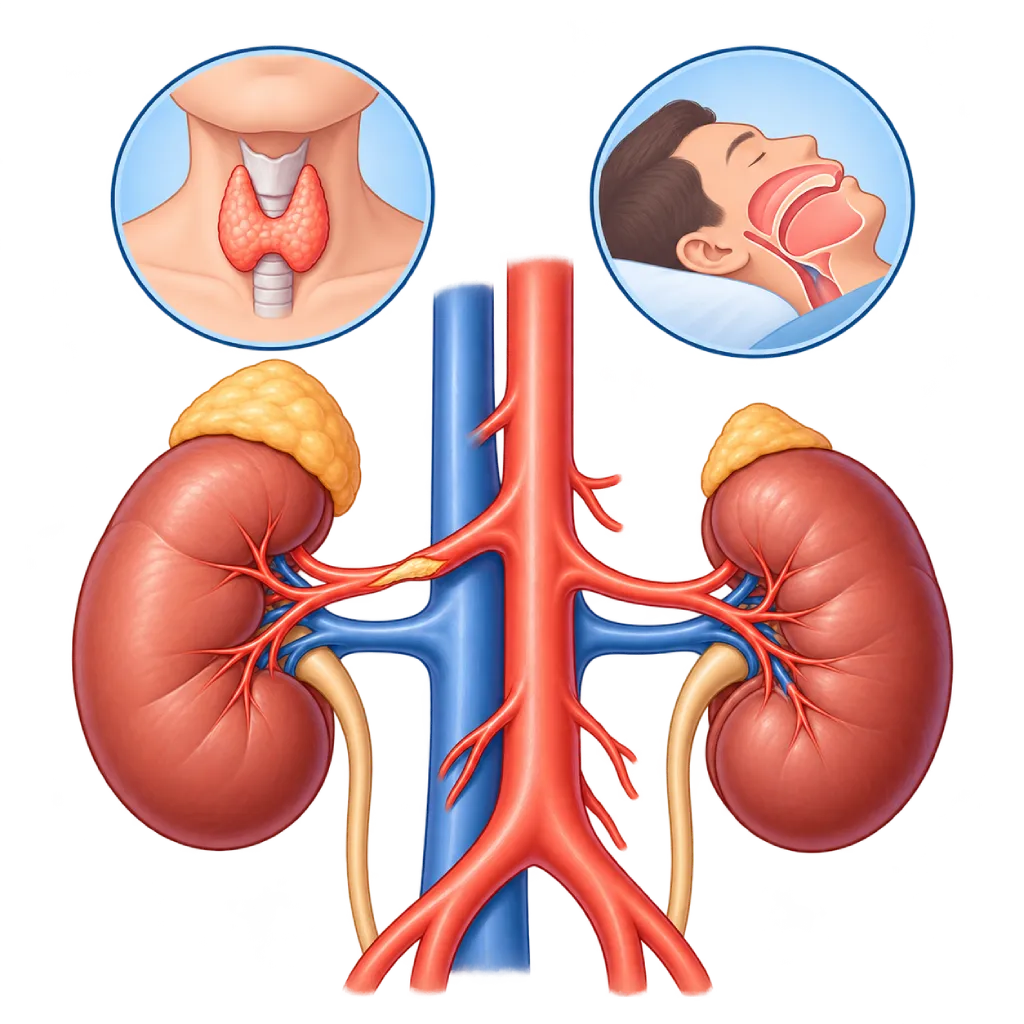
Secondary hypertension is high blood pressure caused by a specific disease or condition, such as a kidney disorder, excess hormones, sleep apnea, or medication. Finding and treating the cause can lower blood pressure and sometimes reduce the need for medication.
SourcesSigns That Need Urgent Help
- Chest pain or a feeling of pressure in the chest
- Severe shortness of breath or a cough with frothy sputum
- Facial drooping, weakness of the arm or leg on one side, or slurred speech
- Sudden severe headache with vomiting or confusion
- Sudden blurred vision or loss of vision
- Severe chest or back pain that feels like tearing
If these signs appear, go to the nearest emergency department right away or call Heart Attack Center 1500 258.
01 / Understanding the condition
About Secondary Hypertension
Secondary hypertension is high blood pressure that results from another disease or condition that can be identified. This type is found in about 1 in 10 adults with hypertension, and is more common in younger people and in hypertension that is hard to control. Unlike primary hypertension, treatment does not only lower the blood pressure numbers but also addresses the source. An overview of hypertension is covered on the Hypertension page.
Common Causes
Chronic kidney disease and narrowing of the kidney arteries disrupt how the kidneys regulate salt and hormones. Primary aldosteronism, in which the adrenal glands make too much aldosterone, is a hormonal cause that is often missed and may come with low blood potassium. Obstructive sleep apnea makes breathing stop repeatedly during sleep, so blood pressure surges at night. Less common causes include pheochromocytoma, Cushing's syndrome, thyroid disorders, and coarctation of the aorta. Medications and substances can also raise blood pressure, for example nonsteroidal anti-inflammatory drugs, decongestants, birth control pills, corticosteroids, alcohol, and stimulants.
Signs That Point to Secondary Hypertension
Your doctor will look for a secondary cause if hypertension starts before age 40, blood pressure rises suddenly or worsens after being well controlled for a long time, blood pressure is very high or stays high on three medications, blood potassium is low for no clear reason, or organ damage looks more severe than the duration of hypertension would explain. Typical symptoms are also clues, such as episodes of pounding heartbeat, sweating, and headache in pheochromocytoma, or loud snoring and daytime sleepiness in sleep apnea. Hypertension that is hard to bring down is covered on the Resistant Hypertension page.
Why Finding It Matters
Some causes can be fully resolved, for example an adrenal tumor that is removed or a coarctation that is repaired. For other causes, targeted treatment makes blood pressure easier to control and protects the organs. Excess aldosterone, for example, is linked to a higher risk of atrial fibrillation, stroke, and kidney disease than primary hypertension with similar blood pressure. In long-standing hypertension, some people still need medication even after the cause has been treated.
02 / Understanding the condition
Symptoms to Recognize.
Common Symptoms
Complaints usually come from the underlying disease. Tell your doctor about the following signs.
- High blood pressure that starts before age 40
- Blood pressure that rises suddenly or stays high despite taking several medications
- Weakness, muscle cramps, or frequent urination due to low potassium
- Sudden episodes of pounding heartbeat, heavy sweating, and headache
- Loud snoring, pauses in breathing during sleep, and daytime sleepiness
- A rounded face, an enlarged belly, and reddish purple streaks on the skin of the belly
- Pounding heartbeat, trembling, weight loss, or easily feeling overheated
- Foamy or bloody urine, or swelling around the eyes
Symptoms in Children
In children, especially young children, hypertension is more often caused by another disease, mainly kidney disease and congenital abnormalities.
- High blood pressure found during a routine checkup
- Weak pulses in the legs, or legs that tire quickly during play
- Slowed growth or poor weight gain
- Recurrent headaches or fussiness without a clear cause
- Foamy or bloody urine, or swelling around the eyes
03 / Understanding the condition
What Causes This Condition?
- Chronic kidney disease or kidney inflammation
- Narrowing of the kidney arteries due to atherosclerotic plaque or fibromuscular dysplasia
- Primary aldosteronism: the adrenal glands make too much of the hormone aldosterone
- Pheochromocytoma or paraganglioma: a tumor that releases adrenaline-like hormones
- Cushing's syndrome, thyroid disorders, or parathyroid gland disorders
- Obstructive sleep apnea: breathing stops repeatedly during sleep
- Coarctation of the aorta: a narrowing of the aorta present from birth
- Medications and substances: nonsteroidal anti-inflammatory drugs, decongestants, birth control pills, corticosteroids, certain cancer drugs, alcohol, and stimulants
04 / Understanding the condition
Who Is at Higher Risk?
Medical
Chronic kidney disease, diabetes with kidney damage, autoimmune diseases that affect the kidneys, atherosclerosis in other blood vessels, and thyroid or adrenal hormone disorders.
Lifestyle
Obesity increases the risk of obstructive sleep apnea, while heavy alcohol use and stimulant drugs can directly raise blood pressure.
Genetic
Some causes can be inherited, for example polycystic kidney disease, some cases of pheochromocytoma or paraganglioma, and inherited forms of aldosteronism.
Age
In children and young adults, a secondary cause is more likely to be found. In older adults, narrowing of the kidney arteries due to atherosclerosis is more common.
Other
Regular use of nonsteroidal anti-inflammatory drugs, decongestants, birth control pills, corticosteroids, certain cancer drugs, or supplements and herbal remedies with unclear ingredients.
Groups at Higher Risk
- People with Hypertension Before Age 40: Hypertension at a young age is more likely to be caused by another disease, so the cause needs to be investigated.
- People with Resistant Hypertension: Primary aldosteronism, kidney disease, and sleep apnea are found more often when blood pressure is hard to bring down.
- People with Chronic Kidney Disease: Kidney disease is a common cause of secondary hypertension and is also made worse by high blood pressure.
- People Who Snore Loudly: Loud snoring with pauses in breathing during sleep can signal obstructive sleep apnea, which raises blood pressure.
- People Taking Medications That Raise Blood Pressure: Regular use of nonsteroidal anti-inflammatory drugs, decongestants, corticosteroids, or birth control pills can raise blood pressure.
05 / Understanding the condition
How Is It Diagnosed?
Testing for secondary hypertension is done step by step and is targeted, not every test at once. Your doctor starts by asking about your age when hypertension began, the medications and herbal remedies you use, your sleep pattern, and typical symptoms, then examines you, including comparing blood pressure in your arms and legs.
Basic tests include potassium, sodium, kidney function, urine tests, and blood sugar. The 2024 ESC guidelines recommend that screening for primary aldosteronism, by measuring aldosterone and renin, be considered in adults with confirmed hypertension. If the initial results point to a specific cause, further tests follow, for example thyroid hormone or metanephrine tests, Doppler ultrasound of the kidney arteries, CT scan or MRI of the abdomen, and a sleep study. Some hormonal causes require working together with an internal medicine specialist in endocrinology, while blood vessel abnormalities may require angiography before a procedure.
Physical Examination
Comparing blood pressure in the arms and legs, feeling the pulses in the legs, listening for a whooshing sound (bruit) over the abdomen, and looking for signs of excess hormones.
Laboratory Tests
Potassium, sodium, kidney function, blood sugar, and the aldosterone to renin ratio to screen for primary aldosteronism.
Urine Tests
Looking for protein or blood in the urine as a sign of kidney disease and, if suspected, measuring certain hormones in the urine.
Thyroid Function Test
Measuring TSH and thyroid hormones to identify an overactive or underactive thyroid gland.
Vascular Ultrasound
Doppler ultrasound of the kidney arteries to look for narrowing that reduces blood flow to the kidneys, without needles and without radiation.
CT scan or MRI of the abdomen to view the adrenal glands, kidneys, and kidney arteries after blood tests point to a specific cause.
Sleep study (polysomnography) to confirm obstructive sleep apnea if you have loud snoring or daytime sleepiness.
06 / Understanding the condition
Treatment Options.
Treatment is decided by a doctor after an assessment. The categories below can help you follow the conversation with your doctor.
Treating the Cause
Treatment is tailored to the source, for example controlling kidney disease or treating a thyroid disorder.
Adrenal Gland Surgery
In one-sided primary aldosteronism or pheochromocytoma, the affected gland can be removed, usually through surgery with small incisions.
Mineralocorticoid Antagonists
This class of medication blocks the action of aldosterone and is used in primary aldosteronism that affects both adrenal glands or is not treated with surgery.
Widening of the Kidney Arteries
Angioplasty is considered for certain kidney artery narrowings, especially fibromuscular dysplasia. For narrowing due to atherosclerosis, medication is generally the first choice.
CPAP for Sleep Apnea
A breathing device worn during sleep that keeps the airway open and can help lower blood pressure.
Stopping or Replacing Trigger Medications
Your doctor reviews medications that may raise blood pressure and finds alternatives. Do not stop any medication on your own.
Blood Pressure Medication
Still needed while the cause is being treated, and in some people over the long term.
07 / Understanding the condition
Complications to Watch For.
Progressive Kidney Damage
Kidney disease and high blood pressure worsen each other, so kidney function can decline faster. Covered on the Chronic Kidney Disease page.
Atrial Fibrillation and Stroke
Excess aldosterone is linked to a higher risk of atrial fibrillation and stroke than primary hypertension with similar blood pressure.
Thickened Heart Muscle and Heart Failure
High blood pressure and excess hormones can thicken the heart muscle, then make it stiff or weak.
Hypertensive Crisis
Some causes, such as pheochromocytoma, can trigger sudden surges in blood pressure that damage organs. Covered on the Hypertensive Crisis page.
Coronary Artery Disease
Long-standing high blood pressure speeds up plaque buildup in the coronary arteries, especially when the cause is found late.
08 / Understanding the condition
What Can You Do?
- Have your blood pressure checked from a young age, especially if your family has a history of kidney disease
- Avoid regular use of nonsteroidal anti-inflammatory drugs and decongestants without your doctor's advice
- Tell your doctor about all the medications, supplements, and herbal remedies you use
- Maintain a healthy weight to lower the risk of obstructive sleep apnea
- Avoid heavy alcohol use and stimulant drugs
- Control diabetes and blood pressure to protect your kidneys
09 / Understanding the condition
When Should You See a Doctor?
Secondary hypertension should be suspected if your blood pressure pattern is unusual. Make an appointment if:
- Hypertension starts before age 40
- Blood pressure rises suddenly or worsens after being well controlled for a long time
- Blood pressure stays high even though you take three types of medication
- Your blood potassium is low, or you often feel weak and have muscle cramps
- You have sudden episodes of pounding heartbeat, heavy sweating, and headache
- You snore loudly and often feel sleepy during the day
Go to the emergency room right away if your blood pressure is 180/120 mmHg or higher with chest pain, shortness of breath, weakness on one side of the body, slurred speech, or vision problems.
Don't Wait in an Emergency.
If symptoms are severe or come on suddenly, go to the nearest emergency department right away or call Heart Attack Center 1500 258, rather than waiting for an appointment.
10 / Common questions
Questions You May Have.
Frequently asked questions about secondary hypertension.
How do I know if my hypertension is secondary?
Secondary hypertension cannot be identified from blood pressure numbers alone. It is suspected when hypertension starts before age 40, rises suddenly, is hard to bring down with three medications, comes with low potassium, or comes with typical symptoms such as episodes of pounding heartbeat and sweating, or loud snoring. Your doctor will choose the blood tests, urine tests, and imaging that match these clues.
Can secondary hypertension be cured?
Some cases can. Removing an adrenal tumor, repairing coarctation of the aorta, or stopping a trigger medication can lower blood pressure, sometimes to the point that medication is no longer needed. The chances are higher when the cause is found earlier. In long-standing hypertension, the blood vessels have already become stiff, so some people still need medication even after the cause has been treated.
What is primary aldosteronism?
Primary aldosteronism is a condition in which the adrenal glands above the kidneys make too much of the hormone aldosterone. This hormone retains salt and water and removes potassium, so blood pressure rises and blood potassium may drop. The condition is often missed because many people who have it have normal potassium levels. The first test is a blood test for aldosterone and renin, followed by further tests depending on the results.
Can medications cause hypertension?
Yes. Nonsteroidal anti-inflammatory drugs for pain, decongestants in cold medicines, birth control pills, corticosteroids, some cancer drugs, and certain antidepressants can raise blood pressure. Alcohol and stimulant drugs also have an effect. Bring a list of all your medications, supplements, and herbal remedies to your checkups. Do not stop any medication on your own; your doctor will review it and find an alternative if needed.
Why do I need a sleep study?
Obstructive sleep apnea makes breathing stop repeatedly during sleep, so oxygen levels drop and blood pressure surges, especially at night. It is common in people who snore loudly, are overweight, or have hypertension that is hard to bring down. A sleep study confirms the diagnosis, and treatment with CPAP can help lower blood pressure. Covered on the Obstructive Sleep Apnea page.
Can children have secondary hypertension?
Yes. In children, especially young children, hypertension is more often caused by another disease, such as kidney disease or coarctation of the aorta. For this reason, children with high blood pressure are usually examined further. Signs to watch for include weak pulses in the legs, slowed growth, foamy or bloody urine, and swelling around the eyes.
Sources and Medical Review
Translated from the Indonesian edition medically reviewed by dr. Debby C. Soemitha, Sp.PD.
Sources as cited in the Indonesian edition.
- McEvoy JW, McCarthy CP, Bruno RM, et al. 2024 ESC Guidelines for the management of elevated blood pressure and hypertension. Eur Heart J. 2024;45(38):3912-4018.
- Mancia G, Kreutz R, Brunström M, et al. 2023 ESH Guidelines for the management of arterial hypertension The Task Force for the management of arterial hypertension of the European Society of Hypertension: Endorsed by the International Society of Hypertension (ISH) and the European Renal Association (ERA). J Hypertens. 2023;41(12):1874-2071.
- Rimoldi SF, Scherrer U, Messerli FH. Secondary arterial hypertension: when, who, and how to screen? Eur Heart J. 2014;35(19):1245-1254.
- Funder JW, Carey RM, Mantero F, et al. The Management of Primary Aldosteronism: Case Detection, Diagnosis, and Treatment: An Endocrine Society Clinical Practice Guideline. J Clin Endocrinol Metab. 2016;101(5):1889-1916.
- Lenders JWM, Duh QY, Eisenhofer G, et al. Pheochromocytoma and Paraganglioma: An Endocrine Society Clinical Practice Guideline. J Clin Endocrinol Metab. 2014;99(6):1915-1942.
- Monticone S, D'Ascenzo F, Moretti C, et al. Cardiovascular events and target organ damage in primary aldosteronism compared with essential hypertension: a systematic review and meta-analysis. Lancet Diabetes Endocrinol. 2018;6(1):41-50.
Doctors Who Treat This Condition

dr. Debby C. Soemitha, Sp.PD
Internal Medicine
Clinical focusDiabetes and Diabetes Complications · Obesity and Metabolic Disease
View Profile
dr. Emanoel Oepangat, Sp.JP(K)
Interventional Cardiology
Vascular Diagnostic and Therapeutic Center +1 center
Clinical focusCoronary Intervention · Peripheral Vascular Intervention
View Profile
dr. Siska S. Danny, Sp.JP(K)
Interventional Cardiology
Coronary Intervention Procedures
Clinical focusPCI for Acute Coronary Syndrome · Primary Coronary Intervention
View Profile