
Quick answer
What Is Peripartum Cardiomyopathy?
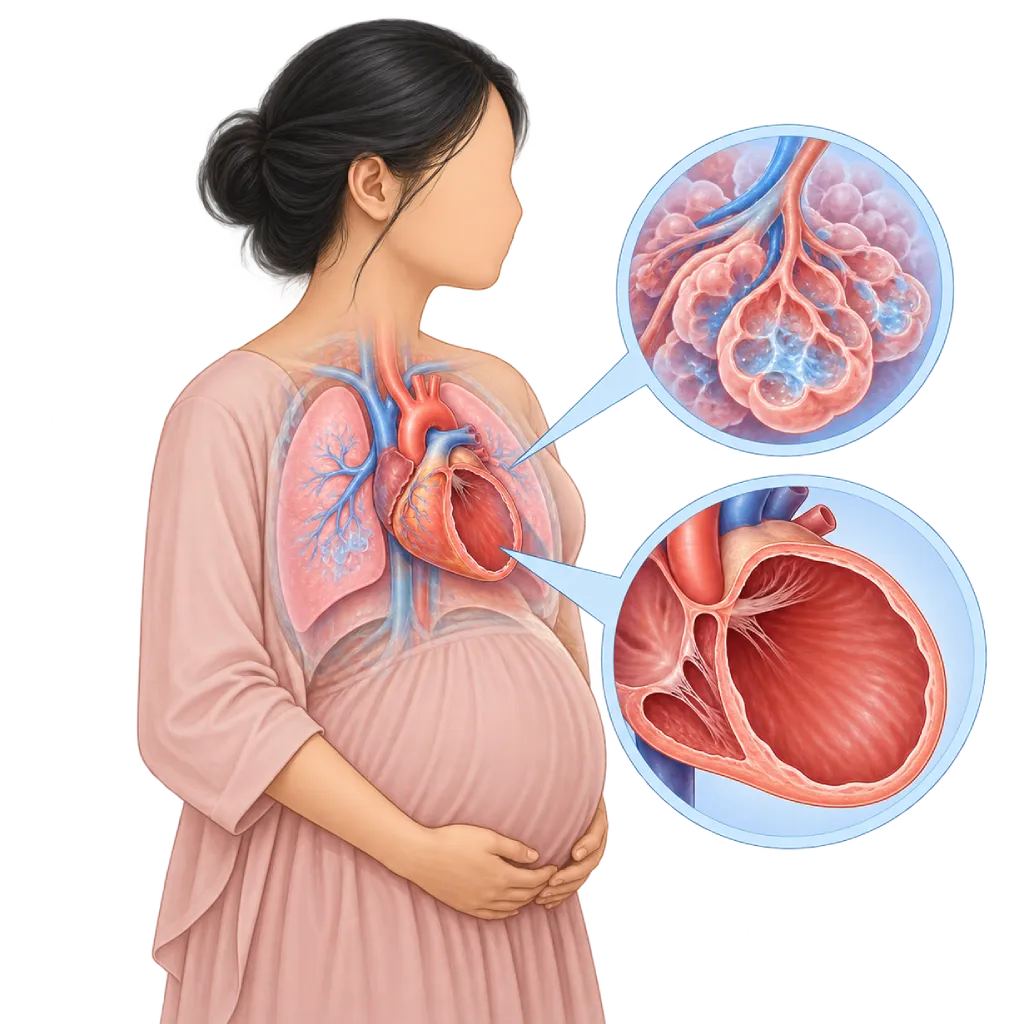
Peripartum cardiomyopathy is a weakening of the heart's pumping that appears toward the end of pregnancy or in the months after giving birth, with no other clear cause. It causes heart failure and needs prompt treatment.
SourcesSigns That Need Urgent Help
- Severe shortness of breath at rest or difficulty speaking because of breathlessness
- Coughing up frothy or pink phlegm
- Chest pain that does not go away
- Fainting or nearly fainting
- A very fast heartbeat with severe dizziness
- Bluish lips, cold skin, and severe weakness
- Sudden facial drooping, arm weakness, or slurred speech
If these signs appear, go to the nearest emergency department right away or call Heart Attack Center 1500 258.
01 / Understanding the condition
About Peripartum Cardiomyopathy
During pregnancy, the heart works harder because blood volume and heart rate increase. In peripartum cardiomyopathy, the muscle of the left ventricle weakens so the heart's pumping declines, usually with an ejection fraction (the percentage of blood pumped out with each beat) below 45 percent. This condition appears toward the end of pregnancy or within a few months after giving birth, especially in the first month after delivery.
The diagnosis is made after other causes have been ruled out, such as valve disease, coronary artery disease, or a cardiomyopathy that was already present before pregnancy. It is known internationally as peripartum cardiomyopathy (PPCM).
Why It Happens
The exact cause is not yet fully understood. Research points to a role for pregnancy and breastfeeding hormones, especially a fragment of the hormone prolactin that forms as a result of oxidative stress and can damage small blood vessels and the heart muscle. Other factors are blood vessel problems in preeclampsia and a genetic tendency. About 15 percent of patients carry gene variants that are also found in dilated cardiomyopathy.
Symptoms That Resemble Pregnancy Complaints
Shortness of breath, tiring easily, and leg swelling are also common in healthy pregnant women. That is why peripartum cardiomyopathy is often recognized late. Signs to watch for are shortness of breath when lying down, to the point of needing several pillows to sleep, coughing at night, shortness of breath that keeps getting worse, swelling that increases quickly, or palpitations. High blood pressure during pregnancy is covered on the Hypertension in Pregnancy page.
Treatment Approach
Treatment follows the principles of heart failure care, but the choices are adjusted to pregnancy, delivery, and breastfeeding, because some classes of medicine are not safe for the baby. In certain cases, the doctor may add a medicine that blocks the hormone prolactin. If this condition appears while you are still pregnant, the cardiologist, obstetrician, and anesthesiologist plan the timing and method of delivery together.
Chances of Recovery
ESC registry data show that almost half of patients recover pumping function within six months with treatment. Others continue to have weak pumping and need long-term heart failure treatment. A later pregnancy carries a risk of recurrence, especially if heart function has not recovered, so it needs to be planned with your doctor. An overview of this family of diseases is covered on the Cardiomyopathy page.
02 / Understanding the condition
Symptoms to Recognize.
Common Symptoms
Symptoms appear toward the end of pregnancy or within a few months after giving birth, and are often mistaken for ordinary pregnancy complaints.
- Shortness of breath out of proportion to activity
- Shortness of breath when lying down, so you need several pillows to sleep
- Waking up at night because of shortness of breath or coughing
- Tiring easily and excessive weakness
- Leg swelling that increases quickly
- Rapid weight gain from fluid retention
- A pounding or irregular heartbeat
03 / Understanding the condition
What Causes This Condition?
- A fragment of the hormone prolactin that forms in excess and damages small blood vessels and the heart muscle
- Blood vessel problems, especially in preeclampsia
- Heart muscle gene variants that are also found in dilated cardiomyopathy
- The increased workload on the heart during pregnancy and delivery
- Inflammation and oxidative stress in the heart muscle
- In some patients, no exact cause is found
04 / Understanding the condition
Who Is at Higher Risk?
Medical
Preeclampsia and high blood pressure during pregnancy are strong risk factors. Anemia, diabetes, obesity, and long-term use of medicines to delay labor are also linked to a higher risk.
Age
The risk is higher in pregnancies after age 30, although this condition can also occur in younger women.
Genetic
A family history of dilated cardiomyopathy or sudden death suggests a possible genetic tendency. Women of African descent are also at higher risk.
Lifestyle
Smoking and poor nutrition during pregnancy have been linked to a higher risk in some studies.
Other
A twin pregnancy, having given birth several times, and a history of peripartum cardiomyopathy in a previous pregnancy raise the risk.
Groups at Higher Risk
- Women with Preeclampsia: Blood vessel problems in preeclampsia are closely linked to peripartum cardiomyopathy, so shortness of breath after giving birth needs to be assessed.
- Women with a Twin Pregnancy: The heart's workload during pregnancy is greater and is linked to a higher risk of peripartum cardiomyopathy.
- History of Peripartum Cardiomyopathy: A later pregnancy carries a risk of recurrence, especially if pumping function has not returned to normal.
- Relatives of People with Cardiomyopathy: Some patients carry cardiomyopathy gene variants that can also be found in other family members.
05 / Understanding the condition
How Is It Diagnosed?
The doctor asks when the symptoms started compared with the time of delivery, about any history of high blood pressure or preeclampsia, and about any family history of heart disease, then checks for signs of heart failure such as crackles in the lungs and swelling. An NT-proBNP or BNP test helps because its level changes relatively little in a normal pregnancy, so a high level points to a heart problem.
Echocardiography is the key test to assess the ejection fraction, chamber size, valves, and blood clots inside the heart. An ECG and a chest X-ray, with abdominal shielding if you are still pregnant, complete the assessment. Cardiac MRI can help distinguish this condition from myocarditis or other cardiomyopathies. The doctor also rules out other causes of shortness of breath, such as pulmonary embolism and severe preeclampsia. If this condition appears while you are still pregnant, care involves a cardiologist, an obstetrician, and an anesthesiologist.
Echocardiography
The key test to measure the ejection fraction, the size of the left ventricle, and valve function, and to look for blood clots. It is safe during pregnancy because it uses no radiation.
NT-proBNP and BNP Test
A high level supports a suspicion of heart failure and helps distinguish it from ordinary pregnancy complaints.
Electrocardiogram (ECG)
Looks for rhythm disorders and signs of strain on the heart. A normal result does not rule out this condition.
Chest X-Ray
Assesses heart enlargement and fluid in the lungs, with abdominal shielding if the patient is still pregnant.
Cardiac MRI
Helps distinguish it from myocarditis or other cardiomyopathies. During pregnancy, it is generally done without gadolinium contrast.
Laboratory Tests
Checks a complete blood count, kidney and liver function, electrolytes, thyroid, and troponin to look for other causes and monitor treatment.
06 / Understanding the condition
Treatment Options.
Treatment is decided by a doctor after an assessment. The categories below can help you follow the conversation with your doctor.
Heart Failure Medicines Suited to Pregnancy
During pregnancy, the doctor chooses classes of medicine that are safe for the baby, such as beta blockers and diuretics. After delivery, other heart failure medicines can be added, with the choices adjusted if you are breastfeeding.
Bromocriptine
Your doctor may consider this prolactin-blocking medicine in certain cases, together with a blood thinner. It stops breast milk production, so the decision is discussed with you.
Blood Thinners
Given if there is a clot in the heart, atrial fibrillation, or an embolism, and considered if pumping function is very low or while taking bromocriptine.
Intensive Care
In shock or severe heart failure, patients are treated in intensive care with carefully chosen medicines to support circulation and, if needed, a temporary heart support device.
Prevention of Sudden Cardiac Arrest
Because pumping often recovers within a few months, an ICD is usually only considered if function remains low after treatment. In the meantime, your doctor may recommend a wearable defibrillator vest.
Planning Delivery and Future Pregnancies
The timing and method of delivery are decided together with the cardiologist, obstetrician, and anesthesiologist. A future pregnancy and contraceptive options are discussed before it is planned.
07 / Understanding the condition
Complications to Watch For.
Acute Heart Failure and Pulmonary Edema
Fluid builds up in the lungs, making shortness of breath severe. This needs urgent care and is covered on the Cardiogenic Pulmonary Edema page.
Cardiogenic Shock
The heart's pumping is too weak to maintain blood pressure and blood flow to the organs, so intensive care and sometimes a circulatory support device are needed.
Heart Rhythm Disorders
Weak pumping can trigger fast rhythms from the lower heart chambers, which carry a risk of fainting or cardiac arrest.
Blood Clots and Embolism
Pregnancy and the postpartum period make the blood clot more easily. Together with weak pumping, clots can form in the heart and travel to the brain or other organs.
Persistent Heart Failure
In some patients, pumping function does not fully recover, so long-term heart failure treatment is needed.
Recurrence in a Later Pregnancy
The risk of recurrence is higher if pumping function has not returned to normal by the next pregnancy, and the risk remains even after heart function has recovered.
08 / Understanding the condition
What Can You Do?
- Attend regular prenatal checkups, including a blood pressure measurement at every visit
- Report shortness of breath when lying down, coughing at night, or swelling that increases quickly
- If you have had this condition, talk to a cardiologist before planning another pregnancy
- Discuss heart-safe contraceptive options with your doctor
- Weigh yourself every morning during recovery to spot fluid buildup
- Take your medicines as prescribed and do not stop them on your own, even if you feel well
- Avoid smoking and alcohol during pregnancy and recovery
09 / Understanding the condition
When Should You See a Doctor?
Heart symptoms in late pregnancy and the postpartum period are easily dismissed as normal. Go to the emergency room right away if you have severe shortness of breath at rest, a frothy cough, chest pain, or fainting. Make an appointment soon if you are in late pregnancy or have recently given birth and have any of the following:
- Shortness of breath when lying down or needing several pillows to sleep
- Waking up at night because of shortness of breath or coughing
- Leg swelling that is spreading or rapid weight gain
- A pounding heart or unusual tiredness
- A history of peripartum cardiomyopathy and plans for another pregnancy
Don't Wait in an Emergency.
If symptoms are severe or come on suddenly, go to the nearest emergency department right away or call Heart Attack Center 1500 258, rather than waiting for an appointment.
10 / Common questions
Questions You May Have.
Frequently asked questions about peripartum cardiomyopathy.
What is the difference between shortness of breath from pregnancy and from peripartum cardiomyopathy?
Mild shortness of breath during activity is normal in late pregnancy because the growing uterus pushes against the lungs. The kind to watch out for is breathlessness at rest or when lying down, breathlessness that wakes you at night, breathlessness with a persistent cough, or breathlessness that gets worse day by day. If in doubt, an NT-proBNP test and echocardiography can help the doctor tell them apart quickly.
Can I still breastfeed?
The decision about breastfeeding is made together with your doctor. In mild to moderate cases treated with medicines that are safe during breastfeeding, breastfeeding can often continue. In severe cases, the doctor may advise stopping breast milk, including when giving bromocriptine, because this medicine suppresses the hormone prolactin. Some heart failure medicines are also preferred over others during breastfeeding.
Can heart function return to normal?
Yes. Almost half of the patients in the ESC registry recovered pumping function within six months, and some others recovered more slowly. The chance of recovery is better if pumping function was not too low at the start and treatment began quickly. Even after recovery, medicines are usually not stopped suddenly. Your doctor will reduce them gradually while monitoring with echocardiography.
Can I get pregnant again?
A later pregnancy carries a risk of recurrence. That risk is high if pumping function has not returned to normal, so the ESC guidelines advise against another pregnancy in that situation. If function has recovered, pregnancy is still risky and requires counseling, a checkup before pregnancy, and close monitoring by a cardiologist and an obstetrician. Also discuss safe contraception from early in your recovery.
Does this condition put the baby at risk?
If it appears during pregnancy, severe heart failure can affect blood flow to the baby and the timing of delivery. That is why the cardiologist, obstetrician, and anesthesiologist plan the timing and method of delivery together. Some heart medicines are not safe for the baby, so the doctor chooses suitable classes of medicine. This condition is not contagious to the baby, although some cases are linked to family genes.
How long do I need follow-up visits?
Frequent follow-up is needed in the first months to adjust medicines and monitor pumping function with echocardiography. After recovery, regular follow-up is still needed, usually every year, because heart function can decline again years later or when medicines are reduced. Your doctor decides the exact schedule based on your progress.
Sources and Medical Review
Translated from the Indonesian edition medically reviewed by dr. Sri Diniharini, Sp.JP(K).
Sources as cited in the Indonesian edition.
- Bauersachs J, König T, van der Meer P, Petrie MC, Hilfiker-Kleiner D, Mbakwem A, et al. Pathophysiology, diagnosis and management of peripartum cardiomyopathy: a position statement from the Heart Failure Association of the European Society of Cardiology Study Group on peripartum cardiomyopathy. Eur J Heart Fail. 2019;21(7):827-843.
- Arbelo E, Protonotarios A, Gimeno JR, Arbustini E, Barriales-Villa R, Basso C, et al. 2023 ESC Guidelines for the management of cardiomyopathies. Eur Heart J. 2023;44(37):3503-3626.
- De Backer J, Haugaa KH, Hasselberg NE, de Hosson M, Brida M, Castelletti S, et al. 2025 ESC Guidelines for the management of cardiovascular disease and pregnancy. Eur Heart J. 2025;46(43):4462-4568.
- Sliwa K, Petrie MC, van der Meer P, Mebazaa A, Hilfiker-Kleiner D, Jackson AM, et al. Clinical presentation, management, and 6-month outcomes in women with peripartum cardiomyopathy: an ESC EORP registry. Eur Heart J. 2020;41(39):3787-3797.
- Hilfiker-Kleiner D, Haghikia A, Berliner D, Vogel-Claussen J, Schwab J, Franke A, et al. Bromocriptine for the treatment of peripartum cardiomyopathy: a multicentre randomized study. Eur Heart J. 2017;38(35):2671-2679.
- Ware JS, Li J, Mazaika E, Yasso CM, DeSouza T, Cappola TP, et al. Shared genetic predisposition in peripartum and dilated cardiomyopathies. N Engl J Med. 2016;374(3):233-241.
Doctors Who Treat This Condition

dr. Siska S. Danny, Sp.JP(K)
Interventional Cardiology
Coronary Intervention Procedures
Clinical focusPCI for Acute Coronary Syndrome · Primary Coronary Intervention
View Profile
Dr. dr. Dafsah A. Juzar, Sp.JP(K)
Interventional Cardiology
Coronary Intervention Procedures +1 center
Clinical focusComplex Coronary Intervention · Cardiac Catheterization
View Profile
dr. Sri Diniharini, Sp.JP(K)
Echocardiography & Cardiovascular Imaging
Cardiovascular Diagnostic Center +1 center
Clinical focusAdvanced Echocardiography · Transesophageal Echocardiography
View Profile