
Quick answer
What Is Toxic Cardiomyopathy?
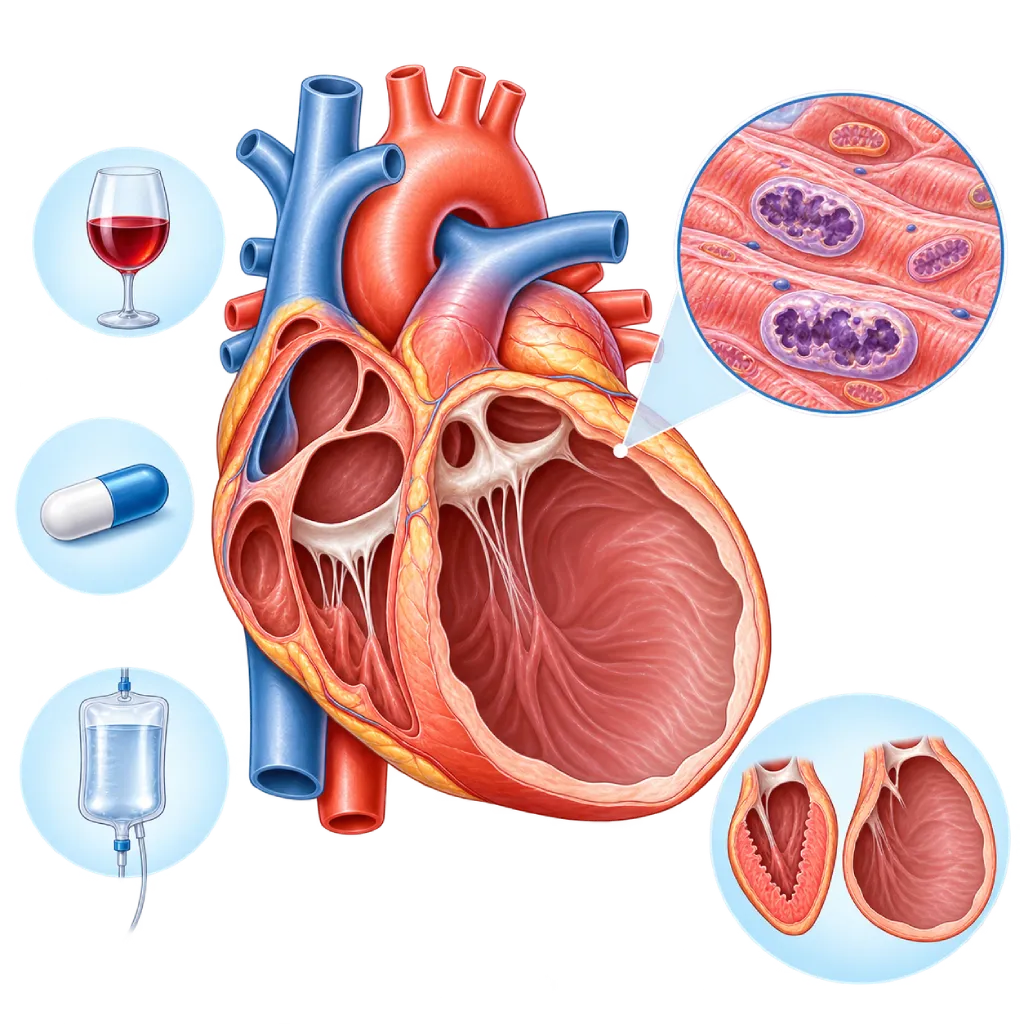
Toxic cardiomyopathy is damage to the heart muscle caused by substances that poison the heart, such as excessive alcohol, stimulant drugs, anabolic steroids, or cancer medicines and radiation. The heart's pumping weakens and can lead to heart failure.
SourcesSigns That Need Urgent Help
- Severe shortness of breath at rest or a frothy cough
- Persistent chest pain, especially after using stimulant drugs
- Fainting or reduced consciousness
- A very fast heartbeat with severe dizziness
- Pale, cold skin and severe weakness
- Sudden facial drooping, arm weakness, or slurred speech
If these signs appear, go to the nearest emergency department right away or call Heart Attack Center 1500 258.
01 / Understanding the condition
About Toxic Cardiomyopathy
Toxic cardiomyopathy is a heart muscle disease caused by substances that damage heart cells. As a result, the left ventricle may enlarge and its pumping weaken, similar to dilated cardiomyopathy, or its walls may weaken without enlarging. The 2023 European Society of Cardiology (ESC) guidelines list exposure to toxic substances as one of the causes to look for in every cardiomyopathy with weakened pumping. Dilated cardiomyopathy is discussed on the Dilated Cardiomyopathy page.
Substances That Can Damage the Heart
A common cause is heavy alcohol use over many years. This damage usually develops quietly, and symptoms appear only after the heart's pumping has become quite weak. Stimulant drugs, such as methamphetamine (crystal meth) and cocaine, raise stress hormones, blood pressure, and heart rate, and trigger blood vessel spasms, so they can damage the heart muscle in a shorter time. Anabolic steroids used for muscle building can also weaken the heart. Exposure to heavy metals such as cobalt and lead is rare, but can happen in the workplace.
Cancer Medicines and Radiation
Some cancer medicines, for example anthracyclines and medicines that target HER2, as well as radiation to the chest area, can reduce heart function. The benefit of cancer treatment remains the priority, so heart risk is assessed and monitored before, during, and after treatment. This topic is covered in full on the Cancer Therapy-Related Heart Disease page.
Why Some People Are More Vulnerable
Not everyone who is exposed develops heart damage. The amount and duration of exposure, age, other illnesses, and genetic makeup all play a part. Research has found that some people with alcohol-related cardiomyopathy carry heart muscle gene variants that are also found in dilated cardiomyopathy, which makes their hearts more easily damaged.
Chances of Improvement
Heart function can improve if exposure is stopped early and heart failure treatment is followed regularly. Improvement is usually seen within a few months. During cancer treatment, regular monitoring helps detect a decline in function before symptoms appear. On the other hand, if exposure continues, the damage can become permanent. That is why identifying the cause and getting support to stop are as important as heart medicines. An overview of this family of diseases is covered on the Cardiomyopathy page.
02 / Understanding the condition
Symptoms to Recognize.
Common Symptoms
Symptoms often develop slowly, so they are easily mistaken for ordinary tiredness.
- Shortness of breath during activity, and over time also when lying down
- Tiring easily and being able to do less than before
- Swelling of the feet and ankles
- Rapid weight gain from fluid retention
- Palpitations or a feeling of an irregular heartbeat
- Coughing or breathlessness that wakes you at night
- Dizziness or nearly fainting
03 / Understanding the condition
What Causes This Condition?
- Drinking large amounts of alcohol over many years
- Stimulant drugs, such as methamphetamine (crystal meth), cocaine, and amphetamines
- Anabolic steroids or hormones used for muscle building
- Certain cancer medicines, for example anthracyclines and medicines that target HER2
- Radiation to the chest area, for example for breast cancer or lymphoma
- Heavy metals such as cobalt, lead, or mercury from the workplace
- Certain other medicines that can weaken the heart muscle in some people
04 / Understanding the condition
Who Is at Higher Risk?
Lifestyle
Excessive drinking, using stimulant drugs, and using anabolic steroids without medical supervision are preventable causes. Smoking adds to the strain on the heart.
Medical
High blood pressure, diabetes, existing heart disease, and pumping function that is already reduced before cancer treatment raise the risk of heart damage from cancer medicines.
Genetic
Certain heart muscle gene variants make some people more vulnerable to alcohol or cancer medicines, even with the same amount of exposure as others.
Age
Children who receive cancer medicines and older adults are more vulnerable to the effects of cancer medicines on the heart, and the effects can appear years later.
Other
A high cumulative dose of cancer medicines, a combination of several cancer medicines, chest radiation, and heavy metal exposure at work raise the risk.
Groups at Higher Risk
- Heavy Drinkers: Drinking large amounts of alcohol every day for years can weaken the heart muscle, often without symptoms at first.
- People Who Use Stimulant Drugs: Methamphetamine and cocaine can damage the heart muscle and trigger heart attacks and rhythm disorders, including at a young age.
- Cancer Patients and Survivors: Certain cancer medicines and chest radiation can reduce heart function during treatment and for years afterward.
- Anabolic Steroid Users: Using them for muscle building or to boost performance can thicken and then weaken the heart muscle.
05 / Understanding the condition
How Is It Diagnosed?
An important step is an honest and complete history of exposure: how much and for how long you have been drinking alcohol, use of drugs or steroids, medicines, supplements, and herbal remedies, cancer treatment, and your occupation. This information is kept confidential and helps the doctor find the cause. The doctor also asks about any family history of heart disease.
Echocardiography assesses chamber size and pumping strength, including measurement of muscle deformation (strain), which can detect a decline in function earlier in cancer patients. An ECG, NT-proBNP, and troponin complete the assessment. Cardiac MRI helps distinguish this condition from myocarditis and other causes. Coronary artery disease needs to be ruled out, for example with coronary angiography or coronary CT, especially if there is chest pain or there are risk factors. If heart function improves after exposure is stopped, a toxic cause becomes more likely.
Echocardiography
Assesses chamber size, pumping strength, and heart muscle strain, and is repeated to monitor recovery or heart function during cancer treatment.
NT-proBNP and BNP Test
Helps assess the strain on the heart and, together with troponin, monitor patients during cancer treatment.
Cardiac Troponin Test
A rise in troponin shows heart muscle injury, for example after using stimulant drugs or during certain cancer treatments.
Cardiac MRI
Assesses heart muscle tissue to distinguish toxic damage from myocarditis, an old heart attack, or genetic cardiomyopathy.
Electrocardiogram (ECG)
Looks for rhythm disorders, signs of a heart attack, and problems with the heart's electrical conduction.
Coronary Angiography
Done when coronary artery disease needs to be ruled out as the cause of the weak heart pump.
06 / Understanding the condition
Treatment Options.
Treatment is decided by a doctor after an assessment. The categories below can help you follow the conversation with your doctor.
Stopping the Exposure
The main step is to stop drinking alcohol, using drugs, or taking anabolic steroids, and to avoid metal exposure at work. Medical support helps you stop safely.
Heart Failure Medicines
Your doctor prescribes guideline-based heart failure medicines, such as beta blockers, renin-angiotensin system inhibitors or ARNI, mineralocorticoid receptor antagonists, and SGLT2 inhibitors, plus diuretics if there is excess fluid.
Adjusting Cancer Treatment
If heart function drops during cancer treatment, the cardiologist and oncologist decide together whether treatment continues, is paused, or is changed, while giving heart-protecting medicines.
Addiction Support
Counseling and, if needed, treatment from a psychiatrist or addiction service help you stop alcohol or drugs and prevent relapse.
ICD If the Pump Remains Weak
Because heart function can improve after exposure stops, an ICD is usually considered only after several months of treatment if the pump remains weak.
Cardiac Rehabilitation
Gradual supervised exercise helps restore fitness and supports long-term lifestyle changes.
07 / Understanding the condition
Complications to Watch For.
Chronic Heart Failure
If exposure continues, the heart's pumping keeps weakening, so breathlessness and swelling become persistent. Covered on the Chronic Heart Failure page.
Heart Rhythm Disorders
Atrial fibrillation and fast rhythms from the ventricles can appear, especially after heavy drinking or stimulant use.
Heart Attack
Cocaine and methamphetamine can trigger coronary artery spasm and blood clots, causing a heart attack even at a young age.
Blood Clots and Stroke
A weak pump and atrial fibrillation make it easier for clots to form in the heart and travel to the brain.
Sudden Cardiac Arrest
Severe rhythm disorders can occur when the pump is very weak or during stimulant poisoning. Covered on the Sudden Cardiac Death page.
08 / Understanding the condition
What Can You Do?
- Avoid excessive alcohol; if your heart is already weak, stop drinking completely
- Do not use stimulant drugs in any form
- Avoid anabolic steroids for muscle building without a doctor's supervision
- Before cancer treatment, have a heart risk assessment and follow the monitoring schedule
- Use personal protective equipment if you work with heavy metals or chemicals
- Bring a list of all your medicines, supplements, and herbal remedies to every medical visit
- Seek professional help if it is hard to stop alcohol or drugs
09 / Understanding the condition
When Should You See a Doctor?
Go to the emergency room right away if you have chest pain, severe shortness of breath, fainting, or a very fast heartbeat, especially after using stimulant drugs or drinking large amounts of alcohol. Make an appointment if any of the following applies to you:
- Shortness of breath, tiring easily, or leg swelling while you regularly drink large amounts of alcohol
- You have used or are using stimulant drugs or anabolic steroids
- You are about to have, are having, or have had chemotherapy or chest radiation
- You work with heavy metals or chemicals and have heart symptoms
- You want to stop alcohol or drugs and need support
Don't Wait in an Emergency.
If symptoms are severe or come on suddenly, go to the nearest emergency department right away or call Heart Attack Center 1500 258, rather than waiting for an appointment.
10 / Common questions
Questions You May Have.
Frequently asked questions about toxic cardiomyopathy.
Can heart damage from alcohol improve?
Yes, especially if it is found early. Research shows that pumping function improves in many people who stop drinking and follow heart failure treatment regularly. Improvement is usually seen within a few months. Cutting down also helps, but in alcohol-related cardiomyopathy, doctors usually recommend stopping completely to give a better chance of recovery.
How much alcohol can damage the heart?
Alcohol-related cardiomyopathy usually occurs in people who drink large amounts every day for many years. However, each person's vulnerability differs because of genetic factors and other illnesses, so there is no limit that is safe for everyone. If your heart is already weak for any reason, doctors usually recommend not drinking alcohol at all.
Do cancer medicines always damage the heart?
No. Most patients undergoing cancer treatment do not develop meaningful heart problems. The risk depends on the type and amount of medicine, radiation, age, and the condition of the heart beforehand. That is why doctors assess the risk before treatment and monitor heart function during treatment. If function declines, it can usually be managed without having to stop cancer treatment completely.
Can drugs like crystal meth damage the heart?
Yes. Methamphetamine (crystal meth) and cocaine raise stress hormones, blood pressure, and heart rate, and can cause blood vessel spasms. This can lead to heart attacks, rhythm disorders, and weakening of the heart muscle, including at a young age. Stopping these substances can improve heart function in some people. Tell your doctor honestly about your use, because this information is kept confidential.
Why does the doctor ask about my job and supplements?
Besides alcohol and drugs, some workplace substances such as cobalt, lead, and mercury, as well as certain medicines or supplements, can affect the heart muscle. This history helps the doctor find causes that might otherwise be missed. Bring a list of all the medicines, supplements, and herbal remedies you use, including those bought without a prescription, every time you see a doctor.
Will I need to take heart medicines for life?
Not always. If pumping function recovers after exposure stops, your doctor can gradually reassess whether you still need the medicines. However, stopping heart failure medicines too soon can cause heart function to decline again in some people. So do not stop your medicines on your own. The decision is made together with your doctor based on echocardiography results and your condition.
Sources and Medical Review
Translated from the Indonesian edition medically reviewed by Dr. med. dr. Denio A. Ridjab, Sp.JP(K).
Sources as cited in the Indonesian edition.
- Arbelo E, Protonotarios A, Gimeno JR, Arbustini E, Barriales-Villa R, Basso C, et al. 2023 ESC Guidelines for the management of cardiomyopathies. Eur Heart J. 2023;44(37):3503-3626.
- Lyon AR, López-Fernández T, Couch LS, Asteggiano R, Aznar MC, Bergler-Klein J, et al. 2022 ESC Guidelines on cardio-oncology developed in collaboration with the European Hematology Association (EHA), the European Society for Therapeutic Radiology and Oncology (ESTRO) and the International Cardio-Oncology Society (IC-OS). Eur Heart J. 2022;43(41):4229-4361.
- McDonagh TA, Metra M, Adamo M, Gardner RS, Baumbach A, Böhm M, et al. 2021 ESC Guidelines for the diagnosis and treatment of acute and chronic heart failure. Eur Heart J. 2021;42(36):3599-3726.
- Ware JS, Amor-Salamanca A, Tayal U, Govind R, Serrano I, Salazar-Mendiguchía J, et al. Genetic etiology for alcohol-induced cardiac toxicity. J Am Coll Cardiol. 2018;71(20):2293-2302.
- Fernández-Solà J. The effects of ethanol on the heart: alcoholic cardiomyopathy. Nutrients. 2020;12(2):572.
- Havakuk O, Rezkalla SH, Kloner RA. The cardiovascular effects of cocaine. J Am Coll Cardiol. 2017;70(1):101-113.
- Kevil CG, Goeders NE, Woolard MD, Bhuiyan MS, Dominic P, Kolluru GK, et al. Methamphetamine use and cardiovascular disease. Arterioscler Thromb Vasc Biol. 2019;39(9):1739-1746.
Doctors Who Treat This Condition

dr. Siska S. Danny, Sp.JP(K)
Interventional Cardiology
Coronary Intervention Procedures
Clinical focusPCI for Acute Coronary Syndrome · Primary Coronary Intervention
View Profile
dr. Sri Diniharini, Sp.JP(K)
Echocardiography & Cardiovascular Imaging
Cardiovascular Diagnostic Center +1 center
Clinical focusAdvanced Echocardiography · Transesophageal Echocardiography
View Profile
Dr. med. dr. Denio A. Ridjab, Sp.JP(K)
Interventional Cardiology
Coronary Intervention Procedures +2 centers
Clinical focusInterventional Cardiology · Coronary Artery Disease
View Profile