
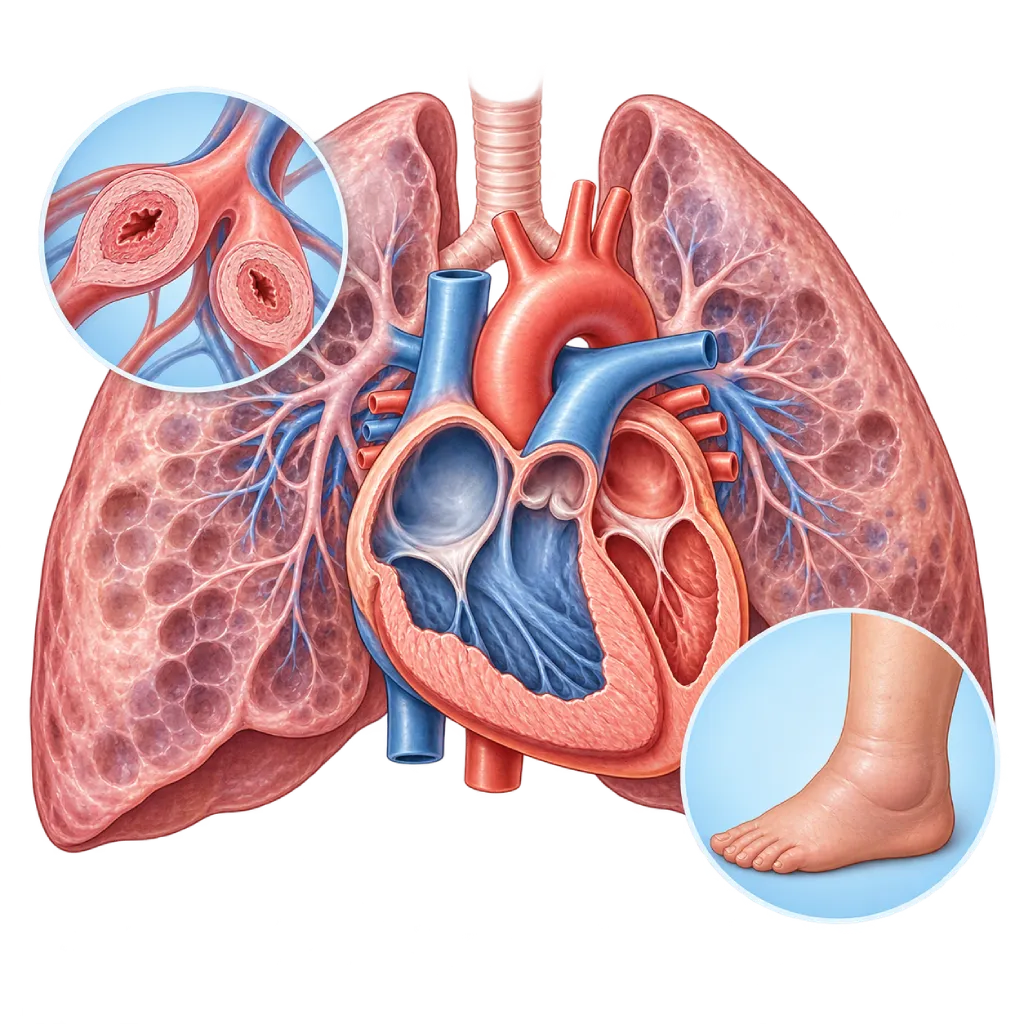
Quick answer
What Is Cor Pulmonale?
Cor pulmonale is enlargement and weakening of the heart's right ventricle caused by disease of the lungs or lung blood vessels, such as COPD, severe sleep apnea, or clots in the lungs. High pressure in the pulmonary arteries makes the right side of the heart work too hard.
SourcesSigns That Need Urgent Help
- Severe shortness of breath at rest or being unable to lie down
- Lips and fingertips that become increasingly blue
- Fainting or nearly fainting, especially during activity
- Chest pain with shortness of breath that comes on suddenly
- Confusion, extreme drowsiness, or difficulty waking
- Coughing up blood
- Swelling that increases quickly over a few days
If these signs appear, go to the nearest emergency department right away or call Heart Attack Center 1500 258.
01 / Understanding the condition
About Cor Pulmonale
Cor pulmonale is a change in the size and function of the heart's right ventricle caused by disease of the lungs, airways, chest wall, breathing control, or lung blood vessels. The right ventricle pumps blood to the lungs to pick up oxygen. When pressure in the pulmonary arteries rises, the right ventricle has to pump harder. Over time, its wall thickens, its chamber enlarges, and its strength declines. Right heart problems caused by left heart disease or congenital heart defects are not considered cor pulmonale.
Why Lung Disease Strains the Heart
Low oxygen levels over a long period cause the small arteries in the lungs to narrow. In chronic lung disease, some of the lung tissue and its blood vessels are also damaged. Both raise the pressure in the pulmonary arteries, a condition covered on the Pulmonary Hypertension page. A common cause is chronic obstructive pulmonary disease (COPD), which is covered on the Chronic Obstructive Pulmonary Disease page. Other causes are pulmonary fibrosis, extensive scarring from past pulmonary TB, severe sleep apnea and obesity hypoventilation, deformities of the spine or chest wall, weakness of the breathing muscles, and long-standing clots in the pulmonary arteries, which are covered on the Chronic Thromboembolic Pulmonary Hypertension page.
Acute and Chronic Forms
Cor pulmonale usually develops slowly over many years. The acute form occurs when pressure in the pulmonary arteries rises suddenly, especially with a large pulmonary embolism, which is covered on the Pulmonary Embolism page. The acute form requires emergency care.
Symptoms Are Often Masked
At first, the symptoms of cor pulmonale resemble those of the underlying lung disease: shortness of breath during activity, coughing, and tiring easily. Signs that the right side of the heart is starting to weaken are swelling in both legs, an abdomen that feels full or swollen, rapid weight gain from fluid, and visibly bulging neck veins. Symptoms often worsen when the lung disease flares up, for example because of a respiratory infection.
Treatment Focuses on the Lungs
The key to treatment is treating the underlying lung disease and improving oxygen levels. In people with COPD whose oxygen level is low at rest, long-term oxygen therapy at home has been shown to prolong life expectancy. Medicines that remove fluid help reduce swelling, and breathing support devices used during sleep help people with sleep apnea. Care is provided jointly by lung and heart specialists, in line with the 2022 ESC/ERS guidelines for pulmonary hypertension and GOLD 2023 for COPD.
02 / Understanding the condition
Symptoms to Recognize.
Common Symptoms
Symptoms develop slowly and are often masked by the symptoms of the underlying lung disease.
- Shortness of breath during activity that gets progressively worse
- Tiring easily and weakness
- Swelling in both ankles or legs
- An abdomen that feels full, bloated, or swollen
- Discomfort in the upper right abdomen
- Rapid weight gain from fluid buildup
- Visibly bulging neck veins
- Bluish lips or fingertips
03 / Understanding the condition
What Causes This Condition?
- Chronic obstructive pulmonary disease (COPD), mainly caused by smoking
- Interstitial lung disease or pulmonary fibrosis
- Extensive lung damage from past pulmonary TB, or bronchiectasis
- Severe obstructive sleep apnea and obesity hypoventilation
- Deformities of the spine or chest wall, and weakness of the breathing muscles
- Long-standing blood clots in the pulmonary arteries, or a large pulmonary embolism that occurs suddenly
- Living for a long time at high altitude, where the air has a low oxygen level
04 / Understanding the condition
Who Is at Higher Risk?
Lifestyle
Smoking is the main cause of COPD. Severe obesity increases the risk of sleep apnea and hypoventilation, while wood smoke and workplace dust also damage the lungs.
Medical
COPD, interstitial lung disease, past pulmonary TB, sleep apnea, a history of pulmonary embolism, and autoimmune diseases that affect the lungs.
Age
Found more often in middle and older age, as chronic lung disease has lasted longer.
Other
Repeated respiratory infections, not using oxygen as recommended, and living for a long time at high altitude can speed up the strain on the right side of the heart.
Groups at Higher Risk
- People with COPD: Especially those with low oxygen levels, frequent flare-ups, or who still smoke, so signs of right heart strain need monitoring.
- People with Severe Sleep Apnea: Repeated pauses in breathing during sleep lower oxygen every night and raise the pressure in the pulmonary arteries.
- People with Interstitial Lung Disease: Stiffened lung tissue impairs oxygen exchange and damages the small blood vessels in the lungs.
- Survivors of Pulmonary TB with Extensive Damage: Damaged and shrunken lung tissue lowers oxygen levels and reduces the number of blood vessels in the lungs.
- People with Severe Obesity: Fat in the chest and abdomen restricts breathing movement, so oxygen drops and carbon dioxide rises, especially during sleep.
05 / Understanding the condition
How Is It Diagnosed?
Your doctor asks about any history of lung disease, smoking, snoring and pauses in breathing during sleep, and any history of blood clots. The physical examination looks for signs of a strained right heart, such as bulging neck veins, an enlarged liver, and leg swelling. Oxygen levels are measured with a device on your finger and, if needed, with a blood gas analysis.
Echocardiography is the main test to assess the size and strength of the right ventricle and to estimate pulmonary artery pressure, although the images are sometimes less clear in severe lung disease. An ECG and a chest X-ray help show signs of right heart strain and the lung disease itself, while an NT-proBNP test assesses how heavily the heart is strained. Lung function tests and a chest CT assess the underlying lung disease. A ventilation-perfusion scan is used to look for long-standing clots in the lungs. Right heart catheterization, which measures pulmonary artery pressure directly, is done when its results will change treatment.
Echocardiography
Assesses the size and strength of the right ventricle and estimates pulmonary artery pressure.
Electrocardiogram (ECG)
Looks for signs of an enlarged right ventricle and right atrium, as well as heart rhythm disorders.
Chest X-Ray
Shows the underlying lung disease, widening of the pulmonary arteries, and the outline of the right heart.
NT-proBNP and BNP Test
Assesses how heavily the heart is strained and monitors the response to treatment.
Lung Function Test (Spirometry)
Measures lung function to confirm and assess the severity of COPD or other lung disease.
Ventilation-Perfusion Scan
Looks for long-standing blood clots in the pulmonary arteries as a treatable cause.
Right Heart Catheterization
Measures pulmonary artery pressure and right heart function directly, when the results will change treatment.
06 / Understanding the condition
Treatment Options.
Treatment is decided by a doctor after an assessment. The categories below can help you follow the conversation with your doctor.
Treating the Underlying Lung Disease
For example, inhaled reliever and controller medicines for COPD, and prompt treatment of flare-ups. Your doctor determines the type of medicine.
Long-Term Oxygen Therapy
Oxygen at home for people whose oxygen level is low at rest, with daily hours of use as advised by your doctor.
Breathing Support During Sleep
A CPAP device for sleep apnea, or a breathing support device used through a mask (NIV) if the carbon dioxide level in the blood is high.
Medicines to Remove Fluid
Diuretics to reduce swelling and fluid in the abdomen, with regular monitoring of kidney function and electrolytes.
Anticoagulants for Clots in the Lungs
Long-term blood thinners when the cause is a pulmonary embolism or long-standing clots in the pulmonary arteries.
Pulmonary Rehabilitation and Vaccination
Supervised breathing and physical exercises, plus influenza and pneumococcal vaccines to reduce lung disease flare-ups.
07 / Understanding the condition
Complications to Watch For.
Right Heart Failure
The right ventricle weakens further, so fluid builds up in the legs, abdomen, and liver. Heart failure in general is covered on the Heart Failure page.
Heart Rhythm Disorders
An enlarged right atrium makes atrial fibrillation or atrial flutter more likely, which can worsen shortness of breath and weakness.
Liver Congestion
Backed-up blood makes the liver enlarged and painful, and over a long period can impair liver function.
Respiratory Failure
When the lung disease flares up, oxygen levels can become very low or carbon dioxide very high, so breathing support is needed.
Reduced Ability to Be Active
Shortness of breath and tiring easily limit walking, working, and daily activities, reducing independence.
08 / Understanding the condition
What Can You Do?
- Stop smoking and avoid cigarette smoke, wood smoke, and workplace dust
- Use oxygen at home for as many hours a day as your doctor recommends
- Use inhaled medicines regularly with the correct technique
- Ask your doctor about influenza and pneumococcal vaccines
- Get loud snoring with pauses in breathing during sleep checked
- Weigh yourself every day and report rapid weight gain or swelling
- Limit salt and follow your doctor's advice on how much to drink
09 / Understanding the condition
When Should You See a Doctor?
See a doctor if you have chronic lung disease and shortness of breath comes on more easily, your ability to walk declines, or swelling appears in your legs. Right heart symptoms are often masked by lung symptoms, so even small changes are worth reporting. Go to the emergency room right away if you have severe shortness of breath at rest, your lips become increasingly blue, or you faint.
- Swelling in both ankles or legs
- An abdomen that feels full or swollen
- Weight gain of more than 2 kg in 3 days
- Needing more oxygen at home than usual
- Loud snoring with pauses in breathing during sleep and frequent daytime sleepiness
Don't Wait in an Emergency.
If symptoms are severe or come on suddenly, go to the nearest emergency department right away or call Heart Attack Center 1500 258, rather than waiting for an appointment.
10 / Common questions
Questions You May Have.
Frequently asked questions about cor pulmonale.
What is the difference between cor pulmonale and pulmonary hypertension?
Pulmonary hypertension is high pressure in the pulmonary arteries, which can have many causes, including left heart disease. Cor pulmonale is the change in the heart's right ventricle that occurs when that high pressure comes from lung disease, a breathing disorder, or clots in the lungs. In short, pulmonary hypertension describes the pressure, while cor pulmonale describes its effect on the right side of the heart.
Is cor pulmonale the same as heart failure?
Advanced cor pulmonale is one form of right heart failure. However, its causes and treatment differ from common heart failure, which originates in the left ventricle. Some medicines that benefit left ventricular heart failure have not been proven to help cor pulmonale. For this reason, treatment focuses on the lung disease, oxygen levels, and fluid management.
Can cor pulmonale be cured?
It depends on the cause. Acute cor pulmonale caused by a pulmonary embolism can recover once the clot is treated. In the chronic form, lung damage usually remains, but right heart function can improve when oxygen levels are corrected, the lung disease is controlled, and sleep apnea is treated. Regular treatment and checkups help slow worsening and reduce hospital stays.
Does using oxygen at home make you dependent on it?
No. Oxygen is given because the body truly lacks oxygen, not out of habit. In people with COPD whose oxygen level is low at rest, long-term oxygen use has been shown to prolong life expectancy and reduce the strain on the right side of the heart. The daily hours of use and the oxygen flow rate are set by your doctor based on test results, and can be adjusted at checkups.
Can people with cor pulmonale exercise?
Yes, at an adjusted intensity. Gradual exercise, especially in a supervised pulmonary rehabilitation program, helps improve endurance and reduce shortness of breath in daily activities. Avoid strenuous activity that makes you very short of breath or dizzy, or that causes chest pain. Ask your doctor which exercises are safe and whether you need to use oxygen while exercising.
Why does my doctor ask about my snoring?
Loud snoring with pauses in breathing during sleep can be a sign of obstructive sleep apnea. In this condition, oxygen levels drop repeatedly every night and can raise the pressure in the pulmonary arteries. Sleep apnea can be treated, for example with a CPAP device, which reduces the strain on the right side of the heart. Its treatment is covered on the Obstructive Sleep Apnea page.
Sources and Medical Review
Translated from the Indonesian edition medically reviewed by dr. Santi R. Dewayanti, Sp.P.
Sources as cited in the Indonesian edition.
- Humbert M, Kovacs G, Hoeper MM, Badagliacca R, Berger RMF, Brida M, et al. 2022 ESC/ERS Guidelines for the diagnosis and treatment of pulmonary hypertension. Eur Heart J. 2022;43(38):3618-3731.
- Shlobin OA, Adir Y, Barbera JA, Cottin V, Harari S, Jutant EM, et al. Pulmonary hypertension associated with lung diseases. Eur Respir J. 2024;64(4):2401200.
- Agustí A, Celli BR, Criner GJ, Halpin D, Anzueto A, Barnes P, et al. Global Initiative for Chronic Obstructive Lung Disease 2023 Report: GOLD Executive Summary. Eur Respir J. 2023;61(4):2300239.
- Konstam MA, Kiernan MS, Bernstein D, Bozkurt B, Jacob M, Kapur NK, et al. Evaluation and Management of Right-Sided Heart Failure: A Scientific Statement From the American Heart Association. Circulation. 2018;137(20):e578-e622.
- Harjola VP, Mebazaa A, Čelutkienė J, Bettex D, Bueno H, Chioncel O, et al. Contemporary management of acute right ventricular failure: a statement from the Heart Failure Association and the Working Group on Pulmonary Circulation and Right Ventricular Function of the European Society of Cardiology. Eur J Heart Fail. 2016;18(3):226-241.
Doctors Who Treat This Condition

dr. Santi R. Dewayanti, Sp.P
Pulmonology
Clinical focusLung and Respiratory Disease · Asthma and COPD
View Profile
dr. Siska S. Danny, Sp.JP(K)
Interventional Cardiology
Coronary Intervention Procedures
Clinical focusPCI for Acute Coronary Syndrome · Primary Coronary Intervention
View Profile
dr. BRM Ario S. Kuncoro, Sp.JP(K)
Echocardiography & Cardiovascular Imaging
Cardiovascular Diagnostic Center +2 centers
Clinical focusAdvanced and 3D Echocardiography · Transesophageal Echocardiography
View Profile