
Quick answer
What Is Hypertensive Crisis?
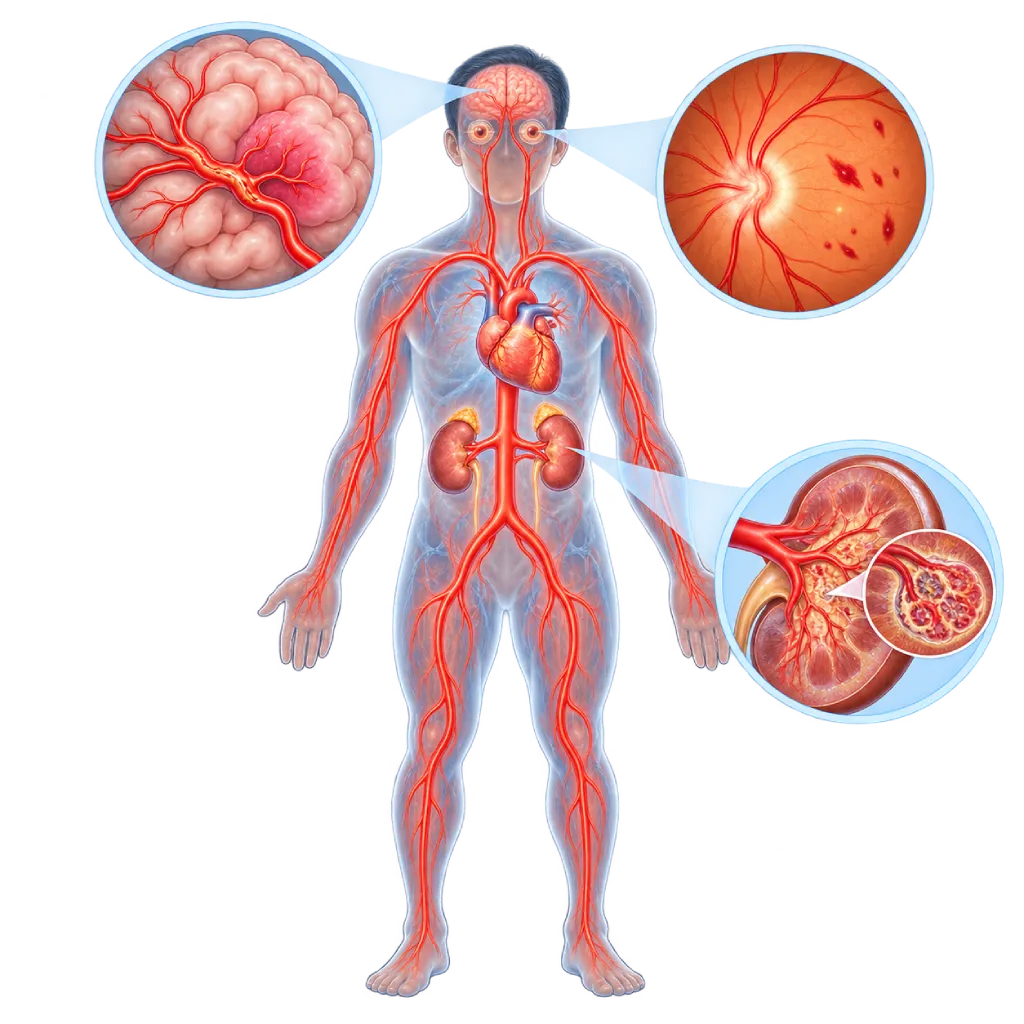
Hypertensive crisis is a surge in blood pressure to very high levels, usually 180/110 mmHg or higher. When it comes with new organ damage, such as in the brain, heart, or kidneys, it is an emergency that needs immediate treatment in the emergency room.
Sources01 / Understanding the condition
About Hypertensive Crisis
Hypertensive crisis is the term for blood pressure that rises to very high levels, usually a systolic pressure (top number) of 180 mmHg or higher, or a diastolic pressure (bottom number) of 110 mmHg or higher. Hypertensive crisis is part of hypertension, which is covered on the Hypertension page. The 2024 ESC and 2023 ESH guidelines distinguish two situations that are managed differently, so the next steps are decided by the doctor's assessment, not by the blood pressure reading alone.
Hypertensive Emergency
A hypertensive emergency occurs when very high blood pressure comes with new or ongoing organ damage. Examples include stroke, heart attack, acute heart failure with fluid in the lungs, a tear in the wall of the aorta, brain dysfunction caused by high pressure (hypertensive encephalopathy), acute kidney failure, or severe preeclampsia in pregnancy. This condition needs care in the emergency room or intensive care unit, with medicines given through an IV and close monitoring.
Severe Hypertension Without Acute Organ Damage
When blood pressure is very high but tests find no new organ damage, the condition used to be called hypertensive urgency. Current guidelines do not recommend lowering blood pressure rapidly in this situation. It is usually enough to restart or adjust oral medicines, then have a follow-up visit within a few days. Lowering blood pressure too quickly can actually reduce blood flow to the brain, heart, and kidneys.
Malignant Hypertension
Malignant hypertension is a form of hypertensive emergency with damage to small blood vessels that can be seen in the retina of the eye, in the form of bleeding, spots, or swelling of the optic nerve. It often comes with declining kidney function and damage to blood cells, so it needs treatment in the hospital.
Why It Happens
Hypertensive crisis often occurs in people with hypertension whose blood pressure is not yet under control or who have stopped taking their medicine. In some people, a crisis is the first sign of hypertension that had never been detected, or a sign of another cause such as kidney disease or a hormonal disorder. Severe pain, anxiety, or panic can also raise blood pressure temporarily. This is different from a hypertensive crisis and usually improves once the cause is addressed.
02 / Understanding the condition
Symptoms to Recognize.
Common Symptoms
Some people do not feel any symptoms at all, so very high blood pressure is only discovered when it is measured.
- Severe headache, often felt at the back of the head
- Dizziness or a light-headed feeling
- Blurred vision
- Nausea or vomiting
- Nosebleed that is hard to stop
- Pounding heartbeat (palpitations)
- Very high blood pressure without symptoms, found when it is measured
03 / Understanding the condition
What Causes This Condition?
- Long-standing hypertension that is not yet under control
- Forgetting, cutting back on, or stopping blood pressure medicine, especially when it is stopped suddenly
- Secondary hypertension, for example kidney disease, narrowing of the kidney arteries, or a tumor of the adrenal gland (pheochromocytoma)
- Medicines that can raise blood pressure, such as nonsteroidal anti-inflammatory drugs, decongestants, and corticosteroids
- Stimulants such as cocaine and amphetamines
- Preeclampsia or eclampsia in pregnancy
- Acute brain disorders, such as stroke or head injury, that also raise blood pressure
04 / Understanding the condition
Who Is at Higher Risk?
Medical
Uncontrolled hypertension, chronic kidney disease, secondary hypertension, and a previous hypertensive crisis. Pregnancy with hypertension also raises the risk.
Lifestyle
Not taking medicine regularly, rarely checking blood pressure, high salt intake, excessive alcohol use, and using stimulants.
Age
In older age, a surge in blood pressure damages organs more easily, especially when there is already heart disease, kidney disease, or a history of stroke.
Other
Using over-the-counter medicines without telling your doctor, such as cold medicines containing decongestants or nonsteroidal anti-inflammatory pain relievers, and having infrequent checkups because health services are hard to reach.
Groups at Higher Risk
- People with Uncontrolled Hypertension: Blood pressure that has been high for a long time without regular treatment is the background in the majority of hypertensive crises.
- People with Chronic Kidney Disease: The kidneys help regulate blood pressure, so kidney problems make blood pressure harder to control and more likely to surge.
- Pregnant Women with Hypertension: Preeclampsia can make blood pressure surge and needs immediate treatment. Covered on the Hypertension in Pregnancy page.
- People Who Use Stimulants: Cocaine, amphetamines, and similar substances can raise blood pressure suddenly, even in people with no history of hypertension.
05 / Understanding the condition
How Is It Diagnosed?
The doctor first confirms the blood pressure reading with repeated measurements using a properly sized cuff, sometimes on both arms. The doctor then asks about your symptoms, your history of hypertension, medicines you take or have stopped, use of over-the-counter medicines and other substances, and the possibility of pregnancy. The goal is to assess whether new organ damage has already occurred, because this determines whether your condition is a hypertensive emergency.
The physical examination covers the heart, lungs, and nerve function, as well as an examination of the back of the eye (funduscopy) to look for bleeding or swelling of the optic nerve. An ECG and a troponin test assess strain on and damage to the heart muscle. Blood and urine tests assess kidney function, electrolytes, blood cells, and protein in the urine. A chest X-ray helps show fluid in the lungs and the size of the heart. If there are neurological symptoms, the doctor orders a CT scan or MRI of the head, and if an aortic tear is suspected, the doctor orders a CT angiography of the aorta.
Physical Examination
Repeated blood pressure measurements, including on both arms, as well as examination of the heart, lungs, and nerve function to look for signs of organ damage.
Examination of the back of the eye (funduscopy) to look for bleeding, spots, or swelling of the optic nerve that indicate malignant hypertension.
Electrocardiogram (ECG)
Looks for signs of a heart attack, rhythm problems, or thickening of the heart muscle due to long-standing hypertension.
Cardiac Troponin Test
Assesses whether there is damage to the heart muscle if you have chest pain or shortness of breath.
Kidney Function Test
Creatinine and eGFR show whether the kidneys are affected; often supplemented with electrolyte, complete blood count, and urine tests.
Chest X-Ray
Shows fluid in the lungs, the size of the heart, and widening of the aorta in patients with shortness of breath or chest pain.
CT scan or MRI of the head if there are neurological symptoms, to distinguish a hemorrhagic stroke, an ischemic stroke, and brain swelling due to hypertension.
06 / Understanding the condition
Treatment Options.
Treatment is decided by a doctor after an assessment. The categories below can help you follow the conversation with your doctor.
Intensive Care with IV Medicines
In a hypertensive emergency, blood pressure lowering medicines are given through an IV with continuous monitoring in the emergency room or intensive care unit. The type of medicine is chosen according to the organ affected.
Gradual Blood Pressure Lowering
Blood pressure is usually lowered gradually over several hours to days so that blood flow to the organs is maintained. With an aortic tear or fluid in the lungs, the doctor lowers it more quickly.
Oral Medicines and Early Follow-Up
For severe hypertension without acute organ damage, the doctor starts or adjusts oral medicines, then schedules a follow-up visit within a few days.
Treating the Affected Organs
Stroke, heart attack, heart failure, preeclampsia, or kidney problems are treated according to the situation, together with the relevant team.
Finding and Addressing Triggers
The doctor looks for causes such as stopping medicines, over-the-counter medicines, stimulants, or secondary hypertension so that the crisis does not happen again.
Long-Term Control Plan
Once your condition is stable, you follow regular treatment, home blood pressure monitoring, and periodic checkups. Covered on the Hypertension Management page.
07 / Understanding the condition
Complications to Watch For.
Stroke
Very high pressure can rupture blood vessels in the brain or trigger a blockage. Covered on the Stroke page.
Hypertensive Encephalopathy
Swelling of the brain caused by very high blood pressure, with severe headache, confusion, vision problems, and even seizures.
Heart Attack and Acute Heart Failure
The heart has to pump against very high pressure, so the heart muscle runs short of oxygen or fluid builds up in the lungs.
Aortic Dissection
A tear in the layers of the aortic wall that needs immediate treatment. Covered on the Aortic Dissection page.
Acute Kidney Failure
Small blood vessels in the kidneys are damaged, so kidney function drops quickly, sometimes to the point of needing temporary dialysis.
Retinal Damage
Bleeding and swelling in the retina can affect vision. Some of it can improve once blood pressure is under control.
08 / Understanding the condition
What Can You Do?
- Take your blood pressure medicine every day as prescribed, even when you feel well.
- Do not stop or reduce your medicine on your own; talk to your doctor if you have side effects.
- Measure your blood pressure at home regularly and bring your records to your checkups.
- Ask your doctor or pharmacist before using cold medicines, pain relievers, or supplements.
- Cut down on salt, limit alcohol, and avoid stimulants.
- Attend your checkups as scheduled, especially after a medicine is changed or added.
09 / Understanding the condition
When Should You See a Doctor?
If your blood pressure reading at home is very high, sit quietly for five minutes and then measure again. If the result is still 180/110 mmHg or higher without symptoms, contact your doctor or go to a health facility on the same day, and do not take extra medicine on your own. Go to the emergency room right away if high blood pressure comes with any of the following signs:
- Chest pain or shortness of breath
- Drooping face, slurred speech, or weakness on one side of the body
- Very severe headache with vomiting or confusion
- Sudden blurred vision or loss of vision
- Severe, tearing pain in the chest or back
- Seizures or reduced consciousness
10 / Common questions
Questions You May Have.
Frequently asked questions about hypertensive crisis.
What blood pressure reading is considered a hypertensive crisis?
European guidelines generally use a threshold of a systolic pressure of 180 mmHg or higher, or a diastolic pressure of 110 mmHg or higher, while American guidelines use 180/120 mmHg. However, the numbers alone are not enough. What matters more is whether there is new organ damage. In pregnancy, a blood pressure of 160/110 mmHg or higher already needs immediate treatment.
What should I do if my blood pressure at home is very high but I feel fine?
Sit quietly for five minutes, then measure again twice with an upper arm monitor. If the result is still 180/110 mmHg or higher without symptoms, contact your doctor or go to a health facility on the same day to be assessed. If chest pain, shortness of breath, weakness on one side of the body, difficulty speaking, or vision problems appear, go to the emergency room right away.
Why isn't blood pressure lowered to normal right away?
In people with long-standing hypertension, the brain, heart, and kidneys have become used to high pressure. Lowering it too quickly can reduce blood flow to these organs and can actually trigger a stroke or kidney problems. That is why doctors usually lower it gradually, except in certain situations such as an aortic tear, where it needs to be lowered more quickly.
Can I take extra medicine on my own when my blood pressure spikes?
It is better not to, unless your doctor has already given you a written plan for that situation. Taking extra medicine on your own, especially fast-acting medicine, can lower blood pressure too drastically. It is safer to measure again, contact your doctor, and go to the emergency room if there are danger signs. Bring a list of your medicines, including over-the-counter medicines and supplements, when you are examined.
Do I need to be hospitalized?
It depends on the test results. If acute organ damage is found, you need to be admitted, often to the intensive care unit, so that IV medicines and monitoring can be carried out closely. If there is no acute organ damage, most patients can go home once their blood pressure starts to come down and their treatment has been adjusted, with a clear follow-up schedule within a few days.
Can a hypertensive crisis happen again?
Yes, especially if the trigger has not been addressed, for example medicines that are often forgotten, secondary hypertension that has not been found, or the use of certain over-the-counter medicines. After a crisis, your doctor usually looks for the cause, adjusts your medicines, and asks you to monitor your blood pressure at home. A checkup within a few days to the first week helps make sure your blood pressure stays under control.
Sources and Medical Review
Translated from the Indonesian edition medically reviewed by dr. Siska S. Danny, Sp.JP(K).
Sources as cited in the Indonesian edition.
- McEvoy JW, McCarthy CP, Bruno RM, et al. 2024 ESC Guidelines for the management of elevated blood pressure and hypertension. Eur Heart J. 2024;45(38):3912-4018.
- Mancia G, Kreutz R, Brunström M, et al. 2023 ESH Guidelines for the management of arterial hypertension The Task Force for the management of arterial hypertension of the European Society of Hypertension: Endorsed by the International Society of Hypertension (ISH) and the European Renal Association (ERA). J Hypertens. 2023;41(12):1874-2071.
- van den Born BJH, Lip GYH, Brguljan-Hitij J, et al. ESC Council on hypertension position document on the management of hypertensive emergencies. Eur Heart J Cardiovasc Pharmacother. 2019;5(1):37-46.
- Peixoto AJ. Acute Severe Hypertension. N Engl J Med. 2019;381(19):1843-52.
- Bress AP, Anderson TS, Flack JM, et al. The Management of Elevated Blood Pressure in the Acute Care Setting: A Scientific Statement From the American Heart Association. Hypertension. 2024;81(8):e94-e106.
- Kulkarni S, Glover M, Kapil V, et al. Management of hypertensive crisis: British and Irish Hypertension Society Position document. J Hum Hypertens. 2023;37(10):863-79.
Doctors Who Treat This Condition

dr. Siska S. Danny, Sp.JP(K)
Interventional Cardiology
Coronary Intervention Procedures
Clinical focusPCI for Acute Coronary Syndrome · Primary Coronary Intervention
View Profile
Dr. dr. Dafsah A. Juzar, Sp.JP(K)
Interventional Cardiology
Coronary Intervention Procedures +1 center
Clinical focusComplex Coronary Intervention · Cardiac Catheterization
View Profile
dr. Indah A. Putri, Sp.N, Subsp, NIOO(K), MSc
Neurovascular, Interventional, Otology, Imaging, and Ophthalmology
Clinical focusStroke and Cerebrovascular Disease · Neurosonology
View Profile