
Quick answer
What Is Kidney Function Test?
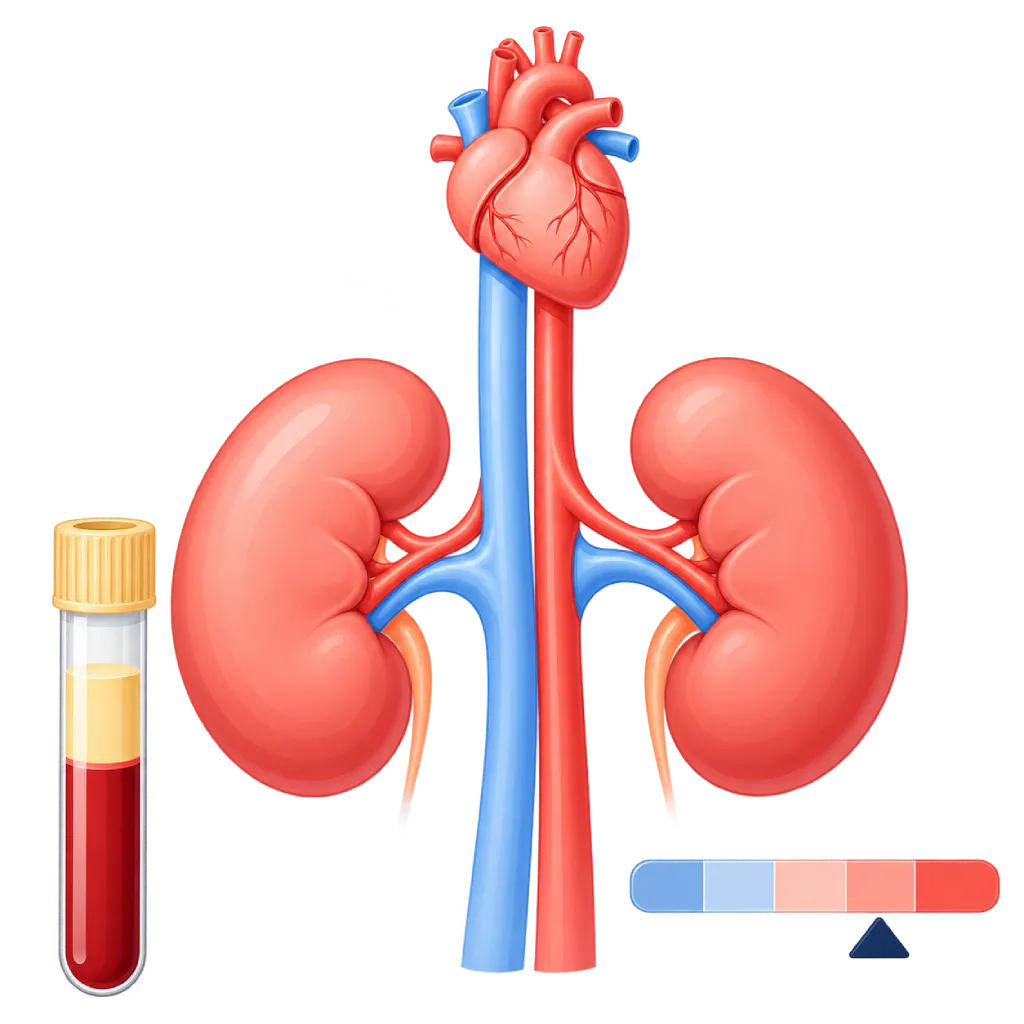
A kidney function test is a blood test that measures creatinine and urea, then calculates eGFR, an estimate of how well the kidneys filter blood. The results are used to detect kidney disease, set medication doses, assess whether contrast dye is safe before catheterization or CT, and monitor heart treatment.
Sources01 / Understanding the procedure
About Kidney Function Test
What Is a Kidney Function Test
Your kidneys filter your blood all the time to remove waste products and excess fluid through the urine. A kidney function test measures waste products in the blood that the kidneys should remove, mainly creatinine and urea. From the creatinine level, age, and sex, the laboratory calculates the eGFR (estimated glomerular filtration rate), an estimate of how much blood the kidneys filter each minute.
How It Works at a Glance
Creatinine is a waste product from the muscles that is released into the blood at a fairly steady rate. When the kidneys filter well, creatinine is removed in the urine and its level in the blood stays low. When filtering declines, creatinine builds up in the blood, so the calculated eGFR falls as well.
What Is Checked
- Creatinine: a muscle waste product, the basis for calculating eGFR.
- eGFR: an estimate of filtering ability, calculated with the CKD-EPI 2021 equation, which no longer uses race.
- Urea or BUN: a waste product from protein. Its level is also affected by not drinking enough, bleeding in the digestive tract, and high-protein foods.
- Cystatin C: checked when creatinine is less accurate, for example in people with very high or very low muscle mass.
This test is often complemented by electrolytes, especially potassium, and a urine protein test. Each is covered on its own page.
Reading Your eGFR
The following thresholds are general KDIGO guidance, in mL/min/1.73 m².
- 90 or higher: normal (G1).
- 60 to 89: mildly decreased (G2).
- 45 to 59: mildly to moderately decreased (G3a).
- 30 to 44: moderately to severely decreased (G3b).
- 15 to 29: severely decreased (G4).
- Below 15: kidney failure (G5).
Chronic kidney disease is only diagnosed when the eGFR is below 60, or there are other signs of kidney damage such as protein in the urine, that persist for more than 3 months. A single low result is not enough, because not drinking enough or an acute illness can lower eGFR temporarily.
Kidney Function and the Heart
The heart and kidneys depend on each other. Heart failure can reduce blood flow to the kidneys, while kidney disease raises the risk of heart attack and heart failure. This two-way interaction is called cardiorenal syndrome.
Kidney function also determines the doses of many heart medications, including some blood thinners, and the preparation before catheterization or CT with contrast. When starting heart failure or hypertension medications such as ACE inhibitors, ARBs, ARNIs, or SGLT2 inhibitors, creatinine may rise slightly. This small rise is often still acceptable, and your doctor will judge whether the dose needs to be changed.
02 / Understanding the procedure
When Is This Procedure Considered?
A doctor may consider this procedure in the situations below. The decision is always made after a thorough assessment.
- Before Procedures with ContrastSuch as cardiac catheterization or CT angiography, to prepare preventive measures if kidney function is reduced.
- Starting or Changing Heart MedicationsTo monitor the effects of heart failure medications, blood pressure medications, and diuretics on the kidneys.
- Determining Medication DosesIncluding some blood thinners whose dose depends on kidney function.
- Hypertension or DiabetesRegular testing to detect kidney damage early.
- Heart FailureTo assess cardiorenal syndrome and adjust diuretic doses.
- Swelling, Reduced Urine, or Abnormal Urine ResultsTo find out whether kidney filtering has declined.
Situations to Consider First
- Strenuous Exercise the Day BeforeIt can raise creatinine temporarily. It should be avoided.
- Eating Large Portions of MeatCooked meat can raise creatinine for several hours.
- Creatine SupplementsThey raise creatinine without any kidney damage. Tell your doctor if you take them.
- Not Drinking Enough, Diarrhea, or VomitingDehydration raises urea and creatinine temporarily.
- Very High or Very Low Muscle MassCreatinine-based eGFR is less accurate, so cystatin C can help.
- PregnancyThe standard eGFR equations do not apply, so the results are interpreted specifically by the doctor.
03 / Before the procedure
How Should You Prepare?
A kidney function test uses a blood sample and usually requires no special preparation.
Eating and drinking. You do not need to fast, unless another test done at the same time requires fasting. Drink water as usual, and avoid eating large portions of meat the night before.
Activity. Avoid strenuous exercise the day before the test.
Medications and supplements. Take your medications as usual unless your doctor tells you otherwise, and bring your medication list. Tell the staff if you take creatine supplements.
Important information. Tell the staff if you are pregnant, have diarrhea or vomiting, or are scheduled for a procedure with contrast.
Previous results. Bring your previous creatinine or eGFR results so your doctor can see any changes.
Unsure about the preparation instructions? Ask our team before the procedure.
04 / During the procedure
How Is the Procedure Done?
The blood draw is usually finished within 10 minutes, and results are usually available on the same day.
Identity Check
The staff match your identity with the test request. Your age and sex are recorded because they are used to calculate eGFR.
Blood Draw
Blood is taken from a vein in the crook of your elbow, then the puncture site is pressed and covered with a bandage.
Laboratory Analysis
An analyzer measures creatinine and urea, as well as cystatin C if requested. From the creatinine result, the laboratory calculates eGFR.
Reading the Results
Your doctor reviews the results together with your previous results, blood pressure, urine protein, and the medications you take, because a single result is not enough to assess kidney function.
05 / Benefits and risks
Benefits and Risks Should Be Discussed Together.
Every medical procedure has benefits and risks. Your doctor will explain both for your situation before the procedure.
Benefits You Can Expect
- Simple and QuickIt needs only a small amount of blood, and results are usually ready on the same day.
- Determining Safe Medication DosesMany heart medications and blood thinners are adjusted to kidney function.
- Preparing for Procedures with ContrastIt helps your doctor prevent kidney problems after catheterization or CT.
- Monitoring Treatment EffectsIt shows whether heart failure and blood pressure medications are safe for your kidneys.
- Detecting Kidney Disease EarlyTogether with a urine protein test, it helps start protecting the kidneys and heart sooner.
The benefits of a procedure are not a promise of a cure. Ask how the results will affect your care plan.
Risks You Should Know
- Minor Pain or BruisingAt the needle site, usually mild and quick to fade.
- Brief Dizziness or FaintingSome people feel dizzy when blood is drawn. Tell the staff so you can lie down.
- Results Affected by Temporary FactorsNot drinking enough, strenuous exercise, or eating meat can change the results, so a repeat test is sometimes needed.
- Infection at the Puncture SiteVery rare, because the skin is cleaned and the equipment used is sterile and single-use.
Risks can differ from person to person. A full explanation and consent are given after an individual assessment.
06 / After the procedure
What Is Recovery Like?
There is no recovery period. You can return to your activities right away.
Puncture site. A small bruise is normal and fades within a few days.
If your eGFR is reduced. The test is usually repeated to confirm the result, then complemented by a urine protein test, urinalysis, or kidney ultrasound as needed.
Before a procedure with contrast. If kidney function is reduced, your doctor prepares preventive steps, such as IV fluids, using as little contrast as possible, and repeating the creatinine test after the procedure.
Monitoring. In kidney disease, in heart failure, or when medication doses are changed, the test is repeated regularly as your doctor advises.
Warning signs. Go to the emergency room right away or contact the medical team if you have:
- A sharp drop in urine output or no urination for a whole day
- Swelling in the legs or face that is increasing quickly
- Shortness of breath, especially when lying down
- Severe weakness, severe nausea, or an irregular, pounding heartbeat
Know the Signs That Need Prompt Care.
Follow the team's guidance on warning signs. If severe or sudden symptoms appear after the procedure, go to the nearest emergency department right away or call Heart Attack Center 1500 258.
07 / Team and support
Doctors and Procedure Support
The doctors below are listed for this procedure. Listed by name, not by ranking.

Dr. dr. Dafsah A. Juzar, Sp.JP(K)
Interventional Cardiology
Coronary Intervention Procedures +1 center
Clinical focusComplex Coronary Intervention · Cardiac Catheterization
View Profile
dr. Khaira U. Yusrie, Sp.PD-KGEH
Gastroenterology & Hepatology
Clinical focusInternal Medicine · Gastroenterology and Hepatology
View Profile
dr. Siska S. Danny, Sp.JP(K)
Interventional Cardiology
Coronary Intervention Procedures
Clinical focusPCI for Acute Coronary Syndrome · Primary Coronary Intervention
View Profile08 / Common questions
Before You Plan the Procedure.
Frequently asked questions about kidney function tests. Your doctor will explain what the results mean for your condition.
What is eGFR?
eGFR is an estimate of how much blood the kidneys filter each minute, calculated from your creatinine level, age, and sex. A value of 90 or higher is considered normal. A value below 60 that persists for more than 3 months indicates chronic kidney disease. The lower the eGFR, the more severe the decline in kidney function.
Why is kidney function checked before catheterization or CT?
Cardiac catheterization and CT angiography use a contrast agent that is removed through the kidneys. In kidneys whose function is already reduced, contrast can worsen kidney problems. By knowing your kidney function beforehand, your doctor can prepare IV fluids, limit the amount of contrast, and recheck creatinine after the procedure.
My creatinine went up after I started a heart medication. Are my kidneys damaged?
Not necessarily. Heart failure and blood pressure medications such as ACE inhibitors, ARBs, ARNIs, or SGLT2 inhibitors can raise creatinine slightly early in treatment because they reduce the pressure in the kidney's filters. This small rise is often still acceptable, and these medications actually protect the kidneys in the long term. Do not stop your medication on your own, and let your doctor assess it.
Do I need to fast before the test?
No, unless another test done at the same time, such as blood sugar or cholesterol, requires fasting. Drink water as usual so you do not become dehydrated. It is advisable to avoid eating large portions of meat the night before and strenuous exercise the day before, because both can raise creatinine temporarily.
What is the difference between creatinine, urea, and cystatin C?
Creatinine is a muscle waste product and is the basis for calculating eGFR. Urea is a protein waste product that is also affected by not drinking enough, diet, and bleeding in the digestive tract. Cystatin C is produced by nearly all cells in the body and does not depend on muscle mass, so it is used when creatinine results are in doubt.
How is kidney function related to heart disease?
The heart pumps blood to the kidneys, and the kidneys regulate fluid and blood pressure. When one of them is impaired, the other is also strained. Chronic kidney disease raises the risk of heart attack and heart failure, while heart failure can reduce kidney function. For this reason, kidney function is routinely monitored in heart patients.
Sources and Medical Review
Translated from the Indonesian edition medically reviewed by dr. Debby C. Soemitha, Sp.PD.
Sources as cited in the Indonesian edition.
- Kidney Disease: Improving Global Outcomes (KDIGO) CKD Work Group. KDIGO 2024 Clinical Practice Guideline for the Evaluation and Management of Chronic Kidney Disease. Kidney Int. 2024;105(4S):S117-S314.
- Inker LA, Eneanya ND, Coresh J, et al. New creatinine- and cystatin C-based equations to estimate GFR without race. N Engl J Med. 2021;385(19):1737-1749.
- Davenport MS, Perazella MA, Yee J, et al. Use of intravenous iodinated contrast media in patients with kidney disease: consensus statements from the American College of Radiology and the National Kidney Foundation. Radiology. 2020;294(3):660-668.
- Rangaswami J, Bhalla V, Blair JEA, et al. Cardiorenal syndrome: classification, pathophysiology, diagnosis, and treatment strategies: a scientific statement from the American Heart Association. Circulation. 2019;139(16):e840-e878.
- Steffel J, Collins R, Antz M, et al. 2021 European Heart Rhythm Association practical guide on the use of non-vitamin K antagonist oral anticoagulants in patients with atrial fibrillation. Europace. 2021;23(10):1612-1676.
- McDonagh TA, Metra M, Adamo M, et al. 2021 ESC Guidelines for the diagnosis and treatment of acute and chronic heart failure. Eur Heart J. 2021;42(36):3599-3726.