
Quick answer
What Is Long QT Syndrome?
Long QT syndrome is an electrical disorder of the heart, inherited or caused by certain medications, in which electrical recovery after each heartbeat takes longer. It can trigger dangerous fast rhythms that cause fainting, but it can usually be managed.
SourcesSigns That Need Urgent Help
- Fainting during exercise, swimming, or when startled
- A sudden seizure in someone with no history of epilepsy
- Unconscious and not breathing normally
- A pounding heartbeat with severe dizziness or nearly fainting
- Fainting after starting a new medication
If these signs appear, go to the nearest emergency department right away or call Heart Attack Center 1500 258.
01 / Understanding the condition
About Long QT Syndrome
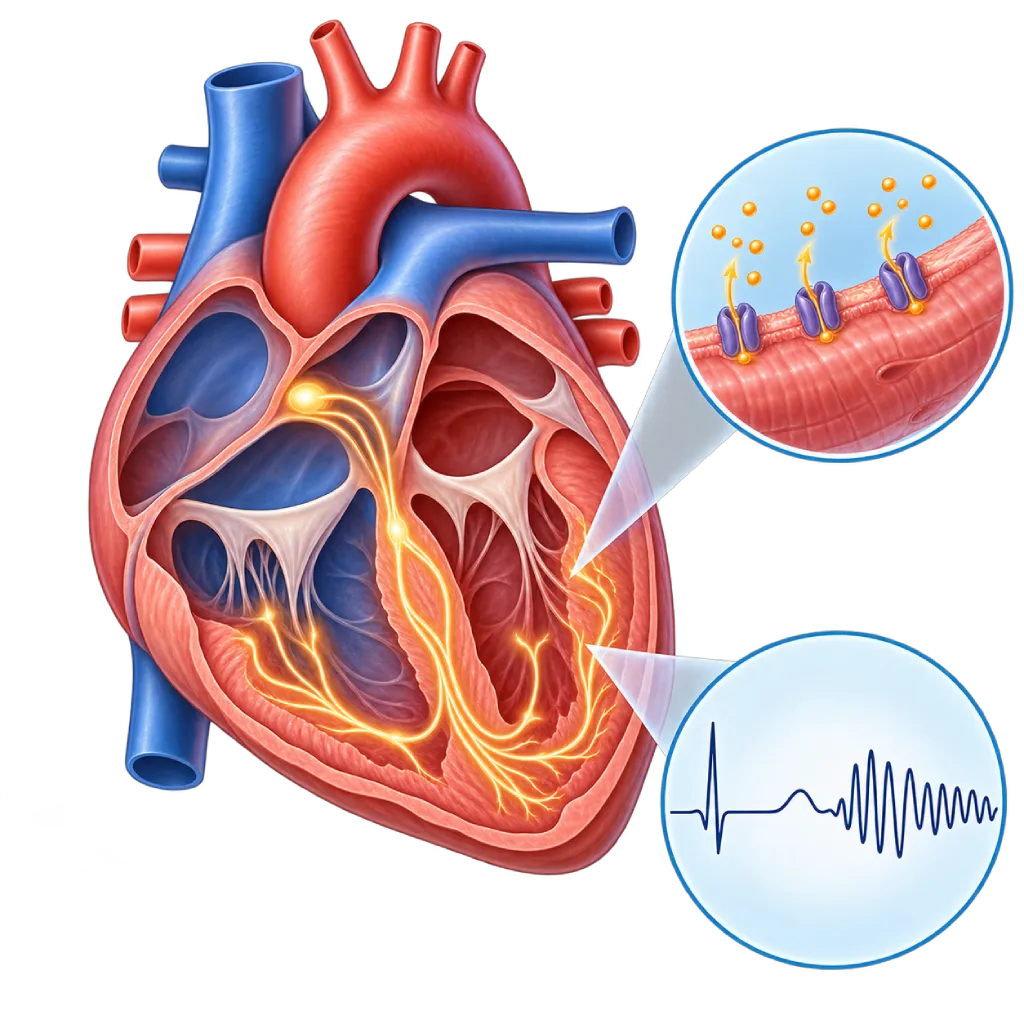
Each time the heart beats, the heart muscle cells release an electrical charge and then restore it before the next beat. On an ECG, the length of this process appears as the QT interval. In long QT syndrome, this electrical recovery takes longer than normal. As a result, the heart is more prone to a fast, irregular rhythm from the ventricles called torsades de pointes. If it is brief, this rhythm causes sudden fainting. If it does not stop on its own, it can progress to ventricular fibrillation and cardiac arrest.
Inherited and Acquired
Inherited long QT syndrome is caused by changes in the genes that control ion channels, the tiny gates in the heart cell wall that let potassium and sodium flow through. About 1 in 2,000 people are estimated to carry this disorder, and many are unaware of it. The three common types are types 1, 2, and 3, each with different triggers: type 1 often flares up during exercise, especially swimming; type 2 when startled by a loud noise such as an alarm or a ringing phone, and in the months after giving birth; type 3 during sleep or rest.
Acquired long QT syndrome occurs because of certain medications, low blood levels of potassium or magnesium, a very slow heart rate, or other diseases. Medications that can prolong the QT interval include some antibiotics, antifungal medications, anti-nausea medications, psychiatric medications, and heart rhythm medications. Some people who appear to have the acquired form actually carry a mild inherited tendency.
Why It Needs to Be Recognized
Many people with long QT syndrome never have symptoms, and the condition is only discovered on a routine ECG or during family screening. The first symptom may be fainting that is mistaken for a seizure or ordinary fainting. That is why fainting during exercise or when startled, as well as a family history of sudden death at a young age, should be checked. This syndrome is one of the rhythm disorders covered on the Heart Rhythm Disorders / Arrhythmia page.
Most people with the condition can lead active lives. Beta blockers, avoiding trigger medications, maintaining potassium levels, and regular checkups lower the risk of dangerous events. An ICD or other procedures are considered only for a small number of people at high risk.
02 / Understanding the condition
Symptoms to Recognize.
Common Symptoms
- Often no symptoms, discovered on a routine ECG or during family screening
- Sudden fainting during exercise, especially swimming
- Fainting when startled, for example by an alarm or a ringing phone
- Fainting or gasping during sleep
- A pounding heartbeat just before fainting
- Fainting with muscle jerks that resemble a seizure
Symptoms in Children
In children, fainting caused by long QT syndrome is often mistaken for febrile seizures, epilepsy, or ordinary fainting.
- Fainting while swimming, running, or playing
- Near drowning in a pool with no clear cause
- Seizures that do not improve with epilepsy medication
- Fainting when crying, angry, or startled
03 / Understanding the condition
What Causes This Condition?
- Inherited changes in the genes that control the potassium or sodium channels in heart muscle cells (types 1, 2, and 3)
- Certain medications, such as some antibiotics, antifungals, anti-nausea medications, psychiatric medications, and heart rhythm medications
- Low blood levels of potassium, magnesium, or calcium, for example due to vomiting, diarrhea, or diuretic medications
- A very slow heart rate or heart block
- Other diseases, such as hypothyroidism, eating disorders with very low body weight, and heart muscle disease
- A rare inherited form with deafness from birth (Jervell and Lange-Nielsen syndrome)
04 / Understanding the condition
Who Is at Higher Risk?
Genetic
Having a parent, sibling, or child with long QT syndrome. In the common inherited forms, a child's chance of inheriting the gene from a parent who carries it is about 50 percent.
Medical
Taking more than one QT-prolonging medication, low potassium or magnesium levels, a slow heart rate, heart failure, and kidney or liver disease that slows the removal of medications from the body.
Age
In males, dangerous events occur more often in childhood; in females, the risk persists into adulthood and increases in the months after giving birth.
Other
Severe vomiting or diarrhea, very poor food and fluid intake, and taking medications or supplements without checking their safety with a doctor or pharmacist.
Groups at Higher Risk
- Family Members of People with Long QT Syndrome: Parents, siblings, and children of a person with the syndrome may carry the same gene even without symptoms, so they need an ECG.
- Children and Teens Who Faint During Exercise: Fainting while swimming, running, or when startled at a young age should be checked with an ECG to look for an inherited rhythm disorder.
- Women After Giving Birth: In people with type 2, the risk of dangerous events increases in the months after giving birth, so medication should be continued as your doctor advises.
- People Taking QT-Prolonging Medications: Especially older adults, people with heart or kidney disease, and people taking several medications at once, because the QT can lengthen more.
05 / Understanding the condition
How Is It Diagnosed?
Diagnosis starts with a 12-lead ECG. Your doctor measures the QT interval and then adjusts it for heart rate, which is called the QTc. Because the QT can vary, the ECG is often repeated and compared with previous recordings. Your doctor also asks about any history of fainting, seizures, the medications you take, hearing loss from birth, and family members who died suddenly at a young age, and then checks blood levels of potassium, magnesium, and calcium as well as thyroid function to look for acquired causes.
If the results are unclear, a Holter recording or a treadmill test can show how the QT changes as the heart rate rises and during recovery. An echocardiogram is done to confirm that the heart's structure is normal. Genetic testing helps confirm the type of syndrome, which affects treatment choices, and allows targeted testing of family members. Your doctor combines all of these results, because a single ECG is not always enough to confirm or rule out the diagnosis.
Electrocardiogram (ECG)
A 12-lead ECG to measure the QT interval adjusted for heart rate (QTc) and look at the shape of the T wave, which can give clues to the type of syndrome.
Holter Monitoring
Records the heart rhythm for 24 to 48 hours to see QT changes throughout the day and night and to capture abnormal rhythms.
Treadmill Stress Test
An exercise test to see whether the QT fails to shorten as the heart rate rises or lengthens during recovery, which is typical of certain types.
Blood Electrolyte Test
Checks blood potassium, magnesium, and calcium to look for acquired causes that can be corrected.
Genetic testing from a blood sample to look for the causative gene change, confirm the type, and test family members in a targeted way, along with genetic counseling.
Echocardiography
A heart ultrasound to make sure there is no structural heart disease that explains the symptoms.
06 / Understanding the condition
Treatment Options.
Treatment is decided by a doctor after an assessment. The categories below can help you follow the conversation with your doctor.
Beta Blockers
Beta blockers are the main treatment for most people with the condition, including those without symptoms, because they lower the risk of dangerous rhythms. Your doctor decides the type and dose, and the medication must not be stopped on your own.
Avoiding Trigger Medications
Avoid medications that prolong the QT interval unless your doctor approves them. Tell your doctor, dentist, and pharmacist about this diagnosis every time you are about to receive a new medication.
Maintaining Electrolyte Levels
Vomiting, diarrhea, or fever needs prompt treatment because it can lower potassium and magnesium. Your doctor can check and correct these levels.
Additional Medication Based on Type
In type 3, your doctor may add a certain sodium channel blocker to shorten the QT, based on test results.
ICD for People at High Risk
An ICD is considered for people who have had cardiac arrest, or who still faint or have dangerous rhythms despite medication. This device stops dangerous rhythms with an electric shock.
Left Cardiac Sympathetic Denervation
Surgery to cut some of the sympathetic nerves on the left side of the upper chest, considered if medication is not enough or cannot be taken, or if an ICD cannot be implanted.
07 / Understanding the condition
Complications to Watch For.
Recurrent Fainting
Fainting caused by torsades de pointes can happen repeatedly and cause injuries, especially if it occurs while swimming or driving.
Sudden Cardiac Arrest
If the fast rhythm does not stop on its own, it can progress to ventricular fibrillation, which requires immediate chest compressions and an electric shock. Covered on the Sudden Cardiac Death page.
Misdiagnosis as Epilepsy
Fainting with muscle jerks can be mistaken for epilepsy, so the heart cause goes untreated. An ECG is recommended if seizures are atypical.
08 / Understanding the condition
What Can You Do?
- If a family member has long QT syndrome, parents, siblings, and children are advised to have an ECG.
- Ask your doctor or pharmacist before taking any new medication, including over-the-counter medicines and supplements.
- Treat vomiting, diarrhea, or high fever promptly to keep potassium and magnesium levels stable.
- Keep a record of your diagnosis and a list of your medications to show at every medical visit or in an emergency.
- Discuss with your doctor which types of exercise are safe, and do not swim alone.
- In type 2, reduce startling loud noises, such as an alarm or phone near your bed.
- Take your medication on schedule and do not stop it on your own.
- Ask close family members to learn chest compressions and how to use an AED.
09 / Understanding the condition
When Should You See a Doctor?
See a cardiologist if you or your child experience any of the following. If someone faints and does not wake up quickly, or is not breathing normally, call an ambulance (119) and start chest compressions.
- Fainting during exercise, swimming, when startled, or during sleep
- Seizures that are atypical or do not improve with epilepsy medication
- A routine ECG shows a long QT interval
- A family member has been diagnosed with long QT syndrome or died suddenly at a young age
- You are about to start a medication that can prolong the QT, and you are known to have a long QT
- Palpitations with severe dizziness or nearly fainting
Don't Wait in an Emergency.
If symptoms are severe or come on suddenly, go to the nearest emergency department right away or call Heart Attack Center 1500 258, rather than waiting for an appointment.
10 / Common questions
Questions You May Have.
Frequently asked questions about long QT syndrome.
Can long QT syndrome be cured?
Inherited long QT syndrome does not go away because it comes from your genes, but it can be controlled. With beta blockers, avoiding trigger medications, maintaining electrolyte levels, and regular checkups, most people with the condition can go to school, work, and stay active safely. Acquired long QT syndrome often improves after the doctor stops the triggering medication or potassium and magnesium levels are corrected.
Can I exercise?
Many people with the condition can still exercise after being assessed by a cardiologist. The decision depends on the type of syndrome, any history of fainting, the length of the QT, and the response to medication. Current guidelines no longer prohibit all sports, but recommend a shared decision between you and your doctor. In type 1, swimming needs supervision. Avoid exercising alone, and make sure people around you know how to give first aid.
Which medications should I avoid?
Many medications can prolong the QT, including some antibiotics, antifungals, anti-nausea medications, psychiatric medications, and heart rhythm medications. Cold medicines that contain stimulants should also be avoided. Because the list is long and constantly updated, do not choose medications on your own. Mention your diagnosis at every medical visit, and ask your doctor or pharmacist to check the safety of any new medication, including over-the-counter medicines and supplements.
Does my family need to be checked?
Yes. In inherited long QT syndrome, the parents, siblings, and children of a person with the syndrome are advised to have an ECG, because some gene carriers have no symptoms. If the gene change is already known, family members can have targeted genetic testing. This testing helps find carriers earlier, so prevention can start before a dangerous event occurs.
Can people with long QT syndrome get pregnant?
Yes, with planning together with an obstetrician and a cardiologist. The risk during pregnancy is relatively low, but it increases in the months after giving birth, especially in type 2. Beta blockers are generally continued during pregnancy and breastfeeding as your doctor decides. Your family can help make sure you are not often woken suddenly by loud noises at night.
Does a long QT on an ECG always mean long QT syndrome?
Not always. The QT can be temporarily prolonged by medications, low potassium or magnesium levels, or a slow heart rate, and then return to normal once the cause is treated. The measurement can also be affected by how it is calculated. That is why your doctor usually repeats the ECG, checks your blood, reviews your medications, and if needed performs other tests before diagnosing inherited long QT syndrome.
Sources and Medical Review
Translated from the Indonesian edition medically reviewed by Dr. dr. Dicky A. Hanafy, Sp.JP(K).
Sources as cited in the Indonesian edition.
- Zeppenfeld K, Tfelt-Hansen J, de Riva M, Winkel BG, Behr ER, Blom NA, et al. 2022 ESC Guidelines for the management of patients with ventricular arrhythmias and the prevention of sudden cardiac death. Eur Heart J. 2022;43(40):3997-4126.
- Priori SG, Wilde AA, Horie M, Cho Y, Behr ER, Berul C, et al. HRS/EHRA/APHRS expert consensus statement on the diagnosis and management of patients with inherited primary arrhythmia syndromes: document endorsed by HRS, EHRA, and APHRS in May 2013 and by ACCF, AHA, PACES, and AEPC in June 2013. Heart Rhythm. 2013;10(12):1932-1963.
- Schwartz PJ, Ackerman MJ, Antzelevitch C, Bezzina CR, Borggrefe M, Cuneo BF, et al. Inherited cardiac arrhythmias. Nat Rev Dis Primers. 2020;6(1):58.
- Wilde AAM, Semsarian C, Marquez MF, Sepehri Shamloo A, Ackerman MJ, Ashley EA, et al. European Heart Rhythm Association (EHRA)/Heart Rhythm Society (HRS)/Asia Pacific Heart Rhythm Society (APHRS)/Latin American Heart Rhythm Society (LAHRS) Expert Consensus Statement on the state of genetic testing for cardiac diseases. Europace. 2022;24(8):1307-1367.
- Schwartz PJ, Stramba-Badiale M, Crotti L, Pedrazzini M, Besana A, Bosi G, et al. Prevalence of the congenital long-QT syndrome. Circulation. 2009;120(18):1761-1767.
- Drew BJ, Ackerman MJ, Funk M, Gibler WB, Kligfield P, Menon V, et al. Prevention of torsade de pointes in hospital settings: a scientific statement from the American Heart Association and the American College of Cardiology Foundation. Circulation. 2010;121(8):1047-1060.
Doctors Who Treat This Condition

dr. Sunu B. Raharjo, Sp.JP(K), Ph.D.
Arrhythmia and Electrophysiology
Arrhythmia and Device Center
Clinical focusClinical and Interventional Electrophysiology · Cardiac Arrhythmia Ablation
View Profile
Dr. dr. Dicky A. Hanafy, Sp.JP(K)
Arrhythmia and Electrophysiology
Arrhythmia and Device Center +1 center
Clinical focusElectrophysiology and Arrhythmia Ablation · Pacemaker and ICD Implantation
View Profile
dr. Radityo Prakoso, Sp.JP(K)
Pediatrics & Congenital Heart Disease
Congenital and Structural Heart Center
Clinical focusPediatric Cardiology Consultation · Congenital Heart Disease Care
View Profile