
Quick answer
What Is Cholesterol and Lipid Profile Screening?
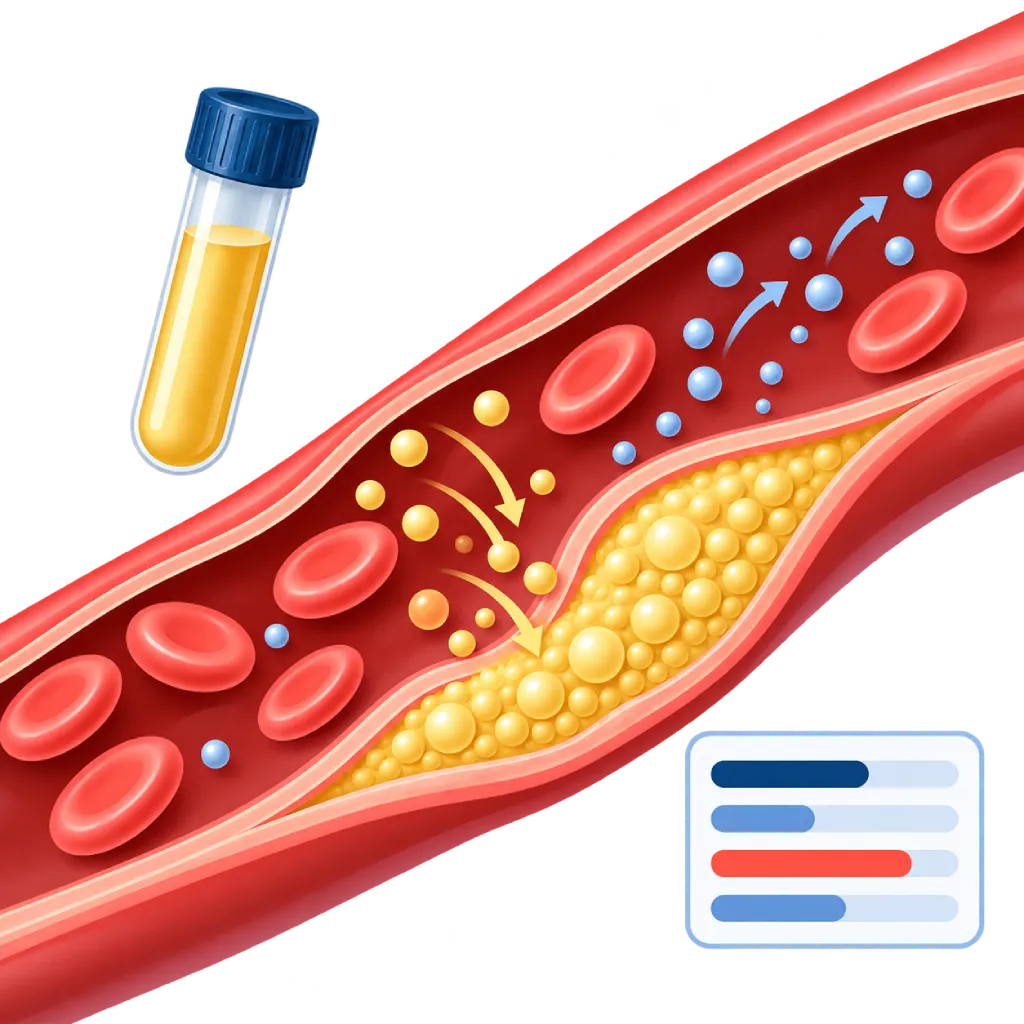
Cholesterol screening is a blood test that measures blood fats: total cholesterol, LDL, HDL, and triglycerides. High LDL cholesterol builds up in the walls of blood vessels and raises the risk of heart attack and stroke. The majority of people do not need to fast. Results are read together with other risk factors to set targets and treatment.
Sources01 / Understanding the procedure
About Cholesterol and Lipid Profile Screening
What Is Cholesterol and Lipid Profile Screening
Cholesterol and triglycerides are fats in the blood that the body needs. In excess, cholesterol can build up in the walls of blood vessels as plaque. This buildup is called atherosclerosis and is the main cause of heart attack and stroke. High cholesterol usually causes no symptoms, so it can only be detected with a blood test. A lipid profile screening measures blood fat levels to assess this risk early.
How It Works in Brief
Cholesterol is carried in the blood by particles called lipoproteins. LDL particles carry cholesterol to the walls of blood vessels and can stay behind to form plaque, while HDL helps carry it back to the liver. The blood sample is examined in the laboratory, and the results are read together with your age, blood pressure, blood sugar, and smoking habits to determine your risk level and cholesterol target.
What Is Measured
- LDL cholesterol: the main target of prevention. The higher the level and the longer it lasts, the greater the risk.
- HDL cholesterol: a low level is also taken into account as a sign of higher risk.
- Triglycerides: rise with excess body weight, diabetes, or alcohol consumption. Very high levels can cause inflammation of the pancreas (pancreatitis).
- Total and non-HDL cholesterol: a picture of all the cholesterol that can form plaque, useful especially when triglycerides are high.
- Lipoprotein(a) or Lp(a): its level is mainly determined by heredity and barely changes throughout life, so guidelines recommend measuring it at least once. Apolipoprotein B (ApoB) may be added in diabetes, obesity, or high triglycerides.
Reading the Results
There is no single normal number that applies to everyone, because the LDL cholesterol target is set according to your risk level. As a general picture from the guidelines:
- LDL target: below 116 mg/dL at low risk, below 100 mg/dL at moderate risk, below 70 mg/dL at high risk, and below 55 mg/dL at very high risk, for example after a heart attack.
- LDL of 190 mg/dL or more: considered very high and may indicate inherited high cholesterol (familial hypercholesterolemia).
- Triglycerides of 150 mg/dL or more: considered high and add to the risk.
- Lp(a) above 50 mg/dL: adds to the risk of heart disease, even when other cholesterol levels are normal.
Who Should Be Tested
A lipid profile test is recommended for adults with risk factors, such as hypertension, diabetes, smoking, excess body weight, or early heart disease in the family, meaning before age 55 in a father or brother and before age 65 in a mother or sister. Without risk factors, testing can begin in men at age 40 and in women at age 50 or after menopause. Close relatives of people with inherited high cholesterol, including children, are also advised to be tested.
02 / Understanding the procedure
When Is This Procedure Considered?
A doctor may consider this procedure in the situations below. The decision is always made after a thorough assessment.
- Men Aged 40 and Women Aged 50 and OverOr after menopause, even without other risk factors.
- Hypertension, Diabetes, or SmokingRisk factors that, together with cholesterol, speed up plaque formation.
- Excess Weight or Large Waist CircumferenceOften accompanied by high triglycerides and low HDL.
- Early Heart Disease in the FamilyA father or brother before age 55, a mother or sister before age 65.
- Family with Inherited High CholesterolFamily members, including children, are advised to be tested.
- Chronic Kidney Disease or Autoimmune DiseaseConditions that raise the risk of heart and blood vessel disease.
Situations to Consider First
- Recent Serious Illness or Major SurgeryCholesterol levels can drop temporarily, so the results are less representative.
- Previously Very High TriglyceridesThe test is done after fasting for 10 to 12 hours so the results can be assessed.
- Currently PregnantCholesterol and triglycerides rise naturally during pregnancy. Let the staff know.
- Recent Change in Cholesterol MedicationA repeat test usually waits 4 to 12 weeks so the effect of the medication can be seen.
- Alcohol or Very Fatty Food the Day BeforeCan temporarily raise triglycerides.
03 / Before the procedure
How Should You Prepare?
A lipid profile can usually be checked without fasting. The staff will let you know if you need to fast.
Fast if asked. Fasting for 10 to 12 hours, while still drinking water, is usually requested if your triglycerides were previously very high, or if a fasting blood sugar test is done at the same time.
Eat as usual. Avoid alcohol and very fatty food the day before, but do not change your diet drastically before the test.
Medications. Keep taking your regular medications, including cholesterol medication, as usual. Bring a list of your medications and any previous cholesterol results.
Important information. Tell the staff if you are pregnant, have recently been seriously ill, or have family members with very high cholesterol or heart disease at a young age.
Unsure about the preparation instructions? Ask our team before the procedure.
04 / During the procedure
How Is the Procedure Done?
The interview, measurements, and blood draw are usually completed in about 30 minutes. Laboratory results are usually available the same day.
Risk Factor Interview
A doctor or nurse asks about your medical history, the medications you take, your smoking habits, and any heart disease or high cholesterol in your family.
Body Measurements
Your blood pressure, weight, height, and waist circumference are measured to complete the risk assessment.
Blood Draw
Blood is drawn from a vein in the crook of your elbow and placed in a tube to be examined in the laboratory.
Risk Assessment
The doctor reads the results together with other risk factors, determines your risk level and LDL cholesterol target, then explains the next steps.
05 / Benefits and risks
Benefits and Risks Should Be Discussed Together.
Every medical procedure has benefits and risks. Your doctor will explain both for your situation before the procedure.
Benefits You Can Expect
- Recognizing Risk Before Symptoms AppearHigh cholesterol usually causes no symptoms.
- Setting a Personal TargetThe LDL target is adjusted to each person's risk level.
- Finding Inherited High CholesterolOpens the opportunity to test and protect family members.
- Just a Blood TestGenerally no fasting is needed, and results are usually available the same day.
- Evaluating Treatment ResultsA repeat test shows whether the target has been reached.
The benefits of a procedure are not a promise of a cure. Ask how the results will affect your care plan.
Risks You Should Know
- Minor Pain or BruisingAt the needle site, usually mild and quick to fade.
- Brief Dizziness or FaintingEspecially when fasting. Tell the staff so you can lie down.
- Results Affected by Temporary ConditionsSerious illness, pregnancy, or alcohol can change the results, so a repeat test is sometimes needed.
- Normal Results Are Not a GuaranteeRisk is also determined by blood pressure, blood sugar, smoking, and heredity.
Risks can differ from person to person. A full explanation and consent are given after an individual assessment.
06 / After the procedure
What Is Recovery Like?
There is no recovery period. Press on the puncture site for a few minutes to prevent bruising, then you can return to your activities right away.
If results are good and risk is low. The test is usually repeated every few years as advised by your doctor.
If cholesterol is high. A diet low in saturated fat, regular physical activity, quitting smoking, and keeping your weight in check form the basis of treatment. At high risk, your doctor may recommend cholesterol-lowering medication such as statins, then recheck after 4 to 12 weeks.
If inherited high cholesterol is suspected. Your doctor may recommend testing for close family members.
Warning signs to watch for. Go to the emergency room right away if you experience:
- Chest pain or pressure, especially with a cold sweat
- Sudden shortness of breath
- Facial drooping, arm weakness, or slurred speech
- Severe upper abdominal pain spreading to the back, especially if triglycerides are very high
Know the Signs That Need Prompt Care.
Follow the team's guidance on warning signs. If severe or sudden symptoms appear after the procedure, go to the nearest emergency department right away or call Heart Attack Center 1500 258.
07 / Team and support
Doctors and Procedure Support
The doctors below are listed for this procedure. Listed by name, not by ranking.

dr. Debby C. Soemitha, Sp.PD
Internal Medicine
Clinical focusDiabetes and Diabetes Complications · Obesity and Metabolic Disease
View Profile
Dr. med. dr. Denio A. Ridjab, Sp.JP(K)
Interventional Cardiology
Coronary Intervention Procedures +2 centers
Clinical focusInterventional Cardiology · Coronary Artery Disease
View Profile
dr. Juweni Joe, Sp.GK
Clinical Nutrition
Clinical focusMedical Nutrition Intervention · Nutrition for Cardiovascular Patients
View Profile08 / Common questions
Before You Plan the Procedure.
Frequently asked questions about cholesterol and lipid profile screening. Your doctor will explain what the results mean for your condition.
Do I need to fast before a cholesterol test?
Usually not. European guidelines state that a lipid profile can be checked without fasting, because normal eating changes the results only slightly. Fasting for 10 to 12 hours is usually requested if your triglycerides were previously very high, or if fasting blood sugar is checked at the same time. Ask the staff when scheduling your appointment.
What is a normal LDL cholesterol level?
There is no single number that applies to everyone. The LDL target is set according to risk level, for example below 116 mg/dL at low risk and below 55 mg/dL at very high risk, such as after a heart attack. For this reason, doctors always read cholesterol results together with age, blood pressure, blood sugar, and smoking habits.
What is lipoprotein(a), and why does it need to be checked?
Lipoprotein(a), or Lp(a), is a cholesterol-carrying particle whose level is mainly determined by heredity. High levels raise the risk of heart attack, stroke, and narrowing of the aortic valve, even when other cholesterol levels are normal. Because its level barely changes, guidelines recommend testing it at least once in a lifetime. The result helps your doctor assess your risk more completely.
I am slim and feel healthy. Is my cholesterol definitely normal?
Not always. Cholesterol is also influenced by heredity, so even people with an ideal body weight who exercise regularly can have high cholesterol. One example is familial hypercholesterolemia, an inherited disorder that causes very high LDL from a young age. Cholesterol levels can only be known through a blood test, especially if someone in your family had heart disease at a young age.
Does high cholesterol always have to be treated with medication?
Not always. At low to moderate risk, lifestyle changes such as cutting down on saturated fat, exercising, and quitting smoking are often the initial step. At high risk, for example in people with diabetes or after a heart attack, medications such as statins are generally recommended because they have been shown to lower the risk of cardiac events. Your doctor decides the options based on your risk.
How often should cholesterol be rechecked?
If results are good and risk is low, the test is usually repeated every few years. After starting or changing cholesterol medication, a repeat test is generally done after 4 to 12 weeks to see whether the target has been reached, then periodically as advised by your doctor. Lp(a) only needs to be checked once unless there is a specific reason.
Sources and Medical Review
Translated from the Indonesian edition medically reviewed by Dr. dr. Jajang Sinardja, Sp.JP(K).
Sources as cited in the Indonesian edition.
- Mach F, Baigent C, Catapano AL, et al. 2019 ESC/EAS Guidelines for the management of dyslipidaemias: lipid modification to reduce cardiovascular risk. Eur Heart J. 2020;41(1):111-188.
- Mach F, Koskinas KC, Roeters van Lennep JE, et al. 2025 Focused Update of the 2019 ESC/EAS Guidelines for the management of dyslipidaemias. Eur Heart J. 2025;46(42):4359-4378.
- Visseren FLJ, Mach F, Smulders YM, et al. 2021 ESC Guidelines on cardiovascular disease prevention in clinical practice. Eur Heart J. 2021;42(34):3227-3337.
- Nordestgaard BG, Langsted A, Mora S, et al. Fasting is not routinely required for determination of a lipid profile: clinical and laboratory implications including flagging at desirable concentration cut-points. Eur Heart J. 2016;37(25):1944-1958.
- Kronenberg F, Mora S, Stroes ESG, et al. Lipoprotein(a) in atherosclerotic cardiovascular disease and aortic stenosis: a European Atherosclerosis Society consensus statement. Eur Heart J. 2022;43(39):3925-3946.