
Quick answer
What Is Premature Atrial Contraction?
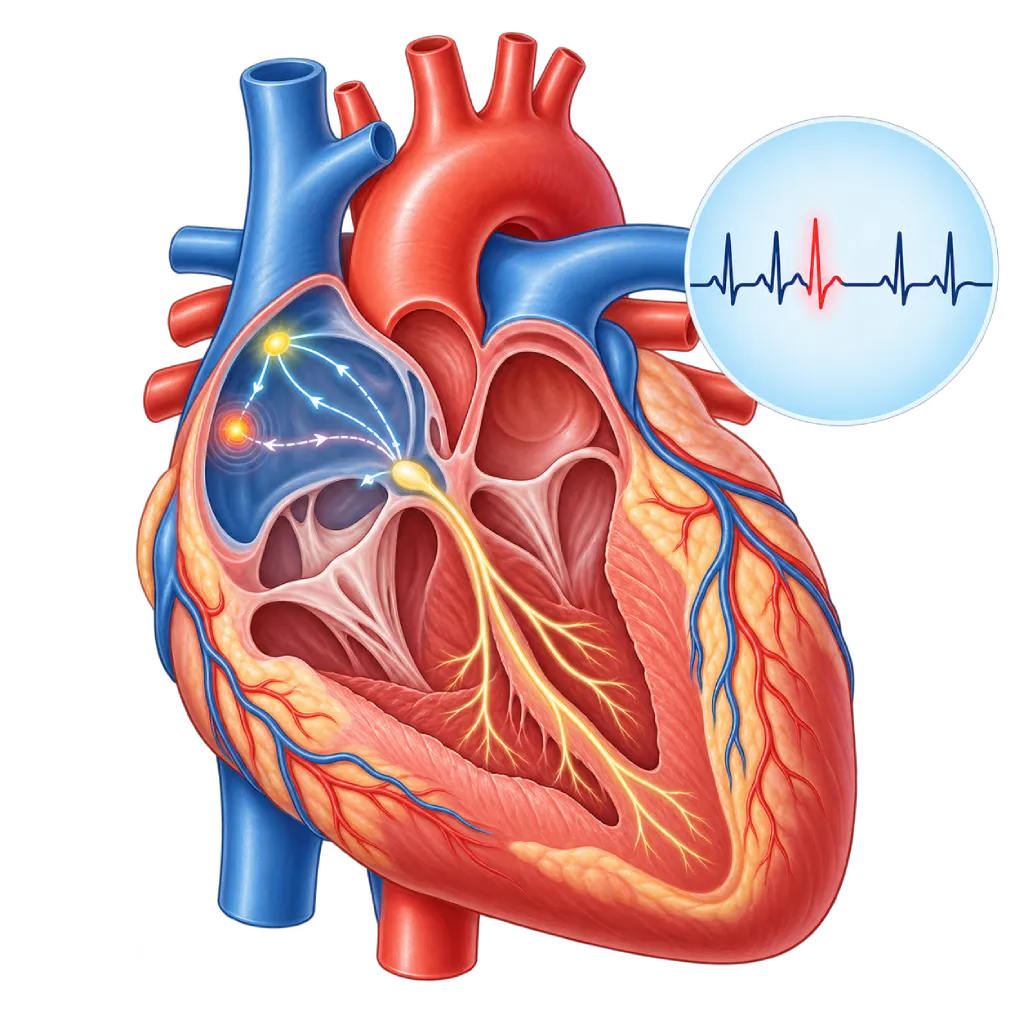
A premature atrial contraction is an extra heartbeat from the upper chambers of the heart that comes earlier than expected. It can feel as if your heart skips or pauses for a moment. It is usually harmless, but very frequent ones should be checked.
SourcesSigns That Need Urgent Help
- Fast, irregular palpitations lasting several minutes or longer
- Severe dizziness or nearly fainting
- Fainting
- Chest pain or shortness of breath
- Palpitations with cold sweats or severe weakness
If these signs appear, go to the nearest emergency department right away or call Heart Attack Center 1500 258.
01 / Understanding the condition
About Premature Atrial Contraction
In a normal rhythm, every heartbeat starts in the sinus node, the natural pacemaker in the right upper chamber. In a premature atrial contraction (PAC), another spot in the upper chamber (atrium) sends a signal earlier than expected. The result is one extra beat that comes too soon, often followed by a short pause before the rhythm returns to normal. Doctors also call it a supraventricular extrasystole, and test results often list it as SVES or PAC.
Common and Usually Harmless
Most adults, especially those over the age of 50, have a few extra beats from the upper chambers when their rhythm is recorded for 24 hours. Many people do not feel them. Those who do usually describe them as the heart skipping, pausing for a moment, or one beat that feels stronger. In people with a healthy heart, infrequent PACs usually do not need treatment.
Everyday Triggers
Extra beats can appear more often with lack of sleep, stress, or fever, and after drinking alcohol, smoking, or taking cold medicines that contain decongestants. Thyroid problems, low potassium or magnesium levels, lung disease, sleep apnea, and high blood pressure can also play a role. Research shows that moderate amounts of coffee generally do not increase the number of PACs, but some people notice more palpitations afterward.
When It Needs Attention
Very frequent PACs, or PACs that come in runs of several beats, are linked to a higher chance of developing atrial fibrillation later on. Atrial fibrillation is covered on the Atrial Fibrillation page. For this reason, your doctor may recommend regular monitoring and control of risk factors such as blood pressure, body weight, alcohol, and sleep apnea. PACs also need to be told apart from other rhythm disorders that require different treatment.
Treatment
Most people only need reassurance that the condition is harmless, along with help reducing triggers. If symptoms are very bothersome, your doctor may prescribe a beta blocker or a calcium channel blocker. Catheter ablation is rarely needed and is considered when PACs are very frequent, very bothersome, do not improve with medicine, or trigger other arrhythmias. Extra beats from the lower chambers are covered on the Premature Ventricular Contraction page.
02 / Understanding the condition
Symptoms to Recognize.
Common Symptoms
Many people feel nothing at all. When symptoms do occur, they are often more noticeable at rest or when lying down.
- A feeling that your heart skips or pauses for a moment
- One beat that feels stronger than usual
- A brief pounding sensation in the chest or neck
- Mild discomfort in the chest
- Being aware of your heartbeat when lying down or falling asleep
- No symptoms, found during an ECG or Holter monitoring
03 / Understanding the condition
What Causes This Condition?
- A spot in the upper chamber of the heart that sends an electrical signal earlier than expected
- Lack of sleep, stress, or fatigue
- Alcohol, smoking, and cold medicines that contain decongestants
- An overactive thyroid gland
- Low blood potassium or magnesium levels
- Stretched upper chambers of the heart, for example due to high blood pressure, valve disease, or heart failure
- Chronic lung disease or sleep apnea
04 / Understanding the condition
Who Is at Higher Risk?
Age
The number of extra beats from the upper chambers tends to increase with age, so they are found more often in people over 50.
Lifestyle
Lack of sleep, stress, alcohol, smoking, excess weight, and lack of physical activity can make extra beats more frequent or more noticeable.
Medical
High blood pressure, valve disease, heart failure, thyroid disorders, chronic lung disease, and sleep apnea are linked to more frequent PACs.
Other
Cold medicines that contain decongestants, certain asthma medicines, and stimulants can trigger extra beats.
Groups at Higher Risk
- People Over 50: The number of PACs increases with age, and they more often accompany heart or lung disease.
- People with Hypertension or Valve Disease: Higher pressure in the upper chambers stretches them and makes them more likely to send extra signals.
- People with Thyroid Disorders: Excess thyroid hormone speeds up the heart rhythm and triggers extra beats.
- People with Sleep Apnea or Chronic Lung Disease: Drops in oxygen levels and pressure changes in the chest during sleep can trigger PACs.
05 / Understanding the condition
How Is It Diagnosed?
Your doctor will start by asking about your symptoms, when they occur, the medicines and supplements you take, and habits such as sleep, alcohol, and smoking. An ECG can capture PACs if they happen during the recording. Because extra beats come and go, a Holter monitor worn for 24 to 48 hours is more often used to count them and to look for runs of beats or brief episodes of atrial fibrillation. If symptoms are infrequent, a rhythm recorder worn for a longer time can help. Echocardiography is recommended if PACs are frequent, there are other symptoms, or heart disease is suspected. Blood tests for thyroid function and electrolytes help find triggers that can be corrected.
Electrocardiogram (ECG)
Records extra beats when they occur and shows whether they come from the upper or lower chambers.
Holter Monitoring
Counts the number of extra beats over 24 to 48 hours and looks for runs of beats or brief atrial fibrillation.
Long-Term Heart Rhythm Monitoring
A rhythm recorder worn for several days to weeks when symptoms are infrequent.
Echocardiography
Assesses the heart's structure, the size of the upper chambers, and the valves if PACs are frequent or heart disease is suspected.
Thyroid Function Test
Looks for an overactive thyroid gland as a trigger for extra beats.
Blood Electrolyte Test
Checks potassium and magnesium levels, which can affect heart rhythm.
06 / Understanding the condition
Treatment Options.
Treatment is decided by a doctor after an assessment. The categories below can help you follow the conversation with your doctor.
Explanation and Monitoring
If your heart is healthy and PACs are infrequent, an explanation that the condition is usually harmless, along with monitoring, is enough.
Reducing Triggers
Get enough sleep, manage stress, limit alcohol, quit smoking, and avoid cold medicines with decongestants if they trigger symptoms.
Treating Coexisting Conditions
Controlling blood pressure, thyroid disorders, sleep apnea, and any underlying heart or lung disease.
Beta Blockers or Calcium Channel Blockers
May be used if symptoms are very bothersome. The type and dose are determined by your doctor.
Catheter Ablation
Rarely needed; considered when PACs are very frequent, cause severe symptoms, do not improve with medicine, or trigger other arrhythmias.
07 / Understanding the condition
Complications to Watch For.
Atrial Fibrillation
Very frequent PACs or runs of PACs are linked to a higher chance of developing atrial fibrillation later on.
Bothersome Symptoms
A frequent sensation of the heart skipping can disturb sleep and concentration and cause anxiety.
Stroke Related to Atrial Fibrillation
Research shows that very frequent PACs are linked to a higher risk of stroke, especially if they progress to atrial fibrillation.
08 / Understanding the condition
What Can You Do?
- Get enough sleep and manage stress
- Limit alcohol and quit smoking
- Read cold medicine labels and avoid decongestants if they trigger palpitations
- Keep your blood pressure and weight under control
- Get checked if you snore loudly or stop breathing during sleep
- Note when symptoms occur and bring the notes to your follow-up visit
09 / Understanding the condition
When Should You See a Doctor?
Infrequent PACs without other symptoms are usually harmless. Still, the feeling of your heart skipping should be checked once to confirm what type it is. Make an appointment with a doctor if:
- Your heart feels like it skips very often or every day
- Symptoms disturb your sleep or activities
- You have high blood pressure, heart disease, or a thyroid disorder
- Palpitations feel fast and irregular for more than a few minutes
- Palpitations come with dizziness, fainting, chest pain, or shortness of breath: go to the emergency room right away
Don't Wait in an Emergency.
If symptoms are severe or come on suddenly, go to the nearest emergency department right away or call Heart Attack Center 1500 258, rather than waiting for an appointment.
10 / Common questions
Questions You May Have.
Frequently asked questions about premature atrial contractions, or extra beats from the upper chambers of the heart.
Are PACs dangerous?
In people with a healthy heart, infrequent PACs are usually harmless and do not need medicine. PACs need attention if they are very frequent, come in runs, occur with dizziness or shortness of breath, or if you have heart disease. In those cases, your doctor will look for the cause and assess your chance of developing atrial fibrillation later on.
What is the difference between PACs and PVCs?
Both are extra beats that come too early. PACs start in the atria (the upper chambers of the heart), while PVCs start in the ventricles (the lower chambers). They can feel similar, so only an ECG or Holter monitoring can tell them apart. This distinction matters because the follow-up tests and treatment are different. PVCs are covered on the Premature Ventricular Contraction page.
Do I have to stop drinking coffee?
Not necessarily. Research shows that moderate amounts of coffee generally do not increase the number of PACs. However, everyone is different. If you notice more palpitations after drinking coffee, strong tea, or energy drinks, try cutting back and see whether anything changes. It is wise to avoid energy drinks high in caffeine if they trigger symptoms.
Can PACs turn into atrial fibrillation?
PACs do not always progress. However, very frequent PACs or PACs that come in runs are linked to a higher chance of developing atrial fibrillation later on, because both often arise from the same upper chambers. For this reason, your doctor may recommend regular rhythm recordings and control of blood pressure, body weight, alcohol, and sleep apnea.
Why does my heart feel like it skips when I lie down?
When you lie down in a quiet setting, it is easier to notice your own heartbeat. In addition, the heart rhythm slows at rest, which gives extra beats room to appear. Lying on your left side also brings the heart closer to the chest wall. This is usually not a sign of danger, but tell your doctor if it happens often.
Do PACs need treatment?
Usually not. If PACs are infrequent and your heart is healthy, reducing triggers is enough. A beta blocker or calcium channel blocker is considered if symptoms are very bothersome. Catheter ablation is only for specific situations, such as very frequent PACs that do not improve with medicine. Do not start or stop heart rhythm medicines without your doctor's guidance.
Sources and Medical Review
Translated from the Indonesian edition medically reviewed by dr. Sunu B. Raharjo, Sp.JP(K), Ph.D..
Sources as cited in the Indonesian edition.
- Brugada J, Katritsis DG, Arbelo E, et al. 2019 ESC Guidelines for the management of patients with supraventricular tachycardia. The Task Force for the management of patients with supraventricular tachycardia of the European Society of Cardiology (ESC). Eur Heart J. 2020;41(5):655-720.
- Van Gelder IC, Rienstra M, Bunting KV, et al. 2024 ESC Guidelines for the management of atrial fibrillation developed in collaboration with the European Association for Cardio-Thoracic Surgery (EACTS). Eur Heart J. 2024;45(36):3314-3414.
- Arnar DO, Mairesse GH, Boriani G, et al. Management of asymptomatic arrhythmias: a European Heart Rhythm Association (EHRA) consensus document, endorsed by the Heart Failure Association (HFA), Heart Rhythm Society (HRS), Asia Pacific Heart Rhythm Society (APHRS), Cardiac Arrhythmia Society of Southern Africa (CASSA), and Latin America Heart Rhythm Society (LAHRS). Europace. 2019;21(6):844-845.
- Himmelreich JCL, Lucassen WAM, Heugen M, et al. Frequent premature atrial contractions are associated with atrial fibrillation, brain ischaemia, and mortality: a systematic review and meta-analysis. Europace. 2019;21(5):698-707.
- Dixit S, Stein PK, Dewland TA, et al. Consumption of Caffeinated Products and Cardiac Ectopy. J Am Heart Assoc. 2016;5(1):e002503.
- Marcus GM, Rosenthal DG, Nah G, et al. Acute Effects of Coffee Consumption on Health among Ambulatory Adults. N Engl J Med. 2023;388(12):1092-1100.
Doctors Who Treat This Condition

dr. Sunu B. Raharjo, Sp.JP(K), Ph.D.
Arrhythmia and Electrophysiology
Arrhythmia and Device Center
Clinical focusClinical and Interventional Electrophysiology · Cardiac Arrhythmia Ablation
View Profile
Dr. dr. Dicky A. Hanafy, Sp.JP(K)
Arrhythmia and Electrophysiology
Arrhythmia and Device Center +1 center
Clinical focusElectrophysiology and Arrhythmia Ablation · Pacemaker and ICD Implantation
View Profile
Dr. med. dr. Denio A. Ridjab, Sp.JP(K)
Interventional Cardiology
Coronary Intervention Procedures +2 centers
Clinical focusInterventional Cardiology · Coronary Artery Disease
View Profile