
Quick answer
What Is Rheumatic Heart Disease?
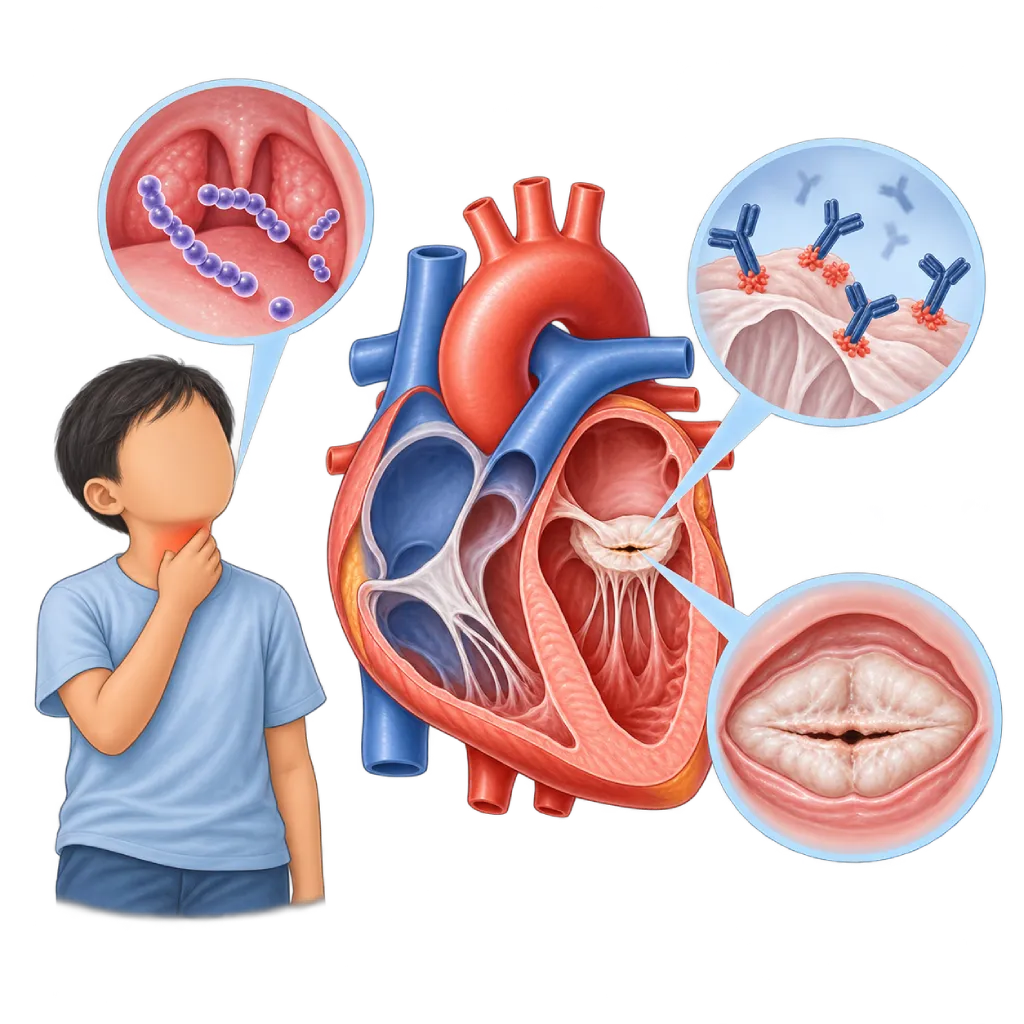
Rheumatic heart disease is permanent damage to the heart, especially the valves, that remains after rheumatic fever, an immune reaction following a sore throat caused by streptococcus bacteria. It can be prevented by treating sore throats and taking preventive antibiotics.
SourcesSigns That Need Urgent Help
- Severe shortness of breath or being unable to lie down, sometimes with a cough that brings up pink, frothy sputum
- A very fast, irregular heartbeat with dizziness or weakness
- Severe chest pain
- Sudden facial drooping, arm weakness, or slurred speech
- Fainting
- Prolonged high fever in a person with rheumatic valve disease
If these signs appear, go to the nearest emergency department right away or call Heart Attack Center 1500 258.
01 / Understanding the condition
About Rheumatic Heart Disease
Rheumatic heart disease is permanent damage to the heart, especially the heart valves, that remains after rheumatic fever. Rheumatic fever itself is a misdirected immune reaction after a throat infection with group A streptococcus bacteria. Antibodies made to fight the bacteria also attack the body's own tissues, such as the heart, joints, skin, and brain. Although the names sound alike, this disease is different from the joint rheumatism that people commonly talk about.
From a Sore Throat to the Heart Valves
Acute rheumatic fever usually appears 2 to 4 weeks after a sore throat that was not fully treated, especially in children aged 5 to 15. Symptoms can include fever, joint pain that moves from joint to joint, and inflammation of the heart. The joints usually recover without lasting damage, but inflammation of the valves can leave damage behind. Each repeat attack adds to the damage, so over time the valves thicken, shrink, and fuse.
The mitral valve, the valve between the left atrium and the left ventricle, is commonly affected, followed by the aortic valve. A valve can become narrowed (stenosis), so blood has difficulty flowing through, or leaky (regurgitation), so blood flows backward. This valve damage is covered in more detail on the Rheumatic Valve Disease page.
Still Commonly Seen
In developed countries this disease is now rare, but it is still common in developing countries, including in Southeast Asia. Many people only find out about their valve damage as adults, when shortness of breath, palpitations, or problems during pregnancy appear. Without treatment, rheumatic heart disease can progress to heart failure, atrial fibrillation, and stroke. Echocardiography screening of children in areas with many cases can detect valve damage before symptoms develop.
It Can Be Prevented
Rheumatic heart disease can be prevented. A strep throat infection that is fully treated with antibiotics prevents rheumatic fever. In people who have had rheumatic fever, regular injections of long-acting penicillin prevent repeat attacks and slow valve damage. The GOAL trial in 2022 showed that preventive antibiotics also benefit early-stage valve damage found through echocardiography screening. If valve damage is already severe, your doctor may recommend widening the valve with a balloon, valve repair, or valve replacement.
02 / Understanding the condition
Symptoms to Recognize.
Common Symptoms
Valve damage often goes unnoticed for years and only causes symptoms once the valve has become significantly narrowed or leaky.
- No symptoms in the early stage, only a heart murmur found during an examination
- Shortness of breath during activity or when climbing stairs
- Tiring easily and reduced ability to do physical activity
- Palpitations or a heartbeat that feels irregular
- Shortness of breath when lying down or waking up at night short of breath
- Swelling in the ankles or legs
- Recurring cough, especially when lying down or during activity
Symptoms in Children
Symptoms of acute rheumatic fever, usually 2 to 4 weeks after a sore throat in children aged 5 to 15.
- Fever a few weeks after a sore throat
- Pain and swelling in large joints that moves from joint to joint, such as the knees and ankles
- Uncontrolled movements of the hands, feet, or face (Sydenham chorea)
- A pink, ring-shaped rash on the body
- Small, painless lumps under the skin near the elbows, knees, or spine
- Shortness of breath, palpitations, or chest pain due to inflammation of the heart
03 / Understanding the condition
What Causes This Condition?
- A throat infection with group A streptococcus bacteria that was not fully treated
- A misdirected immune reaction: antibodies against the bacteria also attack the tissues of the heart, joints, skin, and brain
- Repeated attacks of rheumatic fever after new throat infections, which add to the valve damage
- Genetic susceptibility that makes some people more prone to rheumatic fever
- Long-term inflammation of the valves that causes them to thicken, shrink, and fuse
04 / Understanding the condition
Who Is at Higher Risk?
Medical
Repeated sore throats not treated with antibiotics, and a previous history of rheumatic fever, especially if preventive injections are not received regularly.
Genetic
A family history of rheumatic fever or rheumatic heart disease, which reflects inherited susceptibility and a shared environment.
Age
Acute rheumatic fever usually affects children aged 5 to 15, while valve damage usually only causes symptoms in young adulthood.
Other
Crowded housing, poor ventilation, and limited access to health care make it easier for throat infections to spread. Rheumatic heart disease is more common in women.
Groups at Higher Risk
- Children Aged 5 to 15: Strep throat and acute rheumatic fever are common at this age, so a sore throat with fever should be checked.
- People with a History of Rheumatic Fever: A later throat infection can trigger a relapse and add to valve damage, so preventive antibiotics need to be continued.
- Pregnant Women with Rheumatic Valve Disease: Pregnancy increases the workload of the heart, so symptoms may appear or worsen, especially with mitral valve narrowing.
- Families with a History of Rheumatic Heart Disease: Inherited susceptibility and a shared environment raise the risk for other family members, especially children.
05 / Understanding the condition
How Is It Diagnosed?
Acute rheumatic fever is diagnosed using the Jones criteria, as revised by the AHA in 2015. The doctor looks for evidence of a previous streptococcal infection, then assesses the major signs, such as inflammation of the heart, joint inflammation, uncontrolled movements, a ring-shaped rash, and lumps under the skin, as well as minor signs such as fever, a high ESR or CRP, and ECG changes.
Chronic rheumatic heart disease is confirmed with echocardiography. This test assesses the shape and movement of the valves, the severity of narrowing or leakage, and the size and strength of the heart chambers. The 2023 World Heart Federation guidelines set echocardiographic criteria to recognize valve damage at an early stage, including in the screening of children in areas with many cases.
If needed, the doctor adds a chest X-ray, echocardiography through the esophagus to see the valves more clearly, or cardiac catheterization before a valve procedure.
Physical Examination
The doctor looks for a heart murmur, joint inflammation, rash, lumps under the skin, and uncontrolled movements, which are part of the Jones criteria.
Echocardiography
The main test to look for thickening, narrowing, or leakage of the valves, including early damage that has not yet caused a murmur. The 2023 WHF guidelines also use it for screening.
Electrocardiogram (ECG)
Looks for a prolonged PR interval during acute rheumatic fever, atrial enlargement, or atrial fibrillation.
Antibody tests against streptococcus (ASO titer or anti-DNase B) or a throat swab to prove a previous streptococcal infection.
Erythrocyte Sedimentation Rate (ESR)
A high erythrocyte sedimentation rate signals active inflammation and is one of the criteria for acute rheumatic fever.
C-Reactive Protein (CRP) Test
An inflammation marker used together with ESR to diagnose and monitor acute rheumatic fever.
Chest X-Ray
Shows heart size and signs of fluid congestion in the lungs in advanced valve damage.
06 / Understanding the condition
Treatment Options.
Treatment is decided by a doctor after an assessment. The categories below can help you follow the conversation with your doctor.
Antibiotics for Sore Throat
Strep throat is treated with a full course of penicillin-type antibiotics to prevent rheumatic fever (primary prevention).
Secondary Prevention with Penicillin
Regular injections of long-acting penicillin for people who have had rheumatic fever or have rheumatic valve damage. Your doctor decides how long, often for many years.
Treatment of Acute Rheumatic Fever
Rest, anti-inflammatory medicines for joint pain, and treatment of heart inflammation or uncontrolled movements according to severity, under a doctor's supervision.
Medicines for Heart Failure and Rhythm
Diuretics, heart rate control medicines, and other heart failure medicines to relieve shortness of breath and swelling.
Anticoagulants
In atrial fibrillation caused by rheumatic heart disease, especially with mitral valve narrowing, doctors recommend warfarin; the INVICTUS trial showed that warfarin was better than rivaroxaban in this group.
Valve Procedures
Widening the mitral valve with a balloon through a catheter, valve repair, or valve replacement surgery, depending on the type and severity of the damage.
07 / Understanding the condition
Complications to Watch For.
Chronic Valve Damage
The mitral or aortic valve becomes narrowed or leaky, so the heart has to work harder. Covered on the Rheumatic Valve Disease page.
Heart Failure
The strain from damaged valves causes the heart to enlarge and weaken, with shortness of breath and leg swelling. Covered on the Heart Failure page.
Atrial Fibrillation
An enlarged left atrium triggers an irregular rhythm that makes clots more likely to form. Covered on the Atrial Fibrillation page.
Stroke Caused by a Blood Clot
A clot from the left atrium can break loose and travel to the brain, especially in mitral valve narrowing with atrial fibrillation. Covered on the Ischemic Stroke page.
Infective Endocarditis
Damaged valves are more easily infected by bacteria from the bloodstream. Covered on the Infective Endocarditis page.
Pulmonary Hypertension
Narrowing of the mitral valve raises the pressure in the lung blood vessels and strains the right side of the heart. Covered on the Pulmonary Hypertension page.
08 / Understanding the condition
What Can You Do?
- Take your child to a doctor if a sore throat comes with fever, especially without a cough or runny nose
- Finish the antibiotics as prescribed even if the symptoms have improved
- If you have had rheumatic fever, do not miss your scheduled preventive penicillin injections
- Keep hands clean and make sure your home is well ventilated to reduce the spread of infection
- Take care of your teeth and mouth, and tell your dentist if you have rheumatic valve disease
- Have your heart checked before planning a pregnancy if you have had rheumatic fever
- Have follow-up echocardiograms on schedule even if you have no symptoms
09 / Understanding the condition
When Should You See a Doctor?
Take your child to a doctor if a sore throat comes with fever, and go right away if joint pain that moves from joint to joint or uncontrolled movements appear a few weeks later. Adults with a history of rheumatic fever need regular heart checkups even if they feel well. Go to the emergency room right away if there is severe shortness of breath, a very fast heartbeat, or signs of stroke.
- A sore throat with fever, especially in school-age children
- Joint pain and swelling that moves from joint to joint after a sore throat
- Your doctor finds a heart murmur
- Shortness of breath during activity, tiring easily, or palpitations
- You are planning a pregnancy and have had rheumatic fever
- You have missed a scheduled preventive penicillin injection
Don't Wait in an Emergency.
If symptoms are severe or come on suddenly, go to the nearest emergency department right away or call Heart Attack Center 1500 258, rather than waiting for an appointment.
10 / Common questions
Questions You May Have.
Frequently asked questions about rheumatic heart disease and rheumatic fever.
Is joint rheumatism the same as rheumatic heart disease?
No. In everyday conversation, rheumatism often refers to joint pain in adults, such as osteoarthritis or rheumatoid arthritis, which is covered on the Rheumatoid Arthritis page. Rheumatic heart disease comes from rheumatic fever after a strep throat infection, usually in childhood. Its joint pain moves from joint to joint and heals without lasting damage, while the permanent damage occurs in the heart valves.
Is rheumatic heart disease contagious?
Rheumatic heart disease itself is not contagious. What is contagious is the streptococcus bacteria that cause sore throats, which spread through droplets from coughs and sneezes, especially in crowded homes or schools. Only a small proportion of infected people go on to develop rheumatic fever. That is why a sore throat with fever in children should be checked and fully treated.
How long do preventive penicillin injections need to continue?
It depends on whether there is heart damage and how severe it is. Without heart damage, it is usually about 5 years after the last attack or until age 21. If there is valve damage, it may be 10 years or longer, and with moderate to severe damage it may continue until age 40 or for life. Your doctor determines the schedule and duration; do not stop on your own.
Can people with rheumatic heart disease get pregnant?
Many can have a safe pregnancy, but pregnancy increases the workload of the heart. Mitral valve narrowing that previously caused no symptoms can cause shortness of breath during pregnancy. That is why you should have your heart checked before planning a pregnancy. If the valve is severely narrowed, your doctor may recommend a valve procedure before pregnancy. Medicines such as warfarin also need to be adjusted together with your cardiologist and obstetrician.
Can a valve damaged by rheumatic fever recover?
Mild damage at an early stage can improve if repeat attacks are prevented with regular penicillin injections. The GOAL trial showed that preventive antibiotics reduce the progression of early valve damage. However, a valve that has already thickened, stiffened, and fused cannot return to normal with medicines. In this situation, your doctor may recommend widening the valve with a balloon, valve repair, or valve replacement.
Sources and Medical Review
Translated from the Indonesian edition medically reviewed by dr. BRM Ario S. Kuncoro, Sp.JP(K).
Sources as cited in the Indonesian edition.
- Kumar RK, Antunes MJ, Beaton A, Mirabel M, Nkomo VT, Okello E, et al. Contemporary Diagnosis and Management of Rheumatic Heart Disease: Implications for Closing the Gap: A Scientific Statement From the American Heart Association. Circulation. 2020;142(20):e337-e357.
- Rwebembera J, Marangou J, Mwita JC, Mocumbi AO, Mota C, Okello E, et al. 2023 World Heart Federation guidelines for the echocardiographic diagnosis of rheumatic heart disease. Nat Rev Cardiol. 2024;21(4):250-263.
- Gewitz MH, Baltimore RS, Tani LY, Sable CA, Shulman ST, Carapetis J, et al. Revision of the Jones Criteria for the Diagnosis of Acute Rheumatic Fever in the Era of Doppler Echocardiography: A Scientific Statement From the American Heart Association. Circulation. 2015;131(20):1806-1818.
- Beaton A, Okello E, Rwebembera J, Grobler A, Engelman D, Alepere J, et al. Secondary Antibiotic Prophylaxis for Latent Rheumatic Heart Disease. N Engl J Med. 2022;386(3):230-240.
- Connolly SJ, Karthikeyan G, Ntsekhe M, Haileamlak A, El Sayed A, El Ghamrawy A, et al. Rivaroxaban in Rheumatic Heart Disease-Associated Atrial Fibrillation. N Engl J Med. 2022;387(11):978-988.
- Carapetis JR, Beaton A, Cunningham MW, Guilherme L, Karthikeyan G, Mayosi BM, et al. Acute rheumatic fever and rheumatic heart disease. Nat Rev Dis Primers. 2016;2:15084.
Doctors Who Treat This Condition

dr. Radityo Prakoso, Sp.JP(K)
Pediatrics & Congenital Heart Disease
Congenital and Structural Heart Center
Clinical focusPediatric Cardiology Consultation · Congenital Heart Disease Care
View Profile
dr. Sri Diniharini, Sp.JP(K)
Echocardiography & Cardiovascular Imaging
Cardiovascular Diagnostic Center +1 center
Clinical focusAdvanced Echocardiography · Transesophageal Echocardiography
View Profile
dr. BRM Ario S. Kuncoro, Sp.JP(K)
Echocardiography & Cardiovascular Imaging
Cardiovascular Diagnostic Center +2 centers
Clinical focusAdvanced and 3D Echocardiography · Transesophageal Echocardiography
View Profile