
Quick answer
What Is Shortness of Breath?
Shortness of breath is a feeling of difficulty breathing or of not getting enough air. It can come from the heart, lungs, or blood, or from anxiety. Sudden or severe shortness of breath needs immediate treatment in the emergency room.
SourcesSigns That Need Urgent Help
- Severe shortness of breath that comes on suddenly, including at rest
- Shortness of breath with chest pain, a cold sweat, or a strongly racing heartbeat
- Being unable to speak a full sentence because of shortness of breath
- Lips, tongue, or fingertips that look bluish
- Confusion, extreme drowsiness, or fainting
- Coughing up pink, frothy mucus or coughing up blood
- Swelling of the face, lips, or tongue after eating, taking medicine, or being stung
- Sudden shortness of breath after a long period without moving, after surgery, or with swelling of one leg
If these signs appear, go to the nearest emergency department right away or call Heart Attack Center 1500 258.
01 / Understanding the condition
About Shortness of Breath
Shortness of breath, medically called dyspnea, is an uncomfortable feeling when breathing: your breaths feel short, your chest feels tight, or you feel you cannot take in enough air. It is normal to be short of breath after strenuous exercise or at high altitude. It is not normal when it appears during activities that are usually light, at rest, or when lying down, or when it comes on suddenly. This page helps you recognize possible causes and danger signs; it is not meant for working out the cause on your own.
Sudden Shortness of Breath
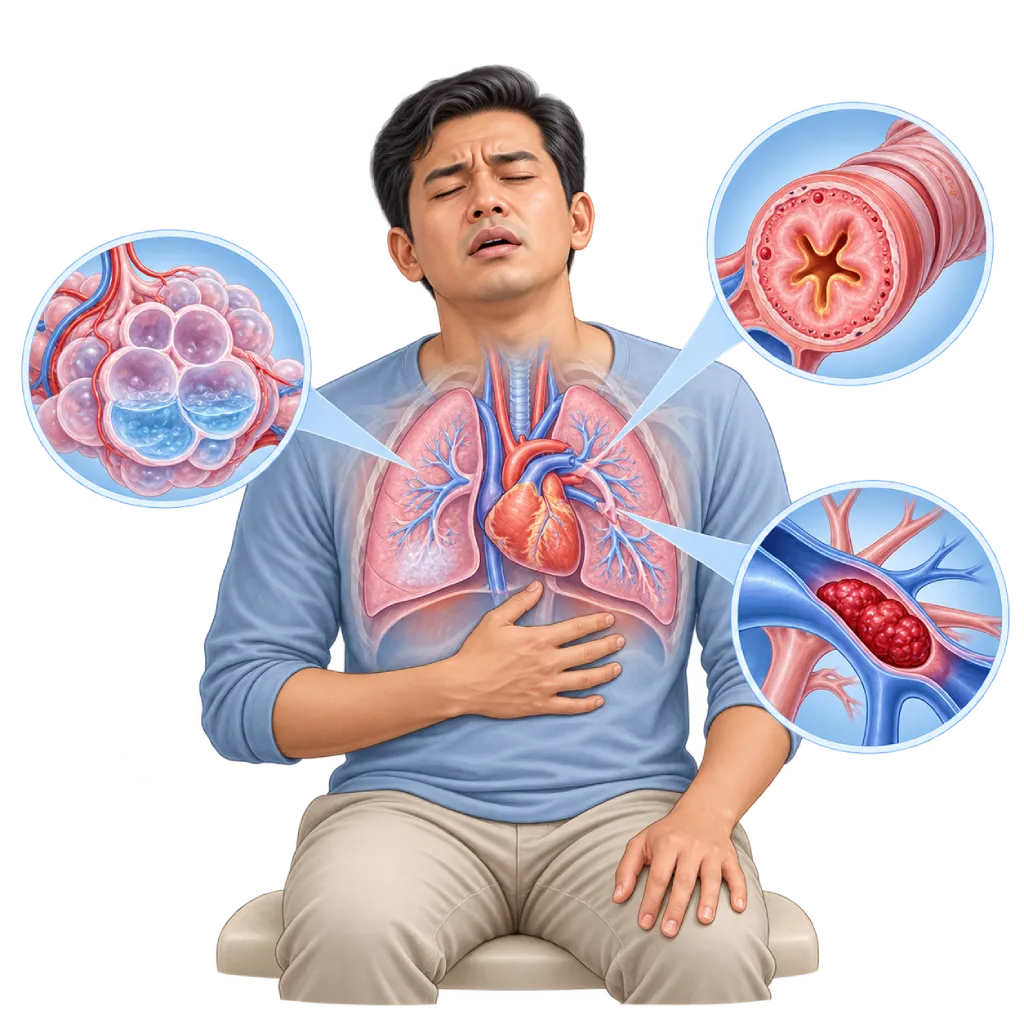
Shortness of breath that develops within minutes to hours can be caused by conditions that need urgent treatment, such as a heart attack, fluid buildup in the lungs due to heart failure, a blood clot in the blood vessels of the lungs, a severe asthma attack, a collapsed lung, pneumonia, a severe allergic reaction, or fluid in the sac around the heart that presses on the heart. Blood clots in the lungs are covered on the Pulmonary Embolism page, and fluid buildup in the lungs caused by the heart is covered on the Cardiogenic Pulmonary Edema page.
Gradually Worsening Shortness of Breath
Shortness of breath that gets worse over several weeks to months often comes from the heart or lungs. Heart causes include heart failure, valve disease, coronary artery disease, and rhythm disorders such as atrial fibrillation. In heart failure, shortness of breath often appears when lying flat, so you need high pillows, or it wakes you up at night, and it comes with leg swelling. Lung causes include chronic obstructive pulmonary disease (COPD), asthma, interstitial lung disease, and high pressure in the blood vessels of the lungs. Other causes are anemia, excess body weight, poor fitness, thyroid disorders, and anxiety.
When the Heart and Lungs Are Both Involved
In many people, especially older adults and smokers, shortness of breath has more than one cause, for example COPD and heart failure at the same time. That is why doctors usually assess the heart and lungs together. Shortness of breath that was previously stable and then gets worse also needs to be rechecked, because it can signal a worsening condition or a new cause. Keeping track of which activities make you short of breath, for example how far you can walk or how many stairs you can climb, helps your doctor assess changes over time.
02 / Understanding the condition
Symptoms to Recognize.
Common Symptoms
- Breaths feel short, or you quickly run out of breath during activity
- Chest feels tight, or you cannot take a deep breath
- Breathing faster than usual
- Shortness of breath when lying flat, and feeling more comfortable on high pillows
- Waking up at night short of breath and needing to sit up
- Wheezing when breathing, or a cough
- Tiring easily and being able to do less activity
Symptoms in Older Adults
In older adults, shortness of breath is often disguised as tiredness or considered normal for their age.
- Tiring more quickly or having to stop while walking
- Cutting back on activities without realizing that shortness of breath is the reason
- Leg swelling that appears along with shortness of breath
- Confusion or drowsiness when oxygen levels drop
Symptoms in Children
Children often cannot say that they feel short of breath; watch how and how fast they breathe.
- Fast breathing and flaring nostrils
- Skin pulling in between the ribs or below the breastbone when breathing
- Wheezing or loud, noisy breathing
- Difficulty eating, breastfeeding, or talking because of shortness of breath
03 / Understanding the condition
What Causes This Condition?
- Heart failure, valve disease, coronary artery disease, or a heart attack
- Heart rhythm disorders, such as atrial fibrillation with a fast heart rate
- A blood clot in the lungs, high pressure in the blood vessels of the lungs, or fluid in the sac around the heart
- Asthma, COPD, pneumonia, or interstitial lung disease
- Collapsed lung (pneumothorax) or fluid in the lining of the lungs
- Anemia, thyroid disorders, or acid-base disturbances in the blood, for example in uncontrolled diabetes or kidney failure
- Excess body weight, poor fitness, or weakness of the breathing muscles
- Anxiety and panic attacks, which can only be concluded as the cause once other causes have been ruled out
04 / Understanding the condition
Who Is at Higher Risk?
Lifestyle
Smoking, exposure to smoke and pollution, lack of physical activity, and excess body weight increase the likelihood of shortness of breath due to heart or lung disease.
Medical
Hypertension, diabetes, coronary artery disease, heart failure, asthma, COPD, chronic kidney disease, and anemia.
Genetic
A family history of cardiomyopathy, asthma, or certain congenital disorders can increase the tendency to become short of breath.
Age
Heart and lung diseases that cause shortness of breath become more common with age.
Other
Exposure to dust or chemicals at work, a history of pulmonary tuberculosis, and prolonged bed rest, recent surgery, pregnancy, and cancer, which increase the risk of blood clots.
Groups at Higher Risk
- People with Heart Failure: Increasing shortness of breath, needing higher pillows, or rapid weight gain can signal a worsening that needs prompt treatment.
- Smokers and Former Smokers: They are at risk of COPD and coronary artery disease, both of which can cause shortness of breath.
- Older Adults: They often have more than one cause of shortness of breath, and their symptoms are often considered normal for their age.
- People with Diabetes and Hypertension: They are at risk of heart disease, which can show up as shortness of breath without obvious chest pain.
- Patients After Surgery or Prolonged Bed Rest: They are at higher risk of blood clots in the legs that can break loose and travel to the lungs, causing sudden shortness of breath.
05 / Understanding the condition
How Is It Diagnosed?
For sudden or severe shortness of breath, the assessment is done in the emergency room. Oxygen levels are measured with a clip on the finger, and the doctor then checks blood pressure, pulse, and breathing while giving initial treatment. An ECG, a chest X-ray, and blood tests such as troponin, NT-proBNP or BNP, and D-dimer help distinguish causes from the heart, the lungs, or a blood clot.
For shortness of breath that gets worse gradually, the doctor asks when it appears, which activities trigger it, and whether you are short of breath when lying down, as well as about your smoking history, work, and medicines. The physical examination covers heart and lung sounds, the neck veins, and leg swelling. Further tests are chosen based on the suspected cause: echocardiography for the heart's pumping, the valves, and the pressure in the blood vessels of the lungs; spirometry for asthma and COPD; a complete blood count for anemia; and a chest CT scan if needed. An exercise test can help determine whether the shortness of breath comes from the heart, the lungs, or poor fitness.
Physical Examination
Measures oxygen levels, blood pressure, pulse, and breathing, listens to the heart and lungs, and checks the neck veins and for leg swelling.
Electrocardiogram (ECG)
Looks for signs of a heart attack, rhythm disorders, or heavy strain on the right side of the heart.
Chest X-Ray
Shows fluid in the lungs, an enlarged heart, pneumonia, fluid in the lining of the lungs, or a collapsed lung.
NT-proBNP and BNP Test
A low result helps rule out heart failure, while a high result indicates the need for further heart tests.
Echocardiography
Assesses the heart's pumping strength, the valves, fluid in the sac around the heart, and the estimated pressure in the blood vessels of the lungs.
Lung Function Test (Spirometry)
A blowing test to identify asthma, COPD, or problems with lung expansion.
D-Dimer Test
Helps rule out a blood clot in the lungs when the likelihood is low; when the likelihood is high, the doctor goes straight to a CT pulmonary angiography.
06 / Understanding the condition
Treatment Options.
Treatment is decided by a doctor after an assessment. The categories below can help you follow the conversation with your doctor.
Emergency Care
Oxygen if levels are low, a sitting position, and rapid treatment of the cause, such as reliever medicines for breathing, diuretics, blood thinners, or a procedure to open the coronary arteries.
Heart Failure Treatment
Core heart failure medicines that are increased gradually, diuretics to reduce fluid, salt restriction, and weight monitoring. Covered on the Heart Failure page.
Lung Disease Treatment
Inhaled reliever and controller medicines for asthma and COPD, quitting smoking, vaccinations, and pulmonary rehabilitation as recommended by a lung specialist.
Treating Rhythm and Valve Problems
Controlling the heart rhythm or heart rate, and repairing valves that are narrowed or leaking through surgery or a catheter procedure when needed.
Treating Other Causes
Treating anemia or thyroid disorders, losing weight, and managing anxiety with counseling and breathing exercises.
Rehabilitation and Gradual Exercise
A supervised exercise program helps improve endurance and reduce shortness of breath in chronic heart and lung disease.
07 / Understanding the condition
Complications to Watch For.
Low Blood Oxygen Levels
Severe shortness of breath can reduce the oxygen reaching the brain and other organs, causing confusion and a bluish color, so oxygen support is needed.
Respiratory Failure
When the breathing muscles become exhausted or the lungs cannot exchange oxygen, breathing needs to be supported with a machine in the intensive care unit.
Worsening Heart Failure
In people with heart failure, ignored shortness of breath can progress to fluid buildup in the lungs that requires hospitalization.
Reduced Quality of Life
Long-term shortness of breath makes people cut back on activity, so their muscles weaken and shortness of breath appears more easily; gradual exercise helps break this cycle.
08 / Understanding the condition
What Can You Do?
- Quit smoking and avoid cigarette smoke, cooking smoke, and pollution.
- Control your blood pressure, blood sugar, and cholesterol to keep your heart healthy.
- Stay active regularly and increase the intensity gradually according to your ability.
- Maintain a healthy body weight.
- Take your heart and lung medicines as recommended, including using inhalers with the correct technique.
- Get influenza and pneumonia vaccinations as recommended by your doctor, especially if you have heart or lung disease.
- Wear a protective mask if you work in a dusty or smoky environment.
- If you have heart failure, weigh yourself every morning and report rapid weight gain to your doctor.
09 / Understanding the condition
When Should You See a Doctor?
Call an ambulance (119) or go to the emergency room right away if shortness of breath comes on suddenly and is severe, comes with chest pain, bluish lips, confusion, or fainting, or if you cannot speak a full sentence. Do not drive yourself. Make an appointment with a doctor if you experience the following.
- Shortness of breath during activities that did not use to make you short of breath
- Shortness of breath when lying down, or waking up at night short of breath
- Shortness of breath with leg swelling or rapid weight gain
- Shortness of breath with a long-lasting cough, wheezing, or fever
- Shortness of breath that does not improve or gets worse over several weeks
- Shortness of breath with palpitations or dizziness
Don't Wait in an Emergency.
If symptoms are severe or come on suddenly, go to the nearest emergency department right away or call Heart Attack Center 1500 258, rather than waiting for an appointment.
10 / Common questions
Questions You May Have.
Frequently asked questions about shortness of breath and when to go to the emergency room.
How can you tell whether shortness of breath comes from the heart or the lungs?
The two cannot always be told apart from the symptoms alone. Shortness of breath from the heart often appears when lying down, wakes you up at night, and comes with leg swelling. Shortness of breath from the lungs more often comes with a cough, phlegm, or wheezing, and is linked to smoking or dust exposure. However, both often occur together. Tests such as a chest X-ray, NT-proBNP, echocardiography, and spirometry help confirm the cause.
What should you do when someone suddenly becomes short of breath?
Help the person sit upright and loosen any tight clothing. If they have a reliever inhaler from their doctor, help them use it as directed. Call an ambulance (119) or take them to the emergency room if the shortness of breath is severe, comes with chest pain, bluish lips, or confusion, or does not improve. If they are unconscious and not breathing normally, start chest compressions in the center of the chest.
Can shortness of breath be caused by anxiety?
Yes. Panic attacks often cause shortness of breath, rapid breathing, tingling, and a choking feeling. However, shortness of breath can also be a sign of heart or lung disease that then triggers anxiety. That is why anxiety should only be considered the cause after a doctor has ruled out other causes. After that, breathing exercises, counseling, and cognitive behavioral therapy can help.
Why do people with heart failure become short of breath when lying down?
When you lie down, more blood from the legs and abdomen returns to the heart and lungs. A weak heart cannot pump it smoothly, so fluid builds up in the lungs and breathing feels heavy. That is why people with heart failure often need high pillows or wake up at night short of breath. If this symptom is new or getting worse, contact your doctor, because your medicines may need to be adjusted.
Can a fingertip oxygen meter be used at home?
This device can help monitor oxygen levels, especially for people with chronic lung or heart disease who have been given a target by their doctor. However, the results can be less accurate when the hands are cold, when nail polish is worn, or on darker skin. Do not wait for the number to drop before seeking help: severe shortness of breath, bluish lips, or confusion are still reasons to go to the emergency room right away.
Is shortness of breath during exercise always normal?
Mild shortness of breath during strenuous exercise is normal and eases within a few minutes after stopping. However, it needs to be checked if you become short of breath during activities that used to be light, if it is out of proportion to how hard the activity is, or if it comes with chest pain, palpitations, dizziness, or fainting. A decline in your ability to be active can be an early sign of heart or lung disease.
Sources and Medical Review
Translated from the Indonesian edition medically reviewed by dr. Santi R. Dewayanti, Sp.P.
Sources as cited in the Indonesian edition.
- Parshall MB, Schwartzstein RM, Adams L, Banzett RB, Manning HL, Bourbeau J, et al. An official American Thoracic Society statement: update on the mechanisms, assessment, and management of dyspnea. Am J Respir Crit Care Med. 2012;185(4):435-452.
- McDonagh TA, Metra M, Adamo M, Gardner RS, Baumbach A, Bohm M, et al. 2021 ESC Guidelines for the diagnosis and treatment of acute and chronic heart failure. Eur Heart J. 2021;42(36):3599-3726.
- Mueller C, McDonald K, de Boer RA, Maisel A, Cleland JGF, Kozhuharov N, et al. Heart Failure Association of the European Society of Cardiology practical guidance on the use of natriuretic peptide concentrations. Eur J Heart Fail. 2019;21(6):715-731.
- Konstantinides SV, Meyer G, Becattini C, Bueno H, Geersing GJ, Harjola VP, et al. 2019 ESC Guidelines for the diagnosis and management of acute pulmonary embolism developed in collaboration with the European Respiratory Society (ERS). Eur Heart J. 2020;41(4):543-603.
- Humbert M, Kovacs G, Hoeper MM, Badagliacca R, Berger RMF, Brida M, et al. 2022 ESC/ERS Guidelines for the diagnosis and treatment of pulmonary hypertension. Eur Heart J. 2022;43(38):3618-3731.
- Agusti A, Celli BR, Criner GJ, Halpin D, Anzueto A, Barnes P, et al. Global Initiative for Chronic Obstructive Lung Disease 2023 Report: GOLD Executive Summary. Eur Respir J. 2023;61(4):2300239.
Doctors Who Treat This Condition

dr. Santi R. Dewayanti, Sp.P
Pulmonology
Clinical focusLung and Respiratory Disease · Asthma and COPD
View Profile
dr. Siska S. Danny, Sp.JP(K)
Interventional Cardiology
Coronary Intervention Procedures
Clinical focusPCI for Acute Coronary Syndrome · Primary Coronary Intervention
View Profile
Dr. med. dr. Denio A. Ridjab, Sp.JP(K)
Interventional Cardiology
Coronary Intervention Procedures +2 centers
Clinical focusInterventional Cardiology · Coronary Artery Disease
View Profile