
Quick answer
What Is Type 1 Diabetes?
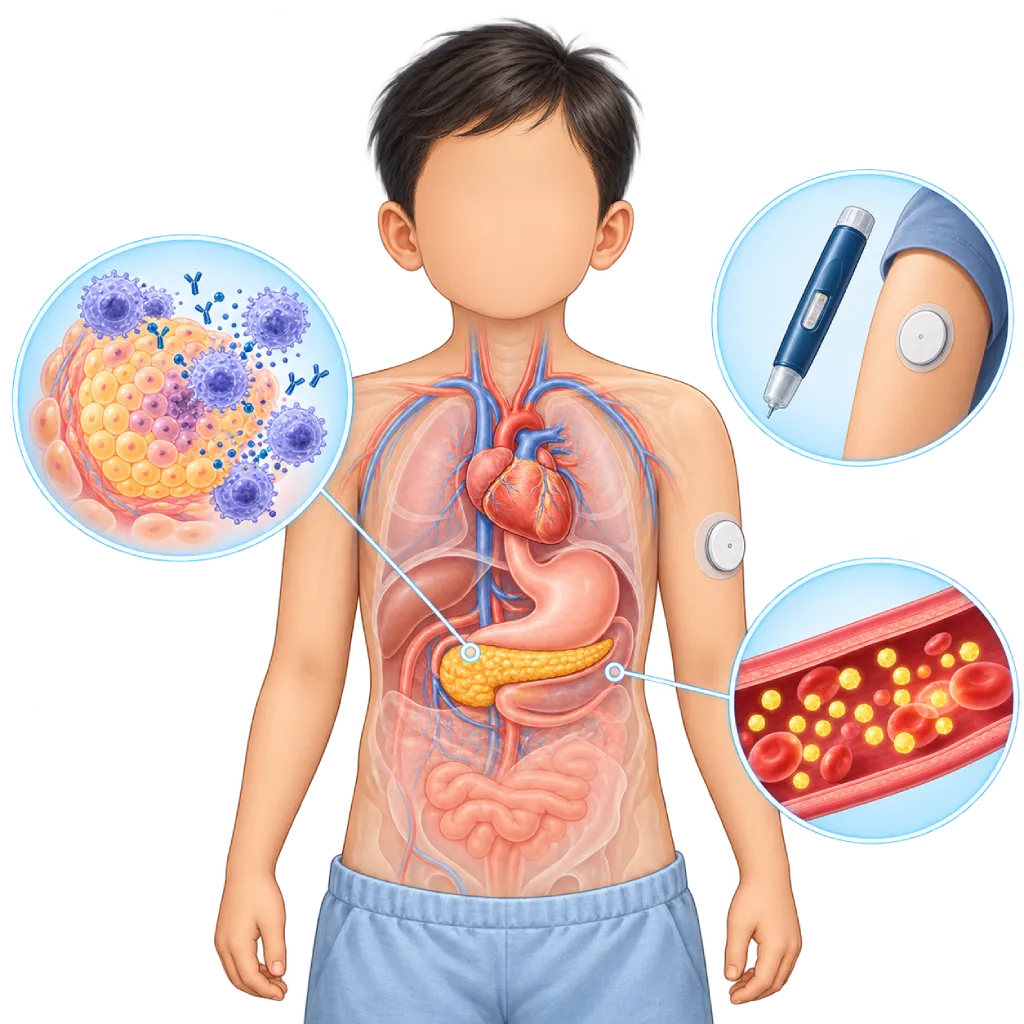
Type 1 diabetes is an autoimmune disease in which the immune system destroys the insulin-producing cells in the pancreas, so the body needs insulin from outside for life. It often appears in children and young adults, but it can occur at any age.
SourcesSigns That Need Urgent Help
- Nausea, vomiting, or abdominal pain
- Fast, deep breathing
- Breath that smells fruity or like acetone
- Extreme sleepiness, confusion, or being hard to wake
- Very dry mouth, urinating rarely, and severe weakness
- Shaking, cold sweats, confusion, or seizures because blood sugar is too low
- Fainting or loss of consciousness
If these signs appear, go to the nearest emergency department right away or call Heart Attack Center 1500 258.
01 / Understanding the condition
About Type 1 Diabetes
Type 1 diabetes is a type of diabetes mellitus, once known as juvenile diabetes. In this condition, the immune system mistakenly attacks beta cells, the cells in the pancreas that make insulin. Insulin is a hormone that helps sugar move from the blood into cells to be turned into energy. When the majority of beta cells are destroyed, the body makes almost no insulin, so sugar builds up in the blood while the cells are short of energy.
Type 1 diabetes is not caused by eating too much sugar or by any particular lifestyle. Its exact cause is not yet known; inherited factors and environmental triggers, such as certain viral infections, are thought to play a role. The disease often appears in children and teenagers, but it can also appear for the first time in adulthood.
It Develops in Stages
The autoimmune process can go on for months to years before symptoms appear. Experts divide it into three stages. In stages 1 and 2, pancreatic autoantibodies can already be detected in the blood, but there are no symptoms yet. In stage 3, symptoms such as extreme thirst, frequent urination, and weight loss start to be felt. In some people, the diagnosis is only made once diabetic ketoacidosis has already developed, which is a buildup of acids (ketones) in the blood that requires immediate care.
Link to the Heart and Blood Vessels
Because it starts at a young age, exposure to high blood sugar in type 1 diabetes can last for decades. This speeds up the buildup of plaque in artery walls, so coronary artery disease, heart attack, and stroke can appear at a younger age than in people without diabetes. The risk rises further when diabetes begins in childhood, blood sugar is often poorly controlled, or there is already kidney damage marked by albumin in the urine. High blood pressure, abnormal cholesterol, and smoking add further strain to the blood vessels.
Living an Active Life with Type 1 Diabetes
Insulin is given every day, by injection or insulin pump, along with blood sugar monitoring. A continuous glucose monitor helps track blood sugar throughout the day and night. With regular management, people with type 1 diabetes can go to school, work, exercise, and raise a family while keeping their blood vessels and heart healthy.
02 / Understanding the condition
Symptoms to Recognize.
Common Symptoms
Symptoms of type 1 diabetes usually appear and worsen over a few days to a few weeks.
- Urinating often and in large amounts
- Extreme thirst and drinking a lot
- Rapid weight loss despite eating a lot
- Tiring easily and feeling weak
- Blurred vision
- Irritability or mood swings
- Fungal (yeast) infections in the genital area
Symptoms in Children
In children, symptoms can be mistaken for flu or a stomach infection, so diabetes is sometimes only discovered once ketoacidosis has developed.
- Bedwetting again, especially at night, after having been dry
- Extreme thirst and constantly asking for drinks
- Weight loss or not gaining weight as expected for age
- Fussiness, lethargy, or declining school performance
- Diaper rash or repeated yeast infections in young children
03 / Understanding the condition
What Causes This Condition?
- The immune system attacks and destroys the insulin-producing beta cells of the pancreas
- Genetic susceptibility, especially certain HLA gene variants that run in families
- Environmental triggers thought to play a role, such as certain viral infections
- Beta cell damage that progresses gradually over months to years before symptoms appear
04 / Understanding the condition
Who Is at Higher Risk?
Genetic
Having a parent or sibling with type 1 diabetes, as well as carrying certain HLA gene variants, increases susceptibility.
Medical
Pancreatic autoantibodies in the blood, as well as other autoimmune diseases such as autoimmune thyroid disease or celiac disease.
Age
It often appears in school-age children and teenagers, but it can also appear for the first time in adulthood, so it is sometimes mistaken for type 2 diabetes.
Lifestyle
Lifestyle does not cause type 1 diabetes. However, smoking, excess weight, and lack of physical activity add to the risk of heart disease in people who have it.
Other
Certain viral infections and other environmental factors are thought to help trigger the autoimmune process, although the exact link has not been proven.
Groups at Higher Risk
- Children and Teenagers: Type 1 diabetes is often diagnosed in school-age children and teenagers, so parents need to recognize the symptoms early.
- Immediate Family of People with Type 1 Diabetes: Parents, children, or siblings of someone with the condition have a higher risk and can have autoantibody testing to detect the early stages.
- People with Other Autoimmune Diseases: Autoimmune thyroid disease, celiac disease, or vitiligo are found more often together with type 1 diabetes.
- People with Long-Term Type 1 Diabetes: The longer someone has diabetes, the more they need routine checks of the heart, kidneys, eyes, and nerves to find complications early.
05 / Understanding the condition
How Is It Diagnosed?
Doctors suspect type 1 diabetes when symptoms come on quickly, especially in children, teenagers, or young adults who are not overweight. Blood sugar and HbA1c tests confirm diabetes. If blood sugar is very high, the doctor promptly checks for ketones in the blood or urine to look for diabetic ketoacidosis, because this condition needs to be treated in a hospital.
To confirm the type, the doctor tests for pancreatic autoantibodies. A positive result points to the autoimmune process typical of type 1 diabetes. C-peptide helps show how much insulin the body is still making. This distinction matters because it determines treatment: type 1 diabetes requires insulin from the start.
After diagnosis, routine checks include regular HbA1c, blood pressure, cholesterol profile, kidney function and urine albumin, eyes, feet, and thyroid function. These checks help protect the heart and blood vessels over the long term.
Blood Sugar Test
A random blood sugar of 200 mg/dL or higher with typical symptoms, or a fasting blood sugar of 126 mg/dL or higher, indicates diabetes.
HbA1c Test
Reflects average blood sugar over two to three months. In type 1 diabetes that develops quickly, the value may not yet be very high, so blood sugar tests are still used.
Pancreatic autoantibody tests, such as GAD, IA-2, and ZnT8, to confirm the autoimmune process and distinguish it from type 2 diabetes.
A C-peptide test to assess how much insulin the body still produces on its own.
Urinalysis
Looks for sugar and ketones in the urine; together with blood ketone testing and blood gas analysis, it helps identify diabetic ketoacidosis.
Urine Protein Test
Urine albumin and kidney function are checked every year, generally starting five years after diagnosis, as markers of kidney and blood vessel health.
Cholesterol and Lipid Profile Screening
The cholesterol profile is checked once blood sugar is stable and regularly after that, to assess the risk of heart disease from a young age.
06 / Understanding the condition
Treatment Options.
Treatment is decided by a doctor after an assessment. The categories below can help you follow the conversation with your doctor.
Daily Insulin Therapy
Insulin is given every day through pen injections several times a day or an insulin pump. The type, schedule, and dose are set by your doctor and adjusted to your meals and activity.
Blood Sugar Monitoring
Measurements with a finger-prick meter or a continuous glucose monitor (CGM) help you and your doctor adjust insulin and keep blood sugar from dropping too low.
Automated Insulin Delivery
An insulin pump connected to a glucose sensor can adjust insulin delivery automatically. Your doctor will assess whether this system is suitable for you.
Meal Planning and Carbohydrate Counting
Learning to estimate the amount of carbohydrates in food with a dietitian, so insulin can be matched to portion sizes.
Education and Psychological Support
Education on sick days, exercise, and handling low blood sugar, as well as support for patients and families to ease the burden of living with diabetes.
Heart and Kidney Protection
Controlling blood pressure and cholesterol, including medicines such as statins or ACE inhibitors when needed, lowers the risk of heart and kidney disease. Your doctor decides when to start these medicines.
07 / Understanding the condition
Complications to Watch For.
Diabetic Ketoacidosis
A lack of insulin makes the body burn fat and produce ketones that make the blood acidic. Symptoms include nausea, vomiting, rapid breathing, and drowsiness, and it requires hospital care.
Severe Hypoglycemia
Blood sugar drops too low because of too much insulin, a delayed meal, or exercise without adjustment. It can cause confusion, seizures, or fainting if not treated promptly.
Coronary Artery Disease and Stroke
Plaque can form in the arteries earlier, so a heart attack or stroke can occur at a young age. Covered on the Coronary Artery Disease page.
Diabetic Kidney Disease
Damage to the small blood vessels in the kidneys is marked by albumin in the urine and adds to the risk of heart disease. Covered on the Chronic Kidney Disease page.
Diabetic Retinopathy
Damage to the blood vessels in the retina that can affect vision. Regular eye exams help detect it earlier.
Diabetic Neuropathy
Nerve damage that causes tingling, numbness, or pain in the feet, and can also affect the nerves that control heart rate and digestion.
08 / Understanding the condition
What Can You Do?
- There is no proven way to prevent type 1 diabetes yet; the focus is on preventing complications
- Use insulin every day according to your doctor's plan, including when you are sick
- Monitor your blood sugar regularly and learn the signs of low and high blood sugar
- Follow sick-day guidance and check ketones if your blood sugar is high or you are vomiting
- Do not smoke, stay active, and keep your blood pressure and cholesterol on target
- Have your eyes, kidneys, feet, thyroid, and heart checked regularly
- Immediate family members of people with type 1 diabetes can ask their doctor about autoantibody testing
09 / Understanding the condition
When Should You See a Doctor?
See a doctor promptly, for yourself or your child, if diabetes symptoms appear and develop quickly over a few days to weeks. Do not wait for symptoms to worsen, because type 1 diabetes can progress to ketoacidosis. If you have already been diagnosed, see your doctor on schedule and sooner if anything changes. Fast, deep breathing, persistent vomiting, extreme sleepiness, or confusion are reasons to go to the emergency room right away.
- Extreme thirst, frequent urination, or bedwetting again
- Weight loss without a clear cause
- Frequently high blood sugar or positive ketones
- Frequent low blood sugar, especially at night
- Illness, fever, or vomiting that makes it hard to eat and drink
Don't Wait in an Emergency.
If symptoms are severe or come on suddenly, go to the nearest emergency department right away or call Heart Attack Center 1500 258, rather than waiting for an appointment.
10 / Common questions
Questions You May Have.
Frequently asked questions about type 1 diabetes.
Is type 1 diabetes caused by eating too much sugar?
No. Type 1 diabetes happens because the immune system destroys the insulin-producing cells in the pancreas. Inherited factors and environmental triggers are thought to play a role, but diet or lifestyle is not the cause. Parents do not need to blame themselves if their child is diagnosed. Diet is still important after diagnosis, because the amount of carbohydrates affects how much insulin is needed.
Can type 1 diabetes be prevented or cured?
There is currently no proven way to prevent or cure type 1 diabetes. Research on detecting the early stages through autoantibody tests and on medicines to delay the onset of symptoms continues to advance, and some of this is already in use in several countries. What can be done now is to manage blood sugar with insulin and regular monitoring, so complications in the heart, kidneys, eyes, and nerves can be prevented.
Can people with type 1 diabetes switch to oral medicines?
No. Because the body makes almost no insulin, insulin from outside is still needed every day. Oral medicines for type 2 diabetes cannot replace it. Insulin must not be stopped on your own, including when you are sick and finding it hard to eat, because this can trigger ketoacidosis. If you have difficulty using insulin, talk with your doctor to find a method or device that suits you better.
Why do people with type 1 diabetes need heart checkups?
Type 1 diabetes often starts in childhood, so the blood vessels are exposed to high blood sugar for decades. A large study in Sweden in 2018 showed that heart disease in people with type 1 diabetes can appear much earlier, especially when diabetes begins at a young age. Regular checks of blood pressure, cholesterol, urine albumin, and the heart help find problems early.
Can a child with type 1 diabetes exercise?
Yes, and exercise is encouraged because it is good for the heart, body weight, and mood. Exercise can lower blood sugar during activity and for several hours afterward, so preparation is needed: check blood sugar before and after, bring a sugary snack, and adjust insulin according to your doctor's plan. Tell teachers or coaches about the signs of low blood sugar and how to help.
What should you do when blood sugar drops too low?
If shaking, cold sweats, hunger, or confusion appear, check blood sugar right away if possible, then take fast-acting sugar such as glucose tablets, juice, or a sweet drink according to your doctor's plan. Check again after a few minutes. If the person is unconscious, having a seizure, or unable to swallow, do not give anything by mouth and call emergency services right away.
Sources and Medical Review
Translated from the Indonesian edition medically reviewed by dr. Tartila, Sp.A, Subsp.ETIA(K).
Sources as cited in the Indonesian edition.
- American Diabetes Association Professional Practice Committee for Diabetes. 2. Diagnosis and Classification of Diabetes: Standards of Care in Diabetes, 2026. Diabetes Care. 2026;49(Suppl 1):S27-S49.
- Holt RIG, DeVries JH, Hess-Fischl A, Hirsch IB, Kirkman MS, Klupa T, et al. The Management of Type 1 Diabetes in Adults. A Consensus Report by the American Diabetes Association (ADA) and the European Association for the Study of Diabetes (EASD). Diabetes Care. 2021;44(11):2589-2625.
- Libman I, Haynes A, Lyons S, Pradeep P, Rwagasor E, Tung JY, et al. ISPAD Clinical Practice Consensus Guidelines 2022: Definition, epidemiology, and classification of diabetes in children and adolescents. Pediatr Diabetes. 2022;23(8):1160-1174.
- Glaser N, Fritsch M, Priyambada L, Rewers A, Cherubini V, Estrada S, et al. ISPAD clinical practice consensus guidelines 2022: Diabetic ketoacidosis and hyperglycemic hyperosmolar state. Pediatr Diabetes. 2022;23(7):835-856.
- Phillip M, Achenbach P, Addala A, Albanese-O'Neill A, Battelino T, Bell KJ, et al. Consensus Guidance for Monitoring Individuals With Islet Autoantibody-Positive Pre-Stage 3 Type 1 Diabetes. Diabetes Care. 2024;47(8):1276-1298.
- Rawshani A, Sattar N, Franzén S, Rawshani A, Hattersley AT, Svensson AM, et al. Excess mortality and cardiovascular disease in young adults with type 1 diabetes in relation to age at onset: a nationwide, register-based cohort study. Lancet. 2018;392(10146):477-486.
Doctors Who Treat This Condition

dr. Debby C. Soemitha, Sp.PD
Internal Medicine
Clinical focusDiabetes and Diabetes Complications · Obesity and Metabolic Disease
View Profile
dr. Tartila, Sp.A, Subsp.ETIA(K)
Pediatric Emergency and Intensive Care
Congenital and Structural Heart Center
Clinical focusPediatric Intensive Care · Pediatric Emergency Care
View Profile
Dr. med. dr. Denio A. Ridjab, Sp.JP(K)
Interventional Cardiology
Coronary Intervention Procedures +2 centers
Clinical focusInterventional Cardiology · Coronary Artery Disease
View Profile