
Quick answer
What Is Cardiogenic Shock?
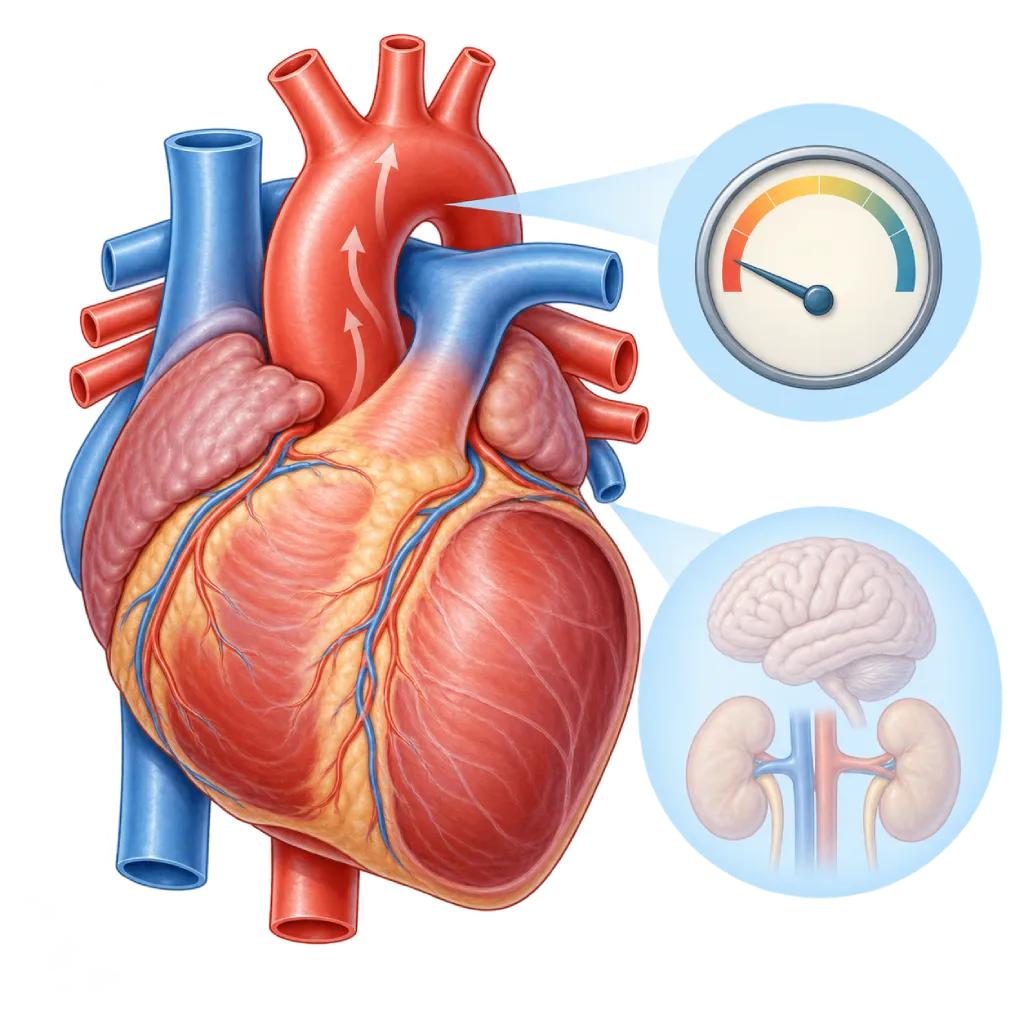
Cardiogenic shock is an emergency in which the heart suddenly cannot pump enough blood, so blood pressure drops and the organs do not get enough oxygen. A common cause is a large heart attack, and treatment takes place in an intensive care unit.
Sources01 / Understanding the condition
About Cardiogenic Shock
Cardiogenic shock occurs when the heart suddenly becomes too weak to pump enough blood to the whole body. Blood pressure drops, usually with the top number below 90 mmHg, and vital organs such as the brain, kidneys, and liver begin to run short of oxygen. Signs include cold, clammy skin, reduced consciousness, and passing very little urine. Cardiogenic shock is the severe end of acute heart failure, which is covered on the Acute Heart Failure page. This condition always requires hospital treatment, usually in a cardiac intensive care unit.
What Causes It
A common cause is a heart attack that damages a large part of the muscle of the left ventricle. The more muscle is damaged, the weaker the pumping becomes. Severe worsening of long-standing heart failure is now also a frequent cause. Other causes include a tear in the wall between the ventricles or in the muscle that supports a valve after a heart attack, severe inflammation of the heart muscle, a valve problem that suddenly gets worse, and a heart rhythm that is very fast or very slow. Shock caused by blocked blood flow, such as in a massive pulmonary embolism or cardiac tamponade, looks similar but is treated differently; shock in general is covered on the Hypotensive Shock page.
A Cycle That Needs to Be Broken Quickly
When the pump weakens, blood pressure drops and blood flow to the heart muscle itself also decreases. The heart muscle becomes even more starved of oxygen and even weaker, so blood pressure drops further. This cycle can progress quickly. That is why treatment aims to break it as soon as possible: opening the blocked artery if the cause is a heart attack, supporting blood pressure with medicines, and, if needed, supporting the heart's work with a device.
Stages of Severity
Doctors classify cardiogenic shock into five SCAI stages, from A (at risk, for example a large heart attack with blood pressure that is still normal) to E (very severe, with circulation close to failing). This classification helps the team decide how intensive the treatment needs to be and when mechanical circulatory support should be considered. With prompt treatment, many patients can get through the critical period and recover gradually.
02 / Understanding the condition
Symptoms to Recognize.
Common Symptoms
These signs show that the organs are not getting enough blood. They are often preceded by chest pain or worsening shortness of breath.
- Pale, cold, and clammy skin, especially on the hands and feet
- Severe shortness of breath or fast, shallow breathing
- Restlessness, confusion, or difficulty holding a conversation
- Fast but weak pulse
- Passing very little urine
- Severe weakness, to the point of having difficulty standing
- Chest pain if the cause is a heart attack
Symptoms in Older Adults
In older age, the early sign of shock is often a change in alertness without obvious chest pain.
- Confusion or disorientation that appears suddenly
- Severe drowsiness and difficulty waking up
- Sudden weakness without chest pain
- Shortness of breath that gets worse quickly
03 / Understanding the condition
What Causes This Condition?
- A large heart attack that damages a large part of the left ventricular muscle, covered on the Myocardial Infarction / Heart Attack page.
- Severe worsening of long-standing heart failure
- A tear in the wall between the ventricles, in the heart wall, or in the muscle that supports the mitral valve after a heart attack
- Severe inflammation of the heart muscle, covered on the Myocarditis page.
- A severe valve problem that appears or gets worse suddenly, for example due to a valve infection
- A heart rhythm that is very fast or very slow for a long time
- Takotsubo cardiomyopathy, cardiomyopathy around the time of childbirth, or poisoning with medicines that suppress the heart's work
04 / Understanding the condition
Who Is at Higher Risk?
Medical
A large heart attack, especially in the front wall of the heart, long-standing heart failure, a previous heart attack, diabetes, and chronic kidney disease.
Age
The risk is higher over the age of 75, because the heart and other organs have smaller reserves of strength.
Other
Arriving late at the hospital during a heart attack. The longer the artery stays blocked, the more heart muscle is damaged and the higher the risk of shock.
Lifestyle
Smoking, uncontrolled blood pressure and cholesterol, and not taking heart failure medicines regularly increase the risk of conditions that can lead to shock.
Groups at Higher Risk
- People with a Large Heart Attack: Damage to a large part of the heart wall, especially the front wall, raises the risk of sudden pump failure.
- People with Advanced Heart Failure: Severe worsening of long-standing heart failure is now an increasingly common cause of cardiogenic shock.
- Older Adults: Especially those over 75. The heart, kidneys, and other organs have smaller reserves, and heart attack symptoms are often vague, so people arrive late.
- People with Diabetes: Heart attacks in people with diabetes are more often large and have vague symptoms, so the risk of shock is higher.
05 / Understanding the condition
How Is It Diagnosed?
Cardiogenic shock is diagnosed from a combination of low blood pressure and signs that the organs are not getting enough blood, such as cold skin, reduced consciousness, low urine output, and a high blood lactate level. Testing happens at the same time as treatment: while placing an IV line, giving oxygen, and attaching monitors, the doctor records an ECG and performs a bedside echocardiogram to look for the cause.
If the ECG or troponin shows a heart attack, the patient is taken right away to the catheterization lab for coronary angiography and opening of the artery. Echocardiography can also find a torn septum, severe valve leakage, or fluid in the sac around the heart that requires other procedures. During intensive care, the pressures inside the heart can be measured with a right heart catheter, and blood tests are repeated regularly to assess whether the organs are starting to recover. The team classifies the severity of shock according to the SCAI stages to tailor treatment.
Electrocardiogram (ECG)
Recorded as soon as the patient arrives to look for signs of a heart attack or a rhythm disorder as the cause.
Echocardiography
A bedside heart ultrasound to assess pumping strength, the valves, the septum, and fluid in the sac around the heart, so that the cause is found quickly.
Cardiac Troponin Test
A troponin blood test to show damage to the heart muscle, for example from a heart attack or myocarditis.
Laboratory Tests
Blood lactate, kidney and liver function, electrolytes, and blood gases to assess how severely the organs are lacking blood.
Coronary Angiography
Done right away if the shock is caused by a heart attack, and used at the same time to open the blocked artery.
Right Heart Catheterization
Measures the pressures inside the heart and lungs and the amount of blood pumped, to guide medicines and circulatory support devices.
Chest X-Ray
Shows fluid in the lungs and the size of the heart, as well as the position of tubes and catheters during intensive care.
06 / Understanding the condition
Treatment Options.
Treatment is decided by a doctor after an assessment. The categories below can help you follow the conversation with your doctor.
Intensive Care and Breathing Support
Close monitoring in the intensive care unit, oxygen, and a breathing machine if needed, while keeping the body's fluid and salt balance in check.
Medicines to Raise Blood Pressure and Strengthen the Pump
Vasopressors raise blood pressure and inotropes strengthen the heart's contractions. The type and dose are closely adjusted by the intensive care team based on the patient's response.
Urgent Opening of the Coronary Artery
If the cause is a heart attack, the culprit artery is opened as soon as possible with a catheter. The CULPRIT-SHOCK study showed that opening only the culprit artery is safer in the early stage.
Mechanical Circulatory Support
A small pump inserted through a blood vessel or an ECMO machine supports the heart's work temporarily. It is chosen for certain patients because it also carries a risk of bleeding and reduced blood flow to the legs.
Treating Other Causes
Surgery for a torn septum or valve, an electric shock or pacing for rhythm problems, and specific treatment for drug poisoning, depending on the cause.
Advanced Therapy for a Heart That Does Not Recover
A long-term mechanical heart pump (LVAD) or a heart transplant is considered for certain patients whose heart does not recover after the critical period.
07 / Understanding the condition
Complications to Watch For.
Acute Kidney Injury
Kidneys that do not get enough blood do not filter well. Some patients need temporary dialysis until kidney function recovers.
Other Organ Problems
The liver, intestines, and brain can also be affected if low blood flow lasts a long time, so their recovery is monitored step by step.
Rhythm Problems and Cardiac Arrest
Weak, oxygen-starved heart muscle easily triggers dangerous rhythms that need an electric shock or chest compressions.
Device and Intensive Care Complications
Circulatory support devices, catheters, and breathing machines can cause bleeding, reduced blood flow to the legs, or infection, so they are closely monitored.
Long-Term Heart Failure
Many survivors are left with a weak heart pump and need heart failure medicines, rehabilitation, and regular checkups.
08 / Understanding the condition
What Can You Do?
- Know the signs of a heart attack and go to the emergency room right away; the sooner the artery is opened, the lower the risk of shock.
- If you have heart failure, take your medicines as prescribed and attend regular checkups.
- Weigh yourself every morning if you have heart failure, and report rapid weight gain or worsening shortness of breath.
- Control your blood pressure, cholesterol, and blood sugar, and quit smoking.
- Do not stop or change your heart medicines on your own without talking to your doctor.
09 / Understanding the condition
When Should You See a Doctor?
Cardiogenic shock is always an emergency. If someone with chest pain or shortness of breath looks pale, has cold and clammy skin, is confused, or is very weak, call an ambulance (119) or take them to the nearest emergency room right away. If they are unconscious and not breathing normally, start chest compressions in the center of the chest and use an AED if one is available nearby.
After going home from the hospital, contact your cardiologist or get checked right away if:
- Your shortness of breath gets worse, especially when lying down.
- Your weight goes up by more than 2 kg in 3 days or your legs become more swollen.
- You feel dizzy, have palpitations, or faint.
- You pass noticeably less urine or feel very weak.
10 / Common questions
Questions You May Have.
Frequently asked questions about cardiogenic shock.
How is cardiogenic shock different from ordinary heart failure?
In heart failure, the heart's pumping is weakened but the body can still adjust, so blood pressure and blood flow to the organs are generally adequate. In cardiogenic shock, the pump is so severely weakened that blood pressure drops and organs such as the brain and kidneys do not get enough blood. Cardiogenic shock is the severe end of acute heart failure and is always treated in the intensive care unit.
Is cardiogenic shock the same as a heart attack?
They are not the same, but they are related. A heart attack is a blockage in a coronary artery that damages the heart muscle. If the damage is extensive, the heart's pumping can fail, leading to cardiogenic shock. Only a small proportion of heart attacks lead to shock, especially when treatment is delayed. Cardiogenic shock can also be caused by other things, such as worsening heart failure or inflammation of the heart muscle.
Is cardiogenic shock the same as ordinary fainting?
No. Ordinary fainting, for example from standing too long or seeing blood, happens because blood pressure drops briefly, and the person comes around within seconds to minutes after lying down. In cardiogenic shock, blood pressure stays low because the heart's pump is failing, along with cold skin, shortness of breath, and confusion that do not improve by lying down. This condition needs immediate treatment in the emergency room.
What is mechanical circulatory support?
Mechanical circulatory support is a device that takes over part of the heart's work temporarily. Examples include a small pump inserted through a blood vessel in the groin up to the left ventricle, and an ECMO machine that circulates the blood and adds oxygen to it outside the body. These devices give the heart time to recover, but they can cause bleeding and reduced blood flow to the legs, so they are chosen for certain patients.
Can people with cardiogenic shock recover?
Many patients can get through the critical period, especially when the cause is treated quickly, for example when a blocked artery is opened right away. Recovery is usually gradual: from the intensive care unit to a regular ward, then cardiac rehabilitation. Some survivors are left with a weak heart pump and need long-term heart failure medicines. The medical team will explain the progress and expected recovery based on each patient's situation.
What can the family do while the patient is in intensive care?
Choose one family member as the contact person for the medical team, and prepare the patient's list of medicines, medical history, and previous test results. Ask about the stage of severity, the purpose of each procedure, and the next steps. If the team discusses circulatory support devices or other major procedures, ask for an explanation of the benefits and risks. Also take care of your own health, because the hospital stay can last several days to weeks.
Sources and Medical Review
Translated from the Indonesian edition medically reviewed by Dr. dr. Jajang Sinardja, Sp.JP(K).
Sources as cited in the Indonesian edition.
- van Diepen S, Katz JN, Albert NM, Henry TD, Jacobs AK, Kapur NK, et al. Contemporary Management of Cardiogenic Shock: A Scientific Statement From the American Heart Association. Circulation. 2017;136(16):e232-68.
- Chioncel O, Parissis J, Mebazaa A, Thiele H, Desch S, Bauersachs J, et al. Epidemiology, Pathophysiology and Contemporary Management of Cardiogenic Shock: A Position Statement from the Heart Failure Association of the European Society of Cardiology. Eur J Heart Fail. 2020;22(8):1315-41.
- Naidu SS, Baran DA, Jentzer JC, Hollenberg SM, van Diepen S, Basir MB, et al. SCAI SHOCK Stage Classification Expert Consensus Update: A Review and Incorporation of Validation Studies. J Am Coll Cardiol. 2022;79(9):933-46.
- McDonagh TA, Metra M, Adamo M, Gardner RS, Baumbach A, Bohm M, et al. 2021 ESC Guidelines for the diagnosis and treatment of acute and chronic heart failure. Eur Heart J. 2021;42(36):3599-726.
- Byrne RA, Rossello X, Coughlan JJ, Barbato E, Berry C, Chieffo A, et al. 2023 ESC Guidelines for the management of acute coronary syndromes. Eur Heart J. 2023;44(38):3720-826.
- Thiele H, Akin I, Sandri M, Fuernau G, de Waha S, Meyer-Saraei R, et al. PCI Strategies in Patients with Acute Myocardial Infarction and Cardiogenic Shock. N Engl J Med. 2017;377(25):2419-32.
- Moller JE, Engstrom T, Jensen LO, Eiskjaer H, Mangner N, Polzin A, et al. Microaxial Flow Pump or Standard Care in Infarct-Related Cardiogenic Shock. N Engl J Med. 2024;390(15):1382-93.
Doctors Who Treat This Condition

dr. Siska S. Danny, Sp.JP(K)
Interventional Cardiology
Coronary Intervention Procedures
Clinical focusPCI for Acute Coronary Syndrome · Primary Coronary Intervention
View Profile
Dr. dr. Jajang Sinardja, Sp.JP(K)
Interventional Cardiology
Coronary Intervention Procedures
Clinical focusAcute Coronary Syndrome · Primary Coronary Intervention
View Profile
dr. Widya T. Suwatri, Sp.BTKV, Subsp. JD(K)
Adult Cardiac Surgery
Advanced Cardiovascular Surgical Care +1 center
Clinical focusMinimally Invasive Cardiac Surgery · Coronary Artery Bypass Surgery
View Profile