
Quick answer
What Is Percutaneous Coronary Intervention?
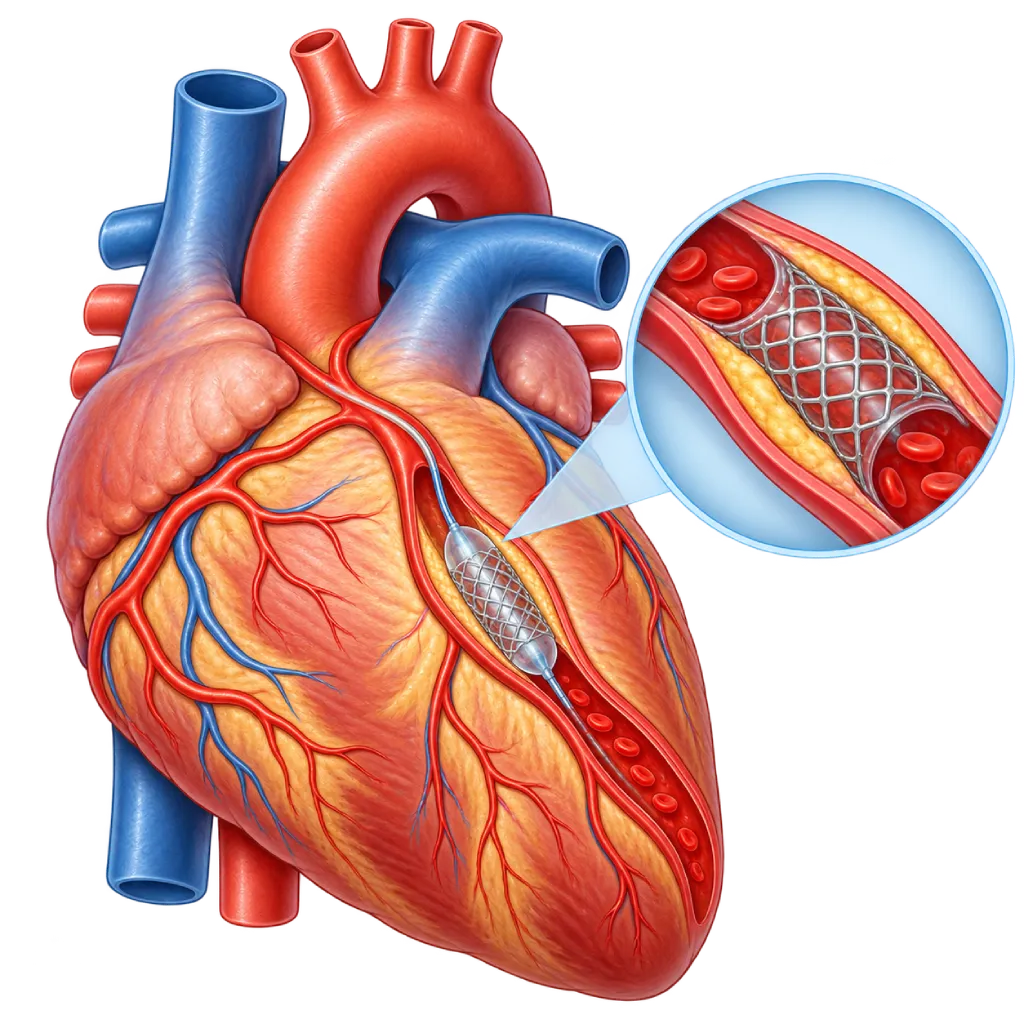
Percutaneous coronary intervention (PCI) is a procedure that opens a narrowed or blocked coronary artery through a catheter from the wrist or groin, without opening the chest. The doctor widens the artery with a balloon and usually places a stent. PCI is planned or done as an emergency during a heart attack, taking about 30 minutes to 2 hours.
Sources01 / Understanding the procedure
About Percutaneous Coronary Intervention
What Is Percutaneous Coronary Intervention (PCI)
Percutaneous coronary intervention, abbreviated PCI, is the medical name for all procedures that open a narrowed or blocked coronary artery from inside the blood vessel. The coronary arteries are the vessels that carry blood to the heart muscle. Percutaneous means through a small puncture in the skin, usually at the wrist or groin, so the chest does not need to be opened. Many people in Indonesia call this procedure getting a "ring".
The core of PCI is widening the artery with a balloon and then placing a stent, a small metal mesh tube that supports the artery wall. Details of the balloon and stent are covered on the Coronary Angioplasty page. The sections below cover the bigger picture: when PCI is done, the tools that can be used, and other options.
Emergency PCI During a Heart Attack
In a heart attack with a total blockage (STEMI), PCI is performed as soon as possible to open the blocked artery. Guidelines recommend opening the artery within less than 2 hours of diagnosis when possible, because the sooner blood flow is restored, the less heart muscle is damaged. In a heart attack without a total blockage (NSTEMI) and in unstable angina, catheterization is usually done within 24 hours in high-risk patients, followed by PCI if the narrowing causing it is found.
Planned PCI in Stable Coronary Artery Disease
In stable coronary artery disease, PCI is scheduled when chest pain remains troublesome even though medications are taken regularly, or when tests show that a large area of heart muscle is not getting enough blood. The large ISCHEMIA trial showed that in many stable patients, opening the arteries early, with PCI or bypass, did not lower the risk of heart attack or death compared with medications and a healthy lifestyle, but relieved chest pain more. For this reason, medications remain the foundation of treatment, which is covered on the Coronary Artery Disease Management page.
Supporting Tools in PCI
Before placing a stent, the doctor can measure the flow pressure inside the artery with FFR or iFR to confirm that the narrowing truly limits blood flow. Imaging from inside the vessel with IVUS, which uses sound waves, or OCT, which uses light, helps choose the stent size and check the result; OCT is covered on the Optical Coherence Tomography page. Hard calcium in the artery wall can be shaved away with a tiny drill, covered on the Rotational Atherectomy (Rotablation) page, or cracked with a shock wave balloon (intravascular lithotripsy). A long-standing total blockage (CTO) requires special wires and techniques.
PCI or Bypass Surgery
For narrowings in the left main coronary artery or in three main vessels, especially in people with diabetes or reduced heart pumping function, bypass surgery often gives better long-term results. This option is covered on the Coronary Artery Bypass Grafting (CABG) page. The decision is made together with the heart team, namely the interventional cardiologist and the cardiac surgeon, taking into account the pattern of the narrowings, other conditions, and your preferences.
After PCI
After a stent is placed, two antiplatelet medications are taken together for several months to prevent clots inside the stent, then usually one medication long term. Cholesterol medication, risk factor control, and cardiac rehabilitation help prevent another heart attack.
02 / Understanding the procedure
When Is This Procedure Considered?
A doctor may consider this procedure in the situations below. The decision is always made after a thorough assessment.
- Heart Attack with Total BlockageIn STEMI, emergency PCI opens the blocked artery as quickly as possible to limit damage to the heart muscle.
- Heart Attack Without Total BlockageIn NSTEMI and unstable angina, PCI is performed if catheterization finds the narrowing causing it.
- Angina That Remains TroublesomeChest pain keeps limiting your activities even though medications are taken regularly.
- Widespread Ischemia on TestingAn exercise test or imaging shows that a large area of heart muscle is not getting enough blood flow.
- Renarrowing in a Stent or GraftA narrowing inside an old stent or in a bypass graft can be reopened through a catheter.
- Long-Standing Total BlockageA chronic total occlusion (CTO) that causes symptoms can be opened with special catheter techniques in selected patients.
Situations to Consider First
- Narrowing That Does Not Limit Blood FlowIf FFR or iFR results are normal, a stent usually gives no added benefit compared with medications.
- Extensive and Complex Coronary DiseaseIn the left main coronary artery or three vessels, especially with diabetes, bypass surgery is often more suitable.
- Unable to Take Antiplatelet MedicationA very high bleeding risk or major surgery planned in the near future needs to be discussed before a stent is placed.
- Severe Contrast Allergy or Kidney ProblemsThese do not always rule out the procedure, but they require special preparation and limiting the amount of contrast dye.
- Active Infection or BleedingFor planned PCI, infection, severe anemia, or active bleeding is usually treated first.
03 / Before the procedure
How Should You Prepare?
Preparation depends on your situation. During a heart attack, the team prepares you as quickly as possible in the emergency room. For planned PCI, the team gives you instructions a few days beforehand.
Tests before the procedure. Blood tests, including kidney function and blood clotting, an ECG, and if needed an echocardiogram. Bring the results of any previous coronary angiography, coronary CT, or exercise test.
Medications. Bring a list of all your medications and supplements. You will usually be asked to start taking antiplatelet medication before the procedure. Other blood thinners and some diabetes medications such as metformin may need to be adjusted. Do not change any medication without your doctor's instructions.
Allergies and kidneys. Tell the team if you have ever had an allergy to contrast dye or have kidney disease, so that anti-allergy medication or IV fluids can be prepared.
Fasting. Follow the fasting instructions from the team, usually for a few hours before the procedure.
Consent to the procedure. The doctor explains the plan, including the possibility that PCI is performed right after catheterization and the use of tools such as FFR, IVUS, or OCT.
Companion. Arrange for a family member to accompany you, because you must not drive yourself after the procedure.
Unsure about the preparation instructions? Ask our team before the procedure.
04 / During the procedure
How Is the Procedure Done?
PCI is performed in the cardiac catheterization room (cath lab) by an interventional cardiologist together with nurses and radiographers. You stay awake under local anesthesia, sometimes with a mild sedative. The procedure usually takes 30 minutes to 2 hours, longer for complex narrowings or a long-standing total blockage.
Access and Angiography
After the skin is numbed, a short tube is inserted into an artery in the wrist or groin. The catheter is guided to the origin of the coronary arteries, and contrast dye is injected to map the narrowings with X-rays.
Assessing the Narrowing
If the severity of a narrowing is uncertain, the doctor measures the flow pressure with FFR or iFR, or looks from inside the vessel with IVUS or OCT, before deciding whether to place a stent.
Opening the Artery
A very thin wire is passed across the narrowing. If needed, calcium is shaved or cracked first. A balloon is then inflated, and a stent is placed and pressed against the artery wall. You may feel brief chest pain as the balloon inflates.
Confirming the Result
Angiography is repeated. For complex narrowings, IVUS or OCT is used to make sure the stent is fully expanded and sits firmly against the artery wall.
Closing the Access Point
The catheter is removed. A compression band is placed on the wrist, while the groin is pressed or closed with a special closure device.
05 / Benefits and risks
Benefits and Risks Should Be Discussed Together.
Every medical procedure has benefits and risks. Your doctor will explain both for your situation before the procedure.
Benefits You Can Expect
- Blood Flow Restored Without Opening the ChestThe artery is opened from inside through a small puncture in the wrist or groin under local anesthesia.
- Limits Damage During a Heart AttackPCI performed promptly in STEMI limits the extent of heart muscle damage and lowers the risk of death.
- Relieves Chest PainIn stable coronary artery disease, PCI helps reduce angina and improve your ability to be active.
- Decisions Based on MeasurementFFR, iFR, IVUS, and OCT help ensure that a stent is placed when needed and in a suitable size.
- Relatively Short RecoveryAfter planned PCI, many patients go home the next day and return to work in about one week.
The benefits of a procedure are not a promise of a cure. Ask how the results will affect your care plan.
Risks You Should Know
- Bleeding or Bruising at the Puncture SiteUsually mild; access through the wrist carries a lower risk of bleeding than access through the groin.
- Contrast Reaction or Kidney ProblemsContrast dye can trigger an allergy or temporarily reduce kidney function, especially in people with kidney disease.
- Coronary Artery InjuryThe artery wall can tear or, very rarely, be perforated; this can usually be managed during the procedure.
- Heart Attack, Stroke, or Rhythm DisturbancesThese are rare during or after the procedure, and the team monitors you throughout.
- Clot or Renarrowing in the StentA clot is more likely if antiplatelet medication is stopped too early; renarrowing can appear years later.
- Emergency SurgeryVery rarely needed, namely when a complication cannot be managed through the catheter.
Risks can differ from person to person. A full explanation and consent are given after an individual assessment.
06 / After the procedure
What Is Recovery Like?
Recovery after planned PCI is usually quick. After a heart attack, the length of care depends more on the condition of your heart.
The first few hours. Your blood pressure, heart rhythm, and puncture site are monitored. If the puncture was in the groin, you lie with your leg straight for several hours.
Length of stay. After planned PCI, many patients go home the next day. After a heart attack, the hospital stay is usually several days.
Antiplatelet medication. Take two antiplatelet medications as advised by your doctor, usually for several months to one year. Do not stop them on your own, including before a tooth extraction or surgery, because the stent can become blocked by a clot.
Returning to activities. For a few days, avoid lifting heavy objects with the hand or leg used for the puncture. Many people return to work about one week after planned PCI; after a heart attack, the timing is decided by the doctor.
Rehabilitation and lifestyle. Join a cardiac rehabilitation program, take your cholesterol medication, stop smoking, and control your blood pressure and blood sugar.
Warning signs to watch for. Go to the emergency room right away if you experience:
- Chest pain, pressure, or shortness of breath
- Bleeding from the puncture site that does not stop after pressing, or a lump that grows quickly
- The hand or leg used for the puncture becomes cold, pale, tingly, or very painful
- Black stools, vomiting blood, or widespread bruising while taking antiplatelet medication
- Fainting, an irregular pounding heartbeat, or weakness on one side of the body
Know the Signs That Need Prompt Care.
Follow the team's guidance on warning signs. If severe or sudden symptoms appear after the procedure, go to the nearest emergency department right away or call Heart Attack Center 1500 258.
07 / Team and support
Doctors and Procedure Support
The doctors below are listed for this procedure. Listed by name, not by ranking.

dr. Adrianus Kosasih, Sp.JP(K)
Interventional Cardiology
Coronary Intervention Procedures
Clinical focusPrimary Coronary Intervention · PCI for Acute Coronary Syndrome
View Profile
Dr. dr. Dafsah A. Juzar, Sp.JP(K)
Interventional Cardiology
Coronary Intervention Procedures +1 center
Clinical focusComplex Coronary Intervention · Cardiac Catheterization
View Profile
Dr. med. dr. Denio A. Ridjab, Sp.JP(K)
Interventional Cardiology
Coronary Intervention Procedures +2 centers
Clinical focusInterventional Cardiology · Coronary Artery Disease
View ProfileRotational Atherectomy System
A system for treating calcified plaque in the coronary arteries. A small diamond-coated burr spins at high speed over a guidewire…
Physiologic Testing System (FFR / iFR)
Measurement of blood pressure inside the coronary artery during catheterization, using a wire with a pressure sensor, to assess…
Intravascular Lithotripsy (IVL) System
A special balloon catheter that emits pulses of sonic pressure waves to crack calcium in the coronary artery wall. It is used…
Intracoronary Imaging System (IVUS / OCT)
Imaging from inside the coronary artery using ultrasound (IVUS) or near-infrared light (OCT). It is used during catheterization…
The availability of technology and test support is confirmed with the team. Technology is chosen according to clinical need.
08 / Common questions
Before You Plan the Procedure.
Questions patients and families often ask about percutaneous coronary intervention (PCI).
What is the difference between PCI, coronary angioplasty, and getting a "ring"?
The three are closely related. PCI is the medical name for all procedures that open a coronary artery through a catheter. Coronary angioplasty is the widening of the artery with a balloon, which is almost always followed by stent placement. Getting a "ring" is the everyday term people in Indonesia use for a stent. Details of the balloon and stent are covered on the Coronary Angioplasty page.
Why must PCI be done as quickly as possible during a heart attack?
When a coronary artery is completely blocked, the heart muscle beyond it starts to be damaged within minutes to hours. The sooner the artery is opened, the more heart muscle is saved and the lower the risk of heart failure later on. For this reason, if severe chest pain lasts more than 15 minutes, go to the emergency room right away or call emergency services.
Does every narrowing need a stent?
No. A narrowing that does not limit blood flow can usually be treated with medications. If its severity is uncertain, the doctor can measure it with FFR or iFR. In stable coronary artery disease, the ISCHEMIA trial showed that medications and a healthy lifestyle remain the foundation of treatment, while PCI mainly helps when chest pain remains troublesome.
Is PCI painful?
You stay awake with local anesthesia at the puncture site, so what you feel is usually only the anesthetic injection. You cannot feel the catheter moving inside the blood vessel. When the contrast dye goes in, you may feel warm for a moment, and brief chest pain may occur when the balloon is inflated. Tell the team if you feel any discomfort so it can be treated right away.
When does the doctor recommend bypass surgery instead of PCI?
Bypass surgery is often more suitable when the narrowing is in the left main coronary artery or in all three main vessels, especially in people with diabetes or reduced heart pumping function. In these situations, bypass reduces the need for repeat procedures and, in some patients, extends life expectancy. The heart team discusses both options with you.
How long do I need to take medication after PCI?
Two antiplatelet medications are usually taken together for several months to about one year, followed by one medication long term. The duration is decided by your doctor based on the reason for the procedure and your bleeding risk. Cholesterol medication and other medications are also still needed, because a stent only opens one section of the artery and does not cure the disease.
Sources and Medical Review
Translated from the Indonesian edition medically reviewed by Dr. dr. Jajang Sinardja, Sp.JP(K).
Sources as cited in the Indonesian edition.
- Lawton JS, Tamis-Holland JE, Bangalore S, et al. 2021 ACC/AHA/SCAI Guideline for Coronary Artery Revascularization: A Report of the American College of Cardiology/American Heart Association Joint Committee on Clinical Practice Guidelines. Circulation. 2022;145(3):e18-e114.
- Byrne RA, Rossello X, Coughlan JJ, et al. 2023 ESC Guidelines for the management of acute coronary syndromes. Eur Heart J. 2023;44(38):3720-3826.
- Vrints C, Andreotti F, Koskinas KC, et al. 2024 ESC Guidelines for the management of chronic coronary syndromes. Eur Heart J. 2024;45(36):3415-3537.
- Maron DJ, Hochman JS, Reynolds HR, et al. Initial Invasive or Conservative Strategy for Stable Coronary Disease. N Engl J Med. 2020;382(15):1395-1407.
- Tonino PAL, De Bruyne B, Pijls NHJ, et al. Fractional Flow Reserve versus Angiography for Guiding Percutaneous Coronary Intervention. N Engl J Med. 2009;360(3):213-224.
- Stone GW, Christiansen EH, Ali ZA, et al. Intravascular imaging-guided coronary drug-eluting stent implantation: an updated network meta-analysis. Lancet. 2024;403(10429):824-837.