
Quick answer
What Is Danon Disease?
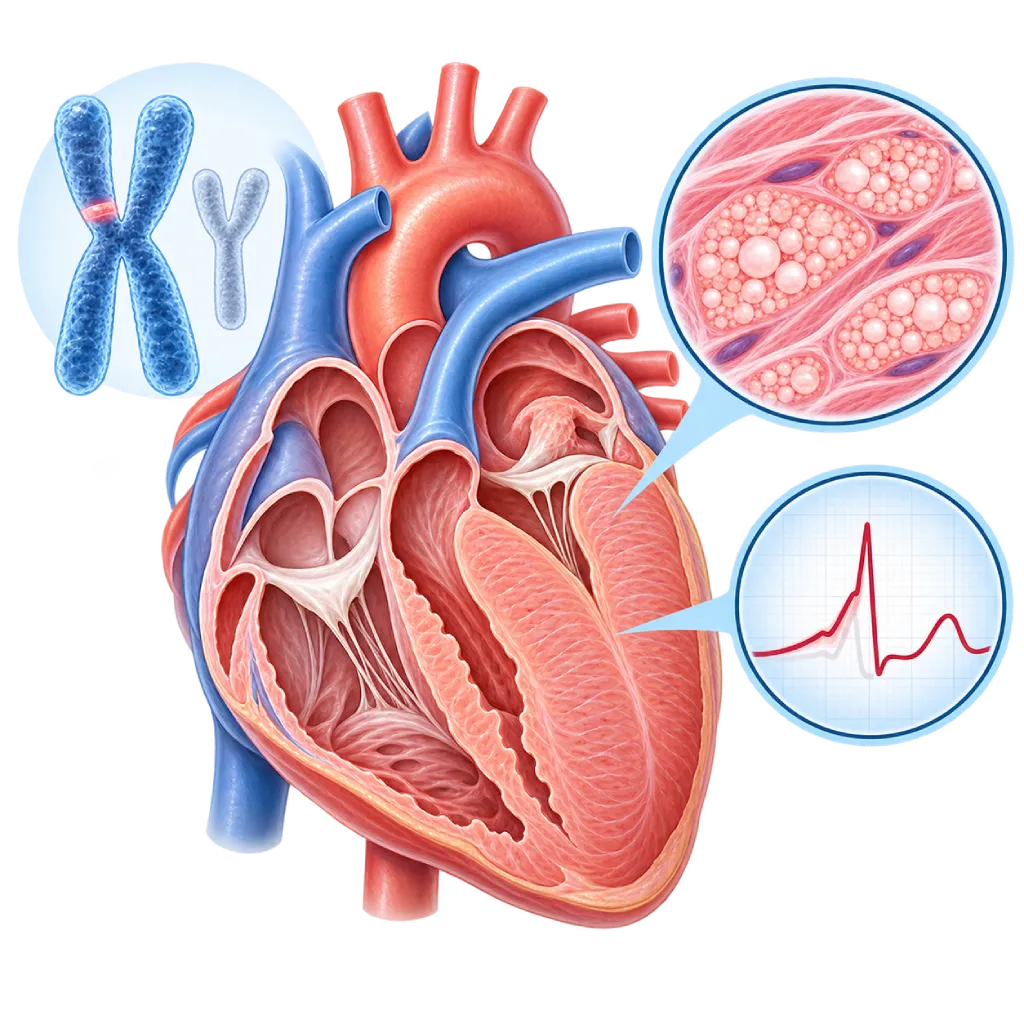
Danon disease is a rare genetic disorder caused by a change in the LAMP2 gene that mainly affects the heart muscle, skeletal muscles, and the retina of the eye. It causes thickening of the heart muscle, rhythm problems, and heart failure from a young age.
SourcesSigns That Need Urgent Help
- Fainting, especially during activity
- A very fast, pounding heartbeat with dizziness, chest pain, or shortness of breath
- Severe shortness of breath at rest or being unable to lie down
- Severe chest pain that does not go away with rest
- Unconsciousness and not breathing normally
If these signs appear, go to the nearest emergency department right away or call Heart Attack Center 1500 258.
01 / Understanding the condition
About Danon Disease
Danon disease is a rare inherited disease caused by a change in the LAMP2 gene. This gene makes a protein that is important for lysosomes, the parts of the cell that recycle damaged cell components through a process called autophagy. When this protein does not work, waste material builds up in small bubbles (vacuoles) inside cells, especially in the heart muscle and skeletal muscles. This disease belongs to the group of storage diseases that can look like hypertrophic cardiomyopathy, and it is covered together with similar causes on the Infiltrative Cardiomyopathy page.
Different in Males and Females
The LAMP2 gene is located on the X chromosome. Males have only one X chromosome, so symptoms usually appear earlier, often in childhood or the teenage years, and are more severe. In males, the heart muscle usually thickens markedly, and many need a heart transplant before age 30. Females have two X chromosomes, so symptoms usually appear later, often in young adulthood, and the form of the disease varies more, including a heart muscle that weakens and enlarges. Even so, females can also have severe disease.
More Than Just the Heart
Besides the heart, Danon disease can affect the skeletal muscles, making the shoulder and thigh muscles feel weak; the retina of the eye, affecting vision; and, in some males, learning ability. In females, muscle and eye involvement is usually milder. An ECG often shows a pre-excitation pattern, an extra electrical pathway like in Wolff-Parkinson-White syndrome, covered on the Wolff-Parkinson-White Syndrome page. Blood tests can show raised levels of the muscle enzyme creatine kinase and of liver enzymes.
Why Diagnosis Matters
Danon disease is often mistaken for ordinary hypertrophic cardiomyopathy, even though it progresses faster. The diagnosis is confirmed with genetic testing, covered on the LAMP2 Genetic Test page. An accurate diagnosis helps your doctor plan rhythm monitoring, the timing of ICD placement, transplant referral, and testing of family members. When one family member is diagnosed, family testing can find other carriers before symptoms appear, so monitoring can start earlier. Gene therapy for Danon disease is being studied in clinical trials, but it is not yet routine treatment.
02 / Understanding the condition
Symptoms to Recognize.
Common Symptoms
Symptoms and the age at which they appear differ between males and females.
- Tiring easily and getting short of breath quickly during activity
- A pounding or irregular-feeling heartbeat
- Chest pain during activity
- Fainting or nearly fainting, especially during activity
- Weakness in the shoulder, upper arm, or thigh muscles
- Vision that gradually gets worse
- Swelling in the legs or abdomen in later stages
Symptoms in Teenage Boys
In males, symptoms usually start in childhood or the teenage years and progress faster.
- Tiring quickly and falling behind peers during sports
- Weak thigh or shoulder muscles, such as difficulty climbing stairs
- Difficulty learning or concentrating at school
- Palpitations or fainting during activity
- Worsening vision
Symptoms in Adult Women
In females, symptoms usually appear later, often in young adulthood, and muscle weakness is rarely prominent.
- Shortness of breath and tiredness that slowly get worse
- Palpitations or an irregular heartbeat
- Leg swelling due to a weakened heart pump
- Fainting or nearly fainting
03 / Understanding the condition
What Causes This Condition?
- A change (pathogenic variant) in the LAMP2 gene, located on the X chromosome
- Inherited from a mother who carries the gene variant, or from an affected father to his daughters
- A new gene change that appears for the first time in the patient, with no family history
- A lack of the LAMP-2 protein, which disrupts the recycling of cell components (autophagy)
- Buildup of waste material in vacuoles in heart muscle and skeletal muscle cells
04 / Understanding the condition
Who Is at Higher Risk?
Genetic
A mother who carries a LAMP2 variant has a 50 percent chance of passing it on in each pregnancy, to both sons and daughters. An affected father passes it on to all his daughters, but not to his sons.
Age
In males, heart symptoms usually appear before age 20. In females, symptoms usually appear in adulthood, often after age 20 to 30.
Other
Being male is linked to earlier symptoms and faster progression. A family history of cardiomyopathy, heart transplant, or sudden death at a young age raises suspicion.
Groups at Higher Risk
- Young Males: Males with a LAMP2 variant usually have symptoms from childhood or the teenage years, and their disease progresses faster.
- Female Carriers of a LAMP2 Variant: Female carriers can develop cardiomyopathy in adulthood, so they still need heart monitoring.
- Family Members of People with Danon Disease: The mother, siblings, and children of an affected person may carry the same gene variant and need genetic counseling.
- Young People with Hypertrophic Cardiomyopathy: Heart muscle thickening at a young age with pre-excitation or muscle weakness needs to be investigated for a genetic cause.
05 / Understanding the condition
How Is It Diagnosed?
Suspicion arises when heart muscle thickening is found in a child, teenager, or young adult, especially with a pre-excitation pattern on the ECG, muscle weakness, raised creatine kinase, vision problems, or learning difficulties. The 2023 ESC guidelines describe these signs as clues to look for causes other than the heart muscle protein abnormalities usually found in hypertrophic cardiomyopathy.
Echocardiography and cardiac MRI assess thickness, scar tissue, and pumping strength. The diagnosis is confirmed with LAMP2 genetic testing. If a gene variant is found, genetic counseling and family testing, including the mother and sisters who may be carriers, can be done in a more targeted way. An eye examination by an ophthalmologist and a developmental assessment in children complete the evaluation.
LAMP2 Genetic Test
DNA testing of a blood sample to find a LAMP2 gene variant and confirm the diagnosis, which also forms the basis for testing family members.
Electrocardiogram (ECG)
Often shows a pre-excitation pattern and very high voltage due to the thickened heart muscle.
Echocardiography
Assesses heart muscle thickness, chamber size, and pumping strength, including the shift from thick walls to a weakened pump.
Cardiac MRI
Shows a pattern of extensive scar tissue in the heart muscle and helps distinguish it from other hypertrophic cardiomyopathies.
Long-Term Heart Rhythm Monitoring
A Holter or rhythm recorder to look for rhythm problems not caught on a short ECG.
Creatine Kinase (CK) Test
High levels of this muscle enzyme, together with raised liver enzymes, are a clue to Danon disease when the heart muscle is thickened.
Muscle Biopsy
A muscle sample can show typical vacuoles and loss of the LAMP-2 protein when genetic test results are unclear.
06 / Understanding the condition
Treatment Options.
Treatment is decided by a doctor after an assessment. The categories below can help you follow the conversation with your doctor.
Close Monitoring
Regular ECG, echocardiography, cardiac MRI, and rhythm recordings to detect changes earlier.
Heart Failure and Rhythm Medicines
Your doctor prescribes heart failure medicine classes and heart rhythm medicines according to the stage of the disease, for example when the heart muscle starts to weaken.
Implantable Defibrillator (ICD)
Considered to prevent sudden cardiac arrest, especially in males with severe thickening or ventricular rhythm problems.
Accessory Pathway Ablation
Considered when pre-excitation causes dangerous episodes of fast heartbeat.
Heart Transplant
An option for patients with advanced heart failure. Early referral to a transplant center is recommended because the disease can worsen quickly, especially in males.
Muscle, Eye, and Learning Support
Physical therapy, regular eye exams, and learning support for children help maintain independence.
Genetic Counseling
Helps families understand the inheritance pattern, the chance of passing it on, and testing options for family members.
07 / Understanding the condition
Complications to Watch For.
Advanced Heart Failure
The thickened heart muscle can become weak and enlarged within a few years, leading to heart failure that is difficult to control with medicines.
Ventricular Arrhythmias and Cardiac Arrest
Fast rhythms from the ventricles can cause fainting or cardiac arrest, so an ICD is often considered. Covered on the Sudden Cardiac Death page.
Fast Heartbeat from an Extra Pathway
A pre-excitation pattern can trigger a very fast heartbeat and is sometimes treated with ablation.
Atrial Fibrillation and Blood Clots
Enlarged upper chambers make atrial fibrillation and the formation of clots that can cause a stroke more likely.
Vision Problems
Retinal abnormalities can gradually reduce the sharpness of vision, especially in males.
Skeletal Muscle Weakness
Weakness of the shoulder and thigh muscles is usually mild to moderate, but it can interfere with daily activities.
08 / Understanding the condition
What Can You Do?
- If a family member has Danon disease, discuss genetic testing and heart checkups
- Have ECG, echocardiography, and rhythm recordings on schedule even without symptoms
- Avoid competitive sports or strenuous exercise until assessed by a cardiologist
- Teach family members and teachers to recognize fainting and how to give chest compressions
- Have your eyes checked regularly
- Take your medicines as prescribed and do not stop them on your own
- Keep your genetic test results and bring them to every medical visit
09 / Understanding the condition
When Should You See a Doctor?
Go to the emergency room right away if fainting occurs, or if you have a very fast heartbeat with dizziness or severe shortness of breath. Make an appointment with a cardiologist if:
- Your child or teenager has been found to have a thick heart muscle, especially with muscle weakness or learning difficulties
- An ECG shows a pre-excitation or Wolff-Parkinson-White pattern together with heart thickening
- A family member has been diagnosed with Danon disease or has had cardiomyopathy, a heart transplant, or sudden death at a young age
- You are a female carrier of a LAMP2 variant and have not had a heart checkup
- A person with Danon disease starts getting short of breath or tired more quickly
Don't Wait in an Emergency.
If symptoms are severe or come on suddenly, go to the nearest emergency department right away or call Heart Attack Center 1500 258, rather than waiting for an appointment.
10 / Common questions
Questions You May Have.
Frequently asked questions about Danon disease.
How is Danon disease different from ordinary hypertrophic cardiomyopathy?
Both make the heart muscle thicken. Hypertrophic cardiomyopathy is usually caused by changes in heart muscle protein genes, while Danon disease is caused by a change in the LAMP2 gene that disrupts cell recycling. Danon disease often comes with pre-excitation on the ECG, muscle weakness, and vision problems, and it usually progresses faster. These differences affect monitoring and treatment planning, so genetic testing is important.
How is Danon disease inherited?
The LAMP2 gene is located on the X chromosome. A carrier mother has a 50 percent chance of passing the gene variant on in each pregnancy, to both sons and daughters. An affected father will pass it on to all his daughters, but not to his sons. Some cases occur because of a new gene change with no family history. Genetic counseling helps families understand these chances.
Can women who carry the gene get sick?
Yes. Unlike many other X-linked diseases, women with a LAMP2 variant often develop cardiomyopathy, although it usually appears later, for example at age 20 to 40. It can take the form of thickening or a weakened pump. That is why female carriers are advised to have regular ECG, echocardiography, and rhythm monitoring even before any symptoms appear.
Can Danon disease be cured?
There is currently no treatment that cures it. Treatment focuses on close monitoring, heart failure and rhythm medicines, an ICD to prevent sudden cardiac arrest, ablation if there is an extra electrical pathway, and a heart transplant for advanced heart failure. Gene therapy that aims to restore the LAMP-2 protein is being studied in clinical trials, but it is not yet routine treatment.
Can a child with Danon disease play sports?
Light everyday activity is usually allowed and helpful, but competitive sports or strenuous exercise should first be assessed by a cardiologist because they can trigger rhythm problems. The decision is based on heart muscle thickness, any history of fainting, rhythm recording results, and whether the child has an ICD. Tell teachers and coaches about your child's condition, and teach them how to help if your child faints.
Why is my doctor checking my eyes and muscles?
Danon disease does not affect only the heart. Retinal abnormalities can reduce vision, and skeletal muscles can weaken. Raised levels of the creatine kinase enzyme and liver enzymes are also common, so these results do not always mean liver disease. Findings in the eyes and muscles help confirm the diagnosis and determine the support you need, such as physical therapy or vision aids.
Sources and Medical Review
Translated from the Indonesian edition medically reviewed by dr. Radityo Prakoso, Sp.JP(K).
Sources as cited in the Indonesian edition.
- Arbelo E, Protonotarios A, Gimeno JR, Arbustini E, Barriales-Villa R, Basso C, et al. 2023 ESC Guidelines for the management of cardiomyopathies. Eur Heart J. 2023;44(37):3503-626.
- Hong KN, Eshraghian EA, Arad M, et al. International Consensus on Differential Diagnosis and Management of Patients With Danon Disease: JACC State-of-the-Art Review. J Am Coll Cardiol. 2023;82(16):1628-47.
- Ommen SR, Ho CY, Asif IM, Balaji S, Burke MA, Day SM, et al. 2024 AHA/ACC/AMSSM/HRS/PACES/SCMR Guideline for the Management of Hypertrophic Cardiomyopathy: A Report of the American Heart Association/American College of Cardiology Joint Committee on Clinical Practice Guidelines. Circulation. 2024;149(23):e1239-311.
- Brambatti M, Caspi O, Maolo A, et al. Danon disease: Gender differences in presentation and outcomes. Int J Cardiol. 2019;286:92-8.
- Boucek D, Jirikowic J, Taylor M. Natural history of Danon disease. Genet Med. 2011;13(6):563-8.
- Maron BJ, Roberts WC, Arad M, Haas TS, Spirito P, Wright GB, et al. Clinical outcome and phenotypic expression in LAMP2 cardiomyopathy. JAMA. 2009;301(12):1253-9.
Doctors Who Treat This Condition

dr. Radityo Prakoso, Sp.JP(K)
Pediatrics & Congenital Heart Disease
Congenital and Structural Heart Center
Clinical focusPediatric Cardiology Consultation · Congenital Heart Disease Care
View Profile
Dr. dr. Dicky A. Hanafy, Sp.JP(K)
Arrhythmia and Electrophysiology
Arrhythmia and Device Center +1 center
Clinical focusElectrophysiology and Arrhythmia Ablation · Pacemaker and ICD Implantation
View Profile
dr. Siska S. Danny, Sp.JP(K)
Interventional Cardiology
Coronary Intervention Procedures
Clinical focusPCI for Acute Coronary Syndrome · Primary Coronary Intervention
View Profile