
Quick answer
What Is Post-Myocardial Infarction Complications?
Post-myocardial infarction complications are problems that can appear within hours to years after a heart attack, such as rhythm disorders, heart failure, shock, a tear in the heart muscle, blood clots in a heart ventricle, and inflammation of the sac around the heart.
SourcesSigns That Need Urgent Help
- Severe chest pain that comes back and lasts more than 5 minutes
- Sudden severe shortness of breath, noisy breathing, or coughing up froth
- Fainting or unconsciousness
- A very fast, very slow, or irregular heartbeat with weakness
- Cold, pale, clammy skin with severe weakness
- Weakness on one side of the body, a drooping face, or slurred speech
If these signs appear, go to the nearest emergency department right away or call Heart Attack Center 1500 258.
01 / Understanding the condition
About Post-Myocardial Infarction Complications
A heart attack leaves part of the heart muscle damaged. This damage can disrupt three things: the electrical system that controls the rhythm, the pumping strength, and the integrity of the heart walls and valves. These problems are called post-myocardial infarction complications. The risk depends on how much muscle is damaged, where the attack occurred, and how quickly the artery was reopened. Thanks to faster reopening of arteries, severe complications are now far less common than a few decades ago. An overview of heart attacks is covered on the Myocardial Infarction / Heart Attack page.
Complications in the First Days
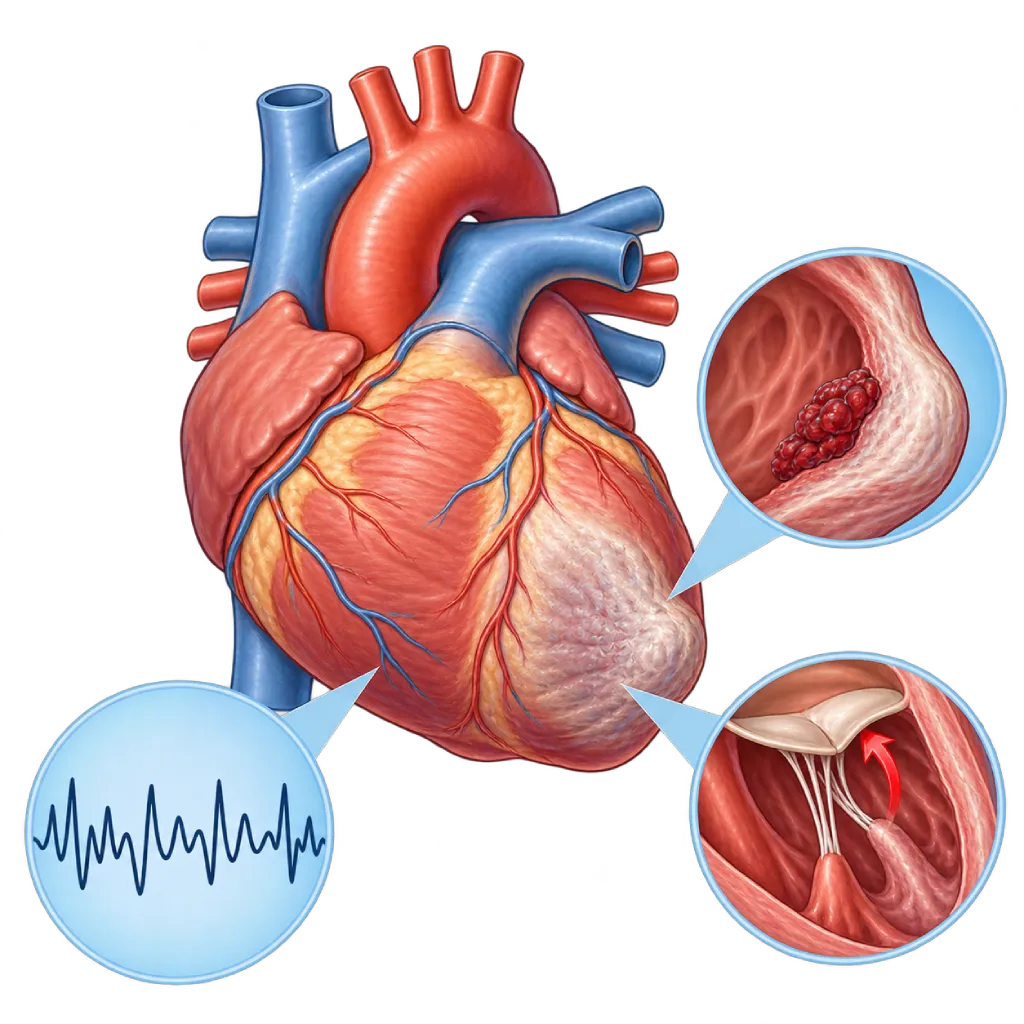
In the first 48 hours, heart rhythm disorders are common, ranging from a heart rate that is too slow to a chaotic ventricular rhythm (ventricular fibrillation) that can stop the heart. For this reason, patients are monitored in a cardiac intensive care unit. If the damaged area is large, acute heart failure or cardiogenic shock can occur, meaning blood pressure drops because the heart's pumping is very weak. Within the first few days to two weeks, the damaged muscle can tear: in the heart wall, the wall between the two ventricles, or the muscle that supports the mitral valve. These mechanical complications are rare but need surgery or an urgent procedure.
Complications in the Following Weeks to Months
Blood clots can form on a part of the left ventricular wall that no longer moves, especially after a large attack on the front wall, and can break loose and travel to the brain. Inflammation of the sac around the heart (pericarditis) can appear a few days to weeks after the attack. A thinned wall can bulge outward, forming a ventricular aneurysm. Many people also feel anxious, sad, or have trouble sleeping after a heart attack; these feelings are normal and help is available.
Long-Term Complications
Scar tissue can make the heart widen and weaken slowly, leading to chronic heart failure. Scar tissue can also become a source of ventricular rhythm disorders that carry a risk of sudden cardiac arrest. For this reason, your doctor reassesses the heart's pumping strength 6 to 12 weeks after the attack to decide whether a device such as an implantable defibrillator is needed. The risk of another heart attack also remains, especially in the first year, so medication, follow-up visits, and cardiac rehabilitation need to be followed consistently.
02 / Understanding the condition
Symptoms to Recognize.
Common Symptoms
Signs that can appear after you go home from heart attack treatment.
- Shortness of breath during light activity or when lying down
- Swelling in the ankles or legs
- Rapid weight gain over a few days
- Tiring quickly and difficulty returning to usual activities
- Palpitations or a heartbeat that feels irregular
- Dizziness or a light-headed feeling
- Sharp chest pain that gets worse when breathing in or lying down
Symptoms in Older Adults
In older age, signs of complications are often subtle and easily mistaken for ordinary tiredness.
- Confusion or excessive sleepiness
- Severe weakness and loss of appetite
- Shortness of breath when lying down, so you need to sleep on high pillows
- Falling or nearly fainting when standing up
03 / Understanding the condition
What Causes This Condition?
- The extent of heart muscle that died during the attack
- An artery that was reopened late or not fully reopened
- Scar tissue that disrupts the heart's electrical pathways
- Damaged, thinned heart muscle that tears easily in the first days
- Slowed blood flow in a part of the ventricle that does not move, which triggers clots
- The body's inflammatory reaction to damaged heart muscle
- Ongoing coronary artery disease in other arteries
04 / Understanding the condition
Who Is at Higher Risk?
Medical
A large heart attack, especially on the front wall, already reduced pumping function, diabetes, chronic kidney disease, and a history of previous heart attacks.
Age
Age over 75 increases the risk of cardiogenic shock, mechanical complications, and bleeding from blood thinners.
Lifestyle
Continuing to smoke, not taking medication as prescribed, and not joining cardiac rehabilitation increase the risk of another heart attack and heart failure.
Other
Arriving at the hospital more than 12 hours after symptoms start, so the artery is reopened late. Women and people having their first heart attack also experience mechanical complications more often.
Groups at Higher Risk
- Patients Who Arrive Late: An artery reopened more than 12 hours after symptoms start leaves more extensive damage and a higher risk of heart muscle tears.
- Older Adults: Older age increases the risk of cardiogenic shock, mechanical complications, heart failure, and bleeding from medications.
- Patients with Reduced Pumping Function: A low ejection fraction after the attack increases the risk of heart failure and dangerous ventricular rhythm disorders.
- People with Diabetes or Kidney Disease: Both conditions increase the risk of heart failure, another heart attack, and bleeding, so closer monitoring is needed.
05 / Understanding the condition
How Is It Diagnosed?
After a heart attack, testing aims to find complications as early as possible. During the hospital stay, the heart rhythm is monitored continuously. The doctor listens to the heart for a new murmur that may signal a tear in the wall between the ventricles or in the muscle supporting the valve, and checks for signs of fluid in the lungs and legs.
Echocardiography is the main test: it assesses pumping strength, wall motion, mitral valve leakage, tears, clots in the left ventricle, and fluid in the sac around the heart. The ECG is repeated to look for another heart attack or rhythm disorders. Blood tests, including NT-proBNP and kidney function, help assess the strain on the heart. Cardiac MRI may be used if clots or scar tissue need to be seen in more detail. After you go home, Holter monitoring can record the heart rhythm for 24 to 48 hours, and echocardiography is repeated a few weeks later to plan further treatment.
Echocardiography
The main test to assess pumping strength, wall motion, mitral valve leakage, tears, clots in the left ventricle, and fluid in the sac around the heart.
Electrocardiogram (ECG)
Repeated to look for another heart attack, rhythm disorders, or problems with the heart's electrical conduction.
NT-proBNP and BNP Test
A blood test that helps assess the strain on the heart and monitor heart failure after the attack.
Holter Monitoring
Records the heart rhythm for 24 to 48 hours to look for rhythm disorders not captured by a standard ECG.
Cardiac MRI
Assesses the extent of scar tissue, clots in the left ventricle, and muscle that is still alive if echocardiography results are unclear.
Coronary Angiography
Repeated if chest pain comes back, to look for a new blockage or a blocked stent.
06 / Understanding the condition
Treatment Options.
Treatment is decided by a doctor after an assessment. The categories below can help you follow the conversation with your doctor.
Monitoring in the Cardiac Intensive Care Unit
Rhythm and blood pressure are monitored continuously in the first days so rhythm disorders can be treated right away with medication or an electric shock.
Heart Failure Medications
If pumping function is reduced, your doctor prescribes a combination of medications such as ACE inhibitors or ARNI, beta blockers, mineralocorticoid receptor antagonists, and SGLT2 inhibitors, increased gradually.
Circulatory Support in Shock
Medication to strengthen pumping, mechanical circulatory support devices in certain patients, and immediate reopening of the artery if cardiogenic shock occurs.
Surgery to Repair Mechanical Complications
For tears in the septum, the wall, or the muscle supporting the mitral valve. The timing and type of procedure are decided together by the heart team.
Anticoagulant Medication
For a clot in the left ventricle, usually for several months, with repeat echocardiography to confirm the clot has gone.
Implantable Defibrillator
Considered if pumping function stays low after at least 6 weeks of guideline-based treatment, to prevent sudden cardiac arrest.
Cardiac Rehabilitation
Supervised exercise, education, emotional support, and risk factor control to prevent another heart attack and heart failure.
07 / Understanding the condition
Complications to Watch For.
Heart Rhythm Disorders
A heart rate that is too fast, too slow, or chaotic. Ventricular fibrillation can stop the heart and needs an immediate electric shock.
Heart Failure
The heart's pumping weakens, so fluid builds up in the lungs and legs. It can appear suddenly during the hospital stay or slowly over the following months.
Cardiogenic Shock
Blood pressure drops because the heart's pumping is very weak, so organs do not get enough blood. It needs intensive care and immediate reopening of the artery.
Mechanical Complications
A tear in the free wall of the heart, the wall between the ventricles, or the muscle supporting the mitral valve, which causes sudden valve leakage. Rare, but it needs urgent surgery.
Blood Clot in the Left Ventricle
Forms on a wall that does not move, especially after a large attack on the front wall, and can break loose and travel to the brain, causing a stroke.
Post-Infarction Pericarditis
Inflammation of the sac around the heart that causes sharp chest pain, sometimes with fever, a few days to weeks after the attack.
Left Ventricular Aneurysm
A thinned part of the left ventricular wall bulges outward, reduces pumping strength, and can become a source of clots or rhythm disorders.
08 / Understanding the condition
What Can You Do?
- Take your medication as prescribed every day and do not stop or change it on your own.
- Join a cardiac rehabilitation program after you leave the hospital.
- If your doctor asks you to, weigh yourself every morning and report a gain of more than 2 kg in 3 days.
- Attend follow-up visits as scheduled, including a repeat echocardiogram a few weeks after the attack.
- Stop smoking completely.
- Keep your blood pressure, blood sugar, and LDL cholesterol at the targets set by your doctor.
- Teach your family to recognize warning signs, call an ambulance, and perform chest compressions.
09 / Understanding the condition
When Should You See a Doctor?
Call an ambulance or go to the nearest emergency room right away if, after a heart attack, you have severe chest pain lasting more than 5 minutes, sudden severe shortness of breath, fainting, a very fast or irregular heartbeat, or signs of stroke. Contact your cardiologist or move your follow-up visit forward if:
- You are getting more short of breath or need higher pillows to sleep.
- Your legs swell or you gain more than 2 kg in 3 days.
- You develop sharp chest pain that gets worse when breathing in, with a fever.
- You have palpitations, feel dizzy, or feel very tired during light activity.
- You feel sad, anxious, or have trouble sleeping for a long time after the attack.
Don't Wait in an Emergency.
If symptoms are severe or come on suddenly, go to the nearest emergency department right away or call Heart Attack Center 1500 258, rather than waiting for an appointment.
10 / Common questions
Questions You May Have.
Frequently asked questions about complications after a heart attack.
When do complications after a heart attack usually appear?
The timing differs for each complication. Dangerous rhythm disorders usually occur in the first 48 hours. Heart muscle tears usually occur within a few days to two weeks. Clots in the left ventricle and pericarditis can appear within the first days to weeks. Heart failure and rhythm disorders caused by scar tissue can develop months to years later.
Will everyone who has had a heart attack develop complications?
No. Many people recover without significant complications, especially if the artery was reopened quickly and the muscle damage is small. The risk is higher with a large attack, delayed treatment, older age, diabetes, or kidney disease. Taking medication regularly, attending follow-up visits as scheduled, and cardiac rehabilitation help lower the risk of long-term complications.
Why do I need another echocardiogram after going home?
Part of the heart muscle that was weakened during the attack can recover within a few weeks after blood flow is restored. A repeat echocardiogram, usually 6 to 12 weeks later, shows the true pumping strength. The result determines whether heart failure medications need to be added or adjusted, and whether you should be considered for a device such as an implantable defibrillator.
Do I need an implantable defibrillator?
Not everyone does. An implantable defibrillator is considered if the heart's pumping function stays low after at least 6 weeks of guideline-based treatment, because the risk of dangerous ventricular rhythms is higher. The device monitors the rhythm and stops dangerous rhythms with pacing or an electric shock, as covered on the Implantable Cardioverter Defibrillator (ICD) page.
Is it normal to feel anxious and sad after a heart attack?
Yes, and it is quite common. Many people fear another attack, have trouble sleeping, or lose motivation. If these feelings last more than two weeks or interfere with daily activities, tell your doctor. Depression after a heart attack can be treated, and a cardiac rehabilitation program that includes emotional support can help your recovery.
How does cardiac rehabilitation help prevent complications?
Cardiac rehabilitation combines supervised exercise, education about medications and warning signs, risk factor control, and emotional support. Research shows that the program lowers the risk of hospital readmission and death from heart disease. Measured exercise also helps you learn your safe activity limits and regain confidence after a heart attack.
Sources and Medical Review
Translated from the Indonesian edition medically reviewed by dr. Siska S. Danny, Sp.JP(K).
Sources as cited in the Indonesian edition.
- Byrne RA, Rossello X, Coughlan JJ, et al. 2023 ESC Guidelines for the management of acute coronary syndromes. Eur Heart J. 2023;44(38):3720-3826.
- Damluji AA, van Diepen S, Katz JN, et al. Mechanical Complications of Acute Myocardial Infarction: A Scientific Statement From the American Heart Association. Circulation. 2021;144(2):e16-e35.
- Zeppenfeld K, Tfelt-Hansen J, de Riva M, et al. 2022 ESC Guidelines for the management of patients with ventricular arrhythmias and the prevention of sudden cardiac death. Eur Heart J. 2022;43(40):3997-4126.
- McDonagh TA, Metra M, Adamo M, et al. 2021 ESC Guidelines for the diagnosis and treatment of acute and chronic heart failure. Eur Heart J. 2021;42(36):3599-3726.
- Levine GN, McEvoy JW, Fang JC, et al. Management of Patients at Risk for and With Left Ventricular Thrombus: A Scientific Statement From the American Heart Association. Circulation. 2022;146(15):e205-e223.
- van Diepen S, Katz JN, Albert NM, et al. Contemporary Management of Cardiogenic Shock: A Scientific Statement From the American Heart Association. Circulation. 2017;136(16):e232-e268.
- Ambrosetti M, Abreu A, Corra U, et al. Secondary prevention through comprehensive cardiovascular rehabilitation: From knowledge to implementation. 2020 update. A position paper from the Secondary Prevention and Rehabilitation Section of the European Association of Preventive Cardiology. Eur J Prev Cardiol. 2021;28(5):460-495.
Doctors Who Treat This Condition

dr. Siska S. Danny, Sp.JP(K)
Interventional Cardiology
Coronary Intervention Procedures
Clinical focusPCI for Acute Coronary Syndrome · Primary Coronary Intervention
View Profile
Dr. dr. Dicky A. Hanafy, Sp.JP(K)
Arrhythmia and Electrophysiology
Arrhythmia and Device Center +1 center
Clinical focusElectrophysiology and Arrhythmia Ablation · Pacemaker and ICD Implantation
View Profile
dr. Ayu Amalia U. Putri, Sp.KFR
Physical Medicine & Rehabilitation
Clinical focusCardiac Rehabilitation · Postoperative Rehabilitation
View Profile