
Quick answer
What Is Heart Rhythm Disorders / Arrhythmia?
An arrhythmia is a problem with the heart's electrical system that makes the heartbeat too fast, too slow, or irregular. Some are harmless, while others need treatment to prevent fainting, stroke, or heart failure.
SourcesSigns That Need Urgent Help
- Fainting or nearly fainting, especially during activity
- Chest pain with a fast heartbeat
- Severe shortness of breath or being unable to lie flat
- A very fast heartbeat that does not stop, with weakness and a cold sweat
- A drooping face, slurred speech, or weakness in the arm and leg on one side
- Someone suddenly becomes unresponsive and is not breathing normally
If these signs appear, go to the nearest emergency department right away or call Heart Attack Center 1500 258.
01 / Understanding the condition
About Heart Rhythm Disorders / Arrhythmia
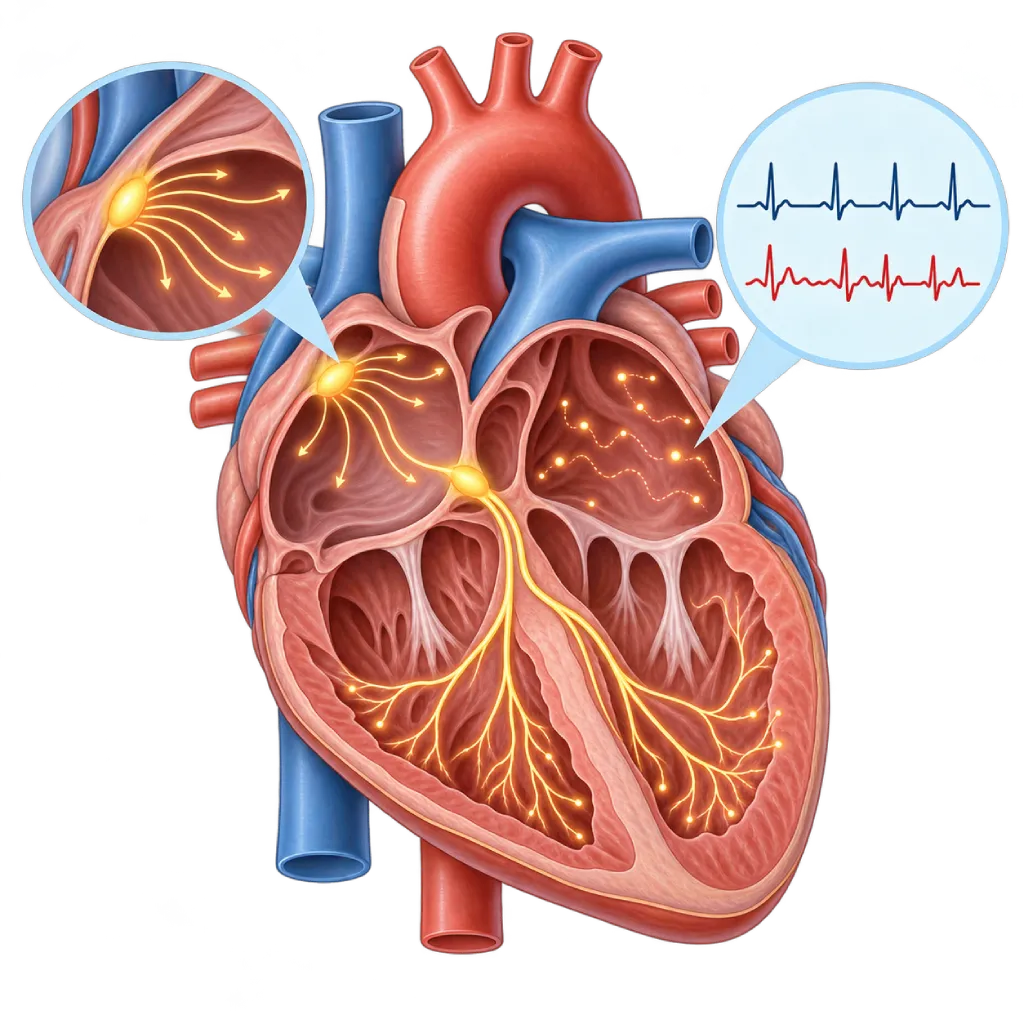
The heart beats because of regular electrical signals. These signals start in the sinus node, the natural pacemaker in the right upper chamber (right atrium), then travel through the atrioventricular node (the junction between the upper and lower chambers) to both lower chambers (ventricles). In adults at rest, a normal heart rate is usually 60 to 100 beats per minute with a regular rhythm. An arrhythmia occurs when the formation or conduction of these signals is disrupted.
Types of Arrhythmia
Arrhythmias are grouped by their speed and where they start. Tachycardia is a heartbeat that is too fast, more than 100 beats per minute at rest, covered on the Tachycardia page. Bradycardia is a heartbeat that is too slow, covered on the Bradycardia page. There are also irregular rhythms from the upper chambers, namely atrial fibrillation and atrial flutter, as well as ventricular fibrillation from the lower chambers, which causes cardiac arrest. Tachycardia-bradycardia syndrome combines fast and slow heartbeats that alternate, while post-procedural arrhythmia appears after heart surgery or a heart procedure. The full list is shown in the condition types section on this page.
Why Arrhythmias Happen
The causes vary. Some are related to heart disease, such as coronary artery disease, scarring from a previous heart attack, valve problems, or a weakened heart muscle. Others are triggered by conditions outside the heart, for example an overactive thyroid gland, unbalanced potassium or magnesium levels, pauses in breathing during sleep (sleep apnea), medication side effects, alcohol, or lack of sleep. Some arrhythmias also run in families because of gene changes that control the heart's electrical activity.
Not All Arrhythmias Are Dangerous
Occasional extra beats, such as premature contractions, are common in healthy people and usually do not need treatment. On the other hand, atrial fibrillation increases the risk of stroke, severe bradycardia can make you faint, and arrhythmias from the lower chambers can stop the heart from pumping. For this reason, the first step is to confirm the type of arrhythmia with a recording of the heart rhythm, rather than guessing from symptoms alone.
Treatment is tailored to the type of arrhythmia, your symptoms, and your heart condition. Options range from addressing triggers, medication, and catheter ablation to implanting a pacemaker or an ICD. Many people with arrhythmias can continue to work, exercise, and go about their usual activities once their treatment is clear.
02 / Understanding the condition
Types and Related Conditions
The following conditions belong to the Heart Rhythm Disorders / Arrhythmia group. Open each one for a full explanation.
03 / Understanding the condition
Symptoms to Recognize.
Common Symptoms
- Palpitations, with the heart feeling too fast, too hard, or irregular
- A feeling that the heart skips or pauses for a moment
- Dizziness or lightheadedness
- Tiring easily and shortness of breath during activity
- Chest discomfort
- No symptoms, discovered only during an ECG
Symptoms in Older Adults
In older adults, an arrhythmia is often not felt as palpitations and shows up as vague symptoms instead.
- Frequent falls or unsteadiness
- Confusion or difficulty concentrating that comes and goes
- Tiring quickly and a reduced ability to do daily activities
- Shortness of breath and swollen legs
04 / Understanding the condition
What Causes This Condition?
- Coronary artery disease or a previous heart attack that has left scar tissue
- Long-standing high blood pressure that changes the size and shape of the upper and lower chambers of the heart
- Heart valve problems, a weakened heart muscle, or congenital heart disease
- Aging of the heart's electrical system, especially the sinus node and the conduction pathways
- An overactive or underactive thyroid gland
- Abnormal levels of potassium, magnesium, or calcium in the blood
- Side effects of medications, alcohol, stimulants, or illegal drugs
- Gene changes that affect the electrical channels of heart muscle cells
05 / Understanding the condition
Who Is at Higher Risk?
Age
The risk of arrhythmia, especially atrial fibrillation and a slow heartbeat, increases with age because the heart's electrical tissue also ages.
Medical
Hypertension, diabetes, coronary artery disease, heart failure, valve disease, thyroid disorders, chronic kidney disease, and pauses in breathing during sleep (sleep apnea) increase the risk of rhythm disorders.
Lifestyle
Drinking alcohol, smoking, excess body weight, lack of sleep, and the use of stimulants or illegal drugs can trigger or worsen arrhythmias.
Genetic
A family history of arrhythmia, fainting without a clear cause, or sudden death at a young age may point to an inherited electrical disorder of the heart.
Groups at Higher Risk
- Older Adults: The heart's electrical system ages, so atrial fibrillation and a slow heartbeat are more common after age 65.
- People with Hypertension: Long-standing high blood pressure enlarges the left atrium, where atrial fibrillation can arise.
- People with Heart Disease: A previous heart attack, heart failure, or valve problems leave behind tissue that can easily trigger rhythm disorders.
- Family Members of People with Inherited Arrhythmias: Family members of people with long QT syndrome, Brugada syndrome, or sudden death at a young age should be checked.
06 / Understanding the condition
How Is It Diagnosed?
The key to diagnosing an arrhythmia is recording the heart rhythm right when symptoms occur. The doctor starts by asking what the palpitations feel like, when they occur, how long they last, and what triggers them, as well as about the medications you take and your family history. If you were able to check your pulse or record your rhythm with a smartwatch during symptoms, bring the record with you.
A resting ECG is done at the first visit. If the arrhythmia only appears occasionally, the doctor uses longer recordings, from a 24 to 48 hour Holter monitor and a patch recorder worn for several days to an implanted recorder for symptoms that occur rarely. Echocardiography and blood tests help look for the cause behind the arrhythmia. In certain cases, an electrophysiology study is done to map the source of the arrhythmia from inside the heart.
Physical Examination
The doctor checks your pulse, measures your blood pressure, and listens to your heart to assess the speed and regularity of the heartbeat.
Electrocardiogram (ECG)
A recording of the heart's electrical activity over a few seconds to confirm the type of arrhythmia if it is occurring during the examination.
Holter Monitoring
A 24 to 48 hour rhythm recording during your daily activities to capture arrhythmias that come and go.
Implantable Loop Recorder (ILR)
A small recorder placed under the skin of the chest for symptoms that occur rarely, such as repeated fainting whose cause has not been found.
Echocardiography
An ultrasound of the heart to look at the size of the chambers, the valves, and the pumping strength, which can underlie an arrhythmia.
Laboratory Tests
Blood tests for electrolytes, thyroid function, and kidney function, which can trigger arrhythmias or affect the choice of medication.
Electrophysiology Study
An examination of the electrical signals from inside the heart through a catheter to confirm the source of the arrhythmia, often followed by ablation.
07 / Understanding the condition
Treatment Options.
Treatment is decided by a doctor after an assessment. The categories below can help you follow the conversation with your doctor.
Treating Triggers and Underlying Conditions
Controlling blood pressure, thyroid function, electrolytes, sleep apnea, and body weight, as well as cutting back on alcohol, often helps relieve arrhythmias.
Rate and Rhythm Control Medication
Beta blockers, calcium channel blockers, or antiarrhythmic drugs are chosen by the doctor based on the type of arrhythmia and your heart condition.
Blood Thinners
Given for atrial fibrillation or atrial flutter with a risk of stroke, after the doctor weighs the benefits against the risk of bleeding.
Cardioversion
A controlled electric shock or medication to restore a normal rhythm, done as a planned procedure or right away if the condition is unstable.
Cardiac Ablation
A catheter procedure to deactivate the electrical spots or pathways that trigger the arrhythmia, an option for many types of tachycardia and atrial fibrillation.
Pacemakers and ICDs
A pacemaker keeps the heartbeat from becoming too slow, while an ICD stops dangerous ventricular arrhythmias with rapid pacing or an electric shock.
08 / Understanding the condition
Complications to Watch For.
Stroke
In atrial fibrillation and atrial flutter, blood can clot in the left atrium and then travel to the brain. Blood thinners lower this risk when needed.
Heart Failure
A heartbeat that is too fast or too slow for a long time can weaken the heart's pumping. In some cases this improves once the rhythm is controlled.
Fainting and Injuries from Falls
A very slow or very fast heartbeat can reduce blood flow to the brain, so you may suddenly faint and risk injury.
Sudden Cardiac Arrest
Arrhythmias from the lower chambers, such as ventricular tachycardia and ventricular fibrillation, can stop the heart from pumping and require immediate help.
09 / Understanding the condition
What Can You Do?
- Control your blood pressure, blood sugar, and cholesterol to the targets set by your doctor
- Limit or stop alcohol, and quit smoking
- Maintain a healthy weight and stay active for about 150 minutes per week
- Get loud snoring or pauses in breathing during sleep checked
- Avoid stimulants, excessive energy drinks, and medications not recommended by your doctor
- Take your heart medications as directed and do not stop them on your own
- Learn how to check your pulse, and note the time and duration of symptoms when your heart races
10 / Understanding the condition
When Should You See a Doctor?
Make an appointment with a cardiologist if you often feel unusual palpitations, especially if they come with dizziness, tiring easily, or shortness of breath. A checkup is also recommended if your pulse feels irregular or very slow without a clear reason, or if your smartwatch repeatedly warns of an irregular rhythm.
Go to the emergency room right away or call emergency services if:
- You faint or nearly faint, especially during activity
- Palpitations come with chest pain, severe shortness of breath, or a cold sweat
- A very fast heartbeat does not stop after a few minutes and you feel weak
- Signs of stroke appear, such as a drooping face, slurred speech, or weakness on one side of the body
- Someone suddenly becomes unresponsive and is not breathing normally: start chest compressions and ask someone else to find an AED
Don't Wait in an Emergency.
If symptoms are severe or come on suddenly, go to the nearest emergency department right away or call Heart Attack Center 1500 258, rather than waiting for an appointment.
11 / Common questions
Questions You May Have.
Frequently asked questions about heart rhythm disorders, or arrhythmias.
Do palpitations always mean an arrhythmia?
Not always. Your heart can pound because of anxiety, exercise, fever, caffeine, or lack of sleep, while the rhythm stays normal. Palpitations are only called an arrhythmia when a recording of the heart's electrical activity shows an abnormal rhythm. For this reason, the doctor will try to record your rhythm when symptoms occur, for example with an ECG or a Holter monitor. Palpitations in general are covered on the Palpitations page.
Can an arrhythmia be cured?
It depends on the type. Arrhythmias triggered by something that can be corrected, such as an overactive thyroid or an electrolyte imbalance, can go away once the trigger is treated. Some types of tachycardia can be eliminated with ablation. Other types, such as long-standing atrial fibrillation or heart block, are usually controlled long term with medication or a device. With appropriate treatment, most people can go about their usual activities.
Can a smartwatch detect arrhythmias?
Some smartwatches can record a single-lead ECG and give a warning if the rhythm looks irregular, especially for atrial fibrillation. The results are useful as a clue, but they are not a diagnosis. False alarms can happen, and a watch does not pick up every type of arrhythmia. If your watch gives repeated warnings, show the recordings to your doctor so they can be confirmed with an ECG or a longer recording.
Can people with arrhythmias exercise?
Most people can, and are even encouraged to, once the type of arrhythmia and their heart condition are known. Regular moderate-intensity exercise helps control blood pressure and body weight, which are linked to arrhythmias. For certain arrhythmias, for example those that appear during strenuous activity or are related to heart muscle disorders, the doctor may limit the types of exercise. Ask about the safe limits that suit you.
Do arrhythmias run in families?
The majority of arrhythmias are not inherited and are related to age, blood pressure, or other heart conditions. However, some arrhythmias are caused by gene changes, such as long QT syndrome and Brugada syndrome. If a family member died suddenly at a young age without a clear cause, or often faints during activity, tell your doctor, because your family may need to be checked.
Does coffee trigger arrhythmias?
In most people, coffee in moderate amounts has not been shown to increase the risk of arrhythmia. However, some people feel palpitations after drinking coffee, strong tea, or energy drinks. If you notice this pattern, cut back and note whether your symptoms improve. Large amounts of energy drinks, alcohol, and stimulants are more clearly linked to rhythm disorders.
Sources and Medical Review
Translated from the Indonesian edition medically reviewed by dr. Sunu B. Raharjo, Sp.JP(K), Ph.D..
Sources as cited in the Indonesian edition.
- Van Gelder IC, Rienstra M, Bunting KV, Casado-Arroyo R, Caso V, Crijns HJGM, et al. 2024 ESC Guidelines for the management of atrial fibrillation developed in collaboration with the European Association for Cardio-Thoracic Surgery (EACTS). Eur Heart J. 2024;45(36):3314-3414.
- Zeppenfeld K, Tfelt-Hansen J, de Riva M, Winkel BG, Behr ER, Blom NA, et al. 2022 ESC Guidelines for the management of patients with ventricular arrhythmias and the prevention of sudden cardiac death. Eur Heart J. 2022;43(40):3997-4126.
- Kusumoto FM, Schoenfeld MH, Barrett C, Edgerton JR, Ellenbogen KA, Gold MR, et al. 2018 ACC/AHA/HRS Guideline on the Evaluation and Management of Patients With Bradycardia and Cardiac Conduction Delay: A Report of the American College of Cardiology/American Heart Association Task Force on Clinical Practice Guidelines and the Heart Rhythm Society. Circulation. 2019;140(8):e382-e482.
- Brugada J, Katritsis DG, Arbelo E, Arribas F, Bax JJ, Blomstrom-Lundqvist C, et al. 2019 ESC Guidelines for the management of patients with supraventricular tachycardia. The Task Force for the management of patients with supraventricular tachycardia of the European Society of Cardiology (ESC). Eur Heart J. 2020;41(5):655-720.
- Glikson M, Nielsen JC, Kronborg MB, Michowitz Y, Auricchio A, Barbash IM, et al. 2021 ESC Guidelines on cardiac pacing and cardiac resynchronization therapy. Eur Heart J. 2021;42(35):3427-3520.
Doctors Who Treat This Condition

dr. Sunu B. Raharjo, Sp.JP(K), Ph.D.
Arrhythmia and Electrophysiology
Arrhythmia and Device Center
Clinical focusClinical and Interventional Electrophysiology · Cardiac Arrhythmia Ablation
View Profile
Dr. dr. Dicky A. Hanafy, Sp.JP(K)
Arrhythmia and Electrophysiology
Arrhythmia and Device Center +1 center
Clinical focusElectrophysiology and Arrhythmia Ablation · Pacemaker and ICD Implantation
View Profile
Dr. dr. Faris Basalamah, Sp.JP(K)
Interventional Cardiology
Coronary Intervention Procedures +1 center
Clinical focusComplex Coronary Intervention · Cardiac Electrophysiology
View Profile