
Quick answer
What Is Chronic Thromboembolic Pulmonary Hypertension?
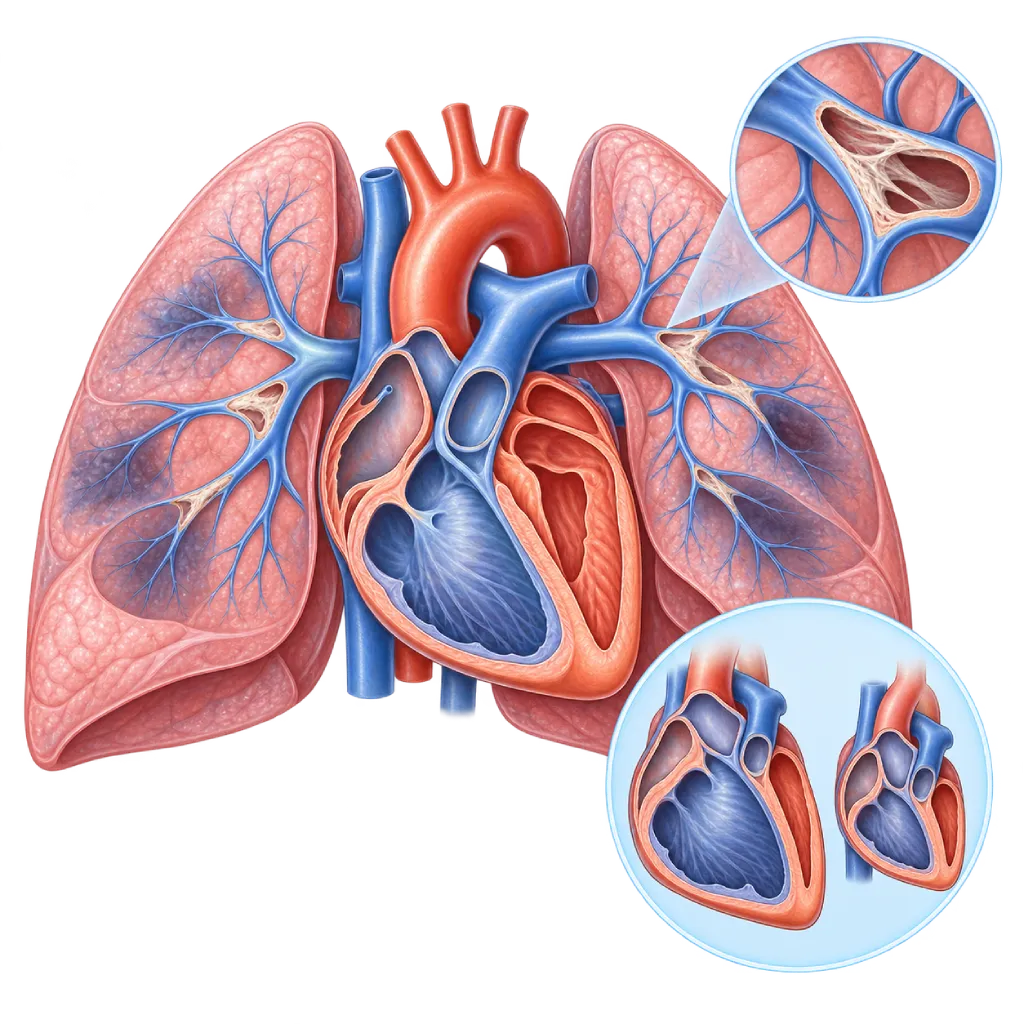
Chronic thromboembolic pulmonary hypertension (CTEPH) is high pressure in the pulmonary arteries caused by old blood clots that turn into scar tissue and block the lung vessels. This condition can be treated, and some patients have a chance of recovery through surgery.
SourcesSigns That Need Urgent Help
- Sudden or very severe shortness of breath
- Sharp chest pain, especially when breathing in
- Fainting
- Coughing up a large amount of blood
- Bluish lips or fingertips
- Swelling, pain, and warmth in one leg
If these signs appear, go to the nearest emergency department right away or call Heart Attack Center 1500 258.
01 / Understanding the condition
About Chronic Thromboembolic Pulmonary Hypertension
Chronic thromboembolic pulmonary hypertension, or CTEPH, is group 4 pulmonary hypertension according to the ESC/ERS 2022 guidelines. It occurs when a blood clot in the pulmonary arteries does not fully dissolve after a pulmonary embolism and instead turns into scar tissue that sticks to the artery wall. This tissue forms webs, bands, or blockages that obstruct blood flow, so the pressure in the pulmonary arteries rises and the right ventricle of the heart has to work harder. Pulmonary embolism is covered on the Pulmonary Embolism page, while an overview of pulmonary hypertension is covered on the Pulmonary Hypertension page.
How Common It Is
In most people, the clot dissolves within a few weeks to months with blood thinners. Only a small proportion of pulmonary embolism survivors, about two to three in every hundred people, develop CTEPH within two years. However, up to a quarter of people with CTEPH never knew they had a pulmonary embolism, because the initial episode had no clear symptoms or was not diagnosed.
Symptoms That Are Easily Missed
The main symptom of CTEPH is shortness of breath during activity that does not improve, or even gets worse, after the pulmonary embolism has been treated. Because it resembles being out of shape, asthma, or heart failure, the diagnosis is often delayed. Guidelines recommend an evaluation if shortness of breath or limited ability to be active is still present three to six months after a pulmonary embolism.
It Can Be Treated
Unlike the majority of pulmonary hypertension types, CTEPH can often be improved. If the blockages can be reached, pulmonary endarterectomy surgery removes the scar tissue from inside the pulmonary arteries. This surgery can lower lung pressure substantially, even close to normal in some patients. If surgery is not possible, the options are balloon pulmonary angioplasty and specific medicines. Everyone with CTEPH needs long-term blood thinners. Guidelines recommend that treatment decisions be made by a multidisciplinary team experienced in treating CTEPH.
After Treatment
After surgery or balloon angioplasty, regular follow-up is still needed to assess lung pressure and right ventricular function, usually with echocardiography, a six-minute walk test, and sometimes right heart catheterization. Blood thinners are continued, and supervised exercise training helps gradually restore your ability to be active.
02 / Understanding the condition
Symptoms to Recognize.
Common Symptoms
Symptoms often appear gradually, months to years after a pulmonary embolism, or without any known history of embolism.
- Shortness of breath during activity that does not improve after a pulmonary embolism has been treated
- Tiring quickly and a reduced ability to be active
- Chest pain or pressure during activity
- Dizziness or nearly fainting during activity
- Swelling in the ankles or legs
- Cough, sometimes with streaks of blood
- Palpitations
03 / Understanding the condition
What Causes This Condition?
- Blood clots from a pulmonary embolism that do not fully dissolve and then turn into scar tissue
- Recurrent pulmonary embolism
- Webs or bands of scar tissue in the pulmonary arteries that narrow or block blood flow
- Damage to the small lung vessels in areas that are not blocked, which also raises the pressure
- Blood clotting disorders such as antiphospholipid syndrome
- A pulmonary embolism without symptoms that was never diagnosed
04 / Understanding the condition
Who Is at Higher Risk?
Medical
A history of pulmonary embolism, especially one that was extensive, recurrent, or without a clear trigger; deep vein thrombosis; antiphospholipid syndrome; cancer; removal of the spleen; inflammatory bowel disease; and thyroid hormone therapy.
Genetic
Blood types other than O and certain blood clotting disorders are associated with a tendency to form clots and a higher risk of CTEPH.
Other
Artificial devices or channels inside the blood vessels, such as a shunt from the fluid spaces of the brain to the heart (ventriculoatrial shunt) or infected pacemaker leads.
Groups at Higher Risk
- Pulmonary Embolism Survivors: If shortness of breath or limited ability to be active persists three to six months after a pulmonary embolism, the possibility of CTEPH needs to be checked.
- People with Antiphospholipid Syndrome: Blood clots more easily, and guidelines recommend testing for these antibodies in people with CTEPH. Covered on the Antiphospholipid Syndrome page.
- People with Recurrent Pulmonary Embolism: Each episode adds to the chance of blockages that do not dissolve and turn into scar tissue.
- People with Cancer or Whose Spleen Was Removed: Both conditions are associated with blood clots that form and persist more easily.
05 / Understanding the condition
How Is It Diagnosed?
Suspicion usually arises in people who are still short of breath after a pulmonary embolism, or whose shortness of breath has no explanation. Echocardiography assesses the likelihood of pulmonary hypertension and the strain on the right ventricle. A ventilation-perfusion (V/Q) scan is the screening test recommended by guidelines: a normal result nearly rules out CTEPH, while areas of the lung that receive air but no blood flow point to long-standing blockages.
The diagnosis is made after you have been on blood thinners for at least three months. CT pulmonary angiography, catheter-based pulmonary angiography, or MRI shows the typical webs, bands, and blockages. Right heart catheterization confirms the pulmonary artery pressure and pulmonary vascular resistance. Blood tests, including antiphospholipid antibodies, look for clotting disorders. The results of all tests are discussed by the CTEPH team to decide whether the blockages can be treated with surgery.
Echocardiography
Assesses the likelihood of pulmonary hypertension and how much strain the right ventricle is under.
Ventilation-Perfusion Scan
The recommended screening test: a normal result nearly rules out CTEPH, while areas without blood flow point to long-standing blockages.
CT pulmonary angiography to look for webs, bands, and long-standing blockages in the pulmonary arteries, as well as collateral vessels around them.
Pulmonary Angiography
Maps the location of the blockages in detail using a catheter and contrast dye to plan surgery or balloon angioplasty.
Right Heart Catheterization
Confirms pulmonary hypertension and measures pulmonary vascular resistance, which is important for assessing the risk of treatment procedures.
Antiphospholipid Antibody Test
Looks for antiphospholipid syndrome, which affects the choice of long-term blood thinner.
NT-proBNP and BNP Test
Assesses the strain on the right side of the heart and monitors treatment results.
06 / Understanding the condition
Treatment Options.
Treatment is decided by a doctor after an assessment. The categories below can help you follow the conversation with your doctor.
Long-Term Blood Thinners
Everyone with CTEPH needs lifelong anticoagulants to prevent new clots. In antiphospholipid syndrome, the doctor chooses a specific type of medicine. Do not stop taking them without your doctor's guidance.
Pulmonary Endarterectomy
Open-heart surgery to remove scar tissue from inside the pulmonary arteries, with circulation temporarily stopped at a low body temperature. It is the main option when the blockages can be reached.
Balloon Pulmonary Angioplasty
A catheter procedure to gradually widen blocked branches of the pulmonary arteries, for patients who cannot have surgery or whose pressure stays high after surgery.
Specific Pulmonary Hypertension Medicines
Soluble guanylate cyclase stimulators and other medicines are used when surgery is not possible or the pressure stays high after surgery. Your doctor determines the type.
Supportive Therapy
Diuretics to reduce fluid buildup, and oxygen if blood oxygen levels are low.
Supervised Exercise Training
A supervised, gradual exercise program can improve the ability to be active in patients whose condition is stable.
07 / Understanding the condition
Complications to Watch For.
Right Heart Failure
The right ventricle enlarges and weakens from constantly pumping against the blockages, causing swelling and increasingly severe shortness of breath.
Heart Rhythm Disorders
Enlargement of the right atrium can trigger atrial flutter or atrial fibrillation, which makes symptoms worse.
Coughing Up Blood
Enlarged collateral blood vessels in the airways can rupture and cause coughing up blood.
Recurrent Pulmonary Embolism
New clots can form if blood thinners are stopped, adding to the blockages in the lungs.
Low Oxygen Levels
Uneven blood flow in the lungs lowers oxygen levels, especially during activity.
08 / Understanding the condition
What Can You Do?
- Take blood thinners after a pulmonary embolism or deep vein thrombosis for as long as your doctor prescribes.
- Do not stop blood thinners on your own, including before a tooth extraction or surgery, without your doctor's guidance.
- Come for a follow-up visit three to six months after a pulmonary embolism, and tell your doctor if you are still short of breath.
- Move as early as possible after surgery or a hospital stay, as advised by your care team.
- On long trips, move your legs regularly and drink enough water.
- Know the signs of a clot in the leg: swelling, pain, and warmth on one side.
09 / Understanding the condition
When Should You See a Doctor?
If you have had a pulmonary embolism, get checked if shortness of breath or limited ability to be active is still present three to six months later, or is getting worse. Go to the emergency room right away if you have sudden shortness of breath, sharp chest pain, cough up a large amount of blood, or faint. Make an appointment for a checkup if you have:
- Shortness of breath when climbing stairs or walking that does not improve
- Tiring more quickly than before the pulmonary embolism
- Swelling in the ankles
- Dizziness or nearly fainting during activity
- Unexplained shortness of breath and a history of deep vein thrombosis
Don't Wait in an Emergency.
If symptoms are severe or come on suddenly, go to the nearest emergency department right away or call Heart Attack Center 1500 258, rather than waiting for an appointment.
10 / Common questions
Questions You May Have.
Frequently asked questions about chronic thromboembolic pulmonary hypertension.
Will everyone who has had a pulmonary embolism develop CTEPH?
No. In most people, the clot dissolves with blood thinners. CTEPH occurs in only a small proportion of pulmonary embolism survivors, about two to three in every hundred people within the first two years. Testing for it is recommended when shortness of breath or limited ability to be active persists three to six months after a pulmonary embolism, not for everyone without symptoms.
Can CTEPH be cured?
CTEPH is a type of pulmonary hypertension that has a chance of being corrected. If the blockages can be reached, pulmonary endarterectomy surgery can lower lung pressure substantially and improve symptoms over the long term in many patients. If surgery is not possible, balloon angioplasty and specific medicines can help. Blood thinners are still needed for life, even when treatment results are good.
What is the difference between pulmonary endarterectomy and balloon angioplasty?
Pulmonary endarterectomy is open-heart surgery to peel scar tissue from inside the large and medium-sized pulmonary arteries. Balloon angioplasty is done with a catheter inserted through a vessel in the groin or neck to widen blockages in smaller branches, usually over several sessions. The CTEPH team chooses based on where the blockages are, your heart condition, and any other conditions you have.
Do I have to take blood thinners for life?
Yes. The ESC/ERS 2022 guidelines recommend lifelong anticoagulants for people with CTEPH, including after successful surgery, because the risk of new clots remains. Your doctor chooses the type of medicine; in antiphospholipid syndrome, for example, certain types are preferred. Do not stop or switch medicines on your own, and tell every doctor or dentist you see that you take this medicine.
Why am I still short of breath even though my pulmonary embolism has been treated?
Shortness of breath after a pulmonary embolism can have many causes, such as reduced fitness, another lung or heart disease, leftover clots without pulmonary hypertension, or CTEPH. That is why shortness of breath that persists for three to six months needs to be checked. Echocardiography and a ventilation-perfusion scan are the first steps in finding the cause.
Can CTEPH happen without ever having a pulmonary embolism?
Yes. Up to a quarter of people with CTEPH have no known history of pulmonary embolism, because the initial episode may have been mild, had no symptoms, or was not diagnosed. That is why doctors still check for the possibility of CTEPH in everyone with pulmonary hypertension, for example with a ventilation-perfusion scan.
Sources and Medical Review
Translated from the Indonesian edition medically reviewed by dr. Santi R. Dewayanti, Sp.P.
Sources as cited in the Indonesian edition.
- Humbert M, Kovacs G, Hoeper MM, et al. 2022 ESC/ERS Guidelines for the diagnosis and treatment of pulmonary hypertension. Eur Heart J. 2022;43(38):3618-731.
- Delcroix M, Torbicki A, Gopalan D, et al. ERS statement on chronic thromboembolic pulmonary hypertension. Eur Respir J. 2021;57(6):2002828.
- Kim NH, D'Armini AM, Delcroix M, et al. Chronic thromboembolic pulmonary disease. Eur Respir J. 2024;64(4):2401294.
- Konstantinides SV, Meyer G, Becattini C, et al. 2019 ESC Guidelines for the diagnosis and management of acute pulmonary embolism developed in collaboration with the European Respiratory Society (ERS). Eur Heart J. 2020;41(4):543-603.
- Lang IM, Andreassen AK, Andersen A, et al. Balloon pulmonary angioplasty for chronic thromboembolic pulmonary hypertension: a clinical consensus statement of the ESC working group on pulmonary circulation and right ventricular function. Eur Heart J. 2023;44(29):2659-71.
- Valerio L, Mavromanoli AC, Barco S, et al. Chronic thromboembolic pulmonary hypertension and impairment after pulmonary embolism: the FOCUS study. Eur Heart J. 2022;43(36):3387-98.
Doctors Who Treat This Condition

dr. Santi R. Dewayanti, Sp.P
Pulmonology
Clinical focusLung and Respiratory Disease · Asthma and COPD
View Profile
dr. Widya T. Suwatri, Sp.BTKV, Subsp. JD(K)
Adult Cardiac Surgery
Advanced Cardiovascular Surgical Care +1 center
Clinical focusMinimally Invasive Cardiac Surgery · Coronary Artery Bypass Surgery
View Profile
dr. Suko Adiarto, Sp.JP(K), Ph.D.
Interventional Cardiology
Vascular Diagnostic and Therapeutic Center +1 center
Clinical focusCoronary Intervention · Peripheral Vascular Intervention
View Profile