
Quick answer
What Is Aortic Dissection?
Aortic dissection is a tear in the inner layer of the aorta, the main artery leaving the heart, that lets blood flow between the layers of its wall. The typical complaint is sudden, extremely severe chest or back pain, and it needs urgent treatment in the emergency room.
Sources01 / Understanding the condition
About Aortic Dissection
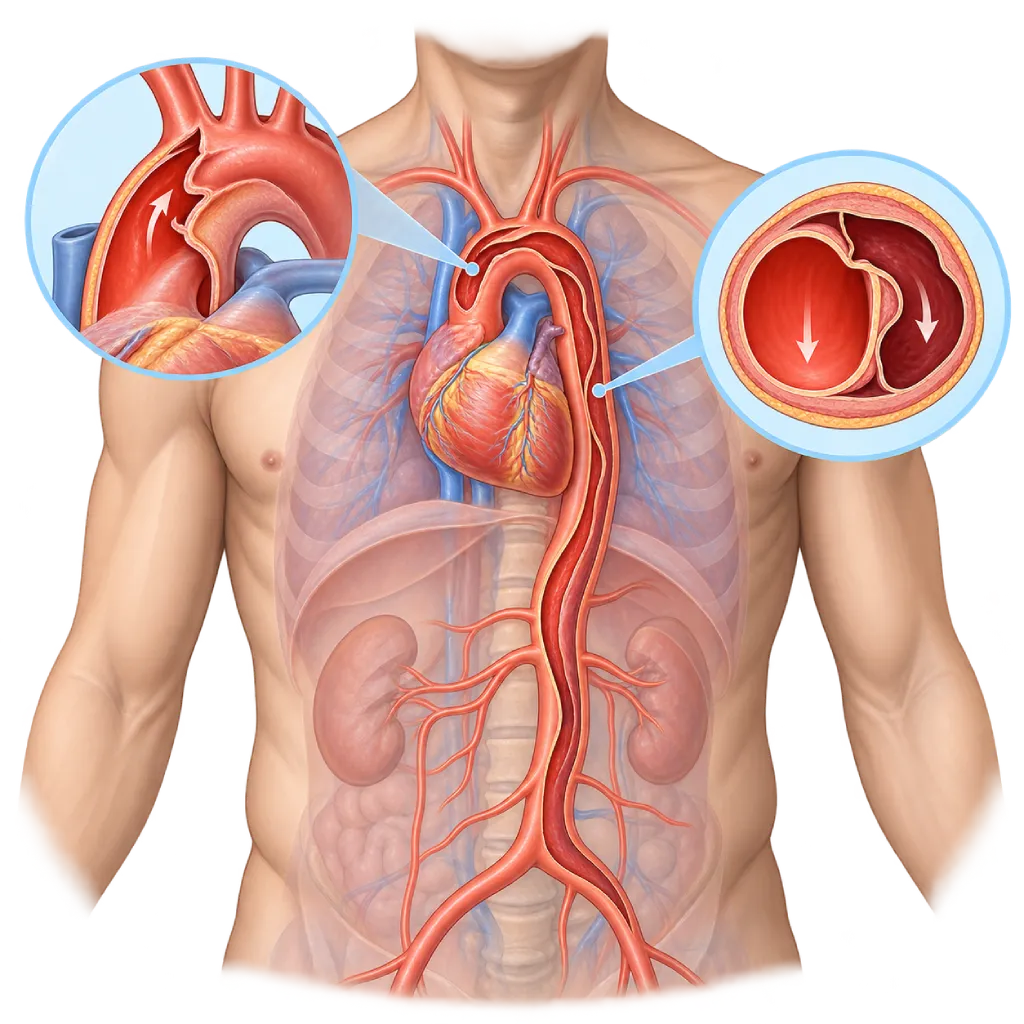
The aorta is the body's main artery. It leaves the left ventricle of the heart, rises briefly (the ascending aorta), arches over the heart, and then descends through the chest and abdomen before branching into both legs. Its wall has three layers. In aortic dissection, the inner layer of the wall tears. Blood pumped by the heart enters through the tear and splits the wall, creating a second channel inside the aortic wall called the false lumen. The false lumen can compress the true channel, block the openings of the aorta's branches, or make the outer wall thin and rupture.
Part of Acute Aortic Syndrome
Aortic dissection belongs to acute aortic syndrome, a group of emergencies affecting the aortic wall. This group also includes intramural hematoma, which is bleeding within the aortic wall without a visible tear, and penetrating atherosclerotic ulcer, which is a sore in a plaque that erodes the aortic wall. Their symptoms and treatment are similar, so doctors assess all three together.
Type A and Type B
Doctors classify dissection by the part of the aorta involved. Type A involves the ascending aorta, the part close to the heart. A tear here can extend into the aortic valve, the openings of the coronary arteries, or the sac surrounding the heart, so it usually needs emergency surgery. Type B does not involve the ascending aorta and usually begins beyond the origin of the artery to the left arm. Uncomplicated type B is usually treated with medicines and close monitoring, while complicated type B needs a procedure. The 2024 ESC guidelines also recommend recording the location of the entry tear and the affected aortic branches to plan treatment.
Why the Aortic Wall Can Tear
Dissection usually happens in an aortic wall that is already weak. High blood pressure that has gone uncontrolled for a long time is found in the majority of people affected. Other factors are an already enlarged aorta, covered on the Aortic Aneurysm page, inherited connective tissue disorders such as Marfan syndrome, a bicuspid aortic valve, previous heart or aortic surgery, severe chest injury, and cocaine or amphetamine use. In younger people, dissection is more often linked to an inherited condition.
Why It Needs Urgent Treatment
The symptoms of dissection can resemble a heart attack, pulmonary embolism, or stroke, yet the treatment is different. Blood thinners used for a heart attack, for example, can be dangerous if the cause is a dissection. For this reason, imaging of the aorta needs to be done as quickly as possible. After the acute phase has passed, people who have had aortic dissection need lifelong blood pressure control and regular aortic imaging, because the remaining parts of the aorta can widen over time.
02 / Understanding the condition
Symptoms to Recognize.
Common Symptoms
- Chest or back pain that starts suddenly and is extremely severe from the start
- Sharp pain that feels like stabbing or tearing
- Pain that moves to the neck, jaw, abdomen, or legs as the tear spreads
- Cold sweat, paleness, and restlessness
- A clear difference in blood pressure or pulse between the right and left arms
- Nausea or vomiting along with the pain
Symptoms in Older Adults
In older adults, the pain is often not sudden or not very severe, so dissection is easily mistaken for another illness.
- Chest, back, or abdominal pain that is not very severe or comes on gradually
- Sudden weakness, confusion, or appearing disoriented
- Shortness of breath or a drop in blood pressure without a clear cause
- Fainting without the typical pain beforehand
03 / Understanding the condition
What Causes This Condition?
- High blood pressure that has gone uncontrolled for a long time, constantly straining the aortic wall
- A weakened and enlarged aortic wall (aortic aneurysm), including from aging
- Inherited connective tissue disorders, such as Marfan syndrome, Loeys-Dietz syndrome, and vascular Ehlers-Danlos syndrome
- Bicuspid aortic valve, an aortic valve with two leaflets that often comes with a fragile aortic wall
- Atherosclerotic plaque that erodes the aortic wall until it forms a sore (ulcer)
- Severe chest injury, for example from a traffic accident, or injury during catheter procedures and heart surgery
- Sudden surges in blood pressure, for example from cocaine, amphetamines, or lifting very heavy weights
04 / Understanding the condition
Who Is at Higher Risk?
Medical
Hypertension, aortic aneurysm, bicuspid aortic valve, coarctation of the aorta, and previous heart or aortic surgery. Inflammation of the blood vessel wall (vasculitis) affecting the aorta also adds to the risk.
Genetic
Marfan syndrome, Loeys-Dietz syndrome, vascular Ehlers-Danlos syndrome, Turner syndrome, and thoracic aortic disease that runs in families. A family history of aortic aneurysm or dissection should be shared with your doctor.
Age
On average, it occurs in people in their 60s, and about two thirds of people affected are men. Under age 40, the cause is more often an inherited condition.
Lifestyle
Smoking, cocaine or amphetamine use, and lifting very heavy weights that make blood pressure surge. Not taking blood pressure medicine regularly also adds to the risk.
Other
Pregnancy, especially the third trimester and the period after giving birth, in women with an aortic or connective tissue disorder. Severe chest injury and medical procedures on the aorta can also trigger dissection.
Groups at Higher Risk
- People with Uncontrolled Hypertension: Persistently high pressure weakens the aortic wall. Controlling blood pressure is the main preventive step.
- People with Aortic Aneurysm: An aorta that is already enlarged tears more easily, so its size is monitored regularly and it is repaired when it reaches the limit set by the doctor.
- People with Marfan Syndrome and Connective Tissue Disorders: Dissection can occur at a young age and at a smaller aortic size, so regular aortic imaging is needed.
- People with a Bicuspid Aortic Valve: A valve with two leaflets often comes with widening of the ascending aorta, so the size of the aorta is assessed together with valve function.
- Close Relatives of People with Aortic Dissection: Aortic disease can be inherited. The doctor may recommend aortic imaging and genetic counseling for parents, siblings, and children.
05 / Understanding the condition
How Is It Diagnosed?
In the emergency room, the doctor asks about the nature of the pain and any history of high blood pressure, aortic abnormalities, or aortic disease in the family. The doctor measures blood pressure in both arms, feels the pulses in the arms and legs, and listens to the heart sounds. These three are combined in the aortic dissection detection risk score (ADD-RS) to decide how quickly imaging is needed.
An ECG and a troponin test are done to distinguish dissection from a heart attack, because the symptoms can be similar. In people with a low likelihood of dissection, a normal D-dimer result helps rule it out. The main test to confirm the diagnosis is CT angiography of the aorta, a CT scan with contrast dye from the chest to the pelvis. This test shows the location of the tear, the type of dissection, and the affected aortic branches. Bedside echocardiography assesses the aortic valve and fluid around the heart. If the patient is not stable enough to be taken to the CT room, transesophageal echocardiography, an ultrasound through the esophagus, can be an option.
After the acute phase, CT or MRI of the aorta is repeated regularly to monitor the size of the aorta and the false lumen.
Physical Examination
Questions about the nature of the pain and medical history, blood pressure measurement in both arms, and checking the pulses in the arms and legs to assess the dissection risk score.
Electrocardiogram (ECG)
A recording of the heart's electrical activity, together with a troponin test, to distinguish dissection from a heart attack. A normal ECG does not rule out dissection.
D-Dimer Test
When the likelihood of dissection is low, a normal D-dimer result helps rule it out. A high result is not specific and needs to be followed by CT.
Cardiac CT Scan
CT angiography of the aorta with contrast dye from the chest to the pelvis, the main test to confirm dissection, determine its type, and see the affected branches.
Echocardiography
Bedside heart ultrasound to assess the aortic valve, the aortic root, and fluid around the heart, or through the esophagus (TEE) if the patient is unstable.
Aortic Angiography
An examination of the aorta using a catheter and contrast dye, usually done together with stent graft placement, not for the initial diagnosis.
Regular CT or MRI of the aorta after the acute phase to monitor the size of the aorta and the false lumen, for example at the first, sixth, and twelfth months, then as your doctor advises.
06 / Understanding the condition
Treatment Options.
Treatment is decided by a doctor after an assessment. The categories below can help you follow the conversation with your doctor.
Intensive Care and Pain Control
Patients are cared for in an intensive care unit with close monitoring. Pain relievers are given because pain also raises blood pressure and heart rate.
Lowering Blood Pressure and Heart Rate
Medicines given by IV, usually a beta blocker first, to reduce the pressure on the aortic wall. The targets and type of medicine are set by the doctor, then continued with oral medicines.
Emergency Surgery for Type A
The torn part of the ascending aorta is replaced with a synthetic tube graft, sometimes together with the aortic valve or aortic arch. Covered on the Aortic Surgery page.
Stent Graft Placement for Type B
A fabric-covered tube is placed from inside the aorta through an artery in the groin to seal the entry tear. It is recommended for complicated type B and considered for some uncomplicated type B cases.
Medication and Monitoring for Type B
Uncomplicated type B is usually treated with medicines, close monitoring, and repeat CT to make sure the tear is not spreading and blood flow to the organs remains good.
Lifelong Follow-Up and Imaging
After going home, blood pressure is kept at the target set by your doctor, activities are adjusted, and the aorta is checked with CT or MRI regularly.
07 / Understanding the condition
Complications to Watch For.
Aortic Rupture
The thinned outer wall of the aorta can rupture and cause internal bleeding. This requires immediate surgery.
Cardiac Tamponade
Blood can seep into the sac surrounding the heart and compress it, impairing its pumping. Covered on the Cardiac Tamponade page.
Aortic Valve Leakage
A tear near the heart can damage the support of the aortic valve so the valve does not close tightly. Covered on the Aortic Regurgitation page.
Heart Attack
The tear can extend into the openings of the coronary arteries and disrupt blood flow to the heart muscle.
Stroke and Spinal Cord Problems
Blood flow to the brain or spinal cord can be disrupted, causing weakness on one side of the body or paralysis of the legs.
Reduced Blood Flow to the Kidneys, Intestines, and Legs
The false lumen can block branches of the aorta so the kidneys, intestines, or legs do not get enough blood. This is called malperfusion and needs a procedure.
Later Widening of the Aorta
The part of the aorta with a false lumen can slowly widen into an aneurysm over the following months or years, so regular imaging is needed.
08 / Understanding the condition
What Can You Do?
- Measure your blood pressure regularly and keep it at the target set by your doctor.
- Take your blood pressure medicine every day and do not stop it without consulting your doctor.
- Quit smoking and stay away from cocaine and amphetamines.
- If you have an enlarged aorta, have regular imaging on the schedule your doctor sets.
- Avoid lifting very heavy weights or exercises that make you hold your breath while straining; ask which types of exercise are safe.
- If a family member has had a dissection, aortic aneurysm, or Marfan syndrome, tell your doctor so they can assess whether you need testing.
- If you have an aortic abnormality and are planning a pregnancy, plan the pregnancy and delivery together with a cardiologist.
09 / Understanding the condition
When Should You See a Doctor?
Aortic dissection is an emergency. If you or someone near you has sudden, extremely severe chest, back, or abdominal pain, call an ambulance (119) right away or ask someone to take you to the nearest emergency room. Do not drive yourself and do not wait for the pain to ease. Tell the staff if you have high blood pressure, an enlarged aorta, or Marfan syndrome.
Make a consultation appointment with a doctor if:
- You have had aortic dissection and need blood pressure follow-up and regular imaging
- Test results show an enlarged aorta or a bicuspid aortic valve
- A close family member has had aortic dissection or aneurysm, or has Marfan syndrome
- Your blood pressure is often high even though you take medicine
- You are planning a pregnancy and have an aortic or connective tissue disorder
10 / Common questions
Questions You May Have.
Frequently asked questions about aortic dissection.
What is the difference between aortic dissection and a heart attack?
A heart attack happens because a coronary artery is blocked, while aortic dissection is a tear in the wall of the main artery. Both can cause severe chest pain. Dissection pain is usually extremely strong right from the start, feels sharp or tearing, and often spreads to the back. The treatments are different, so doctors confirm the cause with an ECG, blood tests, and CT before giving blood thinners.
What is the difference between aortic dissection and aortic aneurysm?
An aneurysm is a widening of the aorta that usually develops slowly and often without symptoms. A dissection is a tear in the inner layer of the aortic wall that happens suddenly. An enlarged aorta tears more easily, but dissection can also happen in an aorta of normal size. Monitoring and repair of an enlarged aorta are covered on the Aortic Aneurysm page.
Does every aortic dissection need surgery?
Not always. Type A dissection, which involves the aorta near the heart, usually needs emergency surgery. Uncomplicated type B dissection is usually treated with medicines that lower blood pressure and heart rate, along with close monitoring. If complications appear, for example reduced blood flow to an organ, pain that does not ease, or rapid widening of the aorta, the doctor considers stent graft placement or surgery.
What is life like after aortic dissection?
Many survivors can return to their daily activities. The keys are well-controlled blood pressure, medicines taken regularly, and regular CT or MRI of the aorta, because the remaining aorta can widen. Light to moderate exercise such as walking is generally recommended, while heavy lifting and exercise that makes you strain should be discussed with your doctor first.
Can aortic dissection run in families?
Some cases can. Connective tissue disorders such as Marfan syndrome, Loeys-Dietz syndrome, and vascular Ehlers-Danlos syndrome, as well as familial thoracic aortic disease, can be inherited. If dissection happens at a young age or other family members are affected, the doctor may recommend genetic testing and aortic imaging for the parents, siblings, and children of the person affected. Marfan syndrome is covered on the Marfan Syndrome page.
What should you do while waiting for the ambulance?
Ask the person to lie down or sit calmly, and do not let them walk or strain. Do not give any food, drink, or medicine without instructions from medical staff. Prepare a list of their medicines and medical history to share in the emergency room. If they are unconscious and not breathing normally, start chest compressions while waiting for help to arrive.
Sources and Medical Review
Translated from the Indonesian edition medically reviewed by dr. Suko Adiarto, Sp.JP(K), Ph.D..
Sources as cited in the Indonesian edition.
- Mazzolai L, Teixido-Tura G, Lanzi S, Boc V, Bossone E, Brodmann M, et al. 2024 ESC Guidelines for the management of peripheral arterial and aortic diseases. Eur Heart J. 2024;45(36):3538-700.
- Isselbacher EM, Preventza O, Hamilton Black J 3rd, Augoustides JG, Beck AW, Bolen MA, et al. 2022 ACC/AHA Guideline for the Diagnosis and Management of Aortic Disease: A Report of the American Heart Association/American College of Cardiology Joint Committee on Clinical Practice Guidelines. Circulation. 2022;146(24):e334-482.
- Czerny M, Grabenwöger M, Berger T, Aboyans V, Della Corte A, Chen EP, et al. EACTS/STS Guidelines for diagnosing and treating acute and chronic syndromes of the aortic organ. Eur J Cardiothorac Surg. 2024;65(2):ezad426.
- Malaisrie SC, Szeto WY, Halas M, Girardi LN, Coselli JS, Sundt TM 3rd, et al. 2021 The American Association for Thoracic Surgery expert consensus document: Surgical treatment of acute type A aortic dissection. J Thorac Cardiovasc Surg. 2021;162(3):735-58.e2.
- Evangelista A, Isselbacher EM, Bossone E, Gleason TG, Eusanio MD, Sechtem U, et al. Insights From the International Registry of Acute Aortic Dissection: A 20-Year Experience of Collaborative Clinical Research. Circulation. 2018;137(17):1846-60.
- Nazerian P, Mueller C, Soeiro AM, Leidel BA, Salvadeo SAT, Giachino F, et al. Diagnostic Accuracy of the Aortic Dissection Detection Risk Score Plus D-Dimer for Acute Aortic Syndromes: The ADvISED Prospective Multicenter Study. Circulation. 2018;137(3):250-8.
Doctors Who Treat This Condition

dr. Widya T. Suwatri, Sp.BTKV, Subsp. JD(K)
Adult Cardiac Surgery
Advanced Cardiovascular Surgical Care +1 center
Clinical focusMinimally Invasive Cardiac Surgery · Coronary Artery Bypass Surgery
View Profile
dr. Suko Adiarto, Sp.JP(K), Ph.D.
Interventional Cardiology
Vascular Diagnostic and Therapeutic Center +1 center
Clinical focusCoronary Intervention · Peripheral Vascular Intervention
View Profile
dr. BRM Ario S. Kuncoro, Sp.JP(K)
Echocardiography & Cardiovascular Imaging
Cardiovascular Diagnostic Center +2 centers
Clinical focusAdvanced and 3D Echocardiography · Transesophageal Echocardiography
View Profile