
Quick answer
What Is Bentall Procedure?
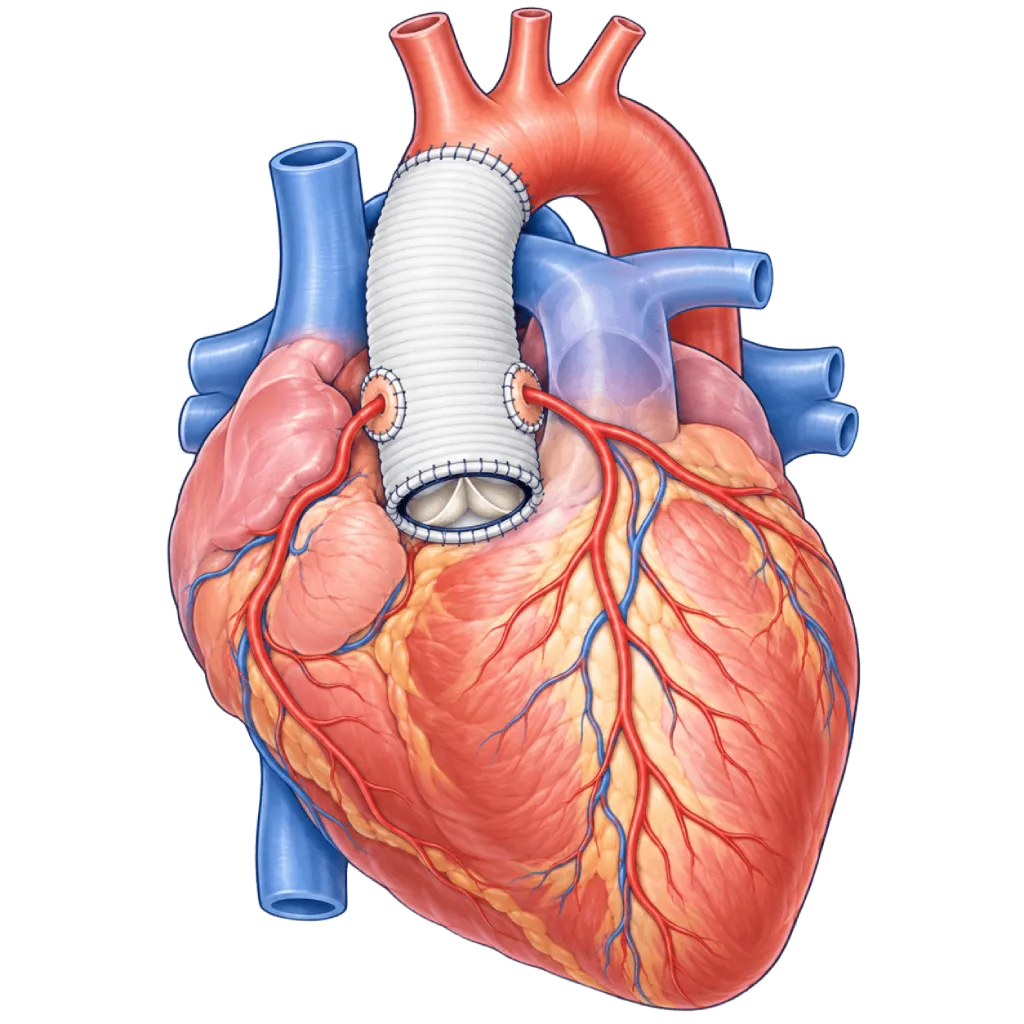
The Bentall procedure is open-heart surgery that replaces the aortic valve, the aortic root, and the initial part of the aorta at once, using a single valved artificial tube. Both coronary arteries are then reattached to this tube. The operation is usually considered when the aortic root is enlarged and the valve also has problems.
Sources01 / Understanding the procedure
About Bentall Procedure
Understanding the Aortic Root
The aorta is the main blood vessel that carries oxygen-rich blood from the heart to the rest of the body. The part attached directly to the heart is called the aortic root. This section contains the aortic valve, which keeps blood from flowing back into the left ventricle, and the starting points of the two coronary arteries that carry blood to the heart muscle.
The aortic root can enlarge slowly without causing symptoms. This enlargement is called an aneurysm, and it can be linked to long-standing high blood pressure, a bicuspid aortic valve, or connective tissue disorders such as Marfan syndrome. The wider it becomes, the higher the risk that the aortic wall will tear (dissection) or rupture.
What Is Replaced in the Bentall Procedure
The diseased aortic valve and aortic root are removed and replaced with a single artificial tube (graft) that already has an artificial valve attached at one end. The openings of both coronary arteries are detached along with a small rim of surrounding tissue, then sewn back onto the tube so the heart muscle keeps receiving blood flow. The upper end of the tube is connected to the healthy part of the aorta.
This technique was originally described by Hugh Bentall and Antony De Bono in 1968. Since then, the method has been continually refined, including the technique for reattaching the coronary arteries that is now in common use, and it has become one of the standard operations for aortic root disease.
Valve Options: Mechanical or Biological
Mechanical valves are made of durable artificial materials, but people who have one need to take a blood thinner (warfarin) for life, with regular blood tests.
Biological valves are made from animal tissue. They usually do not require lifelong blood thinners, but they can wear out over time, so at some point they may need to be replaced or treated again.
The choice of valve is discussed with your doctor, taking into account your age, pregnancy plans, bleeding risk, work and lifestyle, and your own preferences.
The Bentall Procedure and Other Surgical Options
Not every enlarged aorta is treated with the Bentall procedure. If the aortic valve leaflets are still in good condition, the surgical team may consider an operation that preserves your own valve (valve-sparing surgery), such as the David procedure. If the enlargement is only above the aortic root, the valve and the aorta can be treated separately. The heart team decides on the appropriate option based on your imaging results and your overall condition.
02 / Understanding the procedure
When Is This Procedure Considered?
A doctor may consider this procedure in the situations below. The decision is always made after a thorough assessment.
- Aortic Root Aneurysm with Valve DiseaseThe aortic root has enlarged beyond the size at which guidelines recommend surgery, while the aortic valve leaks or is narrowed and cannot be preserved.
- Type A Aortic Dissection Involving the Aortic RootA tear in the aortic wall that extends into the aortic root or valve is an emergency. In some patients, the Bentall procedure is part of the emergency surgery to treat it.
- Connective Tissue DisordersIn Marfan syndrome, Loeys-Dietz syndrome, and similar disorders, surgery may be recommended at a smaller degree of enlargement because the aortic wall is more fragile. The Bentall procedure is chosen when the aortic valve cannot be preserved.
- Bicuspid Aortic Valve with Aortic EnlargementAn aortic valve with only two leaflets is often accompanied by an enlarged aortic root. If both the valve and the aortic root need treatment, they can be replaced in one operation.
- Rapidly Growing EnlargementAn aortic size that increases quickly from one scan to the next, or symptoms suspected to come from the aorta, may lead to surgery being considered earlier.
- Valve Infection Extending to the Aortic RootIn endocarditis that causes damage or an abscess in the aortic root, replacing the aortic root may be needed as part of treating the infection.
- Alongside Aortic Valve SurgeryIf someone is about to have aortic valve surgery and their aortic root is already fairly wide, the doctor may recommend replacing the aortic root at the same time to avoid a second operation later on.
Situations to Consider First
- Aortic Valve Leaflets Still in Good ConditionAn operation that preserves your own valve may be an option, so valve replacement is not always necessary.
- Enlargement Has Not Reached the Threshold for SurgerySmall enlargement without symptoms is usually monitored regularly with imaging, along with blood pressure control.
- Very High Surgical RiskAdvanced age with poor general health, or severe disease of the lungs, kidneys, liver, or other organs, means the benefits and risks of surgery need to be weighed very carefully.
- Unable to Take Long-Term Blood ThinnersFor example, because of a high bleeding risk or pregnancy plans. This affects the choice of valve type.
- Active Infection Elsewhere in the BodyFor planned surgery, infections such as dental or skin infections usually need to be treated beforehand because bacteria can attach to the artificial valve.
03 / Before the procedure
How Should You Prepare?
Planned surgery is preceded by several visits and tests. The surgical team, your cardiologist, and the anesthesia team will give you instructions suited to your condition.
Imaging tests. Echocardiography to assess the valve and heart function, and a CT scan of the aorta to measure the aortic root and plan the surgery. An assessment of the coronary arteries, by catheterization or CT, is usually also done at certain ages or if there are risk factors for coronary artery disease.
Blood tests and other supporting tests. Blood tests, an ECG, a chest X-ray, and, if needed, a lung function test help the team assess whether your body is ready for surgery and anesthesia.
Dental check-up. Sources of infection in the teeth and gums should be treated before surgery because bacteria can attach to the artificial valve.
Current medications. Bring a complete list of your medicines and supplements. Blood thinners such as warfarin, clopidogrel, or other anticoagulants may need to be stopped or switched several days beforehand. Do not stop any medicine on your own without your doctor's instructions.
Choosing the valve type. Discuss a mechanical or biological valve with your doctor, including what taking blood thinners involves and the possibility of a repeat procedure in the future.
Stop smoking and look after your health. Quitting smoking as early as possible helps your lungs recover. Control your blood sugar and blood pressure as your doctor advises.
Fasting and the day of surgery. Follow the fasting instructions from the anesthesia team. You may be asked to be admitted to the hospital the day before surgery, shower with antiseptic soap, and remove jewelry, makeup, and nail polish.
Consent and a companion. Your doctor will explain the purpose, benefits, risks, and alternatives before you sign the consent form. Arrange for a family member or companion who can help during your hospital stay and the early weeks at home.
Unsure about the preparation instructions? Ask our team before the procedure.
04 / During the procedure
How Is the Procedure Done?
The Bentall procedure is open-heart surgery performed by the cardiac surgery team in the operating room. You are asleep under general anesthesia throughout the operation, which usually takes several hours. The team will keep your family updated during and after the operation.
Anesthesia and Monitoring
The anesthesia team gives you general anesthesia, then places a breathing tube connected to a ventilator, an IV line, a line for monitoring blood pressure, and a urinary catheter. A transesophageal echocardiography (TEE) probe is usually passed through the mouth into the esophagus to monitor the heart and valve during the operation.
Opening the Chest
The surgeon makes an incision down the middle of the chest and divides the breastbone (sternotomy) to reach the heart and aorta.
Heart-Lung Machine
Blood flow is diverted to a heart-lung machine, which takes over the work of the heart and lungs. The heart is then temporarily stopped with a special solution so the surgeon can work safely on a still heart.
Replacing the Valve and Aortic Root
The aortic valve and the enlarged section of the aorta are removed. The valved artificial tube is sewn onto the aortic valve ring at the base of the heart.
Reattaching the Coronary Arteries
The openings of both coronary arteries, along with a small rim of surrounding tissue, are sewn onto holes made in the artificial tube so the heart muscle receives blood flow again.
Connecting to the Aorta and Restarting the Heart
The upper end of the tube is sewn to the healthy aorta. Air is removed from the heart, then the heart is restarted and the heart-lung machine is gradually withdrawn. Valve function and the tightness of the connections are checked with TEE.
Closing the Chest
Drainage tubes and temporary pacing wires are placed, the breastbone is wired back together, and the skin is stitched closed. You are then moved to the intensive care unit (ICU) for close monitoring.
05 / Benefits and risks
Benefits and Risks Should Be Discussed Together.
Every medical procedure has benefits and risks. Your doctor will explain both for your situation before the procedure.
Benefits You Can Expect
- Valve and Aortic Root Treated in One OperationThe diseased valve and the enlarged aorta are replaced at the same time with a single valved artificial tube, so two separate operations are not needed.
- Lowers the Risk of the Aorta Tearing or RupturingReplacing the enlarged section of the aorta lowers the risk of dissection and rupture in that section, complications that can be life-threatening.
- Improves Blood Flow Through the ValveThe artificial valve ends the leakage or narrowing of the aortic valve, so the heart's workload is reduced. Symptoms such as shortness of breath and tiring easily may improve.
- A Long-Studied TechniqueThe Bentall procedure has been performed since 1968, and its long-term results have been examined in many studies in various countries.
- Valve Type Matched to Your NeedsA mechanical or biological valve is chosen together with your doctor based on your age, life plans, and ability to take long-term blood thinners.
The benefits of a procedure are not a promise of a cure. Ask how the results will affect your care plan.
Risks You Should Know
- BleedingBleeding after surgery may require a blood transfusion and, in a small number of patients, another operation to stop it.
- Heart Rhythm ProblemsAn irregular heart rhythm, such as atrial fibrillation, is fairly common after heart surgery and is usually treated with medication. Some patients need a permanent pacemaker.
- StrokeBlood clots or debris can travel to the brain during or after surgery. The team takes preventive measures and closely monitors for signs of stroke.
- InfectionInfection can occur in the surgical wound, breastbone, lungs, or artificial valve (endocarditis). Infection of an artificial valve is a serious complication that requires long-term treatment.
- Kidney and Lung ProblemsKidney function may decline temporarily, and some patients need breathing support for longer or develop pneumonia after surgery.
- Problems with the Tube or Coronary Artery ConnectionsThe connections can narrow, leak, or form a pouch (pseudoaneurysm). This is rare, but it may require further treatment.
- Problems Related to the Artificial ValveBlood thinners for a mechanical valve increase the risk of bleeding, and clots can form if the drug level is not kept stable. A biological valve can wear out over time and require a repeat procedure.
- Risk of DeathLike other major heart operations, the Bentall procedure carries a risk of death. The level of risk depends on age, the condition of the heart and other organs, and whether the operation is planned or an emergency. Your doctor will explain your estimated risk.
Risks can differ from person to person. A full explanation and consent are given after an individual assessment.
06 / After the procedure
What Is Recovery Like?
Recovery happens gradually. Length of stay and speed of recovery differ from person to person, depending on age, your condition before surgery, and whether the operation was planned or an emergency.
In the ICU. Usually about one to two days. The breathing tube is removed once you are awake and can breathe well. Blood pressure, heart rhythm, and fluid from the drainage tubes are monitored continuously.
On the ward. You start sitting up, walking, and practicing deep breathing and effective coughing with help from nurses and physiotherapists. The drainage tubes and temporary pacing wires are removed within a few days. The total hospital stay is usually about one week, and it may be longer if needed.
The early weeks at home. The breastbone takes about 6 to 8 weeks to heal. During this time, avoid lifting heavy objects, pushing, or pulling hard, and ask your doctor when you can drive again. Light walking, increased gradually, helps your recovery. Many daily activities can be resumed after about 4 to 6 weeks, while full recovery can take several months.
Cardiac rehabilitation. An exercise program supervised by a medical team helps restore your fitness safely. Ask your doctor whether this program is suitable for you.
Medication and regular follow-up visits. People with a mechanical valve take warfarin for life with regular INR tests. People with a biological valve may need blood thinners during the early months. Keep your blood pressure under control, and follow the schedule for echocardiography and CT or MRI of the aorta to monitor the valve and the rest of the aorta.
Protecting the valve from infection. Keep your teeth clean and have regular dental check-ups. Tell your dentist that you have an artificial valve, because certain dental procedures require preventive antibiotics.
Warning signs. Contact the medical team right away or go to the emergency room if you have:
- Fever, or a surgical wound that becomes increasingly red, swollen, or pus-filled, or opens up
- New or worsening chest pain, shortness of breath, or an irregular, pounding heartbeat
- Weakness or tingling on one side of the body, slurred speech, or a face that looks uneven
- Bleeding that is hard to stop, widespread bruising, or black stools while taking blood thinners
- Swelling in the legs or rapid weight gain over a few days
- A clicking sound from a mechanical valve that changes or cannot be heard as usual
Know the Signs That Need Prompt Care.
Follow the team's guidance on warning signs. If severe or sudden symptoms appear after the procedure, go to the nearest emergency department right away or call Heart Attack Center 1500 258.
07 / Team and support
Doctors and Procedure Support
The doctors below are listed for this procedure. Listed by name, not by ranking.

Dr. dr. Dudy A. Hanafy, Sp.BTKV, Subsp. JD(K), MARS
Adult Cardiac Surgery
Advanced Cardiovascular Surgical Care +1 center
Clinical focusMinimally Invasive Cardiac Surgery · Coronary Artery Bypass Surgery
View Profile
dr. Salomo Purba, Sp.BTKV, Subsp.JPK(K)
Pediatric and Congenital Heart Surgery
Congenital and Structural Heart Center +2 centers
Clinical focusPediatric Heart Surgery · Congenital Heart Defect Surgery
View Profile
dr. Widya T. Suwatri, Sp.BTKV, Subsp. JD(K)
Adult Cardiac Surgery
Advanced Cardiovascular Surgical Care +1 center
Clinical focusMinimally Invasive Cardiac Surgery · Coronary Artery Bypass Surgery
View ProfileOperating Theatre (Cardiac Operating Room)
An operating room dedicated to heart and blood vessel surgery, where the surgical, anesthesia, perfusion, and nursing teams work…
Live Surgery Facility
Cameras and an audio-video link in the operating room that allow an operation to be broadcast for education and discussion among…
Cardiovascular Intensive Care Unit (ICU)
An intensive care unit for heart and blood vessel patients who need close monitoring and prompt treatment, for example after…
The availability of technology and test support is confirmed with the team. Technology is chosen according to clinical need.
08 / Common questions
Before You Plan the Procedure.
Questions that patients and families often ask before a Bentall procedure. Answers specific to your situation are given by your doctor during a consultation.
How is the Bentall procedure different from a standard aortic valve replacement?
A standard aortic valve replacement only replaces the valve, while your own aorta is left in place. In the Bentall procedure, the aortic valve, the aortic root, and the initial part of the aorta are replaced at once with a single valved artificial tube, and both coronary arteries are then reattached to the tube. This operation is chosen when, in addition to the valve problem, the aortic root is also enlarged or damaged.
Will I have to take blood thinners for life?
It depends on the type of valve. People with a mechanical valve need to take warfarin for life, with regular INR tests, to prevent blood clots on the valve. People with a biological valve usually need blood thinners only during the early months, unless there is another reason such as atrial fibrillation. Do not change the dose or stop the medicine without your doctor's guidance.
Can my own valve be preserved?
If the aortic valve leaflets are still in good condition and only the aortic root is enlarged, the surgical team may consider an operation that preserves your own valve (valve-sparing surgery), such as the David procedure. This decision depends on the shape and function of the valve, assessed by echocardiography before and during surgery. If the valve cannot be preserved, the Bentall procedure is one of the options.
How long will I stay in the hospital?
After surgery, patients usually stay in the ICU for about one to two days, then move to a regular ward. The total hospital stay is usually about one week, and it can be longer if the operation was done as an emergency, if there are complications, or if recovery takes more time. The team will discuss your expected length of stay with you before surgery.
When can I return to work and drive?
The breastbone takes about 6 to 8 weeks to heal, so driving and heavy lifting are usually postponed during that time. Many people can return to non-strenuous work after about 6 to 8 weeks, while physically demanding work takes longer. Your doctor will decide the timing during your follow-up visits after surgery.
Should my family members be checked?
Enlargement of the aortic root can run in families, especially when it is linked to Marfan syndrome, Loeys-Dietz syndrome, a bicuspid aortic valve, or other genetic disorders. For this reason, your doctor may recommend that your parents, siblings, and children have an echocardiogram or another imaging test and, if needed, genetic counseling.
Sources and Medical Review
Translated from the Indonesian edition medically reviewed by Dr. dr. Dudy A. Hanafy, Sp.BTKV, Subsp. JD(K), MARS.
Sources as cited in the Indonesian edition.
- Bentall H, De Bono A. A technique for complete replacement of the ascending aorta. Thorax. 1968;23(4):338-339.
- Isselbacher EM, Preventza O, Hamilton Black J 3rd, et al. 2022 ACC/AHA Guideline for the Diagnosis and Management of Aortic Disease. Circulation. 2022;146(24):e334-e482.
- Otto CM, Nishimura RA, Bonow RO, et al. 2020 ACC/AHA Guideline for the Management of Patients With Valvular Heart Disease. Circulation. 2021;143(5):e72-e227.
- Mookhoek A, Korteland NM, Arabkhani B, et al. Bentall Procedure: A Systematic Review and Meta-Analysis. Ann Thorac Surg. 2016;101(5):1684-1690.