
Quick answer
What Is Aortic Stent Graft Placement?
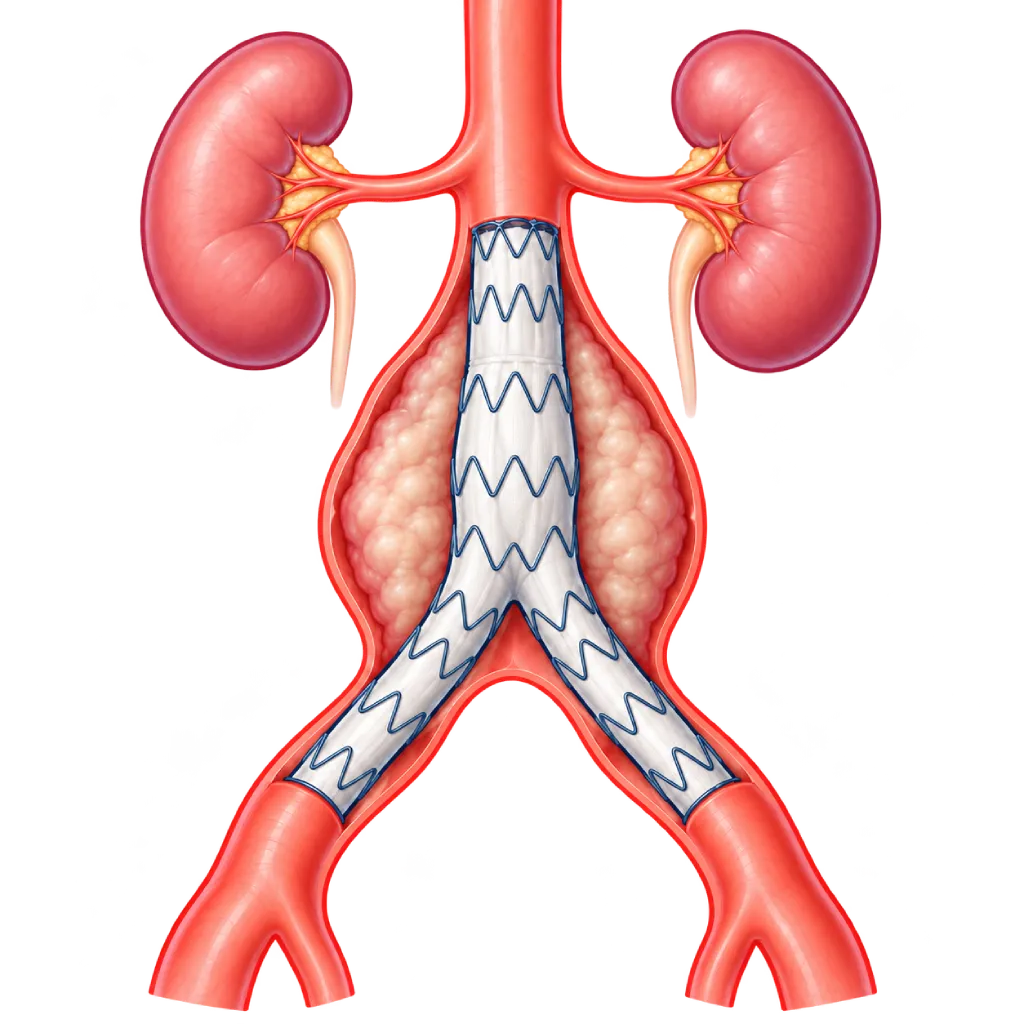
Aortic stent graft placement repairs the aorta from inside the blood vessel. A metal-framed fabric tube is inserted through an artery in the groin, then expanded in the widened or torn part of the aorta so blood flows inside the tube. It is called EVAR in the abdominal aorta and TEVAR in the chest aorta.
Sources01 / Understanding the procedure
About Aortic Stent Graft Placement
What Is an Aortic Stent Graft
The aorta is the main blood vessel that carries blood from the heart to the rest of the body. If its wall weakens and widens (aneurysm) or tears (dissection), the aorta can rupture, which is life-threatening. A stent graft is a tube made of synthetic fabric reinforced with a metal frame. The tube is placed inside the aorta through a catheter, so blood flows inside the tube and no longer pushes against the weak wall.
EVAR and TEVAR
The name of the procedure depends on which part of the aorta is repaired.
- EVAR (endovascular aneurysm repair): the stent graft is placed in the abdominal aorta, commonly for an abdominal aortic aneurysm. The stent graft is usually split into two branches that extend into the left and right pelvic (iliac) arteries.
- TEVAR (thoracic endovascular aortic repair): the stent graft is placed in the descending thoracic aorta (the downward part of the aorta in the chest), for example for a thoracic aortic aneurysm, type B aortic dissection, or aortic injury from a severe blunt impact.
When a Stent Graft Is Considered
An abdominal aortic aneurysm is usually repaired when its diameter reaches about 5.5 cm in men or 5.0 cm in women, when it grows quickly, or when it causes symptoms. A descending thoracic aortic aneurysm is usually repaired at a diameter of about 5.5 cm. In type B aortic dissection with complications, such as reduced blood flow to organs or a threat of rupture, TEVAR is the main treatment option. The decision always takes into account the shape of your aorta, your overall health, and your preferences.
Stent Graft or Open Surgery
Compared with open surgery, a stent graft does not require a large incision in the chest or abdomen, so recovery is faster and the hospital stay is shorter. However, not every aortic shape is suitable for a stent graft, for example when the healthy section of the aorta above or below the aneurysm is too short. After a stent graft, lifelong imaging is needed, and some patients need an additional procedure later on. In young patients or those with a connective tissue disorder such as Marfan syndrome, open surgery is often preferred.
02 / Understanding the procedure
When Is This Procedure Considered?
A doctor may consider this procedure in the situations below. The decision is always made after a thorough assessment.
- Abdominal Aortic Aneurysm That Needs RepairA diameter of about 5.5 cm in men or 5.0 cm in women, rapid growth, or pain, with an aortic shape suitable for a stent graft.
- Descending Thoracic Aortic AneurysmWidening of about 5.5 cm or more, or rapid growth. If the shape of the aorta is suitable, a stent graft is usually preferred over open surgery.
- Type B Aortic Dissection with ComplicationsA tear in the wall of the descending thoracic aorta that causes reduced blood flow to organs, pain that does not ease, rapid widening, or a threat of rupture.
- Ruptured Aneurysm or Aortic InjuryIn emergencies, such as a ruptured aneurysm or a tear in the aorta from an accident, a stent graft can be placed quickly if the shape of the aorta allows it.
- Other Aortic Wall DisordersFor example, an ulcer that penetrates the aortic wall (penetrating aortic ulcer) or bleeding within the aortic wall (intramural hematoma) with complications.
Situations to Consider First
- Unsuitable Aortic ShapeThe healthy section of the aorta above or below the aneurysm is too short, too angled, or too wide to hold the stent graft. A specialized stent graft or open surgery may be considered.
- Small or Tortuous Pelvic ArteriesThe catheter entry route is difficult to pass through. The team may use another access route or additional techniques.
- Aneurysm Near Important BranchesIf the aneurysm involves the origin of the arteries to the kidneys or intestines, or the vessels to the arms and brain, a fenestrated (with openings) or branched stent graft, or additional surgery, is needed to maintain blood flow to those branches.
- Connective Tissue DisordersIn Marfan syndrome and similar disorders, open surgery is usually preferred for planned procedures.
- Kidney Problems or Contrast Dye AllergySpecial preparation is needed, such as IV fluids and limiting the amount of contrast dye.
- Aortic Infection or Active InfectionAn aneurysm caused by infection requires special management, and planned procedures are usually postponed until the infection has resolved.
03 / Before the procedure
How Should You Prepare?
The team will give you written instructions based on your procedure plan.
CT angiography and other tests. CT angiography is important for measuring the aorta and choosing the size of the stent graft. Blood tests for kidney function and blood clotting, an ECG, and heart and lung tests are also done.
Current medications. Bring a list of all your medications and supplements. Blood thinners and some diabetes medications, such as metformin, may need to be adjusted. Do not stop any medication without your doctor's guidance.
Fasting. Follow the fasting instructions from the anesthesia team, usually for several hours before the procedure.
Allergies. Tell the team if you have ever had an allergy to contrast dye, medications, adhesive tape, or latex.
Stop smoking. Smoking speeds up aneurysm growth and increases the risk of complications. Stop as soon as possible; the team can help.
Plan for a companion. Arrange for someone to take you home and to help you at home for the week following the procedure.
Unsure about the preparation instructions? Ask our team before the procedure.
04 / During the procedure
How Is the Procedure Done?
The procedure is done in a catheterization lab or a hybrid operating room, which is an operating room equipped with X-ray imaging.
Anesthesia
The procedure can be done under general anesthesia, regional anesthesia, or local anesthesia with a sedative, depending on the location of the aneurysm and your condition. For procedures on the chest aorta with certain risks, a small tube may be placed in the lower back to drain the fluid around the brain and spinal cord (cerebrospinal fluid), to protect the spinal cord.
Blood Vessel Access
The doctor inserts a tube through an artery in the groin, using a needle puncture or a small incision. Sometimes an artery in the arm is also used.
Mapping the Aorta
Contrast dye is injected and X-ray images are taken to confirm the location of the aneurysm and the origins of important branches, such as the renal (kidney) arteries.
Placing the Stent Graft
The stent graft, folded inside a catheter, is pushed into position and then opened so that it presses against the healthy aortic wall above and below the aneurysm. In the abdominal aorta, the legs of the stent graft extend into the left and right pelvic (iliac) arteries. A balloon may be inflated to seal the connections.
Confirming the Result
Contrast dye is injected again to confirm that blood flows inside the stent graft and there is no leak into the aneurysm sac. The catheter is removed, and the blood vessel is closed with a closure device or stitches.
05 / Benefits and risks
Benefits and Risks Should Be Discussed Together.
Every medical procedure has benefits and risks. Your doctor will explain both for your situation before the procedure.
Benefits You Can Expect
- No Large IncisionThe stent graft is placed through a blood vessel in the groin, without opening the chest or abdomen.
- Faster RecoveryThe hospital stay is usually shorter, and you can return to your activities sooner than after open surgery.
- Prevents Aneurysm RuptureThe stent graft diverts blood flow away from the weak wall, reducing pressure on the aneurysm sac.
- An Option for High-Risk PatientsPatients at high risk from major surgery, for example because of advanced age or heart and lung disease, can still be treated.
- Rapid Treatment in EmergenciesIn aortic dissection with complications or a ruptured aneurysm, a stent graft can be placed quickly if the shape of the aorta is suitable.
The benefits of a procedure are not a promise of a cure. Ask how the results will affect your care plan.
Risks You Should Know
- Leak Around the Stent Graft (Endoleak)Blood still flows into the aneurysm sac outside the stent graft. Some leaks close on their own, while others need an additional procedure. This is why regular imaging is very important.
- Stent Graft Movement or BlockageThe stent graft can shift, or one of its legs can become blocked, so a repeat procedure may be needed.
- Problems at the Puncture SiteBleeding, bruising, or injury to the artery in the groin, which can usually be treated.
- Kidney Problems from Contrast DyeMore likely if kidney function was already reduced before the procedure.
- Spinal Cord Problems or StrokeRare, and more often linked to TEVAR: leg weakness due to reduced blood flow to the spinal cord, or stroke. The team prepares preventive measures based on your risk.
- Repeat Procedures Later OnCompared with open surgery, additional procedures are needed more often in the following years.
Risks can differ from person to person. A full explanation and consent are given after an individual assessment.
06 / After the procedure
What Is Recovery Like?
The majority of patients can start walking on the same day or the next day, and go home after a few days if there are no complications.
In the hospital. Your blood pressure, kidney function, blood flow to the legs, and the puncture site are monitored. After TEVAR, the strength and sensation in both legs are also checked regularly.
Activity. Light activity can start right away. Avoid heavy lifting and strenuous exercise for about two weeks, or longer if you have an incision in the groin.
Mild fever and aches. A few days after the procedure, some patients have a mild fever, aches, or fatigue as the body's reaction to the stent graft. These symptoms usually go away on their own, but still let the team know.
Medications and lifestyle. Take your medications as prescribed, including blood pressure and cholesterol-lowering medications, and do not go back to smoking.
Lifelong imaging. CT angiography is usually done about one month after the procedure, then regularly, usually every year. For the abdominal aorta, Doppler ultrasound may be used for some follow-up visits. These tests are important to detect leaks or movement of the stent graft early.
Warning signs. Go to the emergency room right away or contact the medical team if you have:
- Sudden, severe pain in the abdomen, back, or chest
- Swelling that keeps growing, or bleeding at the puncture site
- A leg that is cold, pale, painful, numb, or weak
- A high fever that does not go down, or a wound that is red and draining pus
- Passing much less urine than usual
Know the Signs That Need Prompt Care.
Follow the team's guidance on warning signs. If severe or sudden symptoms appear after the procedure, go to the nearest emergency department right away or call Heart Attack Center 1500 258.
07 / Team and support
Doctors and Procedure Support
The doctors below are listed for this procedure. Listed by name, not by ranking.

dr. Emanoel Oepangat, Sp.JP(K)
Interventional Cardiology
Vascular Diagnostic and Therapeutic Center +1 center
Clinical focusCoronary Intervention · Peripheral Vascular Intervention
View Profile
dr. Suko Adiarto, Sp.JP(K), Ph.D.
Interventional Cardiology
Vascular Diagnostic and Therapeutic Center +1 center
Clinical focusCoronary Intervention · Peripheral Vascular Intervention
View Profile
dr. Widya T. Suwatri, Sp.BTKV, Subsp. JD(K)
Adult Cardiac Surgery
Advanced Cardiovascular Surgical Care +1 center
Clinical focusMinimally Invasive Cardiac Surgery · Coronary Artery Bypass Surgery
View ProfileCT Scan 512 Slices
A CT scanner that produces up to 512 image slices in a single rotation to show the coronary arteries, calcium in the artery…
The availability of technology and test support is confirmed with the team. Technology is chosen according to clinical need.
08 / Common questions
Before You Plan the Procedure.
Questions patients and families often ask about aortic stent graft placement. Your treatment plan is decided after an evaluation by the team.
What is the difference between EVAR and TEVAR?
Both are catheter-based stent graft placements. EVAR is done in the abdominal aorta, usually for an abdominal aortic aneurysm. TEVAR is done in the descending thoracic aorta, for example for a thoracic aortic aneurysm, type B aortic dissection, or aortic injury. The placement technique is similar, but the preparation and risks can differ depending on the part of the aorta being repaired.
Is a stent graft better than open surgery?
It depends on your situation. A stent graft offers a shorter recovery and a lower early risk. Open surgery less often requires a repeat procedure and long-term imaging. For this reason, the long-term results of a stent graft depend heavily on regular follow-up visits and imaging. The team will weigh the shape of your aorta, your age, and your health before giving advice.
How long will I stay in the hospital, and when can I resume my activities?
After a planned EVAR, the hospital stay is usually 1 to 3 days; after TEVAR it is usually slightly longer. Light activity can start right away, but avoid heavy lifting and strenuous exercise for about two weeks, or longer if you have an incision in the groin. Ask the team when you can drive and return to work.
Why do I need regular CT scans after the procedure?
A stent graft can shift, and blood sometimes still seeps into the aneurysm sac (endoleak) without causing symptoms. Regular CT angiography or Doppler ultrasound helps find these problems early, before the aneurysm grows larger. The imaging schedule usually starts about one month after the procedure, then continues every year for life.
Can a stent graft be placed in an emergency?
Yes, if the shape of the aorta allows it and a suitable stent graft is available. A stent graft can be used for a ruptured aortic aneurysm, type B aortic dissection with complications, and a tear in the aorta caused by an accident. Sudden, severe chest, back, or abdominal pain is an emergency: go to an emergency room near you right away.
Can I have an MRI after a stent graft is placed?
The majority of stent grafts are safe for MRI under certain conditions. Keep the implant card the team gives you, because it lists the type and brand of the stent graft, which MRI staff need to know. Airport metal detectors are usually not affected, but the implant card helps if staff ask.
Sources and Medical Review
Translated from the Indonesian edition medically reviewed by dr. Salomo Purba, Sp.BTKV, Subsp.JPK(K).
Sources as cited in the Indonesian edition.
- Isselbacher EM, Preventza O, Hamilton Black J, et al. 2022 ACC/AHA Guideline for the Diagnosis and Management of Aortic Disease. Circulation. 2022;146(24):e334-e482.
- Mazzolai L, Teixido-Tura G, Lanzi S, et al. 2024 ESC Guidelines for the management of peripheral arterial and aortic diseases. Eur Heart J. 2024;45(36):3538-3700.
- Chaikof EL, Dalman RL, Eskandari MK, et al. The Society for Vascular Surgery practice guidelines on the care of patients with an abdominal aortic aneurysm. J Vasc Surg. 2018;67(1):2-77.e2.
- Patel R, Sweeting MJ, Powell JT, et al. Endovascular versus open repair of abdominal aortic aneurysm in 15-years' follow-up of the UK endovascular aneurysm repair trial 1 (EVAR trial 1): a randomised controlled trial. Lancet. 2016;388(10058):2366-2374.