
Quick answer
What Is Cardiac CT Scan?
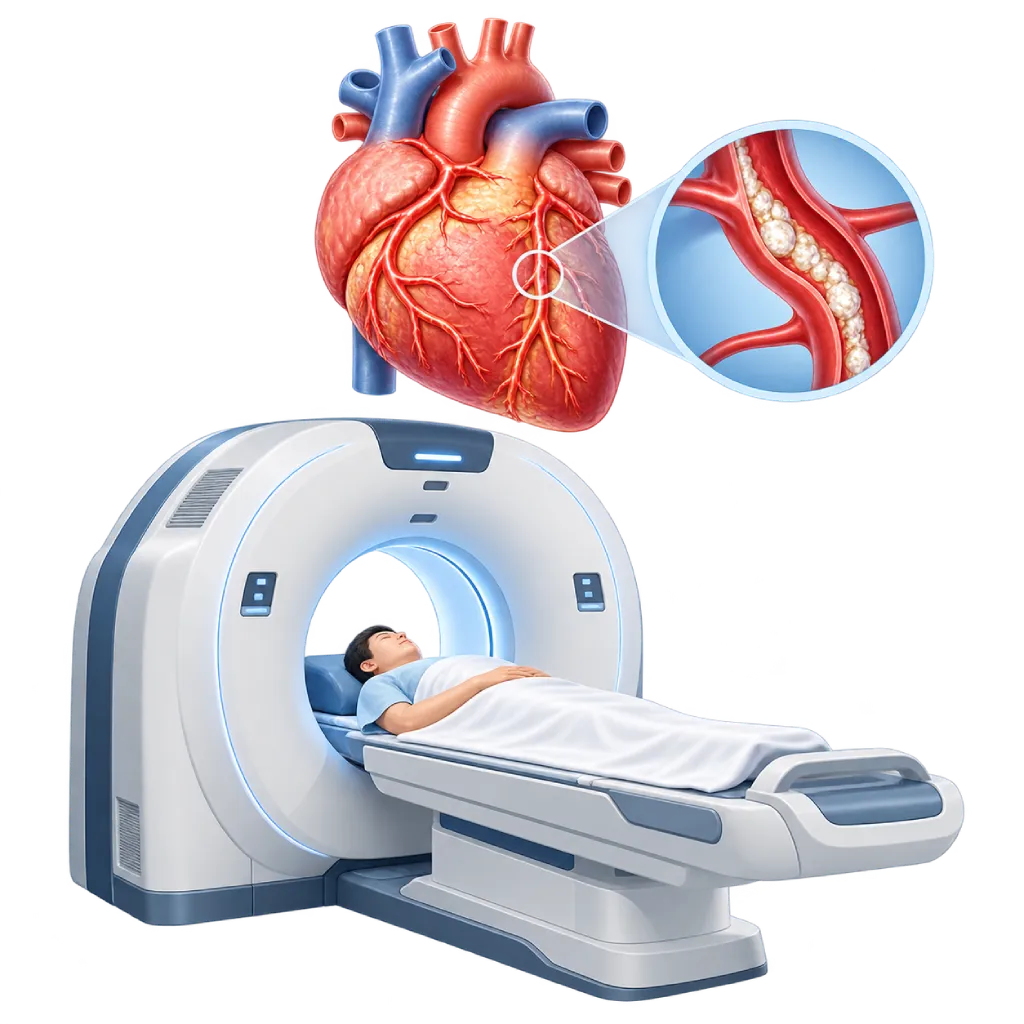
A cardiac CT scan is a test using rotating X-rays that images the heart in a few seconds and builds a 3D picture. Without contrast, it calculates a coronary calcium score to assess risk. With contrast through an IV, it shows coronary narrowing and heart structures. Time in the CT room is usually 10 to 30 minutes.
Sources01 / Understanding the procedure
About Cardiac CT Scan
What Is a Cardiac CT Scan
A cardiac CT scan is an imaging test that uses X-rays rotating around the chest. The scan is synchronized with an ECG recording so the images are taken when the heart is relatively still between two beats. A computer then assembles hundreds of slices into a three-dimensional image of the heart and its blood vessels. There are several types of cardiac CT, and the doctor chooses one based on the question to be answered.
Coronary Calcium Score
This test is done without contrast and needs only a few seconds of scanning. CT measures calcium, which is chalky deposits in plaque on the walls of the coronary arteries, and turns it into a number called the calcium score or Agatston score. A score of zero means no calcified plaque is seen, while a high score indicates more plaque and a higher risk of heart attack. This score helps the doctor decide whether cholesterol-lowering medication is needed in people without symptoms who are at intermediate risk.
CT Coronary Angiography
With iodinated contrast injected through an IV in the arm, CT shows the inside of the coronary arteries, plaque that has not yet calcified, and the degree of narrowing, without inserting a catheter. Guidelines recommend this test for chest pain when the likelihood of coronary artery disease is low to moderate. Preparation, the procedure, and what the results mean are covered on the CT Coronary Angiography page.
CT for Heart Structures
Contrast CT is also used to measure the aortic valve, the aorta, and the blood vessel access route before valve replacement through a catheter, which is covered on the Transcatheter Aortic Valve Implantation (TAVI) page. CT helps map the left atrium and pulmonary veins before certain heart rhythm procedures, and assesses the aorta, the sac around the heart, heart tumors, and congenital heart abnormalities in adults.
Radiation and Contrast
Cardiac CT uses X-rays, but the dose is kept as low as possible for the images needed, and the calcium score uses a low dose. Iodinated contrast is generally safe. The risk of allergy and kidney problems is assessed beforehand, especially in people with kidney disease, diabetes, or a history of contrast allergy.
CT or Other Tests
CT shows the shape of the blood vessels and plaque, while stress tests such as stress echocardiography or myocardial perfusion imaging assess how a narrowing affects blood flow to the heart muscle. Cardiac catheterization is needed when a severe narrowing must be confirmed and treated right away. The doctor chooses the combination of tests that suits you.
02 / Understanding the procedure
When Is This Procedure Considered?
A doctor may consider this procedure in the situations below. The decision is always made after a thorough assessment.
- Chest Pain with Suspected Coronary Artery DiseaseContrast coronary CT as the first test when the likelihood is low to moderate.
- Assessing Risk in People Without SymptomsThe calcium score helps decide whether cholesterol-lowering medication is needed.
- Inconclusive Stress Test ResultsConfirms whether the coronary arteries are narrowed.
- Before Transcatheter Aortic Valve ReplacementMeasures the valve, the aorta, and the leg arteries to plan the procedure.
- Aortic or Pericardial Abnormalities, or Heart TumorsShows the shape and size of the abnormality before a procedure or for monitoring.
- Coronary Artery Anomalies or Bypass GraftsMaps unusual vessel pathways and assesses bypass grafts.
Situations to Consider First
- PregnancyX-ray tests are avoided unless the benefit is clearly greater.
- Severe Allergy to Iodinated ContrastFor contrast CT; the doctor considers another test or medication to prevent an allergic reaction.
- Severe Kidney ImpairmentFor contrast CT; the benefit is weighed and kidney function is checked first.
- Fast or Irregular Heart RateCoronary images can be blurred, so the heart rate is slowed or another test is chosen.
- Uncontrolled HyperthyroidismThe iodine in contrast can worsen a thyroid disorder.
03 / Before the procedure
How Should You Prepare?
Preparation depends on the type of cardiac CT. The team will give you written instructions when your test is scheduled.
Calcium score. No fasting or IV is needed. Avoid coffee and smoking for a few hours beforehand so your heart rate stays calm.
Contrast CT. You usually need to stop eating 2 to 4 hours beforehand; plain water is still allowed. Avoid coffee, tea, energy drinks, and smoking for at least 12 hours beforehand.
Medications. Regular medications are usually still taken. Tell the team if you have taken erectile dysfunction medication in the last 2 days, because nitroglycerin must not be given at the same time. Rules for metformin follow your doctor's instructions.
Kidneys, allergies, and pregnancy. Let the team know if you have kidney disease, diabetes, asthma, or a thyroid disorder, have had a contrast allergy before, or might be pregnant.
Unsure about the preparation instructions? Ask our team before the procedure.
04 / During the procedure
How Is the Procedure Done?
Cardiac CT is done in the CT room without anesthesia. A calcium score takes about 10 to 15 minutes, while contrast CT usually takes less than 30 minutes in the CT room, with the whole visit taking about 1 to 2 hours including preparation and monitoring.
Preparation in the CT Room
ECG electrodes are attached to your chest. For contrast CT, a small IV line is placed in your arm, and if your heart rate is still fast, you are given medication to slow it down. For coronary CT, a nitroglycerin tablet or spray under the tongue may be given to widen the coronary arteries.
Lying Down and Holding Your Breath
You lie on your back on the CT table with both arms above your head. The staff will have you practice holding your breath for a few seconds, because breathing movements can blur the images.
Scanning
The table moves into the ring of the CT scanner and the scan takes a few seconds. With contrast CT, you may feel warm all over your body or briefly feel as if you need to urinate; this is normal and passes quickly.
Reading the Results
A computer assembles three-dimensional images, then the doctor calculates the calcium score or assesses the coronary arteries and heart structures, and writes a report.
05 / Benefits and risks
Benefits and Risks Should Be Discussed Together.
Every medical procedure has benefits and risks. Your doctor will explain both for your situation before the procedure.
Benefits You Can Expect
- Seeing the Coronary Arteries Without a CatheterImages are taken from outside the body; contrast is simply given through an IV in the arm.
- Assessing Risk EarlyThe calcium score finds calcified plaque before symptoms appear.
- A Normal Result Is ReliableClear coronary arteries almost rule out narrowing as the cause of your symptoms.
- A Three-Dimensional Map for ProceduresHelps plan transcatheter valve replacement and other heart procedures.
- Scanning Takes Only a Few SecondsTime inside the scanner is short and the scan itself is painless.
The benefits of a procedure are not a promise of a cure. Ask how the results will affect your care plan.
Risks You Should Know
- Radiation ExposureThe dose is kept as low as possible; the calcium score uses a low dose.
- Allergic Reaction to ContrastUsually mild, such as itching or a rash; severe reactions are rare.
- Kidney Function ProblemsThe risk is low with normal kidneys and receives more attention in severe kidney disease.
- Side Effects of Preparation MedicationsHeadache, dizziness, or a brief drop in blood pressure after nitroglycerin.
- Incidental FindingsSometimes an abnormality is seen in the lungs or other organs that needs further testing.
Risks can differ from person to person. A full explanation and consent are given after an individual assessment.
06 / After the procedure
What Is Recovery Like?
After a calcium score, you can go home right away and resume your usual activities. After contrast CT, you are monitored briefly and then the IV is removed.
After contrast. Drink plenty of water to help your kidneys clear the contrast, unless your doctor limits your fluids. A mild headache from nitroglycerin usually goes away on its own.
Test results. The doctor explains the results during your consultation. The calcium score is used together with other risk factors to plan prevention, while any narrowing found can be followed up with a stress test or cardiac catheterization.
Warning signs to watch for. Contact the medical team right away or go to the emergency room if you experience:
- Itching, a rash, or facial swelling after contrast
- Shortness of breath or chest pain
- Swelling, pain, or redness at the IV site
- Passing much less urine than usual
Know the Signs That Need Prompt Care.
Follow the team's guidance on warning signs. If severe or sudden symptoms appear after the procedure, go to the nearest emergency department right away or call Heart Attack Center 1500 258.
07 / Team and support
Doctors and Procedure Support
The doctors below are listed for this procedure. Listed by name, not by ranking.

Dr. med. dr. Denio A. Ridjab, Sp.JP(K)
Interventional Cardiology
Coronary Intervention Procedures +2 centers
Clinical focusInterventional Cardiology · Coronary Artery Disease
View Profile
dr. Ika Ruriana, Sp.Rad
Radiology
Cardiovascular Diagnostic Center
Clinical focusDiagnostic Radiology · Radiography (X-Ray)
View Profile
dr. Sri Diniharini, Sp.JP(K)
Echocardiography & Cardiovascular Imaging
Cardiovascular Diagnostic Center +1 center
Clinical focusAdvanced Echocardiography · Transesophageal Echocardiography
View ProfileCT Scan 512 Slices
A CT scanner that produces up to 512 image slices in a single rotation to show the coronary arteries, calcium in the artery…
The availability of technology and test support is confirmed with the team. Technology is chosen according to clinical need.
08 / Common questions
Before You Plan the Procedure.
Frequently asked questions about cardiac CT scans, from the types of tests to radiation and results.
How is a cardiac CT scan different from CT coronary angiography?
A cardiac CT scan is a general name for several types of CT tests of the heart. CT coronary angiography is one of them: a contrast CT to see the inside of the coronary arteries and any narrowing. Other types are the calcium score without contrast and CT of heart structures, for example before valve replacement. The doctor decides which type suits the question about your symptoms.
Who should have a calcium score test?
The calcium score is mainly useful for people without symptoms aged about 40 to 75 years with an intermediate risk of heart disease, for whom it is not yet clear whether cholesterol-lowering medication is needed. A score of zero may allow some people to postpone medication, while a high score supports stronger prevention. This test is not recommended as routine screening for everyone.
Is the radiation dangerous?
Cardiac CT uses X-rays at a dose kept as low as possible. The calcium score uses a low dose, roughly equal to a few months of natural background radiation from the environment. The dose for contrast CT is higher, but on modern equipment it is generally still low. Your doctor requests this test when the benefits outweigh the risks. Let the team know if you might be pregnant.
Do I need to fast?
For a calcium score without contrast, you do not need to fast. For contrast CT, you are usually asked to stop eating 2 to 4 hours beforehand, while plain water is still allowed. For both types, avoid coffee, tea, energy drinks, and smoking beforehand because they can speed up your heart rate and blur the images. Follow the written instructions from the team.
Can I have a cardiac CT if I already have a stent?
Yes, but its usefulness depends on the purpose. A calcium score is no longer needed if you are already known to have coronary artery disease or already have a stent. On coronary CT, the metal of a small stent can create shadows that hide its inside, while bypass grafts can usually be assessed well. The doctor will choose the appropriate test.
How long does it take to get the results?
Scanning takes only a few seconds, but the images need to be assembled and carefully assessed by the doctor. Calcium score results are usually faster, while coronary CT and cardiac structure CT take longer to read. The team will tell you when the report will be ready at the time of your test, and the doctor explains what the results mean during your consultation.
Sources and Medical Review
Translated from the Indonesian edition medically reviewed by dr. Sri Diniharini, Sp.JP(K).
Sources as cited in the Indonesian edition.
- Vrints C, Andreotti F, Koskinas KC, et al. 2024 ESC Guidelines for the management of chronic coronary syndromes. Eur Heart J. 2024;45(36):3415-3537.
- Gulati M, Levy PD, Mukherjee D, et al. 2021 AHA/ACC/ASE/CHEST/SAEM/SCCT/SCMR Guideline for the Evaluation and Diagnosis of Chest Pain: A Report of the American College of Cardiology/American Heart Association Joint Committee on Clinical Practice Guidelines. Circulation. 2021;144(22):e368-e454.
- Arnett DK, Blumenthal RS, Albert MA, et al. 2019 ACC/AHA Guideline on the Primary Prevention of Cardiovascular Disease: A Report of the American College of Cardiology/American Heart Association Task Force on Clinical Practice Guidelines. Circulation. 2019;140(11):e596-e646.
- Hecht H, Blaha MJ, Berman DS, et al. Clinical indications for coronary artery calcium scoring in asymptomatic patients: Expert consensus statement from the Society of Cardiovascular Computed Tomography. J Cardiovasc Comput Tomogr. 2017;11(2):157-168.
- Blanke P, Weir-McCall JR, Achenbach S, et al. Computed tomography imaging in the context of transcatheter aortic valve implantation (TAVI)/transcatheter aortic valve replacement (TAVR): An expert consensus document of the Society of Cardiovascular Computed Tomography. J Cardiovasc Comput Tomogr. 2019;13(1):1-20.
- Davenport MS, Perazella MA, Yee J, et al. Use of Intravenous Iodinated Contrast Media in Patients with Kidney Disease: Consensus Statements from the American College of Radiology and the National Kidney Foundation. Radiology. 2020;294(3):660-668.