
Quick answer
What Is Aortic Surgery?
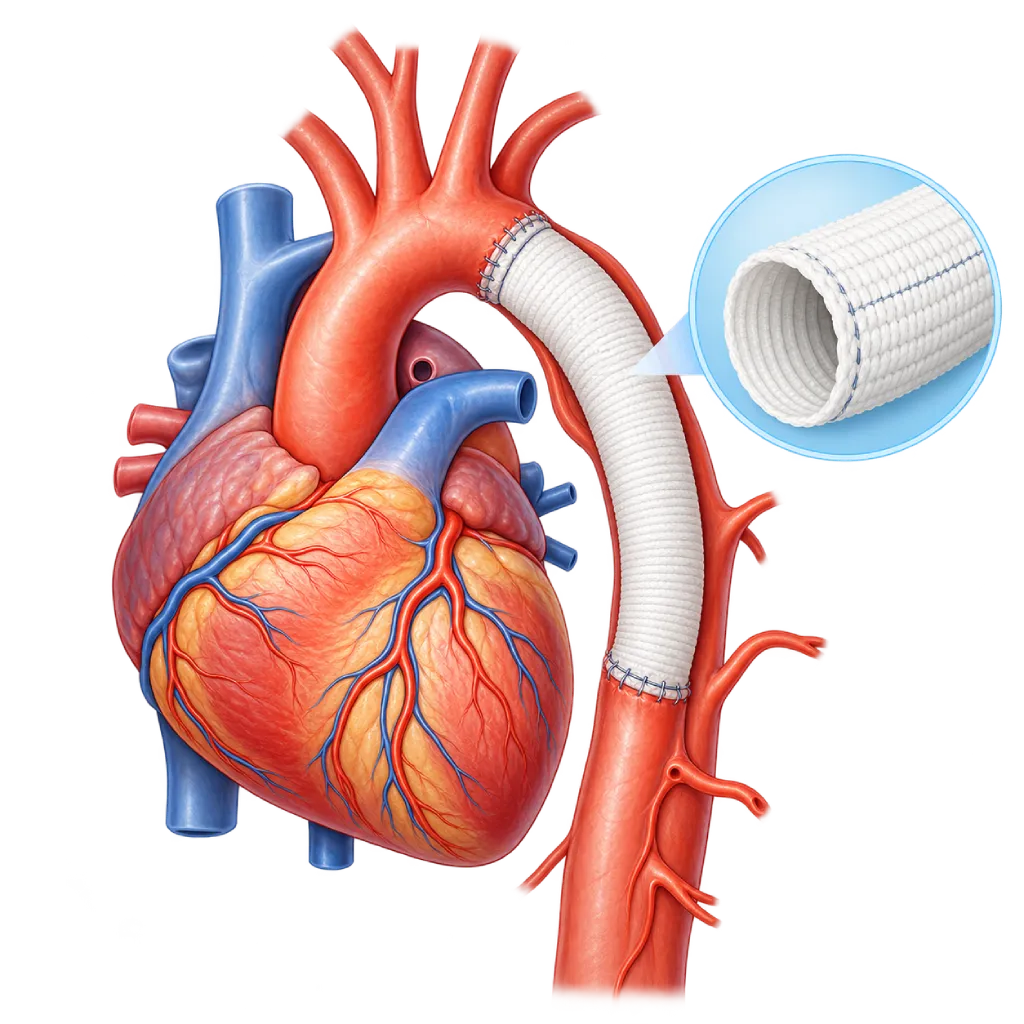
Aortic surgery is open surgery to replace a section of the aorta that is widened (aneurysm), torn (dissection), or damaged with an artificial tube. Surgery on the chest aorta usually uses a heart-lung machine, while surgery on the abdominal aorta is done through an abdominal incision. It takes about 3 to 6 hours, depending on the section repaired.
Sources01 / Understanding the procedure
About Aortic Surgery
What Is Aortic Surgery
The aorta is the main blood vessel that carries blood from the heart to the rest of the body. The aorta leaves the heart, arches in the chest, then runs down through the chest and abdomen before branching into both legs. Aortic surgery is open surgery to repair the affected section of the aorta. The damaged section is usually replaced with an artificial tube (graft) made of synthetic fabric that is sewn to the healthy aorta.
Conditions Treated
- Aortic aneurysm: widening of the aortic wall in the chest or abdomen that keeps growing and may rupture.
- Aortic dissection: a tear in the inner layer of the aortic wall. A dissection that involves the ascending aorta (type A) requires emergency surgery.
- Aortic root disease: widening near the aortic valve, which is often treated together with the valve.
- Other conditions: for example, aortic infection, aortic injury, or problems with a graft from previous surgery.
Types of Surgery by Location
Surgery on the ascending aorta and aortic arch is done through an incision in the middle of the chest with the help of a heart-lung machine. In aortic arch surgery, the body temperature is lowered and blood flow to the body is stopped temporarily, while the brain continues to receive blood through special tubes (cannulas). The descending thoracic aorta and the thoracoabdominal aorta (spanning the chest and abdomen) are operated on through an incision in the side of the chest, often with special protection for the spinal cord. An abdominal aortic aneurysm is operated on through an incision in the abdomen without a heart-lung machine.
Aortic Root Surgery
If the widening is at the aortic root and the aortic valve also has a problem, the valve and aortic root can be replaced at the same time, which is covered on the Bentall Procedure page. If the valve leaflets are still in good condition, the doctor may preserve your own valve and replace only the surrounding aortic wall.
Open Surgery or Stent Graft
Some aneurysms and dissections can be treated from inside the blood vessel with a stent graft, without opening the chest or abdomen, which is covered on the Aortic Stent Graft Placement (Endovascular Aortic Repair) page. For abdominal aortic aneurysm, this option is covered on the Endovascular Aneurysm Repair page. Open surgery is usually chosen for the ascending aorta and aortic arch, for young patients with a long life expectancy, for connective tissue disorders such as Marfan syndrome, or when the shape of the aorta is not suitable for a stent graft. In some patients, both approaches are combined (hybrid procedure).
The Team and Long-Term Monitoring
Aortic surgery is performed by thoracic, cardiac, and vascular surgeons together with anesthesiologists, perfusionists who run the heart-lung machine, and the intensive care team. After surgery, regular CT angiography is still needed because other sections of the aorta can widen later on.
02 / Understanding the procedure
When Is This Procedure Considered?
A doctor may consider this procedure in the situations below. The decision is always made after a thorough assessment.
- Large Thoracic Aortic AneurysmUsually at a diameter of about 5.5 cm, or smaller in connective tissue disorders.
- Type A Aortic DissectionA tear in the wall of the ascending aorta that requires emergency surgery.
- Abdominal Aortic Aneurysm Not Suitable for a Stent GraftOr in young patients in good health with a long life expectancy.
- Aortic Root WideningOften accompanied by aortic valve disease, including a bicuspid aortic valve.
- Thoracoabdominal Aortic AneurysmWidening that extends from the chest to the abdomen and involves the branches to internal organs.
- Infection or Problems with a Previous GraftFor example, aortic infection or a leak at a connection from previous surgery.
Situations to Consider First
- Small Aneurysm Without SymptomsUsually just monitored and controlled with medication and a healthy lifestyle.
- Type B Aortic Dissection Without ComplicationsUsually treated with medication; a stent graft is considered if complications develop.
- Very High Surgical RiskFor example, severe heart, lung, or kidney disease; a stent graft or medication is considered.
- Very Frail General ConditionAge and other illnesses are considered; the decision is made together with the patient and family.
03 / Before the procedure
How Should You Prepare?
For planned surgery, preparation takes place a few days to a few weeks beforehand. For type A aortic dissection or a ruptured aneurysm, preparation is done quickly because the surgery is an emergency.
Aortic imaging. CT angiography maps the affected section of the aorta and its branches. Echocardiography assesses the valves and heart function.
Heart and other organ tests. These may include coronary angiography, lung function tests, kidney function tests, and blood tests.
Medications. Tell the team about all the medications you take. Blood thinners and certain other medications may be stopped or adjusted according to your doctor's instructions.
Teeth and skin. If time allows, dental or skin infections are treated first to reduce the risk of infection of the graft.
Quitting smoking and fasting. Quitting smoking as soon as possible helps your lungs recover. You will be asked to fast from the night before surgery.
Consent. The doctor explains the type of surgery, its risks, and the plan for care in the ICU.
Unsure about the preparation instructions? Ask our team before the procedure.
04 / During the procedure
How Is the Procedure Done?
Aortic surgery is done in the operating room under general anesthesia. It usually takes 3 to 6 hours, and may take longer for aortic arch or thoracoabdominal aortic surgery. Abdominal aortic surgery does not require a heart-lung machine.
Anesthesia and Monitoring
The anesthesia team places a breathing tube, IV lines, and blood pressure monitoring devices. Ultrasound through the esophagus (TEE) may be used to monitor the heart. In surgery on the descending thoracic aorta, a small tube may be placed in the lower back to protect the spinal cord.
Opening the Chest or Abdomen
The doctor makes an incision based on the location of the aorta: in the middle of the chest, on the side of the chest, or in the abdomen.
Diverting Blood Flow
For the ascending aorta and aortic arch, a heart-lung machine takes over the work of the heart and lungs. In aortic arch surgery, the body temperature is lowered and blood flow to the brain is maintained through special tubes (cannulas). For the abdominal aorta, the aorta is clamped temporarily above and below the aneurysm.
Replacing the Aortic Section
The damaged section of the aorta is opened, then the graft is sewn to the healthy aorta at both ends. Important branches, such as the vessels to the brain, intestines, or kidneys, are reconnected if needed.
Closing the Incision
After the connections are confirmed to be tight and blood flow is restored, drainage tubes are placed and the incision is closed. You are then moved to the ICU.
05 / Benefits and risks
Benefits and Risks Should Be Discussed Together.
Every medical procedure has benefits and risks. Your doctor will explain both for your situation before the procedure.
Benefits You Can Expect
- Prevents Aortic RuptureThe widened section is replaced, so the risk of rupture from that section is greatly reduced.
- Emergency Treatment for Type A DissectionPrompt surgery lowers the risk of death from a tear in the ascending aorta.
- Long-Lasting ResultsThe graft usually works well over the long term.
- The Valve Can Be Treated at the Same TimeIn aortic root disease, the aortic valve can be replaced or preserved in the same operation.
- An Option When a Stent Graft Is Not SuitableFor example, for the ascending aorta or an aortic shape that does not allow a stent graft.
The benefits of a procedure are not a promise of a cure. Ask how the results will affect your care plan.
Risks You Should Know
- BleedingMay require a blood transfusion or repeat surgery to stop it.
- StrokeEspecially in ascending aorta and aortic arch surgery; prevented with brain protection measures.
- Leg ParalysisDue to reduced blood flow to the spinal cord, especially in descending thoracic aortic surgery.
- Kidney or Intestinal ProblemsDue to blood flow being stopped temporarily; sometimes temporary dialysis is needed.
- Wound or Graft InfectionRare, but a graft infection requires long-term treatment or repeat surgery.
- Risk of DeathHigher in emergency surgery; your doctor explains the risk based on your condition.
Risks can differ from person to person. A full explanation and consent are given after an individual assessment.
06 / After the procedure
What Is Recovery Like?
After surgery, you stay in the ICU for about 1 to 3 days, then in a regular ward. The total hospital stay is usually about 1 to 2 weeks, and may be longer after emergency surgery.
Breathing and moving. Breathing exercises and walking start gradually from the first days to prevent pneumonia and blood clots.
Blood pressure. Your blood pressure is kept under control with medication to protect the remaining sections of the aorta.
Wound and activity. After an incision in the middle of the chest, avoid heavy lifting for about 6 to 8 weeks so the breastbone can heal, and ask your doctor when you can drive. Full recovery usually takes 2 to 3 months.
Rehabilitation and follow-up. Cardiac rehabilitation helps you return to your activities, which is covered on the Structured Cardiac Rehabilitation Program page. Regular CT angiography is needed to monitor the graft connections and other sections of the aorta.
Warning signs. Go to the emergency room right away if you have:
- Sudden, severe pain in the chest, back, or abdomen
- Severe shortness of breath or fainting
- A drooping face, weakness on one side of the body, or slurred speech
- Weakness or numbness in both legs
- Fever, or a wound that is red, swollen, and draining fluid
- A very fast or irregular heartbeat
Know the Signs That Need Prompt Care.
Follow the team's guidance on warning signs. If severe or sudden symptoms appear after the procedure, go to the nearest emergency department right away or call Heart Attack Center 1500 258.
07 / Team and support
Doctors and Procedure Support
The doctors below are listed for this procedure. Listed by name, not by ranking.

Dr. dr. Dudy A. Hanafy, Sp.BTKV, Subsp. JD(K), MARS
Adult Cardiac Surgery
Advanced Cardiovascular Surgical Care +1 center
Clinical focusMinimally Invasive Cardiac Surgery · Coronary Artery Bypass Surgery
View Profile
dr. Salomo Purba, Sp.BTKV, Subsp.JPK(K)
Pediatric and Congenital Heart Surgery
Congenital and Structural Heart Center +2 centers
Clinical focusPediatric Heart Surgery · Congenital Heart Defect Surgery
View Profile
dr. Suko Adiarto, Sp.JP(K), Ph.D.
Interventional Cardiology
Vascular Diagnostic and Therapeutic Center +1 center
Clinical focusCoronary Intervention · Peripheral Vascular Intervention
View ProfileOperating Theatre (Cardiac Operating Room)
An operating room dedicated to heart and blood vessel surgery, where the surgical, anesthesia, perfusion, and nursing teams work…
Live Surgery Facility
Cameras and an audio-video link in the operating room that allow an operation to be broadcast for education and discussion among…
Cardiovascular Intensive Care Unit (ICU)
An intensive care unit for heart and blood vessel patients who need close monitoring and prompt treatment, for example after…
The availability of technology and test support is confirmed with the team. Technology is chosen according to clinical need.
08 / Common questions
Before You Plan the Procedure.
Frequently asked questions about aortic surgery. If you have sudden, severe chest or back pain, contact the emergency room right away.
Is aortic surgery the same as open heart surgery?
Partly, yes. Surgery on the ascending aorta and aortic arch is done through an incision in the middle of the chest with a heart-lung machine, similar to open heart surgery. Surgery on the descending thoracic aorta is done through an incision in the side of the chest, while an abdominal aortic aneurysm is operated on through an abdominal incision without a heart-lung machine. The type of surgery depends on the affected section of the aorta.
How long will I stay in the hospital, and when will I recover?
You usually stay in the ICU for 1 to 3 days, then in a regular ward, for a total of about 1 to 2 weeks. After going home, light walking is recommended every day. Full recovery usually takes 2 to 3 months. After an incision in the middle of the chest, avoid heavy lifting for about 6 to 8 weeks and ask your doctor when you can drive.
When does an aortic dissection need surgery right away?
A dissection involving the ascending aorta (type A) usually requires emergency surgery as soon as possible, because the tear can extend to the heart or the vessels to the brain, or cause the aorta to rupture. The typical symptom is very severe, sudden chest or back pain, often felt as a tearing sensation. If you have this, go to the emergency room right away. Type B dissection without complications is usually treated with medication.
What is the difference between aortic surgery and stent graft placement?
In aortic surgery, the chest or abdomen is opened and the damaged section of the aorta is replaced with an artificial graft. In stent graft placement, a metal-framed tube is inserted through an artery in the groin without opening the chest or abdomen. Recovery after a stent graft is shorter, but this approach is not suitable for every aortic shape and requires lifelong monitoring. The team chooses the approach based on the location of the disease and your condition.
Will the graft need to be replaced later on?
A synthetic fabric graft usually lasts a long time and does not need to be replaced routinely. Problems such as infection or widening at the connections can occur, but they are rare. Other sections of the aorta that were not replaced can widen over time, so regular CT angiography is still needed. If a biological valve was also implanted, that valve can wear out and may need treatment at some point.
How can I prevent aortic problems from coming back after surgery?
Keep your blood pressure at the target set by your doctor, take your medications regularly, quit smoking, and keep your cholesterol levels in check. Avoid lifting very heavy loads or straining hard. Attend every follow-up visit and imaging appointment. If your aortic disease is linked to a hereditary factor, such as Marfan syndrome, your doctor may recommend testing for close family members.
Sources and Medical Review
Translated from the Indonesian edition medically reviewed by Dr. dr. Dudy A. Hanafy, Sp.BTKV, Subsp. JD(K), MARS.
Sources as cited in the Indonesian edition.
- Isselbacher EM, Preventza O, Hamilton Black J, et al. 2022 ACC/AHA Guideline for the Diagnosis and Management of Aortic Disease: A Report of the American Heart Association/American College of Cardiology Joint Committee on Clinical Practice Guidelines. Circulation. 2022;146(24):e334-e482.
- Czerny M, Grabenwöger M, Berger T, et al. EACTS/STS Guidelines for diagnosing and treating acute and chronic syndromes of the aortic organ. Eur J Cardiothorac Surg. 2024;65(2):ezad426.
- Mazzolai L, Teixido-Tura G, Lanzi S, et al. 2024 ESC Guidelines for the management of peripheral arterial and aortic diseases. Eur Heart J. 2024;45(36):3538-3700.
- Malaisrie SC, Szeto WY, Halas M, et al. 2021 The American Association for Thoracic Surgery expert consensus document: Surgical treatment of acute type A aortic dissection. J Thorac Cardiovasc Surg. 2021;162(3):735-758.e2.
- Wanhainen A, Van Herzeele I, Bastos Goncalves F, et al. European Society for Vascular Surgery (ESVS) 2024 Clinical Practice Guidelines on the Management of Abdominal Aorto-Iliac Artery Aneurysms. Eur J Vasc Endovasc Surg. 2024;67(2):192-331.